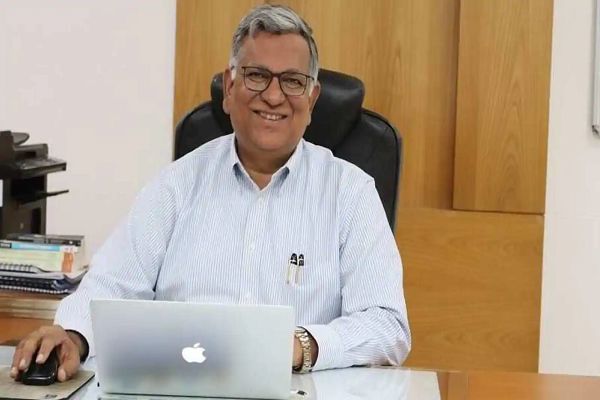
Professor Sudhir K Jain, Director of the Indian Institute of Technology Gandhinagar (IITGN), has been elected International Fellow of the US National Academy of Engineering (US NAE), a leading independent body of the best engineers, business leaders and academics of the entire world.
There are currently only 16 other international members from India to the United States of America NAE, including Ratan Tata, Mukesh Ambani, NR Narayana Murthy, Dr. Kiran Mazumdar Shaw, and Dr. Raghunath A Mashelkar.
Professor Jain is one of 23 international members elected in 2021 and is the only current IIT Director who has been elected to this prestigious body. He will be officially adopted at the NAE’s annual meeting on October 3, 2021.
The announcement was made by the US NAE on February 9, 2021. The organization has 2,355 US members and 298 international members.
Election to the National Academy of Engineering is among the highest professional honors an engineer can receive for outstanding contributions to research, practice, or technical training, including significant contributions to technical literature, as well as for new and developing areas of technology and significant progress awarded in traditional fields of engineering or in the development / implementation of innovative approaches to engineering education. Individuals cannot apply to become members of the NAE. Members are elected by their colleagues (current NAE members) after a one-year process.
Professor Jain was cited by the organization for “his leadership of him in earthquake engineering in developing countries.”
Dr. Jain is currently in his third term as Director of IITGN, which he joined in June 2009 as Founding Director. He is an internationally renowned earthquake engineering scientist and passionate academic administrator recognized for his leadership role in earthquake engineering in India, presenting many innovations in engineering education and institutional management to encourage and encourage excellence. From 2014 to 18, he was also president of the International Association for Earthquake Engineering. In 2013, he was a life member of the New Zealand Society for Earthquake Engineering (NZSEE). In 2020, he received the Padma Shri from the Indian government.
As fintech innovations spread across the globe, our way of life is changing. Buying a morning coffee with a wave of your watch, converting foreign currency online and sending money to someone on the other side of the world are all transactions that have become simple and routine thanks to developments in financial technology.
And international education is becoming one of the many global industries benefitting from these new products. As a result, the bumps in the road for students on their overseas education journey are gradually smoothing out.
Preceding the growth in cross-border tuition fee payment services, which track the money and file it instantly with minimum costs involved, were more staff resources sifting through multiple transactions and matching them to the student, coupled with uncertainty from the student’s side about when or whether the money would actually have arrived.
Student loan structures, including peer-to-peer lending and loan refinancing, are also areas where fintech innovations are popping up.
Modern financing companies, including Financepeer, which consolidate and refinance domestic student loans, have been paving the way in this field. Financepeer, has teamed up with a number of payment solutions to ensure that no further technical or regulatory barriers hinder this process.
Elets Digital Learning Magazine in association with Financepeer organized the first webinar of the series on “How Fintech is Shaping the Future of Education ”. Eminent speakers participated in an exclusive webinar.
Dr. Amrita Vohra, Director Education, GEMS India & Executive Principal, GEMS International School, Gurgaon said “Technology is here to stay and we need to bring in digital literacy to the classroom. Now, the entire world is a classroom for all. The globe has become smaller in the last few months. Technology is a demon and has to be tamed. Human element is more important and no technology can replace a teacher in the classroom.”
She added “For the first time, teaching pedagogy has changed. The learning has gone to the hands of learners. The role of teachers has changed in this era.”
Dr. Vohra also said “The hybrid model will prevail in coming days. School education is different as students make new friends and it defines their entire day.”
Debika Chatterji, Director-Principal, JBCN International School, Borivali, Mumbai said “Learners of this age must understand the importance of financial literacy. Students must understand how to manage budgets, cash and other tools around them. Technology can help us offer financial literacy education to students. We must ensure to provide the highest standard of teaching to students.”
We have to improve access and ensure to provide more opportunities for learners. We must bring new ways of assessments, she added.
Mamta Sabharwal, Head Mistress, Darshan Academy, Delhi said “Today, we are in a technology era and need to adapt it quickly. The pandemic has taught us to change our ways overnight. Technology has empowered teachers to impart education. The holistic education was missing during the virtual classes. Technology is omnipresent, and it’s helping students in every aspect. The world is shrinking as we can connect with anyone at anyplace.”
“The blend is very important as the technology has connected everybody. Technology is empowering everyone and there is a lot of scope for improvement. Training is very important for students, “ she added.
Dr. Kavita Bajpai, Co-founder & Director, The International School of Thrissur said “World has to be divided into two parts, pre and post COVID era. The reality is technology is present and the future. Earlier, Fintech firms were focusing on higher education but nowadays they have entered the school education sector also. We are preparing the students for the unknown. The human touch is also very essential for students. Fintech support is very essential for school education.”
“Schools have to work on the mental and behavioral wellbeing of students, educators and parents. For the growth of children both parents and teachers are responsible”, she added.
Anupam Sachdeva, Head of Business Development, Financepeer said “Financepeer is moving towards the right direction. Fintech will be complemented by edtech in the school education sector. Financepeer is the bridge between parents and institutions. It also helps to manage work management of institutions. Not only Financepeer provides funds but also equipment to institutions. We have tied up with 4500 educational institutions in over 60 cities.”
She said Fintech and Edtech can both take India forward. We need to optimize the money and reduce the cost.
In an attempt to modernize the future of Online learning in India, the Ministry of Education and All India Council for Technical Education (AICTE) will launch National Educational Alliance for Technology (NEAT 2.0) on February 16.
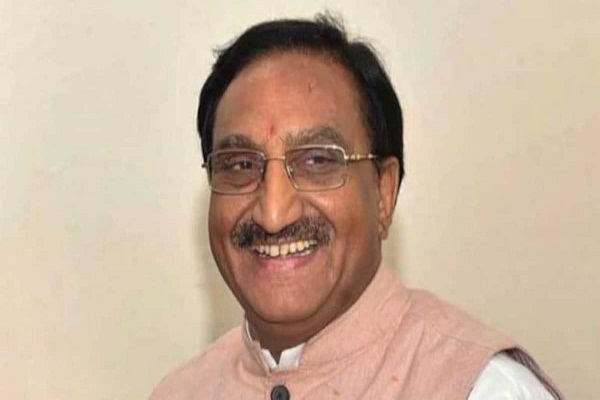
The event will be blessed with the presence of prominent personalities, including the Minister of Education, Ramesh Pokhriyal Nishank, Professor Anil D Sahasrabudhe, Chairman of AICTE, Professor MP Poonia, Vice Chairman of AICTE, Professor Rajive Kumar, Member Secretary, AICTE and Buddha Chandrasekhar, CCO, NEAT, AICTE.
Professor Anil Sahasrabudhe told National Education policy 2020 (NEP 2020) aims at a student-centered learning approach that NEAT champions. Prioritizing and scaling personalized learning models to meet the needs of every student in the country.
Professor MP Poonia indicated NEAT 2.0 helps to verify, aggregate, and deliver EdTech solutions directly to the students, thus giving them a huge choice to select a technological requirement that will suit their requirements, which will, in turn, improve the overall learning outcome.
Professor Rajive Kumar, Member Secretary, AICTE, said, ” The usage of technology in the educational sector is inevitable, and it will reshape the way in which people learned in the past. The usage of the NEAT Platform will enhance their skill and employability opportunities.
Buddha Chandrasekhar, CCO, NEAT, AICTE conveyed that, more than 2 lakh students registered in the NEAT 1.0 portal. Through the NEAT platform, many Edtech companies are accessible on a common platform to have a wider reach across the country. During the COVID lockdown the courses were offered free of cost, and more than 64940 students benefited from it. Through NEAT, 25% sales of registered seats are distributed to economically weaker sections students.
To avoid further conflict between the JEE and CBSE class 12 exams, the National Testing Agency (NTA) has allowed all students taking the grade 12 exams to choose a May exam date to avoid conflict. The agency posted an official notice on the official NTA JEE website at jeemain.nta.nic.in.
According to the statement published by the Agency, the decision to select a date was made taking into account the interests of the candidates in order to avoid a conflict between the two exams. The JEE main exam application form will open on May 3 and end on May 12, 2021 (for the May session). Applicants must notify the NTA of their Class 12 roster number and the name of the board within this time period.
Candidates taking the Class 12 Jury Exam and the JEE Main Exam must complete the information in “If you will attend the jury exam on May 24, 25, 26, 27 and will appear.” 2021 ‘and select the date on your online application form so there is no conflict with the JEE Major and Class 12 Board exam program.
Meanwhile, NTA has released the main JEE 2021 admission card for the February meeting. All candidates present can download the entry through the official NTA JEE website. The test would take place in two shifts on February 23, 24, 25 and 26, 2021. According to reports, around 6.60 lakh of candidates have registered for the exam. Visit the official NTA JEE website for more information.
The Uttar Pradesh government has decided to reopen colleges, universities and other educational institutions in the state as of February 15. All colleges, universities, and other colleges must reopen in accordance with the COVID-19 guidelines from the center and the state government.
All of these institutes reopened with restrictions on November 23, 2020, but now all universities, colleges and other educational institutions will operate normally from next week.
According to the communication letter published between university officials, all teachers and students must wear face masks. Along with this, social distancing is tracked by students sitting six feet away. All institutes must guarantee hygiene and thermal digitization.
The higher education department has asked educational institutions to completely renovate the campus before reopening. If a student, teacher, or staff member exhibits symptoms of a cough, cold, or fever, they should be sent home with first aid. If a student or employee shows symptoms of COVID-19, immediate testing should be done and the results recorded.
Meanwhile, the state government has reopened public schools for grades 6-8 as of February 10, 2021. The Yogi government has created SOPs to ensure the health and safety of students, teachers, and staff. Other non-teaching personnel from the state who will attend schools. Schools in grades 1-5 will reopen on March 1, 2021.
The Central Board of Secondary Education (CBSE) has extended the application deadline for grade 10 and 12 board exams for private applicants. Students who have not yet completed the exam form can do so online from February 22-25 until 5 p.m. on the CBSE website: cbse.gov.in.
The decision to extend the registry for three more days was made by the council in light of complaints from private applicants.
“Due to the request of several candidates from previous years not being able to complete their exam form as private candidates for the 2021 exam for grades 10 and 12, CBSE has decided to give these candidates one last chance, just fill out their online form via the link on the CBSE website, ”said the CBSE official.
The jury examination for CBSE grades 10 and 12 will take place from May 4 to June 10, 2021. Practical exams and activities, including the project and internal assessments, will take place from March 1 to 11 of June.
The Parliament recently announced that a decision was pending on the expert panel’s recommendation that Indian institutes of technology should be exempt from reservations for faculty appointments. In a written response to a question put to Rajya Sabha, the Union’s Education Minister, Ramesh Pokhriyal, said that the committee presented its report last June, which was then distributed to all relevant ministers, and that its comments were they had taken into account. The minister stressed that the government has yet to comment on the committee’s recommendations.
The eight-member IIT board of directors has been invited to propose measures to effectively implement the reservation policy, which will apply not only to recruitment but also to admission. According to a report presented to the government in June, the panel said IITs should be exempt from reservations because they were institutes of national importance and involved in research.
The committee added that it found that IITs have high expectations of faculty due to the quality and standard of teaching and that diversity issues need to be addressed through targeted teacher outreach and hiring campaigns rather than a specific fee.
In accordance with previous reports on the committee’s recommendations to add members of a reserved category to the list of teachers of institutes of excellence who were previously excluded from the reserve guidelines under the Central Educational Institutions Act 2019, it is necessary to promote excellence and the lack of qualified candidates. Stay out of reserved categories at institutions.
The University Scholarship Commission previously requested universities and colleges to fill vacant teaching and non-teaching positions in reserved categories at publicly funded institutions. The UGC asked the institutions to ensure that the reservation policy is implemented in accordance with Article 30 (1) of the Constitution of India.
The Ministry of Education has ruled out any proposal to relax the requirement of UGC-NET exam for lecturership posts in government as well as private colleges.
Union Minister of Education Ramesh Pokhriyal ‘Nishank’ made the statement in response to a written question in Rajya Sabha.
“The University Grants Commission (UGC) has informed that there is no proposal at present to relax the UGC NET exam for lecturership posts,” Nishank said.
The National Eligibility Test (NET) is conducted on behalf of University Grants Commission (UGC) for determining the eligibility of Indian nationals for the Eligibility of Assistant Professorship, Junior Research Fellowship or both, for Indian Universities and Colleges.
Until June 2018, the NET was conducted by CBSE in 84 subjects at 91 cities across the country. Thereafter from December 2018 onwards, the UGC- NET is being conducted by the National Testing Agency (NTA).
UGC-NET is conducted twice every year. However in 2020 due to the pandemic, the June 2020 examination got delayed and was deferred to September 2020 until November 2020 to cover all the subjects. The December 2020 cycle had to be postponed and is now being conducted in March-April 2021.
The University Grants Commission (UGC) solicited contributions from institutions and academics for the government’s online learning platform, SWAYAM.
The UGC asked professors and institutions to “express their interest” in designing and teaching 194 Bachelor (UG) courses in human and social sciences and 155 UG courses in natural sciences. Subjects in which courses are sought include geography, psychology, economics, English, Hindi, and Sanskrit for humanities and social science courses. For science flow, subjects are chemistry, computer science, math, physics, and environmental science.
Through the development of MOOCs, the Faculty will be able to “improve their academic results for professional advancement” and learn to “develop capacities through the use of ICT for teaching and learning”. In September 2020, the UGC had also requested “expressions of interest” for 171 courses in human and social sciences. Topics included history, political science, business, sociology, public administration, and underground-level anthropology.
With COVID pandemic, the demand for online courses have gone up.
The 2021 CBSE practice exam dates have been posted on the official website of the Central Board of Secondary Education along with the guidelines and standard operating procedures to be followed. Directors and principals have also received letters from the board detailing the dates to take the skill test, as well as general instructions and COVID-19 protocols to follow.
According to the schedule available on the official website, schools are expected to host CBSE grade 10-12 practical exams between March 1, 2021 and June 11, 2021. Due to special circumstances, the board Directive passed this year, schools must complete practical exams before the date of the last theory exam, June 11, 2021.
The official notice with the CBSE practice test plan, instructions and guidelines is available on the official website at cbse.gov.in.
According to the guidelines issued, CBSE schools can organize practical exams for 10th and 12th grade between March 1 and June 11, 2021. Unlike previous years, the governing board authorized the schools this year to restart the practical exams. being absent when the school takes the test for the first time.
In case of absence, the schools were also invited to report to the regional office of the governing board so that the external examiner could return for practical tests. However, practical exams must be completed by June 11, 2021.
External exams are compulsory for class 12 practical exams. As in previous years, practical exams will be conducted by an external auditor in the company of an observer appointed by the board and an internal auditor.
Schools have also been warned not to organize practical exams with an internal examiner. In this case, the marks of the practical exams will be canceled and the students will be evaluated in their place in an average scale of marks obtained in the theoretical exams. A disaffiliation process is also started against these schools.