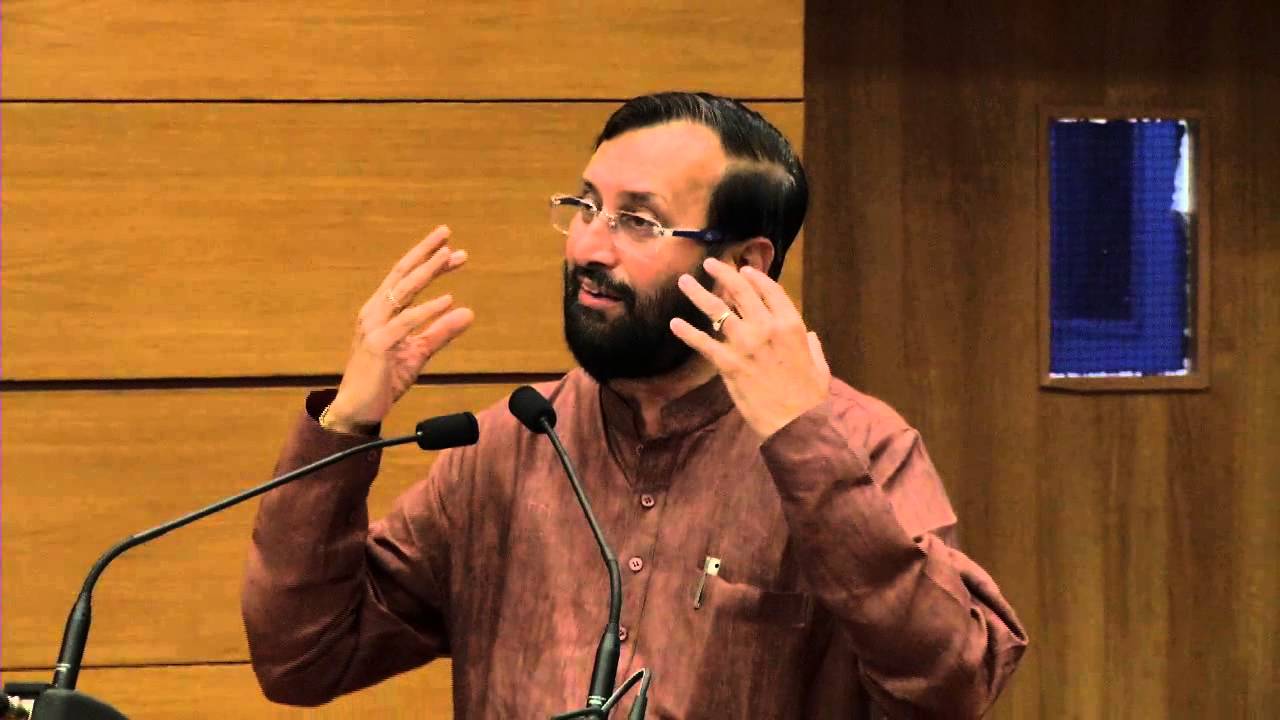
Union Minister for Human Resource Development Prakash Javadekar stated that the Government has decided to reduce the NCERT syllabus by half as the students are getting overburdened and consequently don’t have time for extra-curricular activities.
The union minister announced to cut half of the syllabus last week.
“There is a huge load of books and information, and students have no time. There is no time for physical education, value education and life skills. So, we decided to half the portion (syllabus). There is no need to teach them everything. Students should learn principles and rest of the knowledge they can gain later,” Javadekar said.
Addressing the 10th foundation day of the Foundation for Restoration of National Values (FRNV), Javadekar said that the Ministry of Human Resource Development (MHRD) has received around 37,000 suggestions from parents, teachers and educationists regarding the government’s decision to lessen the burden of books.
The minister said that the values among children can only be inculcated at home and he suggested training for parents in this regard.
Lauding the FRNV’s initiative to integrate value education in the school system in India, he assured that the MHRD will work with it as a “partner”.
FRNV chaired by ‘Metro Man’ E Sreedharan was founded in 2008. On the occasion, he said value education is not being taught at state-run schools and asked the government to take steps for this.
“Value education is the primary step needed by the country. Emphasis on it in government schools is not sufficient. If government schools start it, other schools will also be encouraged to do so,” he said.
A journal based on value-based education was also released at the event organised at the Delhi Metro Rail Corporation’s headquarters at Metro Bhawan.
National Skill Development Corporation (NSDC), under the aegis of Ministry of Skill Development & Entrepreneurship, Government of India, collaborated with Czech Aviation Training Centre (CATC) to establish skill academies in private universities.
Under the collaboration, aviation related courses will be offered to aspiring students. The training will help aspiring candidates in securing a career in the aviation sector across various job roles i.e. Cabin Crew, ATC pre-training and Aviation Security.
Commenting on the partnership, Mr. Manish Kumar, MD & CEO, NSDC said, “The aviation sector has emerged as one of the fastest growing industry in the country over the last three years. Our collaboration with CATC will help students acquire the right skill required to secure a career in the aviation sector. The successful candidates trained under this partnership will pass the entry screening of an Allied Domestic or International airline.”
The agreement will facilitate short term courses and diploma/degree programmes in Aviation sector for both service and maintenance segment in a phased manner at Universities recommended by NSDC.
The required training will be provided as per the industry defined standards under National Skills Qualification Framework further aligned to the European Aviation Safety Agency (EASA) standards.
Placements will be facilitated for all students who successfully complete their training programme, across both national and international airlines.
To run cabin crew training, CATC is likely to invest approximately EUR 12,000 to set-up a Lab in each of the university and will provide all the required equipment’s for safety and service within the skill academy at the universities.
Mr. Antonin Jakubse, CEO, CATC said, “CATC is proud to collaborate with NSDC and contribute towards the Skill India Initiative. We are setting up Labs in universities to provide training for Cabin Crew, ATC Pre training and Aviation Security.”
“During the fiscal year, CATC will explore the possibility of installing first of its kind in India, advanced equipment like CEET Simulator for A320 cabin crew training and install it at a University recommended by NSDC with an expected investment of approximately INR 4.5 Crores,” he added.
West Bengal Board of Secondary Education (WBBSE) has announced the Class 10 board results for 2018. The result was released today morning on board’s official website.
In 2018, 11,02,726 students appeared for WBBSE class 10 board results of which 8,99,564 passed the exams with overall pass percentage of 85.49% this year.
Students can download their mark sheet from the board’s official website wbbse.nic.in. The result is also available on http://wbresults.nic.in/ and westbengalonline.in.
The marks sheets will also be available from 10 am onward at camp offices across the State. Students can also get their results on their mobile phone through SMS or on their email ID by registering themselves on the official website.
WBBSE class 10 board results — Latest updates:
Sanjibani Debnath from Coochbihar has secured first rank with 689 marks
This year, 56 students are in the top ten list
In 2019, the board exams are likely to start from February 12 and end on February 22
List of toppers:
Sanjibani Debnath (First – 689 marks)
Sirshendu Saha (Second – 688 marks)
Mayurakshi Saha (Third – 687 marks)
Nilabja Das (Third – 687 marks)
Mrinmoy Mondal (Third – 687 marks)
How to check result:
Go to the official website of WBBSE — wbbse.nic.in
Click on the link for WBBSE Class 10th Result
Enter your roll number and click on “Get your result”
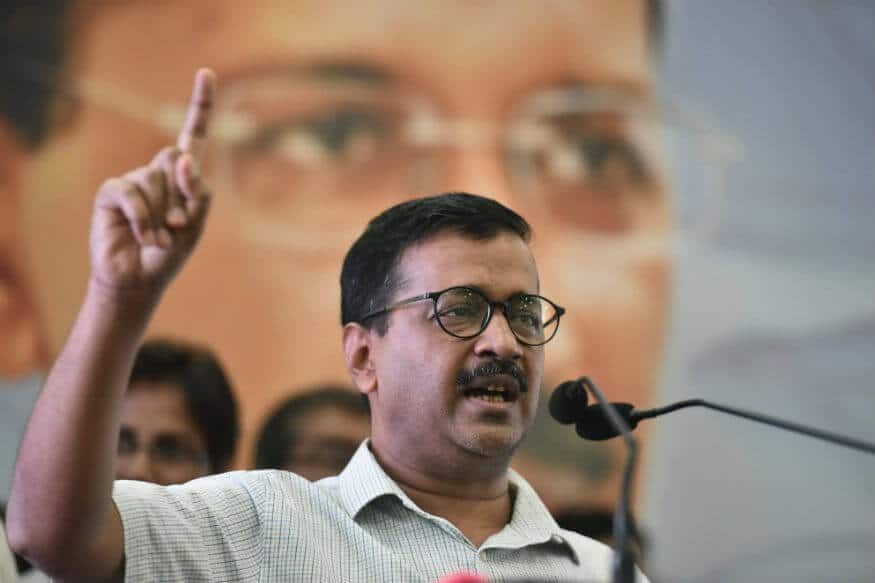
Delhi Chief Minister Arvind Kejriwal stated that his government will work on improving the education system and on changing the content of education.
While interacting with the government school students who qualified for IIT JEE, Kejriwal said, “There is some problem in the content of our education. Soon after we are done with the issues related to the educational system, we will work on improving the content of our education although it will take time.”
“Students after doing BA and B Tech are not getting jobs. It is not that there are no jobs in the society, but the main problem is that what is being taught in the school, college does not have any use in practical life,” he said.
“We are following the same educational system which was imposed by the British on us. The educational system should be one where the students can earn after getting a degree and not have to run for jobs,” he said.
Kejriwal also said that education is one of the most important aspects for the development of a nation and every developed country has 100 per cent literacy rate.
“In every developed country, education is with the government. We also believe that education is the responsibility of the government,” he further said.
Praising the work done by Deputy Chief Minister and Education Minister Manish Sisodia, he said: “Earlier, when I was new as Chief Minister, people used to come to me with requests to help their kids get admission in various private schools. Now I get requests from people to help their kids get admission in government schools,” he added.
Artificial Intelligence (AI) should be leveraged to develop quality solutions at large scale in the sectors like education, health, agriculture, infrastructure and mobility in smart cities, said Niti Aayog CEO Amitabh Kant.
According to a paper titled National Strategy for Artificial Intelligence, “AI for All will aim at enhancing and empowering human capabilities to address the challenges of access, affordability, shortage and inconsistency of skilled expertise.”
Aiming to put AI to use for all and across sectors, the Aayog has identified barriers that need to be addressed to achieve success in the use of AI. These barriers include lack of expertise in research and application of AI, absence of enabling data ecosystem, high resource cost and low awareness, privacy and security issues and absence of collaborative approach to adoption and application of AI.
The Aayog has also proposed to establish Centre of Research Excellence (CORE) recognising the importance of research and its commercial adoption in success of AI. The centre will focus on developing better understanding of existing core research.
Besides, it has proposed setting up of International Centres of Transformational AI with a mandate to develop and deploy application-based research in collaboration with private players.
Alankit Group, a conglomerate of 12 companies, is into diversified activities like Financial Services, e-Governance, Insurance and Health Care verticals. The company envisions to be a leading solution provider in the sectors says Ankit Agarwal, Managing Director, Alankit Limited, in conversation with Elets News Network (ENN).
What inspired launching of this company?
Ankit Agarwal, Managing Director, Alankit Limited
Alankit, the leading service provider, is a twodecade old conglomerate operating in sectors like e-Governance, Financial Services, Healthcare and Insurance Broking. The idea behind launching the company was to provide multiple service offerings under one umbrella by making the processes simpler, faster and hassle-free for all. The company was started with the vision of being a unique and quality service provider in the sectors it serve with emphasis on customer satisfaction along with supporting the Government initiatives. The company aims to take its vision forward by supporting the “Digital India” initiative and developing online solutions for different kind of services in these sectors.
Please describe about the innovations by Alankit in last two years to improve its products and remain ahead of its competitors.
In last two years, Alankit has introduced various new product lines and solutions to boost its market penetration and stay ahead of competitors. Some of the ground-breaking innovative softwares, introduced and developed by Alankit to take the digitisation campaign further, are Alankit GST Muneemji – A secure cloud-based solution for all GST compliances; Alankit GST Saarthi – Point-of- Sale (POS) device for small business enterprises; E-Raahi – first-of-its-kind e-Way bill software and various service specific Mobile Apps among others. The idea is to digitise and simplify the procedures for the masses.
What are the major products of the organisation and how they are helpingin improving the education sector?
Being the National Distributor for Entrust Datacard Printers, Alankit facilitates the distribution of millions of corporate ID, health cards, voter ID cards and Aadhaar cards besides accomplishing a tremendous sale of printers in last few years. Printers act as system integrators that can analyse and provide easy customisation to avoid any duplication of ID Cards in schools, limiting the chances of any kind of fraud.
What is your vision for upcoming years?
Alankit’s vision for upcoming years is to excel as a leading service provider in the verticals it operates in, facilitating convenience for the people as well as the Government. The company is all set to come up with a more refined version in coming months with an aim to increase the turnover to a new record high. For this, we are taking several initiatives to benefit all stakeholders and encouraging our workforce to contribute more towards the overall growth of the organisation.
Which are the futuristic ways that companies like Alankit can look forward to contribute towards education sector?
The education sector is poised to witness a major growth in the coming years and with the rate economy is growing and technology is advancing, there is a lot that can be accomplished by companies like Alankit in future. We can come up with new solutions to simplify the procedures such as form filling and submission for school admissions and many others. Moreover, we are also trying to introduce advanced level tools to ensure safety and security of school kids.
Gender inequality is treated as a punishable offence as per laws of most of the countries. It is important for parents and teachers to make the children sensitive towards the other gender, writes Hema Kalakoti, Principal, APS Academy, Lucknow, for Elets News Network (ENN).
Hema Kalakoti, Principal, APS Academy, Lucknow
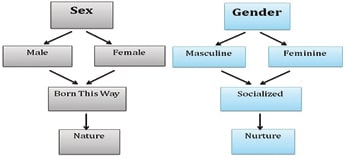
Gender inequality refers to unequal treatment or perceptions of individuals based on their gender. It arises from differences in socially constructed gender roles. Gender systems are often dichotomous and hierarchical, gender binary systems may reflect the inequalities that manifest in numerous dimensions of daily life. Discrimination based on gender is a common civil rights violation that takes many forms including sexual harassment, pregnancy –discrimination, unequal pay for women who do the same jobs as men and discrimination in employment and education.T o overcome gender inequality we need to have gender sensitive society.
What is Gender Sensitivity?
Gender awareness is more analytical and critical since it clarifies issues about gender disparities and gender issues. It pertains to one’s effort to show how gender shapes the role of women and men in society including their role in development and how it affects relations between them. Our education system needs to be gender sensitive and gender friendly. One of the best possible strategies to minimise gender discrimination in society is to promote gender awareness at all levels of society.
Gender Issues In Homes
We can promote gender awareness in parents by
School-parent partnership needs to be strengthened to identify gender issues in homes
Promoting girl education in rural areas
NGOs awareness training and counseling
Parents should be advised to treat both their sons and daughters as equals. Instead of telling their daughters to behave properly, mothers should teach their sons to respect all women as equal. It is important that children should grow up seeing women in their homes being respected by the men in the family. All household females should stop telling the young girls of their families that they need to learn how to cook, serve the husband and in-laws, and always adjust. And whatever else says to make a growing girl feel like she has less access to choice of freedom than her male counterpart.
Gender Sensitivity in Schools
Schools can play an important role in inculcating gender sensitivity in etiquettes and manners of students. It is necessary to create a gender responsive school in which the academic, social and physical environment and its surrounding community take into account the specific needs of girls and boys. A detailed action plan with a definite road map is required in the school curriculum to achieve gender equality.
Gender Sensitivity among Teachers
Teachers play a very important role in the early upbringing of a child. Their idea and beliefs can change the thought processes of young children. Children in the formative years easily nurture values and virtues taught to them. Gender sensitivity training should be mandatory for teachers. The training will enable them to disseminate the desirable attitude based on mutual respect and trust between girls and boys.
We all know that the teachers sometimes “inadvertently” make disparaging remarks about capabilities or characteristics of either gender, so we need to cope with knowledge, attitude, skills and methodologies that promote gender equality.
With growing concern over the lack of gender sensitization among youth, the Central Board of Secondary Education (CBSE) has developed “a kit on gender sensitivity” for teachers to enable them to ensure unbiased participation of both boys and girls in the learning process.
Gender Sensitive Classrooms
Classrooms need to be gender sensitive. We have to take care of few do’s and don’ts for making classroom interaction gender sensitive.
Encourage both males and females to be class leaders (perhaps one of each sex). Appoint two monitors in each classroom, a boy and a girl
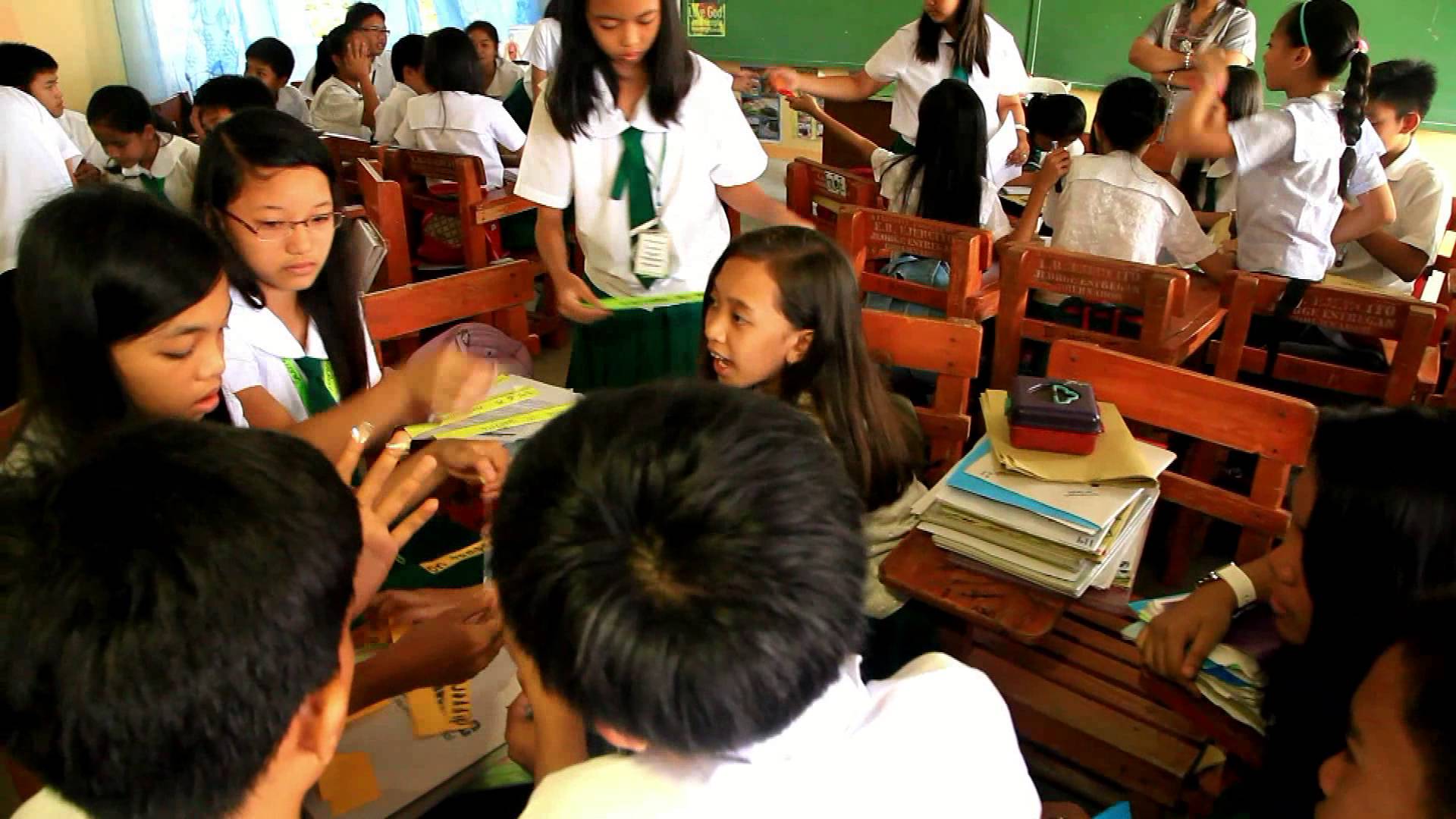
Address and call on girls and boys equally. Do not segregate boys and girls in the classroom in primary classes
Make mixes groups for group activities and games
Try to ‘switch role’ for breaking down gender barriers and stereotyping of gender roles
Make both boys and girls share activities like cleaning, moving furniture, to the chalkboard during a lesson.
Plan and conduct activities that give opportunity to all children accepting one another as equals.
Gender Sensitivity in Curriculum and text
Academic contents with lessons on gender sensitivity and moral traditions will unconsciously mould the character of the tender mind. It is time to transform all text reading materials and books which should be free of notion of gender equality as bias is embedded in textbooks and lessons. In this connection, our government has started taking initiatives regarding gender concerns have been included in the curriculum and in the textbooks drawn up by the National Council of Educational Research and Training(NCERT). (Views expressed by author are personal).
Seth M R Jaipuria Schools aim to develop scientific temper, modern outlook, and love for culture, heritage and traditions, besides imparting the best academic education to its students, says Kanak Gupta, Vice President, Seth M R Jaipuria Schools, in an interview with Elets News Network (ENN).
What teaching methodologies Jaipuria School has adopted to be at par with global education scenario?
Kanak Gupta, Vice President, Seth M R Jaipuria Schools
Our vision is to make quality private education available to students across towns and cities in India. For far too long, quality institutions have been concentrated only in metropolitan cities and a few state capitals. This must change. Whenever we start a new educational institution, our focus is on how we can give a differentiated learning experience to the student. We strongly believe that education has to be learner centric and participative. Our focus is on research, benchmarking best practices world-wide and learning from our functioning 21 schools as well. Holistic development of the student, including focus on values is the key. We have a strong belief in teacher development and learning as the path to success for any educational institution. We provide multiple training opportunities to 2,500+ educationists associated with us in school and outside it on pedagogy and subject knowledge. Moreover, we provide them with new teaching ideas for every topic in the syllabus through around 1,00,000 lesson plans developed by us.
How important is development of critical thinking for student learning?
The greatest challenge is to change mindsets of teachers, administrators and parents towards a new, open and participative learning culture. The most important skill in today’s world is the ability to learn itself. We try to inculcate selflearning in our students, and try to make them self-motivated from a very young age. In today’s world no success is possible without the ability to work with people and in teams. This requires empathy and listening skills. It gives not only a pathway to success but also makes one a better human being, who understands and helps people around himself or herself.
As classroom teaching has evolved over time, what is technology’s role in improving the teaching-learning process?
We strongly believe technology can be an enabler, not the end-all and be-all of the teaching-learning process. Technology has to be integrated in the learning cycle and we must empower teachers and students to use it well. Flipped classroom, multimedia, peer learning, et al are strengthened through technology.
How does the Group aim to develop students’ latent creative potential?
The world is changing at a very rapid pace. We can’t even imagine the types of careers or lives our students of today would be having in 15-20 years. As an educationist, it is important that we keep pace with the changing world around us. Creativity can’t be taught in a traditional classroom setting. It is developed through practice. From a primary level, the school should make students participate and take responsibility both within and outside the classroom.
Higher education enhances the bandwidth of information and depth of processing the information for skillful application of the knowledge, writes Shishir Jaipuria, Chairman, Seth Anandram Jaipuria Education Society, for Elets News Network (ENN).
The word ‘education’ implies such a wide connotation and is perhaps not amenable to a single definition acceptable to all.
Shishir Jaipuria, Chairman, Seth Anandram Jaipuria Education Society
Oxford dictionary, however, gives a very concise and succinct version and that is ‘the process of teaching and learning’. We could take certain liberties with this word and expand the definition to include process of learning, understanding and applying new information for leading a better quality of life.
The objective is to bring a positive change for communicating with each other, and creating a better and more informed society.
The process at primary education level is meant to develop curiosity to explore and discover the material environment, and make sense out of it, first hand. The Secondary and Higher Secondary education is designed to expedite the process of discovery by feeding information on what has been already discovered by others, and yet leave a sense of inquisitiveness for further exploration and creative discovery. Vocational education for becoming economically independent is an integral part of School Education.
Higher education or what is popularly called college education is meant for probing into different branches of knowledge to gain deeper understanding of the subject of interest. At a higher level, the questions for exploration get deeper and become a source for creation of new knowledge by learning what is not known till then.
The learning goes beyond understanding the physical information to a philosophical realm. Higher education at the highest level is essentially a philosophical exploration of universal principles using mathematics or meditation. There is not much scope at this level for use of innovation for learning even in mathematics, for computers cannot generate new mathematics but can only process faster what is already known. That is why no computer on earth has been able to take us beyond the theorems developed by a Ramanujam or Einstein.
The content for Higher Education has two dimensions. At the core, there is dated Knowledge which is essentially information validated by philosophical research methods at certain point of time in history. The knowledge that has remained valid for a long time gets constantly challenged by new explorations and discoveries, and updated overages out of philosophical exploration and validation of new knowledge.
New technology has a limited impact on the content of Knowledge but can have a telling impact on the pace of learning the content as well as the application. Innovation in higher education will thus have to be understood with reference to the process of learning, or the process of acquiring existing knowledge and developing skill competence for using the knowledge for value creation.
The introduction of digital culture brought forth the first landmark innovation in the field of education. The invention of pocket calculator and personal computers heralded the first major innovation. The software revolution bringing spreadsheets and power point to classrooms was the next big innovation in learning.
A combination of hardware and software revolution started with the innovation in gaming technology and development of simulators for making learning easy for pilots and factory workers engaged in high-risk or hazardous work processes. Robots had come to replace men in factories, taking over monotonous and difficult manual labour requiring skill precision. But to think of application of Artificial Intelligence (AI) and Robotics in Education was a little far-fetched. It is not so now.
The application of AI for making ball by ball analysis, synthesising the data, discovering patterns of behaviour of the player in Cricket, and making analysis and recommendations available on real-time basis for the next player going to the crease, is a classic example of what AI can do in education tomorrow.
The student and teacher’s behaviour in class can be analysed in minute detail to predict the outcome of the teaching-learning process, after each session. Questions in a quiz competition randomly generated by the computer, raises the difficulty levels through the process of screening upward, using artificial intelligence for learning and tasking.
“Out of all the emerging technologies, I believe that Artificial Intelligence is the one with the greatest potential for impact on the world of education…,” writes Lasse Rouhiainen, in a book titled, “The Future of Higher Education; How Emerging Technologies will Change Education Forever” (2016).
E-learning Apps and MOOCs are already flooding the Internet. The students’ addiction to mobile handsets have made it a ‘no brainer’ to push a substantial part of educational contents to the mobile phones and use the class room time for clarifications and greater student engagement using blended learning methods. Immersive technologies shall be increasingly useful for enhancing learning with virtual and augmented reality.
There is an interesting paradigm that is visible in the application of new technology that is quite useful for education. The new technology gets applied first for extremely high budget movies, and then gets into business application for making tons of money, and finally gets integrated with education.
Talking about Higher Education in the Age of AI, Joseph E. Aoun introduces a new word – HUMANICS, in his book “ROBOT-PROOF” (MIT 2017), as a new learning model. Writing about the positive side of ‘Machine Learning’, he says, “In many ways the new technologies are an astonishing boon for humanity, giving us the power to mitigate poverty, hunger, and disease”.
Aoun writes further, “The robot-proof model of higher education is not concerned solely with topping up student’s minds with high octane facts. Rather it refits their mental engines, calibrating them with a creative mindset and the mental elasticity to invent, discover, or otherwise produce something society deems valuable”.
Lot of people are afraid of machines today. They think, machines are getting very intelligent and smart and would take away all the jobs from people, not just the manual hardworking jobs at the factory shop floor variety. Thinking jobs are also going away to robots as we are entering the most advanced generation of machines in history. Under these circumstances how can human beings preserve their unique identity and existence in the economic world? This will be possible by discovering and reinforcing some of the unique traits that human beings can only have and which no robot can emulate – traits like ‘creativity’ and ‘flexibility’, suggests Aoun.
Knowledge alone is not sufficient for the work tomorrow, but the cognitive capacities are necessary. Humanics is a future discipline for learning and it is not about content but is about cognitive aspects of learning from data, technology and humanities, all put together.
Lastly, machines can improve efficiency and productivity, but education covers a wide spectrum of transactional behaviour. Innovations in valueeducation, other important aspects of human development and interpersonal relationships are as important and deserve equal attention.
A modern school needs to do much more than ensuring good marks on a sheet, which is the minimum responsibility of a school. The education must nurture a good human being equipped with broad range of capabilities, says Dr Jagdish Gandhi, Founder-Manager, City Montessori School (CMS), Lucknow, in conversation with Arpit Gupta of Elets News Network (ENN).
City Montessori School (CMS), Lucknow is a renowned name of school education sector in the country. How this journey started and with what mission?
Dr Jagdish Gandhi, Founder-Manager, City Montessori School (CMS), Lucknow
The vision of City Montessori School (CMS) keeps it distinct from other schools of the country. We at CMS take into account the three realities of a human being: material, human, and divine. These realities help students to be balanced human beings in their life ahead. A balanced person achieves great success and can grow up to any extent in life.
At CMS, we also inculcate “Decision Making” among students for choosing global professions or positions. It has been done through sending our students to various schools abroad and to global conferences. We also organise “Chief Justices Conference” in the school where the Chief Justices and Judges from across the globe participate and interact with our students. So, at CMS, we do not focus only on the material education but we also broaden students’ thinking.
Our results in board and other exams are the best in India. Various renowned newspapers have covered us on the lines of – “Lucknow Emerging as a Quality Education Hub” mentioning CMS among the Top 10 schools of the country. Out of the Top 10 schools of India, five are City Montessori Schools. The reason behind this is school’s focus on “Divine Education” and on “Human Education” along with “Material Education”. Our “Human Education” helps children to be a contributing member for the family, society and the world.
At CMS, daily prayer-assemblies are planned to be spiritually nourishing. The integration of all-religion prayers before the commencement of every event is an innovative way to teach children to embrace diversity and create awareness of and reverence for all religions.
Other than that, we have several international activities (28) in which students from across the globe participate. As many as 64 students from our school are going to perform Yoga at the UN and also going to visit the National Aeronautics and Space Administration (NASA).
Along with nurturing global thought process among students, what kind of technological innovations have been adopted by CMS for holistic development of students?
One of the most significant innovations adopted in CMS is the use of white board i.e. every class in CMS is smart class. The CMS has over 4,500 computers to make students tech-savvy.
We are also using technology to handle one of the prime concerns of parents i.e. security. Our all the campuses are under CCTV surveillance to keep an eye on every students and avoid any mishappening. Along with that we also conduct seminars and conferences on road safety.
The curriculum for every school affiliated to a board is same, still CMS performs better than other schools, what are the reasons behind that?
We, rather than forcing students to study, develop an encouraging atmosphere to develop the habit of self-study among them. The encouraging and competitive atmosphere helps them to excel in their studies. For example, we have selected a team of five-six students for participation in an international mathematics competition. The team was selected after conducting various tests and quizzes between the six sections of a class. Such activities make student competitive and motivate them for self study.
We also encourage students by awarding them for their performance in any of the international or national level competition. Recently, we awarded Rs 50,000 each to our three students for getting selected in IBT.
Moreover, three CMS students have secured first position at the All-India ISC (Class XII) merit list this year and been awarded cash prize of Rs 1,00,000 each.
At CMS, daily prayer-assemblies are planned to be spiritually nourishing. The integration of all-religion prayers before the commencement of every event is an innovative way to teach children to embrace diversity and create awareness of and reverence for all religions.
A large number of students get selected in exams like JEE Main, NEET, UPSC and many others from CMS every year, to whom would you like to give credit for this achievement?
City Montessori School is among the schools from where a large number of students get selected for various exams every year. Recently our eight students were selected for Kishore Vaigyanik Protsahan Yojana, a scholarship programme funded by the Department of Science and Technology, Government of India. These are due to the combined efforts of everyone. The school management has a very small role in that but the principals, teachers, students and parents contribute significantly in any such achievement.
Principals motivate teachers; teachers motivate students and counsel their parents by visiting their homes, as a result parents also motivate their wards to excel in any competition. For every teacher, “Home Visit” of at least five students every month is necessary. They have been given additional benefits for this other than the salary. The main objective of these home visits is to tell parents about encouraging students for studies and to encourage parents to avoid scolding and beating.
What are your plans?
Starting from one branch in 1959, the City Montessori School now has 18 campuses and more than 4,500 staff educating over 55,000 students in Lucknow. Currently, we don’t have any expansion plans. We aim to provide a joyful learning environment that empowers primary-school aged children and develops their self-confidence and competency in the core subjects. CMS seeks to create a stimulating learning environment that supports to enhance the learning capabilities of a child.