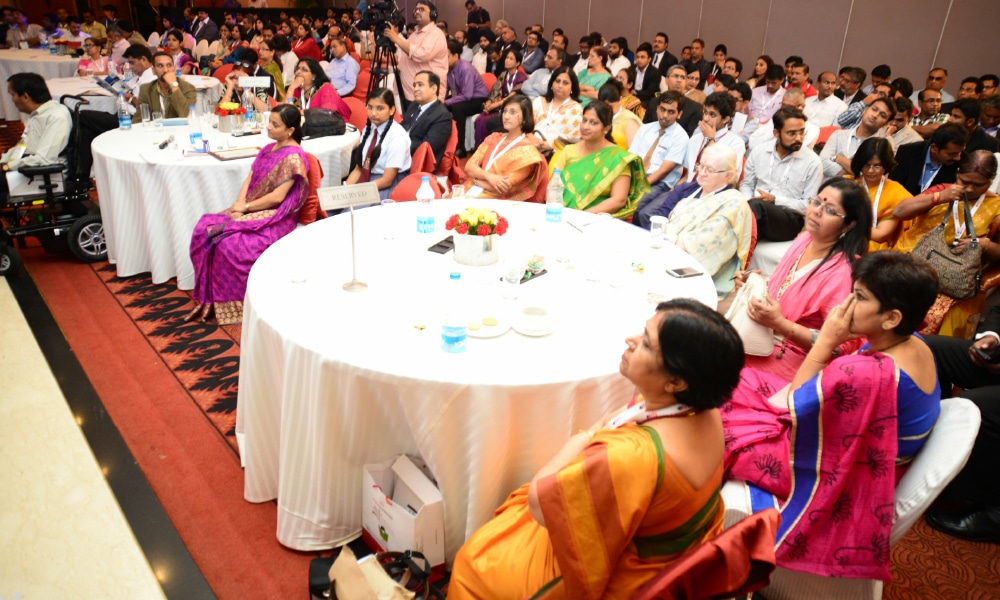
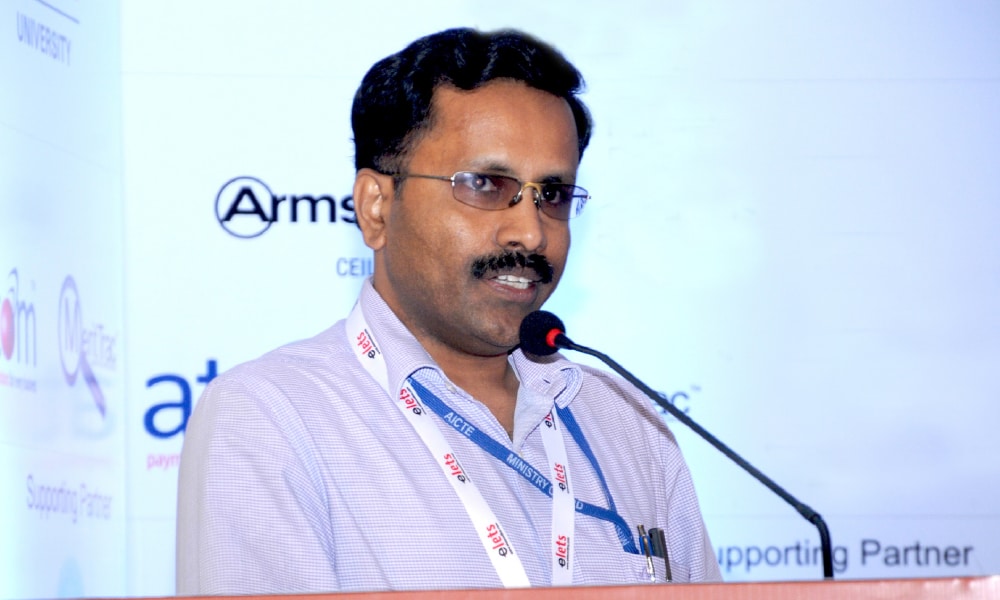
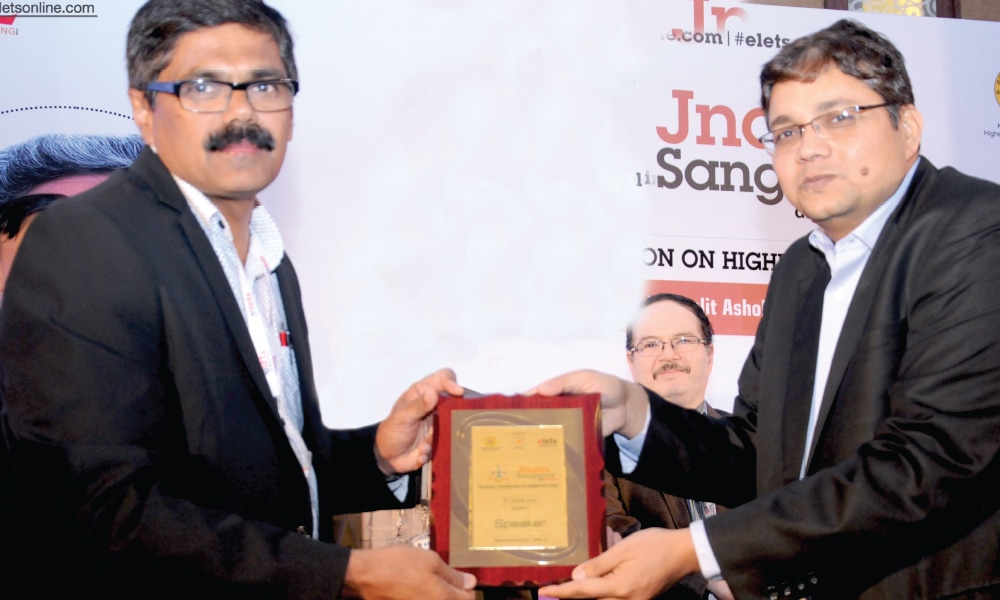
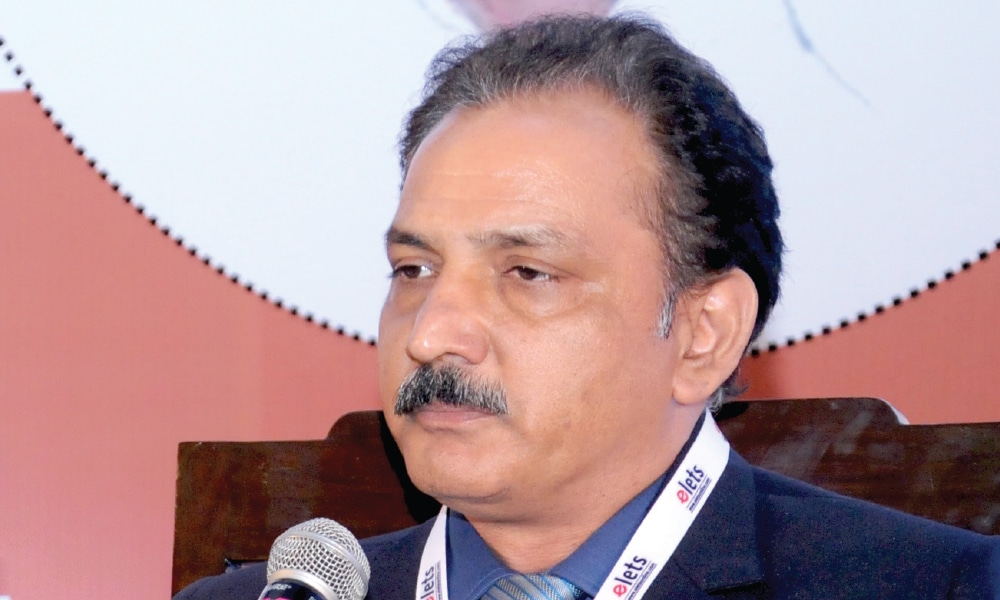
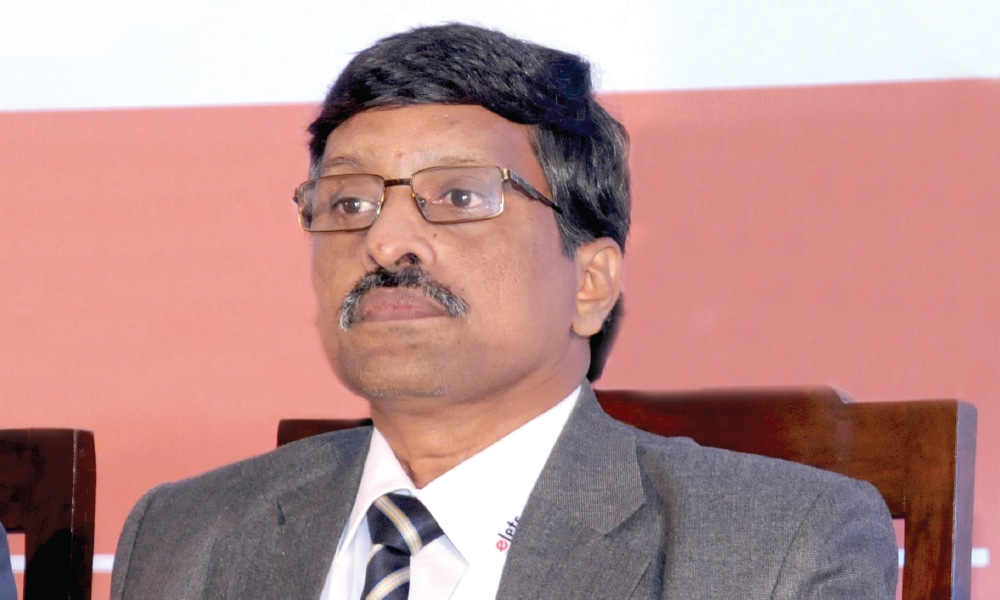
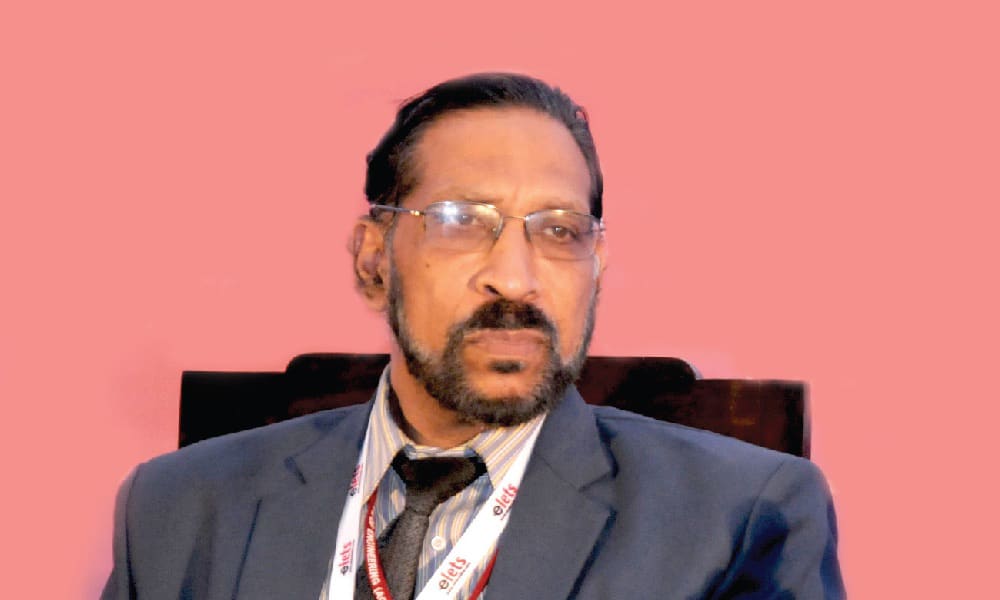
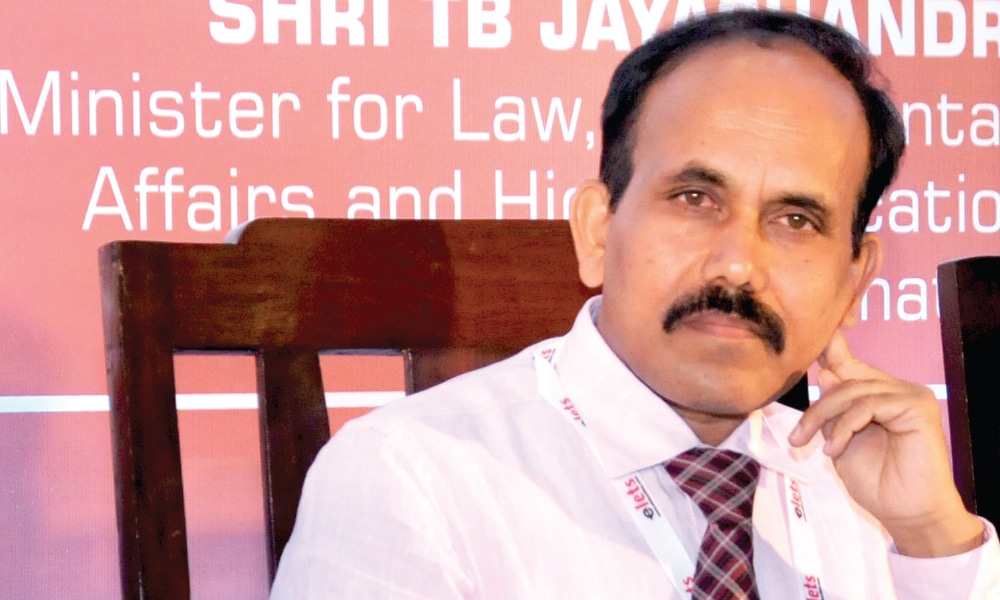
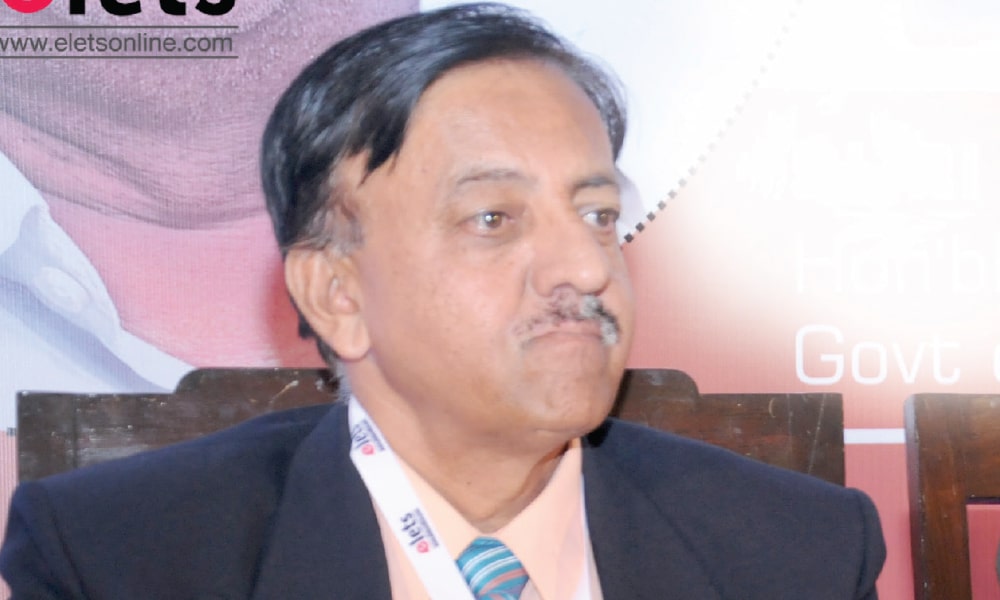
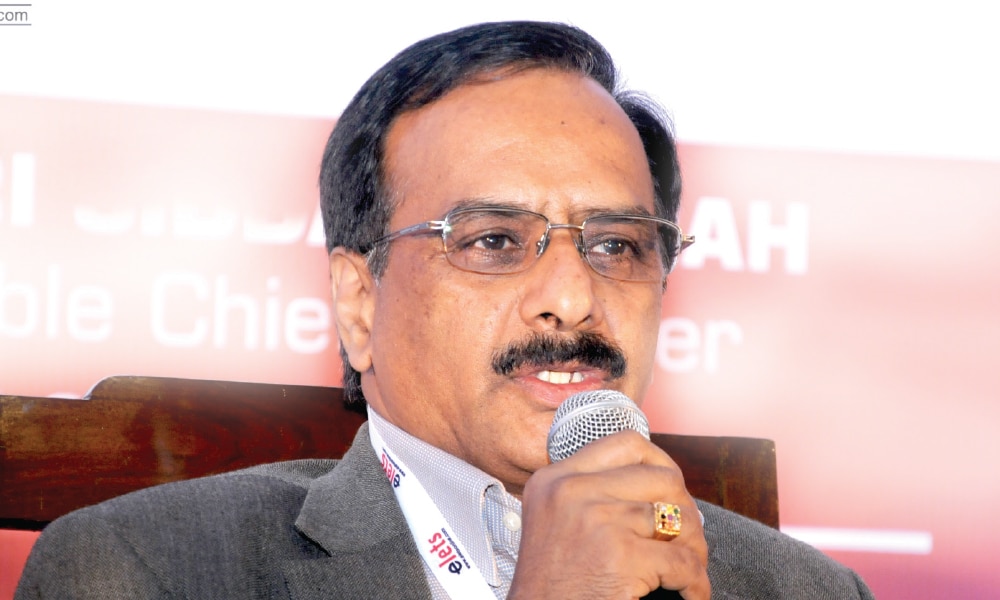
Moving on from the traditional ways of teaching, imparting education is a hightech business today. In line with the global trend, Indian schools and institutions of higher education are fast adopting technologyaided teaching that facilitates greater access to knowledge and the pass-outs are better prepared to face the market. Participants at Elets Technomedia’s legacy event – 7th World Education Summit, New Delhi – will discuss, deliberate and set the future course of education in India.
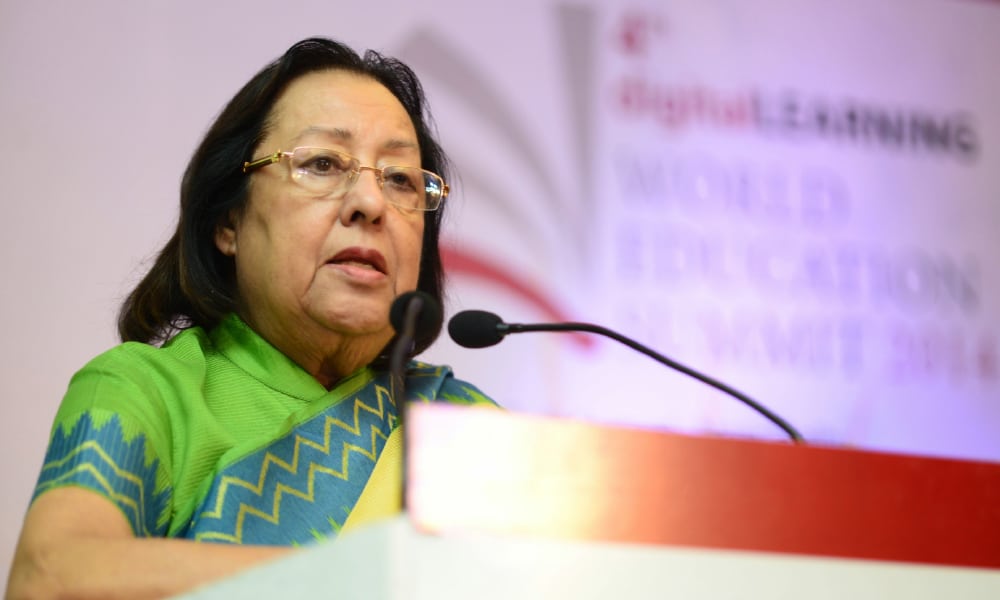
Dr. Najma A Heptulla Former Union Minister for Minority Affairs, Government of India
Technological innovations, for long an emblem of academic research, may now be changing the very way the schools and higher educational institutions impart teaching and students learn. There has been no other generation more comfortable with online and collaborative technologies than today’s young people — the “digital natives”, who have grown up in an immersive computing environment. Where a notebook and pen may have formed the tool kit of prior generations, today’s students come to class armed with smartphones, laptops and iPods.
In today’s technology-enabled knowledge economy, many schools and universities find themselves facing fresh challenges: how not only to equip students with adequate education in their respective fields of study, but also to arm them with the skills and knowledge required to leverage technology effectively in the workplace.
A shift in the way education has been imparted is necessary because this is the age of information technology — an age that requires that teachers facilitate aggregation of such information by students and not merely give them the bookish knowledge
Global researches have shown that Information and Communication Technologies (ICT) can lead to improved student learning and better teaching methods. A report prepared by the National Institute of Multimedia Education in Japan has proved that an increase in student exposure to educational ICT through curriculum integration has a significant and positive impact on student achievement, especially in terms of knowledge, comprehension, practical and presentation skills in subject areas such as mathematics, science and social study. Ever pondered why do we need ICT in schools? Was education not happening before computers came into existence? Why is this paradigm shift necessary? Well, the shift is necessary because this is the age of information and technology —an age that requires that teachers facilitate aggregation of such information by students and not merely give them the bookish knowledge.
In view of the paradigm shift happening in the educational sector in India, the need for its management and faculties to adapt to the changes is imperative. Delving into this topic led to the launch of the World Education Summit (WES) by Elets Technomedia Pvt Ltd. Over the years, the Summit has served as platform where academicians, experts on education, edutech industry representatives, policymakers and other stakeholders share their ideas and deliberate on how the education sector in India can be made to keep pace with the global trends, so that the pass-outs are at par with that of any other institution, globally.
The past editions of the Summit, held majorly in New Delhi and Dubai, have visualised emergence of an interesting range of possibilities on how technology is likely to have its impact on the future academic offerings, spurred by innovative faculty research, student engagement and the pursuit of academic collaboration
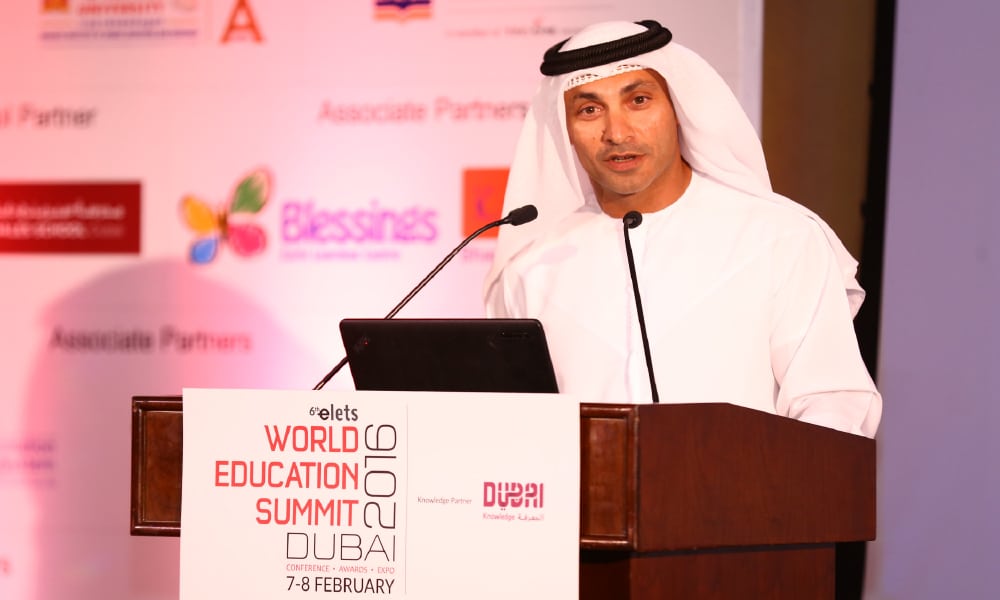
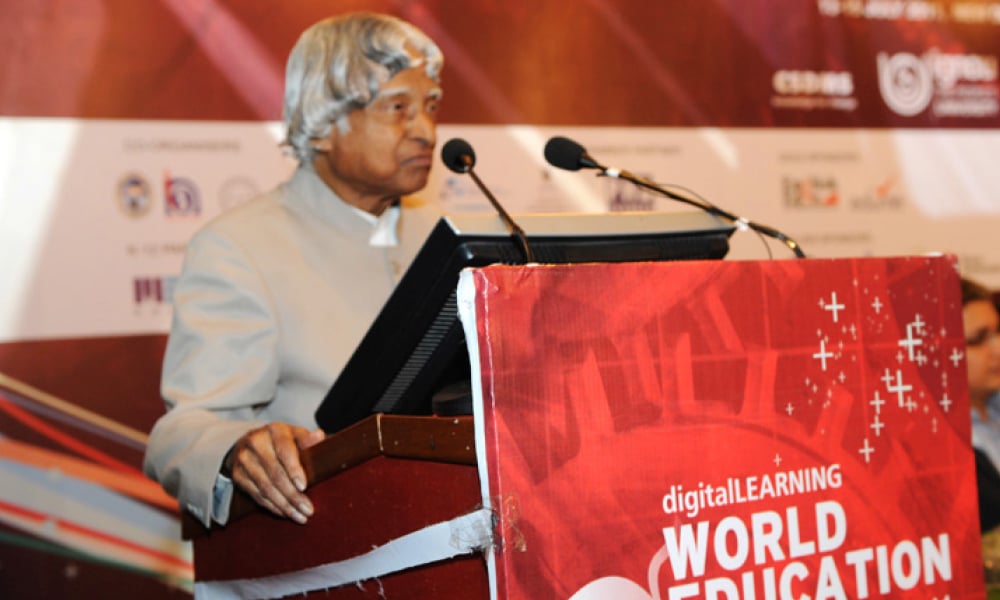
Dr Abdulla Al Karam
The past editions of the Summit, held majorly in New Delhi and Dubai, have visualised emergence of an interesting range of possibilities on how technology is most likely to have its impact on the future academic offerings, spurred by innovative faculty research, student engagement and the pursuit of academic collaboration.
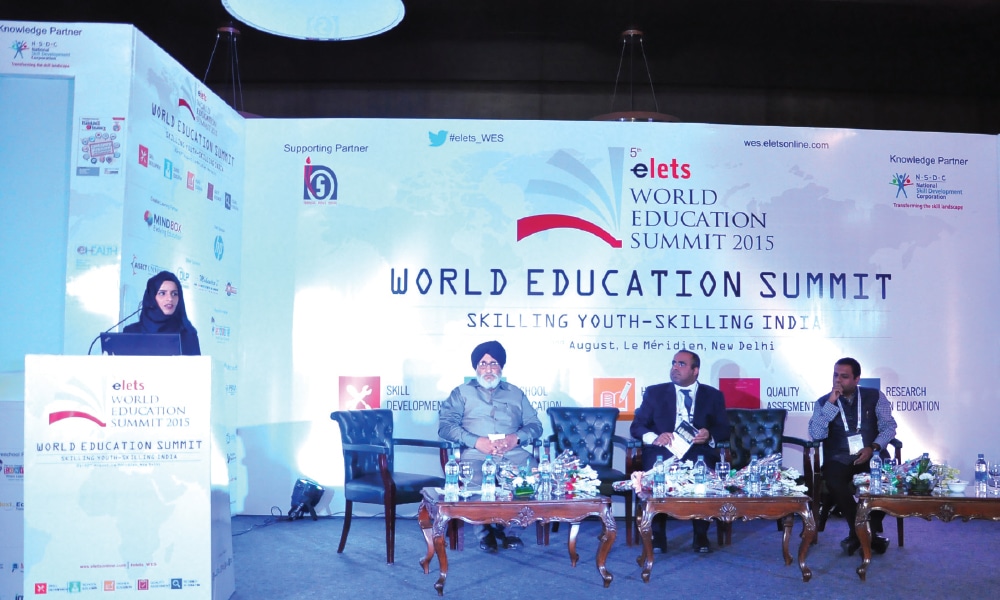
The two-day 7th edition of the World Education Summit (WES) 2016, at New Delhi on 5th and 6th of August, will therefore introduce a platform for knowledge sharing amongst the thought leaders, educational experts and industry leaders to discuss and deliberate upon various aspects of education to create an holistic knowledge-based society.
Besides, an exhibition running parallel to the Summit is set to attract more than 1,000 companies, government bodies and educational institutions touching upon topics like current trends in School Education, Higher Education, Vocational Education & Skill Development and ICT initiatives for education in the country.
An exhibition running parallel to the Summit is set to attract over 1,000 companies, government bodies and educational institutions touching upon topics like current trends in School Education, Higher Education, Vocational Education & Skill Development and ICT initiatives for education in the country
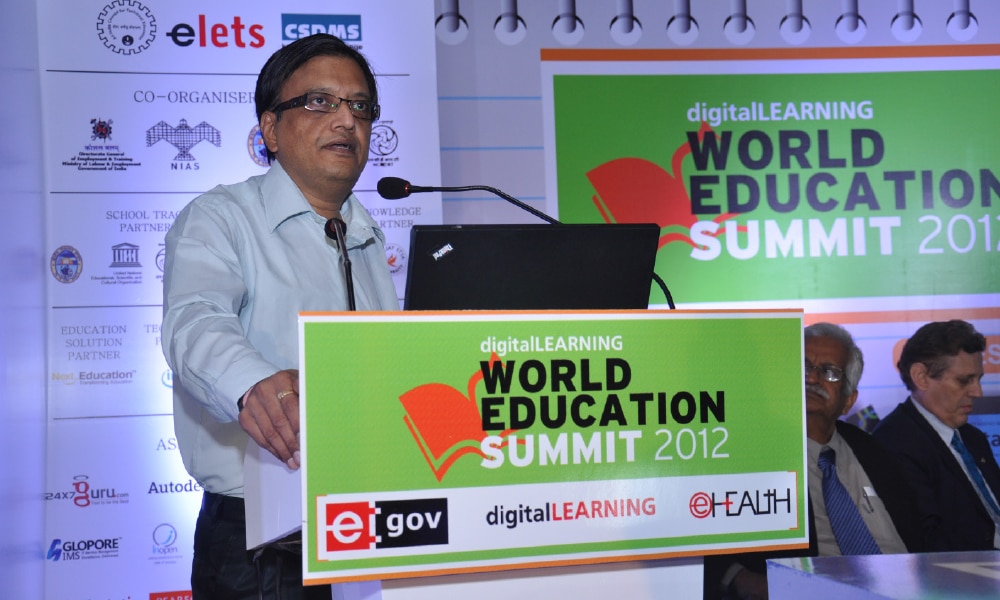
Prof S S Mantha
The exhibition will also push to limelight how the education sector is offering opportunities for Edupreneurs – global or national – to showcase their education technologies, new ideas & innovation and best teaching-learning practices. Not to mention, the WES is the only opportunity to meet 500+ global education leaders and connoisseurs from around the world to face to face, share best practices and discover the technology to fuel the vision of enriching the future of education.
Amid the august presence of ministers and key policy-makers from all over the globe sharing their vision on Education for All, the Summit aims to create a unique platform of thought exchange. To top it all, it intends to build a strong community around it and offer scope for various business and networking opportunities for education industry professionals and experts.
The dynamics of education sector is evolving and changing rapidly world over and WES 2016 is undeniably one of the best platforms for stakeholders to come together to deliberate, discuss and explore the horizon further.
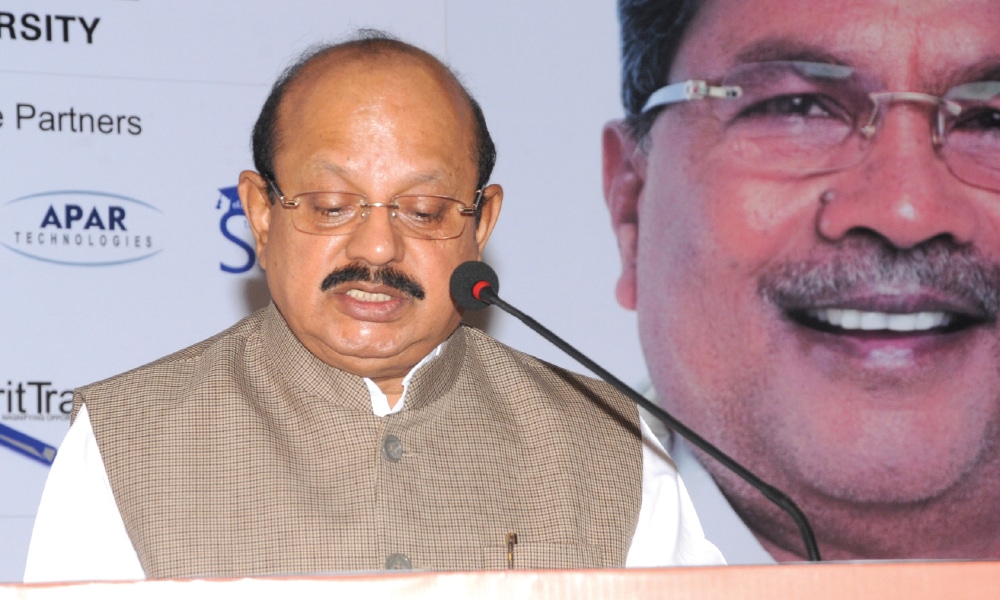
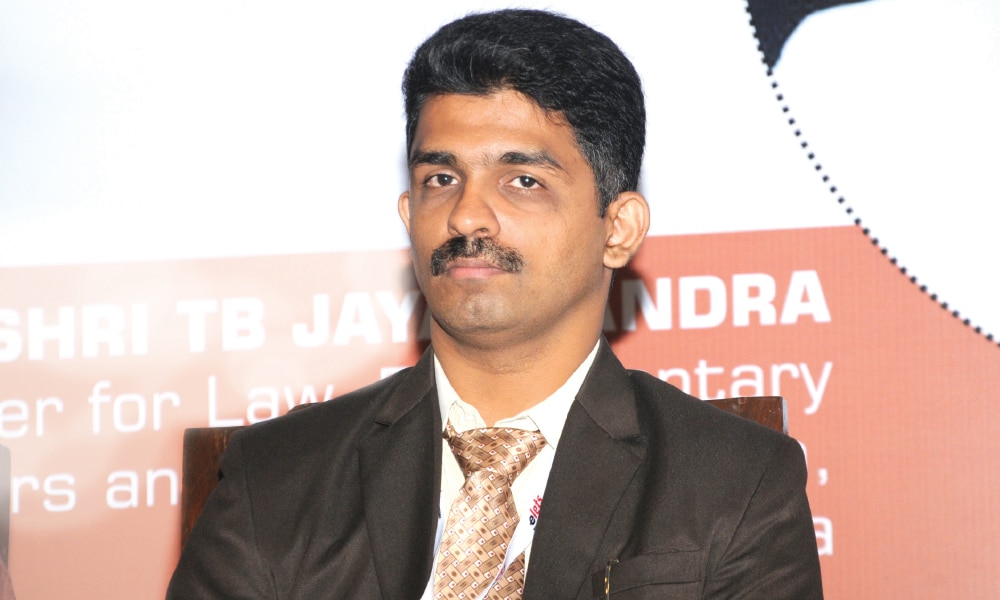
Shri TB Jayachandra, Hon’ble Minister for Law, Parliamentary
Affairs and Higher Education, Government of Karnataka
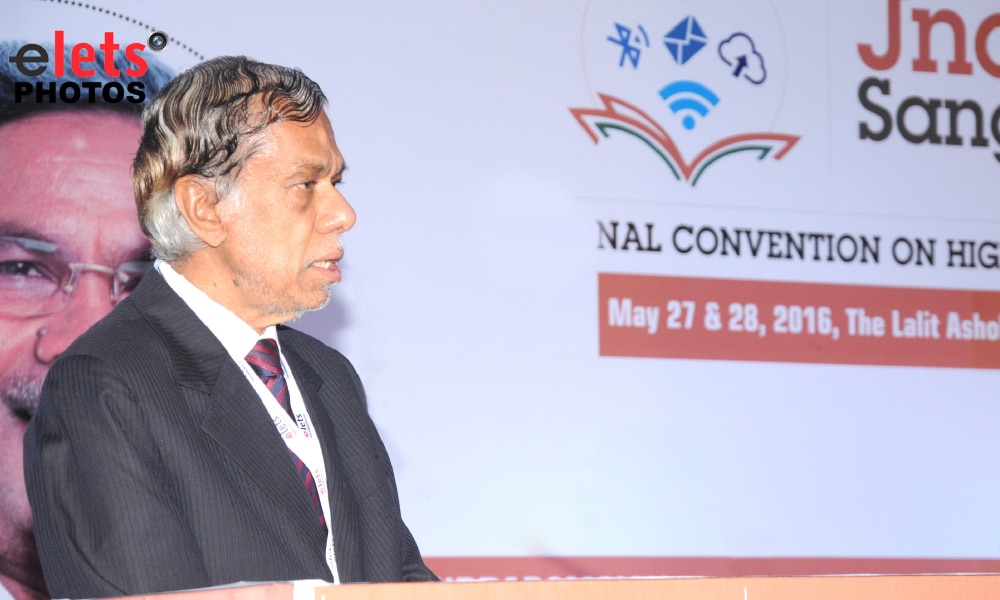
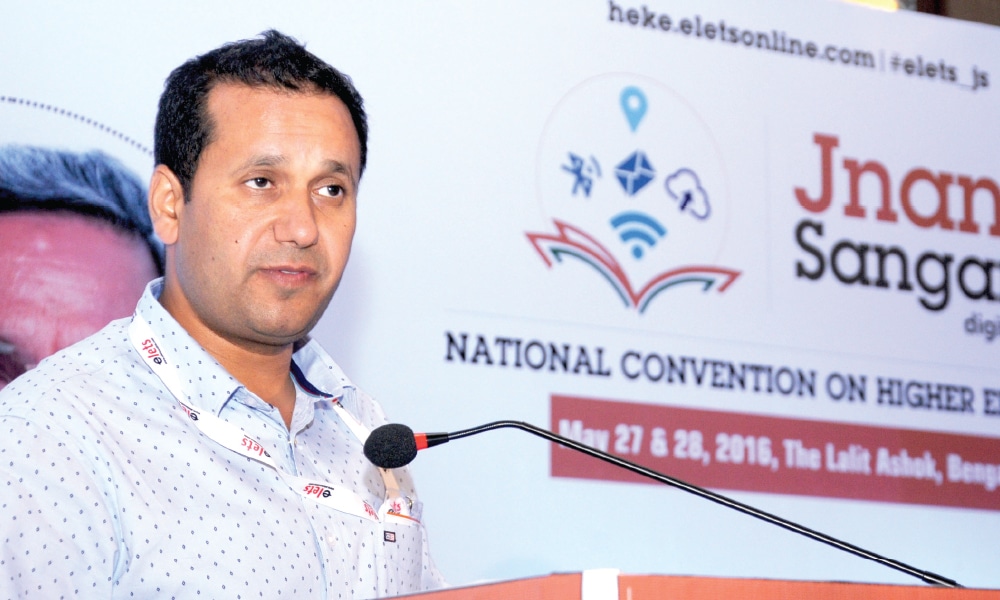
Jnana Sangama, a two-day conference, which was held in Bangalore on May 27-28, 2016, highlighted the idea of bringing large-scale reforms for facilitating quality education and good content delivery using the power of ICT.
Organised jointly by the Department of Higher Education, Government of Karnataka, and Elets Technomedia, the event focused on Karnataka as a prime destination for Higher Education in India by promoting the state’s model of Best ICT Practices in Higher Education.
TB Jayachandra, Minister for Law, Parliamentary Affairs and Higher Education, Government of Karnataka, inaugurated the two-day conference while Bharat Lal Meena, Additional Chief Secretary, Department of Higher Education, Government of Karnataka, and SV Ranganath, former Chief Secretary and Vice-Chairman, Karnataka State Higher Education Council addressed the inaugural session. The participants of the event included vice chancellors of universities, experts in the education domain and secretaries of Department of Education.
Addressing the gathering, TB Jayachandra, said: “Our vision for Karnataka is to continue to empower students by imparting quality education, enabling skill development opportunities, and facilitating needful resources equally for one and all.”
Kadiyam Srihari, Deputy Chief Minister and Minister for Education, Government of Telangana, who was the Chief Guest at the conference, observed that higher education in the country was moving towards “transformative change” with the proposed “new education policy” by the Central Government. According to him, ICT was being treated as a modern tool to enhance the quality of education, which can make significant contribution towards improving teaching and learning at all stages of higher education.
Education Disparity
Shri Kadiyam Srihari, Hon’ble Deputy Chief Minister and Minister for Education, Government of Telangana
We are mobilising our resources and this year (2016-17) we have presented a budget of Rs.1,15,000 crore and are spending nearly Rs. 18000 crores on total education
Observes, the sub-standard quality of classroom education conttributing in the overall degradation inviting serious issues in higher education like low enrollment ratio, and gender gap.
Quality Education
Shri TB Jayachandra, Hon’ble Minister for Law, Parliamentary Affairs and Higher Education, Government of Karnataka
The higher education strength of India in terms of students is third largest in the world next only to China and the United States. Unlike China, India has the advantage of English as a primary language of higher education and research
Stresses on the availability of manpower as the backbone for the development of the state of Karnataka and suggests the institutions of higher education to provide education in such a way that they become competitive.
Revised Curriculum
Shri SV Ranganath, Vice Chairman, Karnataka State Higher Education Council
Possible changes can be made in curriculum ensuring that more autonomy is granted. Vice Chancellors need not be just people of competence but also people of charisma, character, commitment and compassion
Believes that the higher education sector in India is facing various challenges and it is the need for promoting excellence while seeking expansion of the higher education sector.
Lacking Infrastructure
Shri Bharat Lal Meena, IAS, Addl Chief Secretary, Department of Higher Education, Government of Karnataka
Our vision is to integrate all institutes in Karnataka in terms of facilities to students. If a student is studying in ‘X’ institute then he should have the best of facilities in institute ‘Y’
Feels a dire need to upgrade the processes of imparting education and ICT is the only way forward. Support from National Informatics Centre (NIC), will prepare for a vision and convert it into programme for execution.
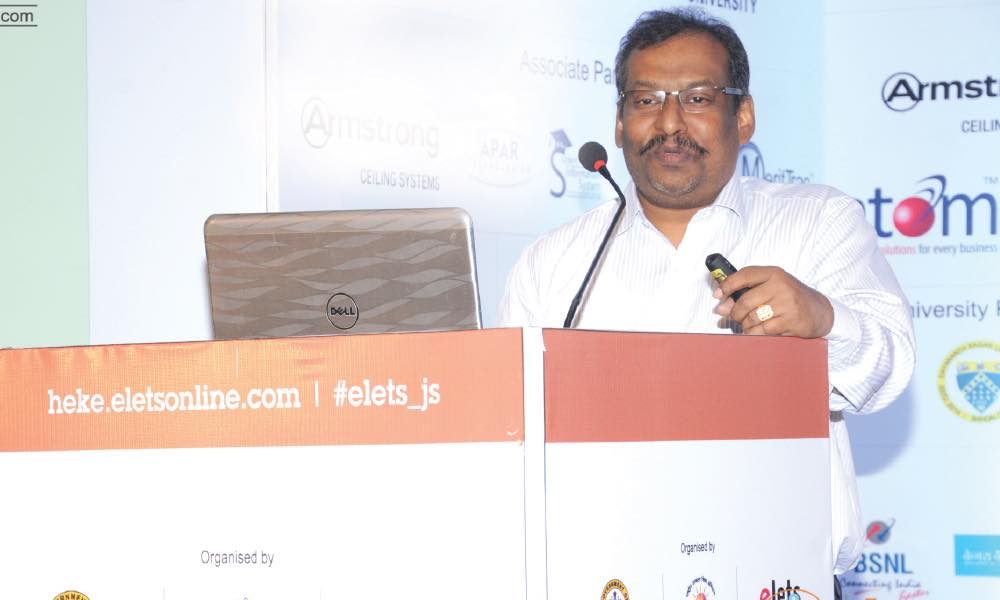
End-to-End Solution
Prasanth Balakrishnan, Project Manager, Orion India systems Pvt Ltd
We have made the entire system digitised which promotes transparency on the part of both the college and the university although through our system much of the hassles of day to day functioning are done away with
Talks about his latest innovative product CAREEVS ( Campus Affiliation Registration Examination Enquiry Verification System) that intends to provide complete end to end solution for any university or board.
Interactive Platform
Sundar, Founder & Director, Mobile Tutor
Mobile Tutor is a dynamic and interactive digital tutorial wherein we create animated content which will induce passion in the students
Tells the basic inspiration of Mobile Tutor is to make the student understand what they are learning and how Mobile Tutor is going to connect with all the stakeholders in one platform for the benefit of the students.
Broad Connectivity
Prof Ravindra Kumar, Vice Chancellor (I/c), IGNOU, New Delhi
IGNOU has the privilege of having four DTH (Direct To Home) telecast channels for round the clock teaching through DTH telecast which will make a major shift in the overall learning environment of the education atmosphere in the country.
Views a paradigm shift in the nature of students they are addressing and that the students can be rightly called digital natives and not digital immigrants.
DTH Education
P Nagaraju, Chief General Manager BSNL, Karnataka Telecom Circle
Through our advanced level training programmes we impart training to lecturers to improve their teaching abilities. 1 GB connectivity is supported to the universities and in Karnataka around 29 universities are already utilising the services
Informs that 20 colleges in Karnataka are using their broadband network and that 75 % of the cost is borne by MHRD.
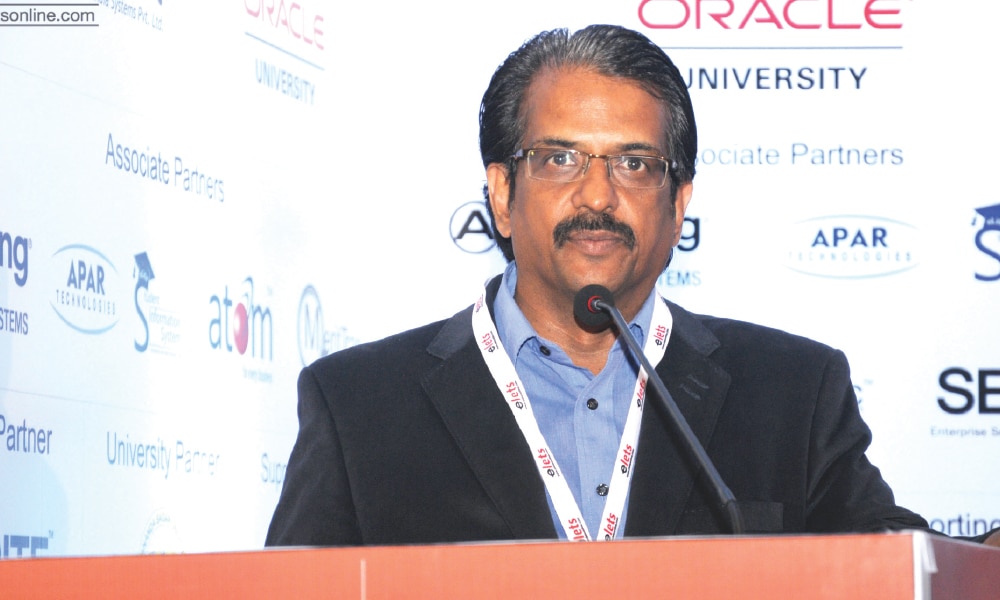
Future Workforce
Jose Koshy, Country Director, Oracle University, India
Our survey tells us that close to 90 % of the graduated students are not employable and hence companies induct students in their system, train them over a period of 6-9 months at a cost of 10-15 lakhs just to make them tenable
Believes in investing on time and building an ecosystem where people are ready to get into industry in a much faster pace.
With 700 universities and thousands of colleges we will need efficient leaders to drive these institutions to excellence. A good leader will always pull through the best out of an average team
Says that there is a big vacuum in the leadership space of educational institutions as there is dearth of well trained and experts educationists.
One challenge that the examination system is facing is that of impersonation. The image in the soft copy of the hall ticket can be removed by anyone and hence impersonation takes place
Informs about solutions they provide wherein the hassles of logistics can be overthrown and the question paper can be printed right at the venue of the exam an hour before the exam starts
Online Classroom
T Vijay Kumar, IAS, Joint Secretary, Department of Education, Government of Telangana
The idea of online classroom attendance is great but unfortunately most schools in our country do not have that facility
Says that at the university level the poll data of period wise attendance of all the affiliated colleges can be easily acquired through the GPS System
Education Transformation
Prof CA Sreenivas Murthy, Director, Central Agricultural University, Manipur
We should create a situation where the interest of the students generates automatically and the teachers should have the enthusiasm to teach them and educate them
Stresses that education is informal where the student learn certain things without the patronage of the teacher like Ekalavya from the Mahabharata
Technology Empowerment
Chakravarthi Mohan, IAS, Commissioner, Department of Collegiate Education, Government of Karnataka
To what extent we have to adopt technology is a question we have to ask. We don’t know whether this technology is better than the old one
Remarks that the industry expects certain skill set from the candidate but unfortunately lack of internet facility poses big challenge for students in Karnataka
Faculty Supplies
Dr J Mahender Reddy, Vice Chancellor, ICFAI Foundation for Higher Education, Hyderabad
The purpose of sending students abroad is to get enriched as there is no dearth of faculty supplies in American Universities or any Western Universities
Asserts that technology now has become the indispensable factor in education, irrespective of the level of education
Productive Workforce
Prof S Ramachandran, Vice Chancellor, Hindustan University, Chennai
Our desired outcome from learning is to be able to get a skilled, job ready and a productive workforce by imparting technical and soft skill training
Suggests the courses should be synchronised with the market requirement and should be a combination of the theory with the practical
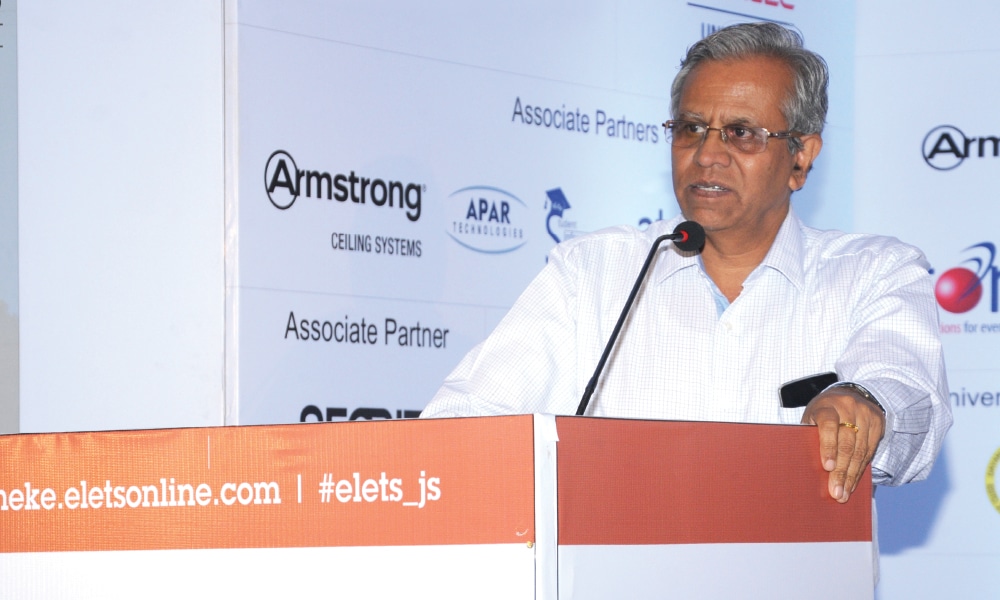
Class Education
Naresh Duble, Head, Education & Healthcare Business, Armstrong World Industries India Pvt Ltd
It is not enough to have good teachers, good buildings and a group of good students if they cannot interact with each other. A student must understand what the teacher is saying, assimilate it and reproduce in the exams
Informs that the government of India has just brought in the new draft of National Building Code which mentions 0.75 seconds as code for educational buildings
Research Scholars
Dr Sivaji Chakravorti, Director, National Institute of Technology, Calicut
I think when we talk of undergraduate courses we should go for breadth and when we are talking about postgraduate courses or research then we should have depth in knowledge
Remarks about quality that varies with different strata of society and expecting the same quality at centres of excellence is not a good idea
Value Education
Dr AH Rajasab, Vice Chancellor, Tumkur University
We do not teach value education to our science students, such as language and literacy education, social responsibility, ethical behaviour, national pride. Unless we integrate these there cannot be good citizens
Remarks our graduates to be industry ready, and they should go to the universities for more knowledge as universities are knowledge providers
Lacking Infrastructure
Prof ANN Murthy, Vice-Chancellor, DayanandSagar University
I look at three aspects in any university, one is the teaching and learning process, the second is research and innovation and the third one is entrepreneurship
Says Higher education has also socio economic responsibility in the context of where it exists and thus we should think globally and act locally
Assessment Tools
Prof BC Prabhakar, Director IQAC, Bangalore University
Implementing of unique assessment tools for affiliation of colleges is a challenging task for universities because there are many complaints in the ways colleges are affiliated
Informs about students of affiliated colleges having access to e-books and e-journals equipped with portable cameras that can read scripts for the blind
Funds Inadequacy
Dr MK Abdul Khader, Vice Chancellor, Kannur University, Kerala
We have seen that more than 86 percent of students who goes to the US for higher studies do not return to their home country. This brain drain has to be reversed for a brain gain for our homeland
Thinks the public private partnership can act as a catalyst in order to boom higher education
Teaching Challenge
A Sevukamoorthy, Director, Mahendra Institute of Technology
After studying for four years the student does not know where to go and thus the stakeholders have to sit down together for a 360 degree change in the higher education scenario
Says everything is available on whatsapp and hence a teacher has to really work overnight for tomorrow’s classes, else the students will not be impressed
Socio-political Development
Dr Ganapatigouda B Patil, Registrar (Evaluation) Karnataka State Law University
A serious challenge facing the higher education is the absence of synchronisation of policies between the UGC and other bodies and the respective state governments
Remarks that the students are giving more emphasis to individualistic attitude, material comfort and are not bothered about the society
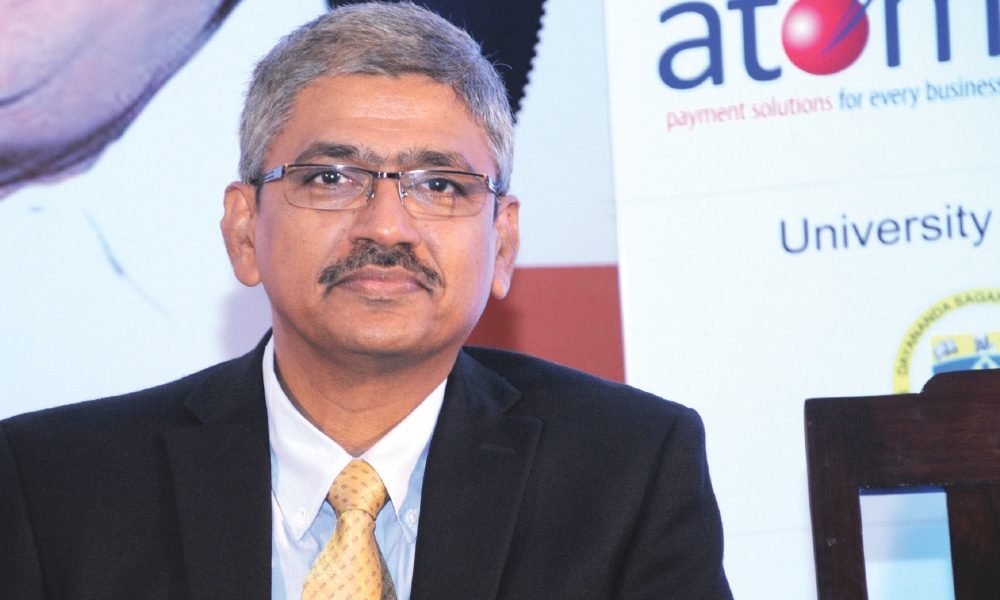
Online Payments
Dewang Neralla, CEO, Atom Technologies Ltd
By using our online payment system the institutions, the students and the parents at tier II and III cities have benefitted in a big way
Says that they have installed point of sale terminals wherein parents can go and make payments which is both cost and time effective
Knowledge Impartation
Pranjali Khare, SIS Specialist, Apar Technologies Ltd
The knowledge impartation should be in such a way that it should impact the lives of the students so that they can give something back to the society
Believes that lack of communication between the administration and the students can hamper the reputation of the college
Faculty Evaluation
Er Maroof Qadri, Director IT & SS, University of Kashmir
I think a transparent faculty evaluation is very important so that the faculty is also made responsible or accountable as to what he or she communicates
Tells about the development of their mobile app where results and other student related activities take place
Student Involvement
Dr P Balakrishna Shetty, Vice-Chancellor, Sri Siddhartha Academy of Higher Education, Tumkur
One of the best practices we should follow is involve the students in the process of impartation. The technique is called ‘Z to A’, which means answer first and discuss next
Thinks that universities should emphasise that their students become wiser rather than simply acquiring knowledge
Many universities are having shortage of funds and it takes a lot of time to extract the sanctioned money of the government, instead it is better for the university to raise their own finance
Feel that technological universities are facing the dual problem of qualified faculties and quality of education simultaneously
Performance Evaluation
B.B Kaliwal, Vice Chancellor, Davangere University
We have made it compulsory to pass the skill based papers which were not taken seriously by the students otherwise
Informs with the advanced technology in application the performance evaluation of faculties has become easy
Scholarship Programmes
Dr NH Siddalinga Swamy, Director ,e-Governance Cell, AICTE, New Delhi
In the recent past the state of Karnataka has taken a slew of measures in the higher education department with regards to implementation of ICT which has been appreciated by the Hon’ble Education Minister
Talks about enabling the students of Jammu and Kashmir through various scholarship programmes to study in other parts of the country
Learning Methods
Dr HR Venkatesh, Director, Academics, Acharya Bangalore B School
We follow 70:30 learning method, wherein 70 percent of the student’s learning has to come from off the classroom and the rest 30 percent has to come from inside
Teaching empowerement
Dr Jitendra Kumar Mishra, Director, MATS Institute of Management and Entrepreneurship
If the teachers impose themselves on the students then the students will learn only to pass the exam and will neither respect nor carry anything what the teacher teaches
Motivational aspects
Dr Y Vijayakumar, Principal, Sri Sairam College of Engineering
The students are looking up to their seniors rather than teachers for motivational aspects and we’ve roped in our alumnus to communicate with them in any manner possible via any media
Skill development
Dr Dinesh Anvekar, Principal, Alpha College of Engineering
The syllabus bound curriculum leaves very little room for exploring and experimenting with anything else
Student involvement
Dr Suresh Lal, Principal, Cambridge Institute of Technology
Student involvement in a number of internal and external projects of the college which keeps the student interested is essential
Tools & technologies
Dr SG Gopala Krishna, Principal, Nagarjuna College of Engineering and Technology
Our virtual lab is fully equipped and students have to go there compulsorily and our civil engineering students are directly put on site since we have ties with Nagarju
Eligibility Criteria
Dr TV Govindaraju, Principal Director, KS Institute of Technology
To increase the skill levels of the students, we try to segregate them on the basis of their eligibility and try to uplift and motivate the weaker ones
Benjamin Franklin once said that investment in knowledge pays the best interest. Nikita Bothra from Elets News Network (ENN) finds out that the Indian government has to do away with several policy maladies that the education sector embodies while simultaneously opening up a freer market to make room for private investments. Read on…
Anirudh Gupta CEO, DCM Group of Schools
The Education sector is one of the fastest developing sectors worldwide and the second largest industry in India. According to the India Ratings report, India boasts of an education sector market size of nearly $110 billion in 2015 inclusive of 1.4 million schools and over 36,000 higher education institutes. These numbers however don’t take into account India’s constantly growing demographic advantage. In order to accommodate the growing student class, there is clearly a need for opportune investments in this sector.
However, rather than capitalising on this advantage, the restrictive regulatory environment that exists in the Indian education sector has been forcing out the potential speculation of private players exploring and entering this sector.
Not-for-profit Policy Outcomes
The foremost cause that has restrained private entrepreneurs from investing in this sector is the not-for-profit policy. Furthermore, the policy mandates that 85 per cent of the profits earned are to be routed back into the sector. While, the very concept of entrepreneurship is to make money; questioning this philosophy will only likely keep investments away. Ironically, the not-for-profit rule has also been promoting immoral activities; as education institutes enjoy tax benefits that makes it easier to hoard money. In fact developed countries such as the US and the UK have commercialised their education sector, thereby enabling multiple educational institutes to sprout up and cater to the needs of a growing demand. In this regard, Dr. Chandrashekar D P -CEO, JGI Schools (The JGI Group) says, “In my view, it is a good thing that education is bracketed under the not-for profit sector. India as a country is a different demography than many developing nations. The scale and the scope of education is so vast in our context and hence access to education is the primary step. This step can be accomplished by maintaining the focus on education as a national development issue rather than an economic issue.” On the other hand, Vinesh Menon- Dy Chief Executive Officer, Global Discovery Schools believes that “in an era where the education environment is changing by the minute and is evolving to suit next gen children, the emphasis has to move to service and delivery to prepare children for the globalised world”.
He further said “that it can be possible only if the product undergoes constant upgrades and is tuned to cater to child’s needs and all this will call for a model that allows profitability to motivate the entrepreneur to eat, breathe & think about a child’s future and parents’ needs”.
Regulatory Challenges in Educational Institutions
Lina Ashar Founder, Kangaroo Kids Preschool & Billabong High International School
India’s education policy has several impediments. There are layers of regulatory bodies mandating overlapping rules and regulations. As education is a subject on the concurrent list, policies at both the national and state level also don’t correspond with each other. For example, to set up a private state university, it first needs to be legislated by the state government. Educationalists across India have suggested that the government should work towards coming up with uniform and simple policies that can be comprehended by all. It is in this context that a suggestion was made that a national higher education regulatory board be set up. Lina Ashar- Founder, Kangaroo Kids Preschool & Billabong High International School remarks, “The need of a single window clearance is the solution. The RTE (Right to Education) is the main challenge in its current form as the implementation hurdles have not been well thought through.”
On the same grounds, Chandrashekhar says, “Challenges vary for different segments in the educational enterprise. For schools, primarily it is clarity in implementation of RTE pan India, fee standardisation policies which are off-balanced and lack of a decentralised approach from the education departments.”
The process of setting up an institution is severely unbalanced. An institution cannot come into existence unless affiliated to an existing government university. This approval procedure requires over 30 different documents to be submitted to multiple departments at the state level. This sector also demands large land and capital requirements, which cannot be afforded by all. Land requirements vary between 3-5 acres from urban to rural areas. Additionally, the not-for-profit policy adds to the burden of all these financial outflows in the initial stages of setting up.
Chandrasekhar DP CEO, The Jain Groups of Institutions
Menon in this regard says that the “government schools seem to have an edge due to the perception that private schools have vested interests in starting a school. The inherent disconnect between the various Boards of Education would need to be ironed out so that we don’t have differences in methodologies of teaching”. Further, he adds, “A better mechanism may need to be put up to assess the objective and purpose of setting up a private school than to paint everyone with the same brush of wanting to start a school for personal gains.”
It is imperative that the state governments adopt a single window system to provide approvals and licenses to set up colleges in our country. Countries such as New Zealand and Singapore have topped the index in this context, as the entire approval process takes only 0.5 days in these countries and all the documents are submitted to a single government department.
The Need for Policy Modifications
Modifications in the policy desk could include
Clarity of regulations
The inherent disconnect between the various Boards of Education would need to be ironed out so that there aren’t differences in methodologies of teaching
Constant updation of regulations and meetings of school management to discuss the same twice a year
Teacher Training Institutions to make teaching a glorified career option rather than a default option
School Rating agencies monitored by an independent regulator and Controlled transition from nonprofit to for-profit with multiple checks and balances to ensure nobility of the objective in imparting k 12 education
Prajodh Rajan Co-Founder, EuroKids International Limited
On this note, Anirudh Gupta CEO, DCM Group of Schools says, “ The Schools should be given breathing space so that they can actually delve on the purpose for which they have been set up. The rules and regulations governing them should be simple and transparent to cut through the red tape and also the process of recognition and affiliation should be time bound.” Moreover, “The departments should not react on anonymous complaints and representations which at times are meant to garner publicity rather than intending something meaningful for the society. The Schools should be allowed to charge fees as per their facilities and requirements. The regulatory mechanism should not be such that the schools become a soft target in case they deny admission or do not toe the line of any individual/organization/party. In case, the salaries have to be hiked during mid-term, the commensurate fee hike should be allowed to balance the added burden,” he adds.
Most of our regulations are centered around infrastructure, number of teaching staff and other inputs rather than the focus on output, i.e what the child is learning at school, there has to be a consistency in the input for all schools whether government or private and all of them must be evaluated by measuring the output- which is the learning output.
Vinesh Menon Dy. Chief Executive Officer Global Discovery Academy
Agrees, Prajodh Rajan-Co-Founder, EuroKids International Limited when he says, “Most people will agree that education in India is over-regulated and under-governed. We need better mechanisms, greater transparency for ease of operations. While the government thinks of its role as a provider what the sector needs is an enabler and the government of the day can use ‘the ease of doing business’ agenda in this sector as well.”
Opening up the sector for pro-profit institutions would attract more domestic and foreign players to set up institutions in India
The Outlook
Alleviating barriers in this sector would help recover the sector’s growth rate and contribute to skilling India’s youth. Opening up the sector for pro-profit institutions would attract more domestic and foreign players to set up institutions in India. Reputed universities such as Yale University and Georgia Tech University are in talks to set up universities in our country. Clearly freeing up certain barriers would promote sectoral growth while further attracting other top colleges from around the globe. In addition, India, which has the world’s largest student population can directly benefit from such a move – from a restrictive to a more business friendly environment. Encouraging private players in this sector would also ultimately lead to stimulating employment and foster economic development of India.
Inspirited by the ‘Digital India’ initiative of Prime Minister Narendra Modi, India stands committed to promoting the spread of Information & Communication Technologies (ICT). The ICT is infusing various systems with new vitality, thus playing a crucial and benefi cial role in advancing the wellbeing of all sections of our society.
Education is one sector that has realised the benefi ts of technology, perhaps, ahead of several others. The adoption of ICT here has been fast, leading to delivery of stunning results even faster. It goes to the credit of educational institutions in India, which are adopting high-tech methods of teaching-learning at the global pace, so as to stay relevant in times of neck-and-neck competition.
At a time when the Government of India is going whole hog towards implementing the ambitious Digital India project in the country, the “World Education Summit – Delhi” Special Issue of DigitalLEARNING highlights the positive implications of technology that are very much relevant and timely in the present context of educational transformation the world is witness to. The convenience of online courses with the advent of new technologies has caught the attention of professionals and students across the nation, furthering the idea of technology-led learning. All this has led to entrepreneurs tapping into the Indian eduTech space.
This issue contains various sections, including the Cover Story on WES that aims to discuss, deliberate and set the future course of education in India.
Besides, well-researched articles on ICT initiatives in schools and higher educational institutions bring in opinionated viewpoints from thought leaders and educationists across the globe. Moreover, case studies, features and the comprehensive ‘Jnana Sangama Report’ are undoubtedly interesting reads.
The Education sector being one of the fastest developing sectors worldwide and the second-largest industry in India clearly invites opportunities of investments but, sadly though, it stands a victim of the restrictive regulatory environment that forces out the potential speculation of private players exploring and entering this sector. The business story in this issue carefully lays down consolidated perspectives of big private players in the segment, analysing the ‘whys’ and ‘hows’ of the policy syndrome.
In view of the paradigm shift taking place in the Indian educational sector, the need for its skillful management and faculties to adapt to the changes is imperative. This will provide the much-needed impetus to the undercurrents of technology fi nding their way into the education domain.
A total of 1,44,034 lakh students from the minority community have registered for basic computer training till June 30, 2016, under the Cyber Gram Yojana scheme in West Bengal, Tripura, and Rajasthan. These students will be undergoing training at their own educational institutions.
Of the registered students, 1,18,967 have completed their training in the three project States and 53,891 have appeared for the assessment, which is conducted through NIELET.
Cyber Gram Yojana is part of the Multi-Sectoral Development Programme (MsDP) under the Ministry of Minority Affairs, Government of India. CSC SPV has been engaged as the national implementing agency for the Scheme. The Scheme initially began in West Bengal and was later on scaled to Tripura (February 2015) and Rajasthan (September 2015) and is being implemented in a total of 24 districts in the three States.
Chandigarh August 9: In order to improve the learning outcomes of the students and to improve the administrative system in government schools of the State, the Haryana School Education Department will start a School Leadership Development Programme (SLDP) in association with Kaivalya Educational Foundation (KEF).
While stating this here today, a spokesman of School Education Department said that under this programme, District Education Officer, District Elementary Education Officer, Block Resource Coordinators, Principals, Teachers would be given leadership training.
He said that Haryana School Shiksha Pariyojna Parishad has signed a Memorandum of Understanding (MoU) with KEF for implementing School Leadership Development Programme in the State. The SLDP would focus on the development of leadership capabilities of Principals and skills of teachers to transform their schools into model schools and create environment for improving learning outcome of students.
The spokesman said that SLD Programme would be implemented for a period of five years from August 2016 to July 2021. In the first phase, 100 Government Schools of Gurgaon district would be covered under this programme. To assess the impact of the programme, a third party would conduct a base line and end line assessment of the children of the government schools of the State, he added.
MBD Group, the leading education company in India, has completed years of existence this year. The company is now planning to invest around 500 million in augmented reality and virtual reality space in the next three to five years. AR & VR market is expected to reach $35 billion by 2025. Also, the Group is planning to enter international markets of US, UK and China.
MBD, which has been diligently and relentlessly serving India’s education sector for six decades now, is foraying into virtual reality, targeting Kindergarten to Grade 12as well as vocational education. It will produce 3D educational AR and VR videos and simulations. This high quality interactive content will be compatible with the best VR devices like Samsung Gear, Oculus Rift etc. Packaged AR & VR based educational curriculum and content will help in keeping the students deeply engaged in the classroom, it will offer an immersive sense of place and time, whether historic or evolving. This will be a great way of learning, where the students can practically experience and bring their subjectsto life, which traditional education couldn’t offer.
Ms. Monica Malhotra Kandhari, Managing Director, MBD Group said, “I am really delighted to announce our group’s successful completion of 60 years, this year. We have had our ups and downs; highs however, by the grace of God and blessings of our Founder Father and our chairperson, have outnumbered the lows. It inspires me to set new milestones for the Group. I will make sure to retain the momentum and dynamism at MBD so that our Group scales remarkable heights in the years to come.”
“We plan to invest 50 crores towards our expansion and launch AR and VR educational content for students, which will be an extremely interesting way of learning things,” adding further.
MBD Group has transformed from a modest bookshop in Jalandhar into an Education company and provides 360 degree education solutions; be it a notebook or a pencil, be it an educational tablet or a latest educational app on app store. Today the Group works with nearly 70,000 schools worldwide and caters to 50 million learners with 34 branch offices across India. The Conglomerate is also offering its products and services to various other countries including international offices in South Africa and Sri Lanka. Moreover, several books of MBD have been praised for its very authentic content, beautiful colored production, easy to understand language and got approved by the CAPS and are part of the National Catalogue of RSA. The Group is also planning to invest and cater to other international educational markets of US, UK, and China.
Hospitality arm of MBD Group has clinched a deal with one of Europe’s leading hospitality company Steigenberger and is all set to launch its own hotel chain under MBD Steigenberger brand. – adding to this Ms. Sonica Malhotra, Joint Managing Director, MBD Group, said, ‘Driven by our Founder’s vision, we have been in the hospitality industry for over a decade and have successfully proven ourselves by exuberant excellence in the hospitality sector in Delhi and Punjab both on financial parameters and also overall guest experience. This joint venture would target to open at least 20 hotels in India over the next 15 years. Our first property under this joint venture will be the iconic MBD Zephyr—an MBD Steigenberger Hotel in Bangalore.
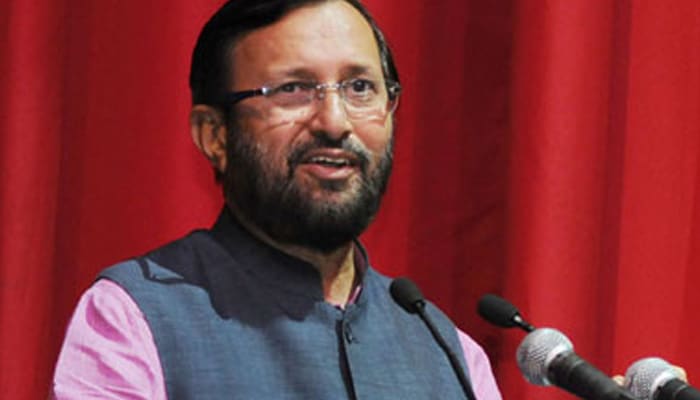
Union HRD Minister, Shri Prakash Javadekar inaugurated IIT Raipur in Chhattisgarh at the campus of Government Engineering College, Raipur. Inaugurating the IIT, Shri Javedkar said that the institute will have its own campus by the time first batch of students obtains degree. He said that to crack IIT entrance test is difficult task, hence all the students who got admissions in IIT deserve congratulations.
Appreciating the ‘Prayas Avasiya Vidhyalaya’ initiative of Chhattisgarh Government, led by Dr. Raman Prasad Singh, Union HRD Minister said that it is a successful and meaningful example of imparting quality education to all specially those who come from disadvantage sections of society. He said Prime Minister, Shri Narendra Modi has emphasized on quality education for all to ensure all round development of the country.
The Minister had interaction with students of Prayas Vidyalaya. He said that it is remarkable that the talented students of Naxal affected districts are being given free coaching in 11th and 12th standards for appearing in PMT, JEE and other competitive exams.
Union Human Resources Development Minister Mr. Prakash Javadekar today said the foundation of nation’s progress is based on sound education system. Mr. Narendra Modi’s Government is laying stress upon quality education. The main motto is quality education for all . Mr. Jawadekar was speaking at the inaugural function of Indian Institute of Technology (I.I.T.) Bhilai, at Shejbahar-based Government Engineering College premises.
Chief Minister Dr. Raman Singh and Union Minister Mr. Prakash Javadekar jointly lit the lamp and inaugurated the function. This is the first I.I.T. in Chhattisgarh and 23rd in the entire country. The classes will be held at the Shejbahar-based Government Engineering College till the Bhilai campus building is completed. Computer Science and Engineering, Electrical Engineering and Mechanical Engineering classes will commence at the outset. Mr. Jawadekar announced that Mining Engineering course also will be launched from the academic year 2018-2019. He appreciated the efforts of Dr. Raman Singh in expanding the scope of Technical education in the entire state. Centre is extending all possible help to the State in this regard. Dr. Raman Singh said that Bhilai I.I.T. will build the future generations. The main focus is to improve the quality of primary education in the State. All higher education institutes have been opened since the inception of Chhattisgarh 16 years ago. Only I.I.T. was missing and that dream is also fulfilled. Dr. Raman Singh expressed his gratitude to Prime Minister Mr. Narendra Modi and Mr. Jawadekar. The platform had been laid for rapid development of State in the near future.
Mr. Jawadekar congratulated the freshers on entering the campus of I.I.T. They have passed through one of the toughest examinations in the country and entered the portals of higher learning. He expressed the hope that the students will not only bring laurels to Chhattisgarh but to the entire country. He stressed upon the need for research and innovation in the field. Indian youth contributed a lot in the development of Google, Facebook , Twitter, window and WhatsApp. They may not have invented the social media. The Union Minister added that Central Government had allocated Rs 20 thousand crore for research and innovation. I.I.Ts are based on research and innovation. The students can take to Startups on the campus itself.
Dr. Raman Singh said that the record of the 16-year rule of the Government is praiseworthy and great. There is cent per cent success in the field of education. Chhattisgarh is ready to take a giant leap in the field of higher education. The State is an Island of Peace except for few pockets of Naxalites’ violence. The natural beauty and forests will entice anyone. The State is way ahead in fiscal management, mining resources and Gross Domestic Production. The State is expanding roads’ network and electricity production with the co-operation of the Central Government. Roads are being laid with an investment of Rs 42 thousand crore. Mr. Jawadekar played an important role in the early clearance of these projects. Students from various parts of the country have joined the local I.I.T. Dr. Raman Singh praised the role of Mr. Jawadekar in making efforts to improve the quality of higher education.
State Technical Education Minister Mr. Premprakash Pande said that I.I.T. was planned in the year 2007 and the dream materialized today. Chhattisgarh had produced 68 thousand engineers till date but today is the Golden Day in the annals of Chhattisgarh History. Bhilai is an Education Hub of the State. The inauguration of I.I.T. will prove to be a milestone. Food Minister Mr. Punnula Mohale, MP Mr. Ramesh Bais, Rajya Sabha MPs Dr. Bhushanlal Jangde, Mr. Ramvichar Netam, Mr. Ranvijay Judeo were also present. Chief Secretary Mr. Vivek Dhand was also present. Union Human Resources Ministry Additional Secretary Mr. R. Subrahmanyam welcomed the gathering. Bhilai I.I.T. Director Mr. U. B. Desai proposed a vote of thanks. Hyderabad I.I.T. Chief of Governing Board Mr. B.B.R. Mohan Reddy, State Government Technical Education Secretary Mrs. Renu Pillai and a lot of senior officers were also present.
There are 118 students (105 boys 13 girls) in the current academic year at Bhilai. I.I.T. is being mentored by Hyderabad I.I.T.
Governor and Chancellor Keshari Nath Tripathi has set up a vice-chancellor search committee for recommending a panel of candidates for selection to the VC’s post of Kalyani University. The committee consists of Sornnath Ghosh, vice-chancellor of University of North Bengal who is the nominee of the Chancellor. Ghosh is also the chairperson of the committee. The other two members of the committee are Shyamal Roy, vice-chancellor of Cooch Behar Panchanan Barma University. Roy is the nominee of the state government. Subha Sankar Sarkar, the vice-chancellor of Netaji Subhas Open University is the nominee of the Court of Kalyani University. “The Governor has also decided that secretarial assistance to the committee will be provided by the Kalyani University and related expenditure for this purpose ( Iike travelling allowances, office expenses etc.) will also be borne by the University.
The registrar of Kalyani University, will immediately contact the members of the search committee to set in motion the Search process,” said a senior state secretariat official. Malayendu Saha, a teacher of the commerce department in Calcutta University was appointed as the interim vice-chancellor of Kalyani University in December last year for six months or till a permanent VC was appointed, whichever is earlier. Saha was also the vice-chairman of West Bengal Higher Education Council. He had succeeded Rattan Lal Hangloo, the full tenure VC of Kalyani University who had quit the post and submitted his resignation following a series of spat with the state government as well as a section of the university employees. Hangloo went on to become the VC of Allahabad University – a central government institution.
Talentedge, India’s leading digital Ed-Tech firm, has launched a ground-breaking partnership with the Jack Welch Management Institute (JWMI), one of the fastest-growing online educational institutions in the United States, to offer a game-changing Executive Certificate Programme in Leadership and Strategic Management to working professionals in India for the first time.
Through this collaboration, Talentedge and JWMI aim to provide participants an opportunity to be a part of a unique experiential leadership programme, where they will learn essential business concepts that they can apply immediately to real-world situations in the workplace. Recently rated the number one most influential education brand on Linkedin and one of the top business schools to watch in 2016, JWMI is the only programme in the world led by celebrated CEO Jack Welch, one of the most successful and admired leaders of all time.
Welch has been a huge supporter of India for three decades. He is widely credited with the interest so many Western countries showed in India during this period. Welch said he came to India to find low cost, but what he found was great intellect:
“I have been in love with the Indian people, their warmth, ingenuity, and great intelligence for over 25 years and look forward to working with them on what I believe are some of the most proven successful management techniques in the business world,” he said.
Welch is known for his unmatched business results, transforming GE into the world’s top-performing organization and increasing the company’s market capitalization 30-fold, by more than $400 billion. He has always been defined by his strong interest in leadership development, teaching managers and executives at GE’s Leadership Development Center and, after retiring, MBA students at Massachusetts Institute of Technology (MIT).
The Executive Certificate Programme in Leadership and Strategic Management sharpens the leadership ability of mid-management professionals, enhancing their career prospects and ability to drive results in their organizations. The program content and structure is designed entirely by JWMI faculty and thought leaders, under the guidance of Welch himself. Participants in the Executive Certificate also have direct access to Welch via web conference, a once-in-a-lifetime experience that organizations across the globe hold in very high esteem.
“Conceiving an innovative idea, charting out a strategy and leading a whole team to convert the idea into reality requires an extensive skillset,” said Aditya Malik, CEO and MD of Talentedge, about the collaboration. “That is exactly why Talentedge has decided to join hands with JWMI, one of the best institutes in the field of management. We hope that this partnership will help mid-career managers, entrepreneurs and young executives learn the nuances of leadership and strategy through meaningful interactions with some of the most eminent academics and industry leaders in business.”
In the program, students attend live, interactive sessions that are designed to offer a real classroom experience in a virtual environment. Participants are given access to the Cloud Campus, which includes an assorted database of learning aids, reference materials, assessments, case studies and assignments that enhance their learning process.





 Global researches have shown that Information and Communication Technologies (ICT) can lead to improved student learning and better teaching methods. A report prepared by the National Institute of Multimedia Education in Japan has proved that an increase in student exposure to educational ICT through curriculum integration has a significant and positive impact on student achievement, especially in terms of knowledge, comprehension, practical and presentation skills in subject areas such as mathematics, science and social study. Ever pondered why do we need ICT in schools? Was education not happening before computers came into existence? Why is this paradigm shift necessary? Well, the shift is necessary because this is the age of information and technology —an age that requires that teachers facilitate aggregation of such information by students and not merely give them the bookish knowledge.