



We are living in the most advanced era of human history and yet, paradoxically, one of the most fragile. Across the globe, classrooms are smarter, campuses are more digital, and students are more connected than ever before. Artificial Intelligence, data analytics, virtual learning environments, and automation are redefining what and how we teach. Skills that once took decades to master are now available at the click of a button.
And yet, amid this remarkable progress, a silent crisis is unfolding.
The global education landscape today stands at a crossroads. The question before us is not whether technology should shape education; it already does. The real question is: What kind of human beings are we shaping through education?

The Missing Pillar in Global Education
Over the last two decades, education systems worldwide have focused, rightly so, on employability, innovation, and competitiveness. Curricula have been redesigned to meet industry demands. Institutions are measured by rankings, placements, and global visibility.
But somewhere along this journey, we have quietly deprioritised something fundamental: character building.
Values such as integrity, empathy, resilience, responsibility, humility, and ethical courage are no longer central learning outcomes. They are assumed to develop “along the way.” In reality, they often don’t.
A world driven purely by skills without values may be productive, but it will never be peaceful.
A generation empowered by technology without ethics may be efficient, but not humane.
Education was never meant to be only about earning a livelihood. It was meant to shape lives, leaders, and societies.
Children of the Digital Age, Victims of Digital Hijack
Today’s students are growing up in a world of constant stimulation.
Notifications replace conversations.
Screens replace silence.
Algorithms replace reflection.
From an early age, children are surrounded by technology but deprived of personal handholding. While access to information has increased exponentially, access to mentorship has reduced dramatically.
Globally, educators are observing rising anxiety, declining attention spans, emotional isolation, and a lack of purpose among students. These are not academic issues; they are human issues.
Technology itself is not the enemy. The real danger lies in education systems that adopt technology without embedding human values alongside it.
Mentorship: The Most Underrated Global Intervention
Across civilisations and centuries, progress has never been accidental; it has always been guided.
From ancient gurukuls to modern universities, mentorship has been the silent architect of character, confidence, and conscience. Yet today, it is often diluted into career advice or reduced to motivational sessions.
True mentorship goes far beyond instruction.
It is human handholding in moments of doubt.
It is moral clarity when choices blur.
It is an unwavering belief when a student begins to question their own worth.
In an age driven by technology, mentorship is not a luxury; it is a necessity.
No algorithm can replicate a mentor’s intuition.
No artificial intelligence can replace human empathy.
No digital platform can independently instil values, purpose, or integrity.
If we aspire to nurture leaders who are ethical, inclusive, and socially responsible, mentorship must move from the margins to the core of global education frameworks, not as an add-on, but as a foundation.
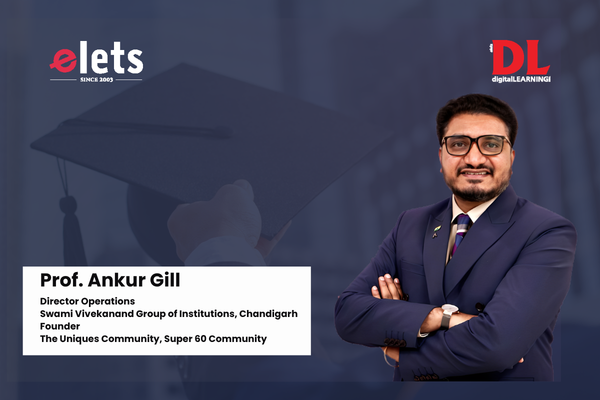
For me, this belief is not merely theoretical; it has been lived and practised for over 11 years. Guided by the conviction that every student carries a powerful potential story, I have worked to transform that potential into purpose and success. Through initiatives such as The Unique Community and Super 60 Community, our focus has remained on personalised mentorship, character formation, and purpose-driven growth. Today, more than 1,000 student success stories stand as testimony, many emerging from underprivileged backgrounds and now confidently shining on global platforms. Their journeys affirm a timeless truth: when education is rooted in empathy, guidance, and belief, transformation is inevitable.
From Placement-Centric to Purpose-Centric Education
Across the world, success is increasingly defined by salaries, titles, and speed. While economic stability is important, it cannot be the sole measure of educational success.
A well-placed graduate without values can harm society.
A skilled professional without empathy can exploit systems.
A powerful leader without character can destabilise nations.
Education must move beyond placement-centric outcomes to purpose-centric impact.
Institutions should ask
- Are we creating responsible citizens or just skilled workers?
- Are our students learning how to compete or how to contribute?
- Are we preparing them for jobs or for life?
When education integrates values, service, and social responsibility, students don’t just succeed; they uplift others along the way.
Also Read: Building Leaders, Not Just Achievers
The Global Responsibility of Educators and Institutions
The responsibility of shaping this future does not lie with students alone.
It lies with
- Educators who must model integrity, not just teach content
- Institutions that must prioritise culture over convenience
- Policymakers who must balance innovation with inclusion
- Industry leaders who must value ethics alongside efficiency
Education leaders across the globe must consciously design ecosystems where technology amplifies humanity, not replaces it.
This means
- Embedding value-based learning into curricula
- Creating structured mentorship programs
- Encouraging reflection, dialogue, and ethical decision-making
- Rewarding character as much as competence
The World We Create Through Education
Every classroom is a blueprint of the future.
The way we educate today will decide whether tomorrow’s world is compassionate or chaotic, inclusive or divided, ethical or exploitative.
If we want a world that is peaceful, innovative, and just, we must begin by nurturing students who are not only intelligent but also kind. Not only ambitious, but also grounded. Not only skilled, but also principled.
Reflections moving forward
As we embrace the future of global education, let us remember
Technology will shape what students can do.
But values will shape what they should do.
And only when skills walk hand in hand with character can education truly serve humanity.
Views expressed by : Prof. Ankur Gill, Director Operations, Swami Vivekanand Group of Institutions, Chandigarh, India; Founder, The Uniques Community, Super 60 Community