Home Blog Page 196

Dual-degree programmes to foster collaboration between Indian and Australian universities, says Goyal

New Delhi 

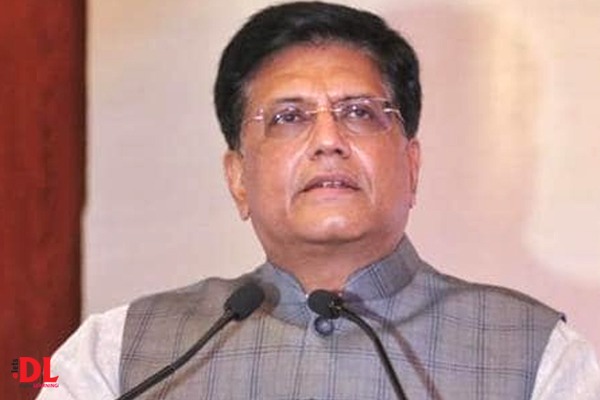
The Union Commerce and Industry Minister Piyush Goyal on Wednesday said that the “Dual Degree Programme”, under the trade agreement with Australia will help bring quality education to more and more Indians and enhance collaboration between universities of the two countries. Goyal, who is in Australia for a three-day visit, said that both sides are working on that.

“There will be mutual recognition of educational qualifications and at the same time we are also looking at degrees being given jointly, let’s say by IIT in India and a university in Australia or by a medical college in India and a medical college in Australia,” the minister said.

Under the dual degree programme between the countries, students would be allowed to study for two years in Australia and for two years in India, subject to certain norms that are under discussion.

Daughters Of families earning upto Rs 1.8 Lakh to get free education, announces Haryana Chief Minister

New Delhi

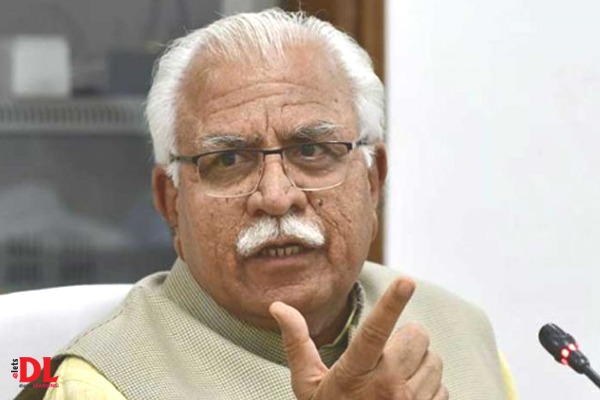
Haryana Chief Minister Manohar Lal Khattar has recently announced that daughters of families earning up to 1.8 lakh will get free education till post graduation. This was announced through the official social media Twitter handle of his office.

Taking to social media, CMO Haryana tweeted, “Will give free education till post-graduation to daughters of families having income up to 1 lakh 80 thousand: Chief Minister @mlkhattar”

Colleges have been established in every 20-kilometre area, so that the girls do not have to go far for their education. In places where the same facility is not available, free bus passes till 150 kilometres have been provided to the girls.

While inaugurating the newly constructed auditorium in GVM Girls College, Sonipat, on Monday, Manohar Lal encouraged the girl students and talked about the recent educational developments in Haryana. He announced a grant of Rs 21 lakh to support the amount to be spent on the auditorium. On this occasion, MP Ramesh Chander Kaushik also announced a donation of 11 lakhs for the GVM organization.

CUET 2022 application process begins at on official website

New Delhi 

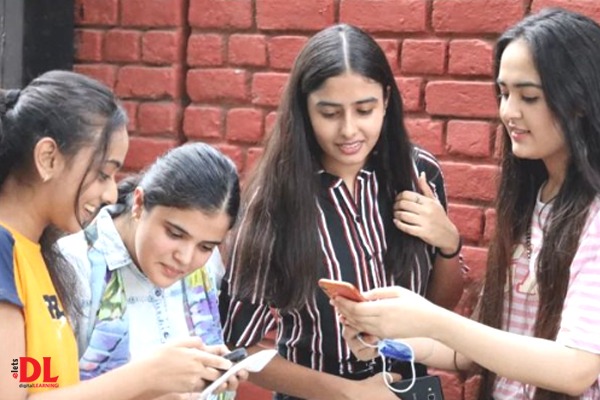
The application process for Common University Entrance Test (CUET) 2022 has started on the official website — cuet.samarth.ac.in. Candidates have time till May 6, 2022 to fill application forms for CUET 2022.

NTA started the process of CUET 2022 registration on Wednesday. Interested candidates can now visit CUET website — cuet.samarth.ac.in — to apply for this year’s newly-introduced entrance exam. “In pursuance of the UGC Notification No. 2-1712022 (CPP-ID), dated: 27 March 2022, the National Testing Agency (NTA) is inviting online applications for the Common University Entrance Test CUET (UG) – 2022 for admission to the undergraduate courses in Central Universities, for the academic year 2022-23,” the official NTA notice stated.

The entrance exam will be held in 547 cities within India and in 13 cities outside India — Sri Lanka, Qatar, Doha, Indonesia, Nepal, Malaysia, Bahrain, Kuwait, Nigeria, Oman, Saudi Arabia, Sharjah and Singapore.

Candidates can only apply for CUET (UG) 2022 in the online mode only though the website — cuet.samarth.ac.in  and the application form in any other way will not be accepted. Also, each candidate can submit their application only once.

The general category students in Indian centres will have to pay Rs 650 each for morning and evening slot. The General-EWS/OBCNCL category students will Rs 600 for each slot in Indian centres and Rs 550 will be charged for each slot from candidates of the SC/ST/PwBD/Third Gender categories. The application fees for students in centres outside India will remain Rs 3000 for all, for each slot.


Rajya Sabha gets a plea to regulate fee in private medical colleges

New Delhi 

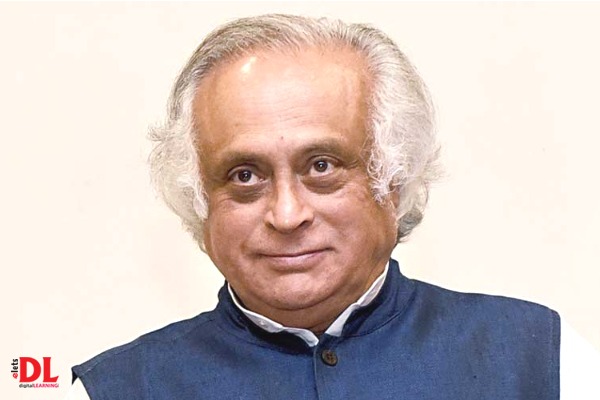
Senior Congress Leader Jairam Ramesh has called for increasing the number of government medical colleges and also made a plea to regulate fees of private medical colleges, in the Rajya Sabha on Wednesday.

Raising the issue through a Zero Hour mention, Ramesh said just about 53 per cent of all medical institutions in the country are government colleges and the rest are private whose population has been increasing over the last few years.

The government, he said, came up with the NMC Bill in 2017 that provided for the National Medical Commission to regulate fees and all other charges for not more than 40 per cent seats in private medical colleges.

The Standing Committee changed it to at least 50 per cent. But the Act passed by the Parliament in 2019 changed at least 50 per cent to 50 per cent, Ramesh said, highlighting the high fees charged by private medical colleges on seats outside the NMC purview.

“We must increase the population of government medical colleges (and) we must strictly regulate the fees of all medical institutions including private institutions,” he said.

The fee policy currently is to ‘pay now learn later’ but it should be ‘learn now pay later’, he said.

“There is an acute shortage of medical doctors and public health professionals in this country,” he said. “The belief that private medical education will form the foundation of medical education in this country is deeply, deeply flawed and deeply dangerous,” he stressed.

Tamil Nadu sets up panel to make its own State Education Policy

Tamil Nadu 

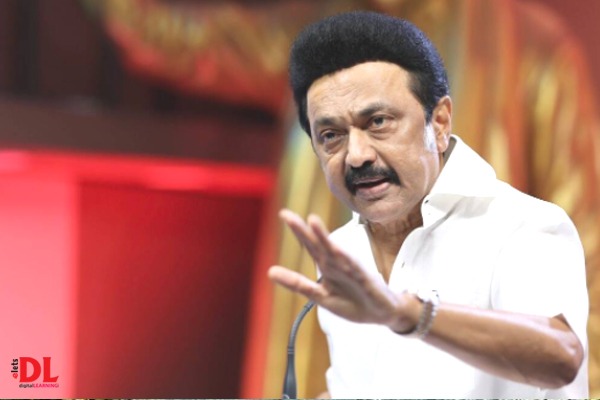
The MK Stalin-led Tamil Nadu government has set up a 13 member panel to make its own education policy. The move comes following the opposition of the National Education Policy by the MK Stalin led DMK Government.

According to sources, the DMK government has rejected the NEP accusing it of forcing the Hindi language. Prominent faces like Chess expert, Vishwanathan Anand and musician, TM Krishna are on the panel and will decide the details of the policy. CM MK Stalin says that the panel will submit its report in about a year.

It may be noted that MK Stalin has been a vehement opposer of the Centre’s National Education Policy and this move will further create the centre-state rift.


Delhi University Vice Chancellor launches the CUET admission policy 2022-23

New Delhi

The Vice-Chancellor of Delhi University (DU), Yogesh Singh launched the admission policy of the university under the Common University Entrance Test (CUET) on Tuesday. The policy outlines what subjects students will need to sit for at the entrance in order to gain admission to various courses.

Launching the policy, Singh said since the university was moving from a cut-off based system to a merit list system, colleges would be given 30 per cent additional students according to their seats, in case of dropouts or withdrawals. Sports and Extracurricular Activities (ECA) for which trials had stopped due to the Covid pandemic, will also be restarted, he said. However, certificates will also be considered for the same along with the CUET score.

Dean (Admissions) Haneet Gandhi said there would be three sections of CUET 2022 in which the first section is divided into two parts. It consists of 13 languages in the first part and 20 languages in the second part. “It is mandatory for the candidates to appear in at least one language for admission to Delhi University, out of both these parts combined,” she said.

“The second section of the entrance exam consists of 27 domain-specific topics. The third section is based on General Knowledge which will be for admission to BA Program only,” she said.

For admission to most UG programs, a candidate has to choose at least three subjects from the second section, which has been divided into two parts.

Gandhi said most B.Sc programs would be calculated on the basis of Physics, Chemistry, Mathematics or Biology. However, 30 per cent marks in any one language in CUET, would also have to be obtained as qualifying criteria.

“For admission to Bachelor of Arts, a candidate will have to appear in the entrance test in any one language from section one and in any three subjects from the other section. Merit will be calculated on the basis of marks obtained by the candidate in the same subject and language,” said Gandhi.

“For BA (Hons) Economics, it is mandatory for the candidates to take the test in Mathematics for CUET. Merit for this will be calculated on the basis of marks obtained in the chosen language, Mathematics and any two subjects,” she said.

For admission to language programmes, candidates can choose a particular language at CUET or take a test in any other language. However, preference will be given to those appearing in the particular language.

Yogesh Singh said a candidate can appear for CUET in a maximum of six subjects, out of which one must be a language subject. The best score will be considered for admission.

“For admission through Sports and Extra-Curricular Activities (ECA), a candidate will have to appear for a performance-based test along with the CUET. Merit for this will be made on the basis of the combined score of CUET (25%) and performance-based test (75%),” he said.

Singh said as of now applicants will only need to register on the National Testing Agency website which conducts CUET, after which they may need to register on the DU website for centralized e-counselling. The DU admission portal – www.admission.uod.ac.in – will go live tomorrow with all the Bulletin of Information and chatbots for help.

Asked what the admission process is once the exam is given, Singh said, “Students will get the option of filling their preference of colleges on the DU website, on the basis of which colleges will be allocated. Colleges will have no say; it will be determined by students. In the second round of counselling, we will give students the option to revise their preferences depending on their score in case they don’t get their preferred colleges,” he said.

In the case of several students with the same CUET score vying for seats, Singh there is a tie-breaker formula that has been devised to decide which student will get admission.


IIT Delhi joins hands with Delhi Jal Board To address water issues

New Delhi

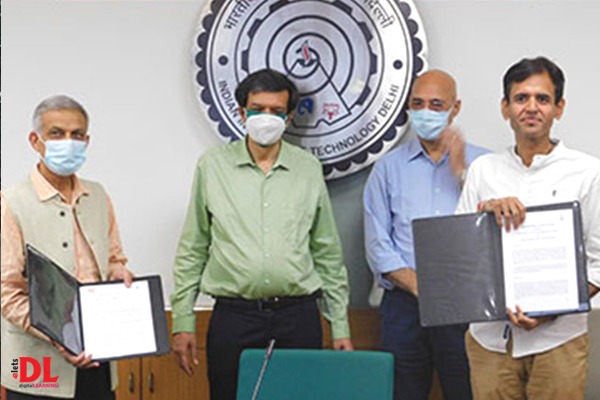
The Indian Institute of Technology (IIT) Delhi has signed an agreement with Delhi Jal Board (DJB), under which the IIT Delhi and Delhi Jal Board will collaborate with each other to address water security related issues being faced by Delhi.

IIT Delhi and DJB will collaborate on identified research and development initiatives in the areas of water supply and distribution; wastewater conveyance, treatment, recycle, reuse and disposal. According to the agreement, both sides will work towards the development of policy and best practice initiatives for wastewater treatment and its reuse/recycling to achieve the goal of zero waste discharge into drains and River Yamuna, an IIT Delhi statement said.

IIT Delhi and DJB will also work together to build shared knowledge platforms and to disseminate data and information products to improve understanding of water and wastewater management alternatives for NCT of Delhi, as part of the collaboration.

The other areas of collaboration include jointly developing the Smart Operation and Management framework for DJB’s Water and Wastewater Infrastructure, jointly developing effective and efficient strategies for Management, Improvement and Rehabilitation of DJB’s Water Distribution and Wastewater Conveyance Systems, developing continuing Education and Training Modules for in-service officers of DJB and more.

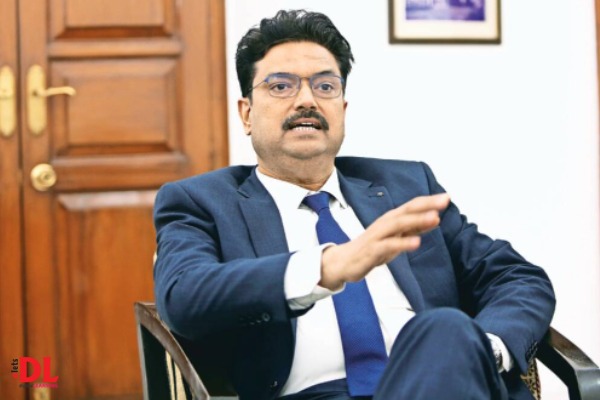
CEO, Delhi Jal Board Udit Prakash Rai said, “The Memorandum of Understanding seeks to foster a collaborative partnership between IIT Delhi and Delhi Jal Board, Govt. of NCT of Delhi, based on shared interests in the area of Water and Wastewater Management and Policy Infrastructure within the overarching domain of Water Security and its Sustainability under present and future climate scenarios.”

Professor Dhanya CT, Department of Civil Engineering, IIT Delhi said, “This MoU will provide a platform to facilitate collaboration between IIT Delhi and DJB in joint studies, research, training and data sharing in problems of common interest such as Operation & Management, Policy and Planning of Water and Wastewater Infrastructure.”


Apeejay School International Announces Admissions to DP Programme

apeejay

New Delhi

Apeejay School International, Delhi’s first and only IB Continuum School, has announced admissions to its Diploma Programme (equivalent to Class XI and XII).

The IB Diploma Programme is an academically challenging and balanced programme of education that prepares students, aged between 16 and 19, for success at university and life beyond. The programme is taught over two years and has gained recognition & respect from the world’s leading universities.

Widely regarded as one of the best pre-university courses in the world, the IBDP aims to develop students with excellent breadth and depth of knowledge. The programme is aimed at making the child a self-learner through inquiry-based pedagogy.

The programme consists of special emphasis on application, prepares students to flourish physically, intellectually and emotionally. The students will have many out-of-classroom activities and experiences, through Learning Enhancement Programme, such as theatre, photography, film review, Indian and western music, robotics, coding and sports like Golf, football, cricket, tennis, basketball & taekwondo, to name a few.

The School offers international standards of infrastructure and facilities to the student and is committed to maintain an ideal student-teacher ratio. The advisory board of ASI consists of well-known academics from Stanford and Harvard University.

Admission Process: Students interested in taking admissions in the DP Programme may submit online enquiry or submit registration form available at the School counter on any working day. Further to this, they have to complete document verification and completion of registration process.

Eventually, the final consideration of a student for admissions will be made after successful completion of assessment test and interaction.

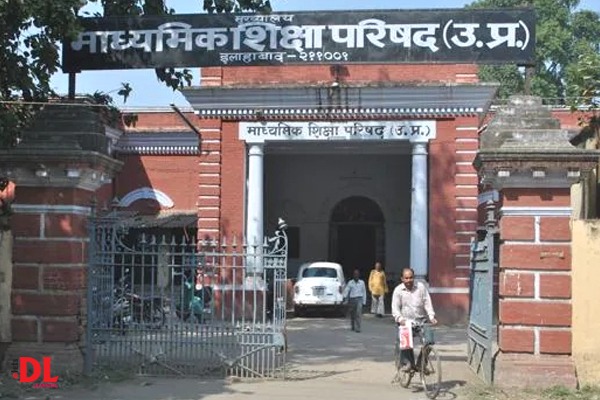
Uttar Pradesh Board Changes 12th Biology, 10th Science Question Papers In Exam Centres In Azamgarh to avoid paper leak

Uttar Pradesh Board

Uttar Pradesh

The Uttar Pradesh Madhyamik Shiksha Board (UPMSP) has changed intermediate (Class 12) Biology, high school (Class 10) Science question papers in exam centres in Azamgarh to avoid incidents of paper leak. According to the official UP Board notification, the question papers for intermediate (Class 12) Biology were changed for exam centres (06686- 06820), and high school (Class 10) Science papers for exam centres (18691- 18829).

The Uttar Prade sh Board earlier had to cancel the Class 12, intermediate English paper after it got leaked in 24 districts of the state. As per report, class 12 English paper was being sold in the market for Rs 500.

The police recently arrested the alleged master mind behind the paper leak. Ballia Police said in a statement on Sunday said, “Nirbhay Narayan Singh, the manager of Maharaji Devi Smarak Inter College, along with one Rajeev Prajapati, leaked the question paper kept in the college.”

“The leaked question paper was sent to an English teacher by Prajapati. The English teacher solved the paper and handed it to Nirbhay Narayan Singh,” it said. Prajapati, along with teacher who solved the paper, had been arrested earlier. Singh sold the solved paper for Rs 25,000-30,000 each, police said. “Singh also shared the solved copy to other people using popular messaging application for money. “The findings have been corroborated using digital forensics of Nirbhay Narayan’s phone and his bank transactions,” police said.

So far 46 people have been arrested in connection with the case, including three journalists and the Ballia District Inspector of Schools. Three FIRs under relevant sections of the Indian Penal Code and the IT Act till now have been lodged at different police stations of Ballia in connection with the case.

UP Chief Minister Yogi Adityanath has directed a Special Task Force (STF) of UP police to book those found involved in the matter under the National Security Act.


J&K administration to upgrade 200 schools for tribal students

J&K administration

Jammu & Kashmir 

The Jammu and Kashmir administration is all set to upgrade 200 schools in tribal areas to establish a strong educational ecosystem for the community. This was stated by the J&K administration officials on Monday evening.

They said Rs 104 crore is being spent to strengthen school infrastructure in tribal areas and an annual outlay of Rs 30 crore has been earmarked for scholarships of tribal students. “To provide education on modern lines to tribal children, the government started an ambitious project of transforming 200 schools into smart schools in tribal areas at a cost of Rs 40 crore,” a senior administrative official said.

The government is continuously making efforts to protect the interests of tribal people, including their land, and education, and uplifting their socio-economic status, they said.

It may be recalled that last year, Lieutenant Governor Manoj Sinha had handed over individual and community rights certificates to the beneficiaries of Gujjar, Bakarwal and Gaddi Sippi communities under the Forest Rights Act (FRA), 2006.

The initiative was hailed as a significant step with the potential to transform the lives of members of tribal communities across Jammu and Kashmir.

In areas where community rights have been granted, Rs 10 crore is provided for infrastructure development including works on roads, power supply, and Anganwadi centres, they said.

The Jammu and Kashmir administration is spending a total of around Rs 104 crore to strengthen school infrastructure in tribal areas and establish a strong educational ecosystem for the tribal community, they said.

LATEST NEWS