Home Blog Page 228

A horizon of new opportunities: Ireland’s Education Fair lures Indian students abroad

A horizon of new opportunities

The challenges brought on by the COVID-19 pandemic impacted the study abroad dream of many Indian students. International travel restrictions and the ensuing confusion that followed with virtual classrooms raised several doubts and concerns. Ireland has been taking decisive steps to combat the situation and last month was even named the best country for its response to the pandemic.

To communicate this message and to address queries of parents and students, Education in Ireland, a Government of Ireland brand under the authority of the Minister for Education and Skills, hosted a virtual education showcase for Indian and Sri Lankan students.

The virtual showcase emerged as a one-stop destination for the attendees to learn more about Ireland and have their concerns about the higher education scenario in Ireland resolved.

Also read: How School Franchising Promotes The Cause of Universal Education

The fair traced over 3,000 registrations for the event and witnessed 45 representatives from 20 Higher Education Institutions and various government and visa officials help students understand the procedures and requirements for their transition to becoming an international student in Ireland. The event captured over 1,500 chat-based interactions between students and Irish representatives.

Speaking about Ireland’s commitment to encourage students to pursue their study abroad plans, Mr. Barry O’Driscoll, Regional Manager, India & South Asia for Education in Ireland said, ”The Education in Ireland Virtual Showcase brings together Indian and Sri Lankan students on an online platform to provide a transparent and straightforward interaction with Ireland’s top higher education institutes. Over 40 representatives from 20 Irish higher education institutions were able to answer student queries at length through audio and video-based chats. It was indeed heartening to see the great number of participants attend the Showcase.”

“Ireland has retained its position as a preferred study destination for many international students, being one of the few countries that has effectively opened up its borders to its international students. Additionally, Ireland’s education system ranks in the top 10 globally and is one that meets the needs of a competitive economy. This meant that we saw a lot of genuine interest for undergraduate and postgraduate programs across different streams including ICT, business, medicine and pharmacy, hospitality and tourism, as well as humanities and the arts, the sector-wise seminars enlightened students on popular programmes and career opportunities after their degrees,” added Mr. Driscoll.

Ireland has always invested in education with a strong sense of the ROI for their international students – which in simple terms means a career boost against their graduation. In Ireland, students will study high-quality programmes that set their future career path and make them highly employable not only in Ireland but globally- even in the post-pandemic world.

Education in Ireland is planning to return with a pan India physical fair early next year.

Schools in Delhi to reopen from Nov 1 for all classes, virtual classes will continue

Schools in Delhi to reopen from Nov 1

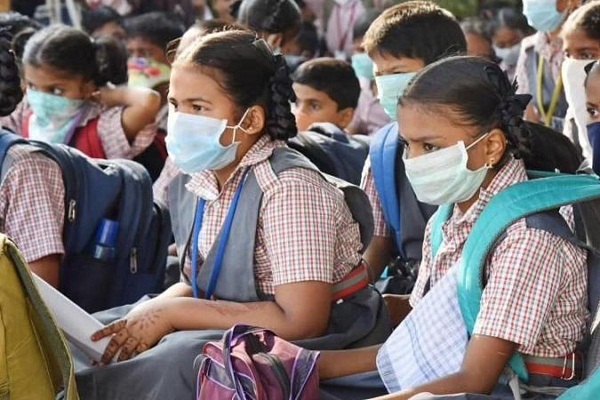
Schools in Delhi will reopen from November 1 for all classes. However, the classes will be held in a blended mode where both physical and virtual classes will be held simultaneously.

Deputy Chief Minister Manish Sisodia said, the parents will not be forced to make their children attend the schools. The physical attendance will be on a voluntary basis.

The classes will be conducted in hybrid mode in-person as well as virtually, he added.

The schools were shut down in March 2020 as the Covid 19 cases shooted and the country went into lockdown.

Sisodia also said that the strength of students will be more than 50 percent. In fact, the staff and non-staff should be properly vaccinated and everyone should adhere to the Covid protocols.

This decision was taken in a meeting held by the Delhi Disaster Management Authority (DDMA).

Currently, the classes have already allowed Classes for 9 to 12 students.

Recently, Delhi registered 41 new Covid cases and reported no deaths in the national capital region.

Delhi University likely to reopen DU Campus After Diwali: Vice-Chancellor

DU university

The Delhi University is likely to reopen its campuses after Diwali. A decision in this regard will be taken after reviewing the ongoing Covid 19 cases in the city. It was said by the Delhi University, Vice Chancellor, Yogesh Singh on Tuesday.

The university will also increase the timings of the colleges to accommodate the extra number of students and avoid overcrowding.

The Delhi University has started its laboratory classes for final year undergraduate and postgraduate students from September 16. In fact, a minimum number of students are attending the laboratory classes as of now.

“We will decide after Diwali. There is a fear that Covid might recur. If the situation remains fine, we will think,” Singh told a news agency.

He added, “We can increase the timing of the existing colleges by a couple of hours, which could lead to the addition of more sections. This can help in adjusting the extra seats created and the EWS seats. This will be better than opening new colleges.”

“In Delhi Technological University (where Singh was the VC earlier), we had kept the timings from 8 am to 6 pm, which was helpful. In case it is done, the staff will come in a staggered manner and the teachers who have classes in the latter half of the day can come late. This was a suggestion in case colleges want to do it,” he said.

CBSE, Microsoft partnered to provide training to teachers in Hybrid Learning

CBSE, Microsoft partnered

The Central Board of Secondary Education (CBSE) has partnered with Microsoft and Tech Avant-Garde to provide training to teachers in hybrid learning.

The state government has reopened schools and there is a need to adapt to the new model of learning. As there will be both online and offline learning methods, it is necessary that the teachers are well-trained to adapt to this learning environment.

“The teachers attending this program should have basic knowledge of technology. Once the teachers complete this training program successfully, they will be certified. Specialists in “Hybrid Learning” shall be available who could be consulted in the future,” an official statement said.

Many parents are reluctant to send their children to schools as of now due to the ongoing Covid 19 pandemic.

The board also aims to educate the students in a proper way during uncertain times. “Pandemic (COVID-19) has been raging on for over a year now and our education system has been under tremendous stress. Most of the schools have been under lockdown for long periods and are struggling to continue with the teaching-learning transaction,” the CBSE said.

At least two teachers can join the training programme that will be held for five days. No registration fee is required for any participation from teachers.

The programme is expected to begin on November 15. “This program will be conducted online, over the period of five days, the duration of the webinar will be of one hour thirty minutes each day,” the CBSE board said.


How School Franchising Promotes The Cause of Universal Education

Mr Anirban Bhattacharya

The teacher-student ratio in Indian schools has improved over the years, but the quality of education depends on the competency of teachers. A franchiser with an established reputation and long legacy in the field of education often provides the necessary teacher training support to its partner schools, said Mr Anirban Bhattacharya, Associate Vice President – Partner Schools, Seth Anandram Jaipuria Group of Schools to Elets News Network (ENN).

Universal Education is the ideal enshrined in the vision of Right to Education Act (RTE) 2009 and National Education Policy (NEP) 2020. A worthy objective, it can be achieved by expanding the reach of education and making it more accessible through school franchising.

An equal opportunity for education to all people, irrespective of gender, race, class, caste and religion is central to the idea of democracy, freedom, justice and progress. In the 75 years of Independence as a democratic nation with a progressive vision, India has taken notable strides in educating its youth, but a lot more still needs to be accomplished. India’s literacy rate presently stands at 74 percent, compared to the global literacy rate of 86.3 percent. Stark disparities exist between the literacy rates of different states and even between the male and female students (girl literacy rate in India presently stands at 64 percent).

Put all these figures in the context of the latest FICCI report ‘Envisioning India 2030’ which projects that India will have around 300 million school students by 2030 and what you get is a contrasting image of disparity and great potential. This divide can veritably be filled by the school franchise model.

To fulfil the objective of universal education, we must firstly understand the impediments to it.

Impediments to Universal Education

  • Income disparity: The gap between the haves and have-nots manifests in the education divide between the rich students who get easy access to world-class education in elite schools and the poor children who can’t afford basic education.
  • Gender gap: Male students outnumber female students in primary and secondary education in India. Societal mores, old prejudices and discriminatory attitudes are some of the reasons behind this disparity.
  • Lack of Proper Educational Infrastructure: While Indian metropolises have state-of-the-art education infrastructure, the same cannot be said of tier 2 and tier 3 cities. In rural areas, insufficient number of schools often cause children to travel long distances for their education.
  • Digital Divide: Unequal access to Information and Communications Technology results in a digital divide which became apparent when the education sector shifted to the online mode during the Covid pandemic. A study conducted by Azim Premji Foundation reveals that nearly 60 percent of school children don’t have access to online learning.

How School Franchising Helps To Promote Universal Education

Making Education Accessible: School franchising is a great boon for the aspiring edupreneurs in small towns and cities who want to open a school but don’t have enough expertise, experience, or resources for doing so. A franchise partnership with a reputed school brand helps these potential investors to open new schools and make education accessible to the far-flung remote areas.

Cutting Costs and Mitigating Risks: School franchising involves division of costs and mitigation of financial risk for both parties – the franchisee and the franchiser. The former has to make a fixed initial investment and meet certain conditions about the size and structure of the school building, but is spared of incurring the costs of promotion, teacher training, human resource development, and business planning which is usually promised and done by the franchiser. This collaboration cuts down the risk and increases the chances of the school’s success.

Building Teaching Competencies: The teacher-student ratio in Indian schools has improved over the years, but the quality of education depends on the competency of teachers. A franchiser with an established reputation and long legacy in the field of education often provides the necessary teacher training support to its partner schools. This helps to build teacher competency and improves learning outcomes in classes.

360-degree Support in School Operations: The successful running of a school requires academic planning, curricular structuring, regular quality audits, marketing, promotions, CBSE affiliation, and IT support. Schools in semi-urban and remote locations often don’t have the expertise to perform these functions. In the school franchising model, a competent franchiser commits to provide 360-degree support to its partner school, thereby helping it become a going concern.

CSR Initiatives: In their capacity as franchisers, big school brands often undertake corporate social responsibility initiatives aimed at promoting equality in education. These include campaigns to support the education of girl child and even backward castes and classes. These initiatives go a long way in changing discriminatory prejudices and help to promote the cause of universal education.

THE WAY FORWARD

The Sarva Shiksha Abhiyan (Education For All Programme) started by India in 2001 merged with the National Education Mission in 2018 to promote the cause of universal education. The recently launched Nipun Bharat Mission has the laudable vision of endowing every child up to grade 3 with foundational literacy and numeracy by 2026-27.

For India to reach the goal of universal education, the competencies of the private sector should be optimally harnessed. Systemic reforms that let private schools to expand their reach to the far-flung areas of the country and provide the needy children with the quality learning that city-bred children avail will help the cause of school franchise and universal education.

It is a cause worth striving for if we want India to become a knowledge superpower with empowered and educated youth.

Bihar Board starts registration for Class 10 and 12 board exam 2022

Bihar Board starts registration

The Bihar School Examination Board (BSEB), Patna has started the registration for Class 10 and 12 board exam for 2022.

The candidates who are eligible can visit the official website biharboardonline.bihar.gov.in.

The last date and deadline to apply and register is October 28. Meanwhile, the last date to apply with fee payment is Nov 1, 2021.

In fact, the Bihar Board has released a dummy admit card for students to review it and check any mistake is there in the admit card.

The students have to check the name, phone number, parents’ name and send for corrections as soon as possible.

For any further information and query, the students can contact the board in their official number or visit the website for details.

IIT Delhi announces new programme MTech In Machine Intelligence And Data Science

IIT Delhi announces new programme

The School of Artificial Intelligence (ScAI), Indian Institute of Technology (IIT) has declared to introduce a new post graduate programme ‘Mtech in Machine Intelligence and Data Science (MINDS).

The new programme is expected to start from July 2022 onwards. The students who have completed undergraduate programmes in science and engineering are eligible to apply for the course.

The programme is industry sponsored and will provide industry-relevant skills to the students.

The official said that the programme will provide students with AI solutions and industry-relevant problems while using AI. The students will be co-advised by the IIT Delhi professor and a researcher from the sponsoring company.

The MINDS programme will include core AI technologies such as deep learning, data mining, application-oriented courses like computer vision, natural language processing and AI for healthcare and also fundamentals of mathematics.

The schools already provide courses on Phd Artificial Intelligence. The founding head of ScAI, Professor Mausam, said, “Our PhD programme has gathered a lot of interest in its first year. We had a 90% success rate in PhD students joining ScAI last semester, which is exceptional for a young academic unit like ours, as students generally prefer more established academic programmes. But they chose us, suggesting that we have put together a really strong faculty team in AI.”

Professor V Ramgopal Rao, Director, IIT Delhi, said, “Academic institutions today cannot remain in silos. They must work closely with all stakeholders, including industry, non-profit, and governmental organizations. M.Tech programme in MINDS will energize academia-industry collaboration in AI.”

Gearing up now for the 22nd World Education Summit to be held this December in Delhi

WES

DigitalLearning is back with the 22nd World Education Summit to be held in Delhi during 17-18 December, 2021. This is the biggest meetup and networking event organised by Elets Technomedia Pvt Ltd on education innovation after the Covid 19 pandemic.

The pandemic has changed the education sector forever. There has been a rise in e-learning and therefore technology is going to play a key role in transforming the education sector. The event will focus on how technology adoption is necessary in today’s teaching and learning process. How tech-enabled solutions play a dramatic role in education?

After the COVID 19 pandemic hit us, there has been a rapid adoption of technology and e-learning has seen a different scenario altogether. Over the past few months, it has been challenging times for learners, staff and educators. However, educators are exploring best practices and solutions that can transform the education sector.

Given the current scenario, the Edtech sector is developing Artificial Intelligence (AI) enabled solutions for educational institutions to impart training in a digital mode. As schools are reopening, there is a need for smart technologies in order to make learning more digitally accessible and user-friendly.

Edtech companies are working hard to cater to the digital needs of schools, colleges and universities. Growing edtech companies are bringing together adaptive interfaces, classroom engagement boosters, and smart tech solutions that help educational institutions become digitally advanced.

The event will be a platform that will discuss the nitty-gritty of such tech-based solutions and their rapid adoption across the sector.

Moreover, there will be requisite discussion to provide skill-based education. How to bridge the skills gap in future workforce, will be discussed by far and large. Upskilling is the best solution to keep up with the demands of the changing and evolving job market. Exploring the skills that we need for the future is of utmost importance to focus on.

The event will have a benign presence of stakeholders across the education sector. There will be discussion on major topics that will help to acquire knowledge and gather information that will help to transform the education sector.

National Education Policy (NEP) 2020 focuses on providing practical knowledge and customized learning for students. Critical thinking, analytical learning, and skill development are some of the priorities under NEP. The new national education policy focuses on providing high-quality education to all.

The summit will be a platform where attendees will gain knowledge, learn about best practices, get policy updates, find appropriate solutions and become aware of the latest technical know-how. ‘

The two-day event will focus on the gap in the education system, lack of quality research work, shortage of faculty, availability of quality institutions, less collaboration and many vital topics that need attention and development in the higher education space. The event will be an inspiration for all who will be attending it.

Also, the World Education Awards and Exhibition will be an innovative platform for all stakeholders of the education sector to participate.

Union Home Minister Amit Shah inaugurated new IIT Jammu campus recently

Amit Shah inaugurated IIT Jammu campus

The Union Home Minister, Amit Shah inaugurated the new campus of Indian Institute of Technology (IIT) at Jammu during his three-day visit recently.

Shah was accompanied by Union ministers Jitendra Singh and Dharmendra Pradhan and Jammu and Kashmir Lieutenant Governor Manoj Sinha.

The new campus of IIT-Jammu has been built at a cost of Rs 210 crore. It has all facilities such as a hostel, indoor games, gymnasium along with higher education for the students.

Also read: IIT Bombay extends UCEED 2022 Registration Deadline till October 17

The officials said the new campus of IIT-Jammu, built at a cost of Rs 210 crore, has all the facilities like hostel, gymnasium, indoor games, along with higher education for the students. After inaugurating the new campus of the IIT-Jammu, Mr Shah reached the Bhagwati Nagar area to address a public rally.

Shah also attended a public rally last Saturday but due to heavy rain, the rally was on hold for sometime. As the weather improved, the local unit of BJP and administration worked overnight to make the rally a success.

Education Minister Dharmendra Pradhan launches phase-II of Mahatma Gandhi National Fellowship to enhance skills

Education Minister Dharmendra Pradhan launches

The Minister for Education and Skill Development & Entrepreneurship, Dharmendra Pradhan today launched the phase-II of Mahatma Gandhi National Fellowship, a two-year long fellowship conceived to create opportunities for young, dynamic individuals to contribute to enhancing skill development at the grassroots.

The two-year fellowship seeks to combine classroom sessions by academic partner IIMs with an intensive field immersion at the district level to create credible plans and identify barriers in raising employment, economic output, and promote livelihoods in rural areas.

Pradhan while speaking on the occasion, called upon fellows to act as catalysts of social change at the grassroots by driving skill development efforts.

He also called upon district collectors and academic partner IIMs to facilitate the fellows and script a success story of change through this fellowship. Under the leadership of Prime Minister Shri Narendra Modi, we are moving towards an Aatmanirbhar Bharat.

Tremendous transformations taking place across sectors will create demand for new skills and more skilled professionals and thus calls for skill mapping at district level and directing skill development efforts accordingly, he added.

In line with the requirements of 21st century and local realities, Pradhan called upon the fellows to work with global thinking and local approach including integrating local language in the skill development efforts.

Speaking about the National Education Policy 2020, the Minister outlined the vision to create strong convergence between education and skills and recent initiatives in this direction including the Academic Bank of Credit.

To operationalise the mission and strengthen the skill training delivery mechanism in the country, Skill Acquisition and Knowledge Awareness for Livelihood Promotion (SANKALP), a World Bank loan assisted program, was launched by the Ministry of Skill Development and Entrepreneurship in January 2018.

SANKALP engages with District Skill Committees (DSCs) to effectively reduce the mismatch between the supply and demand of skilled manpower in the country, thereby creating decent opportunities for the youth to work and earn.

The MGNF program under SANKALP was designed to provide a cadre of professionals at District level who not only know about governance and public policy in general but vocational education too. MGNF is a unique blend of academic and work-based training handled at the IIM campus and the districts, respectively. The academic module familiarizes the Fellows with concepts from Management, Development Economics, Public Policy and the District Skills Ecosystem.

MGNF is an opportunity for young women and men in the age group of 21-30 years who already possess some level of academic or professional expertise for providing catalytic support to the district administration to improve the skill development program delivery.

MGNF Phase-I (Pilot): Launched with IIM Bangalore as Academic Partner and 69 are Fellows currently deployed in 69 districts across 6 States.

MGNF Phase-II (National Roll Out): Being launched on 25th October with 661 MGNFs who will be deployed across all districts of the country. 8 more IIMs have been on boarded taking the total to 9 IIMs (IIM Ahmedabad, IIM Bangalore, IIM-Jammu, IIM Kozhikode, IIM Lucknow, IIM Nagpur, IIM Ranchi, IIM-Udaipur and IIM Visakhapatnam).

LATEST NEWS