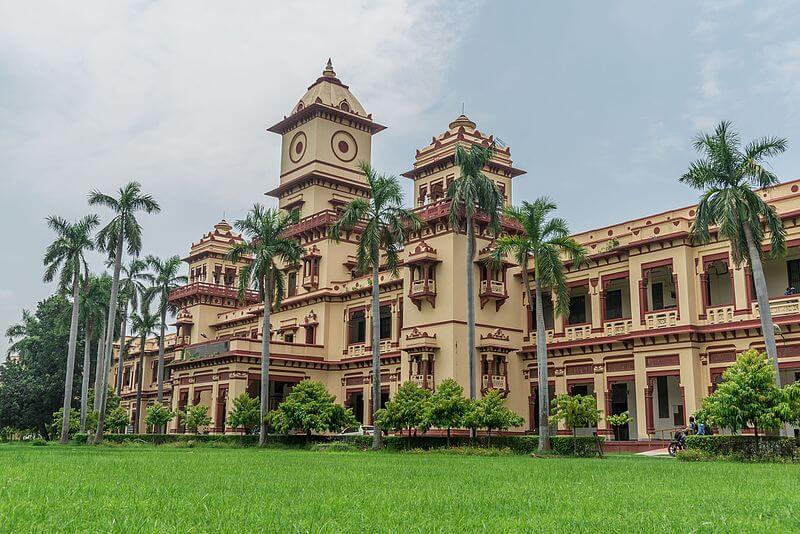
The Indian Institute of Technology – Banaras Hindu University (IIT-BHU) and Amazon Internet Services Private Limited (AISPL) signed a Memorandum of Understanding (MoU) to develop cloud-ready job skills among students.
AISPL will train the students by providing access to the AWS Educate programme and to by assisting in establishing a Cloud Research Lab on Artificial Intelligence (AI) and Machine Learning (ML). The lab will help students in pursing the use researches focused on AI and ML through use of AWS Cloud technology.
The MoU was signed in the presence of Union Human Resources Development Minister Prakash Javadekar in New Delhi.
Speaking on this occasion, Javadekar said, “This is very important occasion as Amazon is joining hands with IIT-BHU for giving essential free services in Cloud Computing, Data-sets and many other new technologies, which will empower our students and faculties to do better and focused research.”
“Prime Minister Narendra Modi is always pushing hard for new research and innovation efforts. The Prime Minister rightly believes that unless we innovate, we don’t attain the sustainable prosperity and to attain the sustainable prosperity, our research and innovations have to go to the next level,” He said. Shri Javadekar said that today’s collaboration is a new milestone and a major step in this direction.
He said, “IIT- BHU, which is the part of BHU family with the existence of more than 100 years, is now using the cutting edge technology which will also enrich the research of other Indian Universities.”
Under the MoU, IIT-BHU gains access to the resources in AWS Educate programme and curriculum designed for higher education institutions to incorporate in their courses. The collaboration will help accelerate cloud-related technical expertise for students and boost their readiness as they prepare to undertake the industry-recognized Certification.
Himachal Pradesh Government to boost school education sector in the State has sanctioned six new central schools.
Currently there are 25 central schools in the State, the new schools will help Himachal Pradesh Government’ objective of improving the education standards as well as to provide education to the children belonging to minority and economically weaker sections of the society.The government, however, has not yet decided on the places where these schools will come up.
According to Education Secretary of Hiimachal Pradesh Arun Sharma, after a meeting with Secretary HRD (School Education) R Subrahmanyam, the permission for setting up the six new schools in Himachal has been granted.
In another very important development in Himachal Pradesh, the proposal by the State Government to establish a model library in Bilaspur has also been approved.
Speaking on the latest developments in the education sector of Himachal Pradesh, Sharma said, “Initially, proposal was only of Rs two crore but now we will be adding to it. There will be several modern facilities, including digital section. The project could well be nearly Rs eight crore and first of its kind in the state”.
Bihar Board 10th result 2018 have been further delayed and likely to be announced 6 days later i.e. on June 26.
BAs per reports, the class 10th result of Bihar Board have been delayed in view of the 42,000 answer sheets that were reported missing. The answer copies of more than 40,000 matric students were found missing from an evaluation centre in Gopalganj.
The Principal, Centre Adminsitrator, and the Night Guard of the concerned centre have been arrested after preliminary investigation. The Principal of SS College had filed an FIR on June 17 about the missing answer sheets.
The board has said that this will not affect the result as the evaluation and marking had already been completed.
Around 17.6 lakh candidates appeared for the Class X exam conducted by BSEB from February 21 to 28. Total 448 candidates barred from the examination for malpractices and 93 examinees were caught for writing papers for the other.
The result is supposed to be announced by the State Education Minister Krishnanandan Prasad Verma. The Principal Secretary of Education Department, R K Mahajan, and Board Chairman Anand Kishore will also be present at the event.
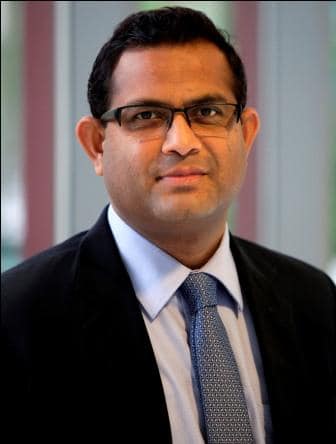
There has been a lot talked about artificial intelligence and automation however, not much has been written about DevOps, which is a software engineering culture and practice that aims at unifying software development (Dev) and software operation (Ops), says Anand Sahay, CEO, Xebia, in conversation with Elets News Network (ENN).
Why is there a need for courses in DevOps?
Anand Sahay, CEO, Xebia
Digital has completely changed the way people want to do business today. It is forcing businesses to adopt digital technologies and find ways to create and innovate products (mostly software) at a faster pace. The software processes and development practices required to bring about the differentiated digital transformation for companies include DevOps. DevOps today is a fundamental software development practice to allow companies to experiment and allow their products to keep pace with the changing market needs and adapt to the ever-changing consumer behavior.
It is of paramount importance for all Computer Science or IT students to learn all aspects of DevOps practices to meaningfully contribute to Digital transformation projects. To some extent, it will serve as the bedrock on which the future of software development will be based.
At a higher level, DevOps courses will teach students about Software craftsmanship, the approach or the mindset to automate wherever possible, integrate security and testing leading to faster innovation and shorter development cycles.
Tell us about your collaboration with UPES and programs Xebia has co-designed with UPES?
UPES and Xebia IT Architects India introduced two new full-time B Tech in Computer Science Engineering (CSE) programmes in 2017-18 with specializations in Big Data and DevOps. Through this collaboration, experts from Xebia will help UPES design curriculum for the programs and train University faculty. Xebia will also provide knowledge support through tech talks and seminars held by industry experts to help connect the learning process to industry discourses. Both programs have ‘Design Thinking’ modules to help students develop problem solving skills, analytical thinking, and knowledge development through creative learning.
Do you see market for Big data and DevOps growing? What are the career prospects?
DevOps is ranked as one of the most difficult tech jobs for companies to fill. This means that there is a huge shortage of professionals in the market. This means that students in this field have a high chance for employment. Career prospects in DevOps include Dev-Op Architect, Security Engineer, Automation Engineer, Integration Specialist etc.
The global big data market is steadily expanding and is estimated to grow from $18.38 in 2014 to $92.28 in 2026. A quick search on job portals like Indeed.com and Naukri.com will reveal that there are more than 3,300 big data job openings on Indeed.com alone, and over 4,000 job postings on Naukri.com with salaries extending from INR three lakhs p.a to over 25 lakhs.
What is the status of education in India? Are there enough courses available?
The computer science education with respect to what is needed today is really behind the curve. The course content and subjects are almost irrelevant and old. Although there are Massive Open Online Courses (MOOCs) to augment the learning process, I feel that the adoption pace is still slow and students coming out of colleges need significant training and cost, borne by the companies to make them prime time to do projects. Also, the amount of relevant hands-on experience required for students to understand the various aspects of software development are low.
If there are courses available, (even with the private player) what is the response of students, are they taking up these courses?
Students and parents need more sensitization to understand the significance of these new courses which are becoming available in the forward-looking private institutions. A lot of parents and students still look for standard specializations which in today’s world is not relevant. It’s important that Universities, and Companies come together to spread awareness about such new courses and pertinent needs of the market.
What are the qualities of the courses/curriculum and graduates so produced?
Private universities are beginning to collaborate with niche companies to develop specialized tech courses, the way UPES and Xebia have collaborated for Big Data and DevOps. This will significantly improve the quality of the course and relevance of the curriculum. The quality of graduates so produced would be more productive for the industry than before. We just need to make sure that more and more passionate students pick such specializations.
Online courses (MOOCs) have good content but it still has a long way to go before we can see those courses as an alternative to thorough classroom engineering courses for students at the undergraduate level. For working professionals, they are a great way to enhance learnings and get better jobs and projects to work on.
Why do you think DevOps would be able to provide jobs in future, considering that it has been there since long and the disruption rate is fast now?
DevOps is already mainstream with many organizations, making it a part of their work culture and the way software is done. However, over 50% of the companies are still lagging. The Digital transformation movement will continue to expand the need for strong DevOps engineers who are already one of the highest paid IT practitioners today and will continue to do so for the next decade.
What are the technologies of future?
It is very difficult to predict the technologies of the future. Tech disruptions are extremely rapid and fast changing. Today, we see Artificial Intelligence, Machine Learning, Wearables, Blockchain, Virtual/ Extended Reality and BOTS becoming mainstream. These technologies are in for a long haul. The way I see it, in the coming decade, they are going to rule the roost.
From a future perspective, we see Quantum Computing as the next big wave in technology. It is still in the research phase and in a few years, they will become mainstream.
Can you share a synopsis of global trends and India’s positioning (both good and bad, loopholes and where India can work) when it comes to new technologies?
Blockchain, Internet of Things, Machine Learning, Bots — these are the current technology trends that are taking the world by storm. In the context of Indian market and innovation, technologies like Deep Learning/AI, Blockchain, and IoT are some of the prime areas where companies are delving into. We see a lot of startups and young companies work in the field of AI. Analytics and IoT are also some of the leading technologies where the Indian companies are gaining their foothold. We also see a shift in the way traditional companies work. They are adapting to the changing technology landscape and reinventing themselves to go fully digital and becoming open to experiments.
One of the weaknesses in India has been the lack of research and funding to create new disruptions. India was typically importing tech, but with the growing startup ecosystem, India is fast becoming a breeding ground for deep innovation, which will hopefully bring the much-desired change.
Why do you think India needs to outsource technologies and companies from foreign for its digital initiatives?
Ancient India is known to have actively contributed to the field of science and technology. Sadly, India is still dependent on foreign countries and companies for its technology needs. The problem is deep-rooted as it starts from how parents and society push young minds to follow a traditional path and discourage risk-taking. This deprives India of passionate people to pursue their dream and force them to settle for less. Job insecurity and wrong definition of success further diminish the enthusiasm of the young talented people. Those who still pursue these alternate paths of serious research find it hard to get funding and infrastructure to create any valuable contribution to the world community.
As a result, instead of growing as the fastest economy, India is still dependent on foreign companies to cater to its digital and infrastructure needs.
Share a brief about your journey and experience as an Indian techie. What were the areas you had to work upon the most? What is the workplace culture now and if you can predict any trend?
I started my journey as an India Techie in the late nineties, when Indian manpower was beginning to be noticed. Despite Indian techies being strong in Science and Math, most of the work was of support or maintenance in nature with less expectation in regard to innovation. I have seen how from doing basic technical work, India has transitioned to become a destination of large turnkey projects leading to huge investment in various processes such as CMMi to improve the predictability of success of projects till late 2000.Yet, India was still seen as manpower providers. Today, the Indian IT workforce has made a huge leap and are beginning to be looked at for bringing innovation into the products they are developing. My own work involved creating differentiated software products for retail and banking industry.
The workplace culture in India has also evolved tremendously over these years. From being command control and hierarchical, we have begun to be more agile and independent. This has helped in creating a workplace environment that is conducive to innovation. The future seems to be moving toward smaller self-sustaining teams using Agile software development practices to create world-class products. Oversight and management will change into becoming a support organization which will help in removing impediments for the team.
Indian students are opting for different countries to study abroad and Australia is one of the most preferred destinations observes Snigdha Moitra, Assistant Director, Marketing & Partnerships, University of New South Wales Australia for Elets News Network (ENN).
Australia is the new and attractive destination beckoning Indian students to study abroad, not just for the academic opportunities there but also the employability factor, which is a major plus point.
Snigdha Moitra, Assistant Director, Marketing & Partnerships, University of New South Wales Australia
While earlier, most Indian students would seek opportunities abroad mainly for a PG course, now increasingly students are seeking out foreign pastures for Undergraduate courses.
Gone is the US’ domination of the higher education space. Washington’s tougher immigration laws and work rights have taken away much of the sheen of studying in the US, and instead brought in a sense of insecurity among not just those planning to study there but even among Indian professionals based there.
Now, countries like Canada and Australia are dominating the landscape because of their welcoming attitude for overseas students and their quality education.
A major advantage with Australia is that it not only allows students to gain work experience but also legally earn money to finance their stay there.
This factor has helped change the outlook among Indian students about studying in Australia. There is now increasing awareness of the high-quality teaching and research opportunities being offered by Australian varsities, including top notch ones like the Monash University, Griffith University and University of New South Wales (UNSW) Sydney, which is ranked 45 in the QS rankings and offers cutting edge research facilities for those keen in pursuing science.
Many Indian families are now able to afford a foreign education for their children, and it has also become easier to avail of bank loans for studying abroad. In this respect, studying in Australia holds a lot of promise for Indian students as the high employability factor makes it easier for students to pay back the bank loans.
The post-study work rights in Australia helps students to recover the expenses incurred on living costs and tuition fees within two years. Besides, the study and work experience also adds significant value to their CVs. Sydney is ranked among the top 10 cities to live in the world (and the best in Australia) by HR consultancy Mercer 2018 quality of living standards study.
Many Australian varsities, including UNSW Sydney, have included career counselling as a key part of their USP, which makes Australia a highly attractive destination of choice.
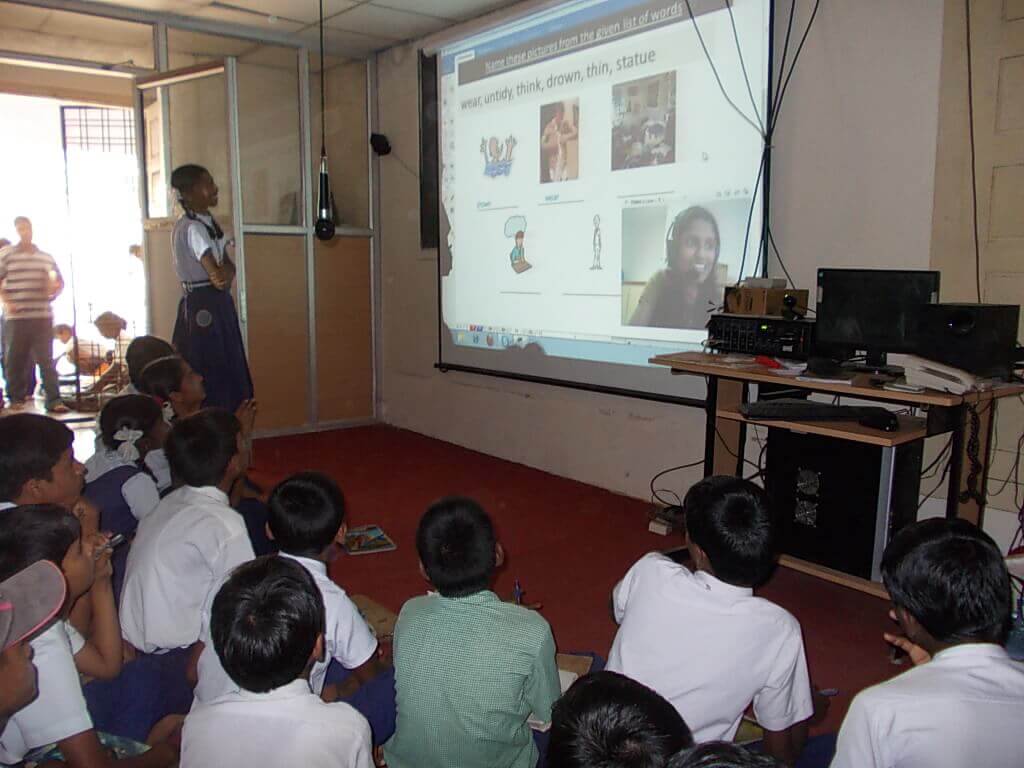
With a view to impart technology based smart education to the students, tab labs and smart classes would soon be started in government schools of cyber city, Gurugram.
For this, the Gururgram district administration has decided to launch EduTech as a pilot project in 17 schools of the district in the first week of July under which students would be taught through smart classes and tablets.
While stating this today, an official spokesman on condition of anonymity said that EduTech pilot project is one-of-its-kind project which aims to connect the students of government schools with hi-tech technology keeping in view the demand of changing times.
He said, “17 schools of district Gurugram and three of district Rewari has been included under this project. To successfully run this project, the principals and teachers of government schools have been imparted training in State Council of Educational Research and Training (SCERT).”
“The project would be based on the concept of tab lab and smart classes. The tab lab concept would be for students of classes first to eighth for which ten government schools have been listed. After feeding the syllabus of each class, the students of these classes would get a unique ID and password,” He added.
The spokesman said that similarly, smart classes would be organised for students of classes 9th to 12th. These classes assume special significance as the children would be taught with the help of projector and computer. Apart from providing career counselling to the students, classes would be organized for English speaking as well as preparation for other competitive examinations.
“This project which has been approved by State Council of Education Research and Training (SCERT) would be run for three years and it would be reviewed from time to time. On the success of this pilot project, it would be replicated in other districts also,” he further said.
The State Bank of India (SBI) has released the admit card for the preliminary examination to be conducted for the post of Probationary Officers (PO).
Aspirants can download the admit card from the official website of the bank. Candidates are required to visit the career section of the SBI website — sbi.co.in to download their admit cards.
On the login page, candidates will need to enter the registration number, password/date of birth and captcha code (reflecting as the image) and click on login. Call letter will be displayed on the screen. Candidates need to take a print out of SBI PO Admit Card as no hard copy will be sent by post. The admit card is to be carried to the examination centre by the candidates along with one photo, identity proof such as Passport/Aadhaar/Pan card/Driving Licence/Voter’s card/Bank passbook with duly attested photograph/Identity card issued by school or college/ gazetted officer with the SBI PO admit card. The Identity proof has to be submitted at the time of the examination.
Candidates who will qualify the preliminary examination will only be eligible to take main examination and after qualifying the main examination, candidates will be called for the group discussions and interviews.
The tentative date for the result of the preliminary examination is July 15, 2018. The main examination will be held online on August 8, 2018 and the result will be declared on August 20, 2018. The group discussions and interview will be conducted from September 24, 2018 to October 12, 2018 and the result will be declared on November 1, 2018.
The preliminary examination is scheduled to be held on July 1, 7 and 8 to fill 2,000 vacancies of PO at different branches of SBI located across the country.
A number of Delhi University (DU) colleges including the some of the most renowned ones have released their first cut off list for 2018 admissions.
Hindu College, Hansraj College, Gargi College, Kirori Mal College, Aurobindo College (evening), Shri Ram College of Commerce (SRCC) and few others have released the first cut off list for admission to their undergarduate courses.
While SRCC has the highest cutoff for B Com (Hons) and B A (Hons) Economics at 97.75 per cent and 98.5 per cent respectively, the highest cutoff for B A (Hons) English has been released by Hindu College at 98 per cent.
First Cut off list of DU Colleges Click Here to download
Important Instructions:
Candidates applying for admission to any college of Delhi University are required to carry the following documents in original along with two sets of self-attested:
Class X Board Examination Certificate
Class X mark sheet
Class XII mark sheet
Class XII provisional certificate/ original certificate
Character certificate, issued either by the Principal of the school last attended or Class-1 Gazetted Officer
SC/ST/PwD/CW/KM certificate (If Applicable) in the name of the applicant issued by the competent authority
OBC (non-creamy layer) certificate (If Applicable) in the name of the applicant. Caste of the applicant must be in central list issued by http://ncbc.nic.in
Transfer certificates from school/college along with Migration certificate issued by respective Board/University/school/institution from the students who have passed senior secondary exam from outside Delhi
At least two passport size self-attested photographs
Madhya Pradesh Government has selected 224 state-run schools at development block level for teaching through digital study material to students from class IX to XII in the state.
The Government is also likely to set up virtual class rooms in these schools. One room in each of these schools will be developed as the learning end in which necessary equipment like computer, TV set, projectors and camera will be installed for digital learning.
Teaching through virtual class has been proved helpful in imparting quality education to students especially in remote and rural areas. The use of technology in education has improved it and made teaching-learning processes more effective for students and teachers. Teachers trained under national middle education mission will use virtual class room for teaching.
In another step to bring transparency, the Government has made scholarships distribution by different departments to school students online. School education department has been made nodal department for distribution of 30 types of scholarships of eight departments through Samagra education portal.
In this process, scholarship has been calculated putting profile of 1.48 crore students studying in all government, non-government schools and educational institutes. On the basis of Samagra unique ID of every school student, Samagra education portal has been prepared for availing school dice code, mapping it with class wise and school wise enrollment. Scholarship has been transferred to students’ bank account through Mission One Click in 2017-18.
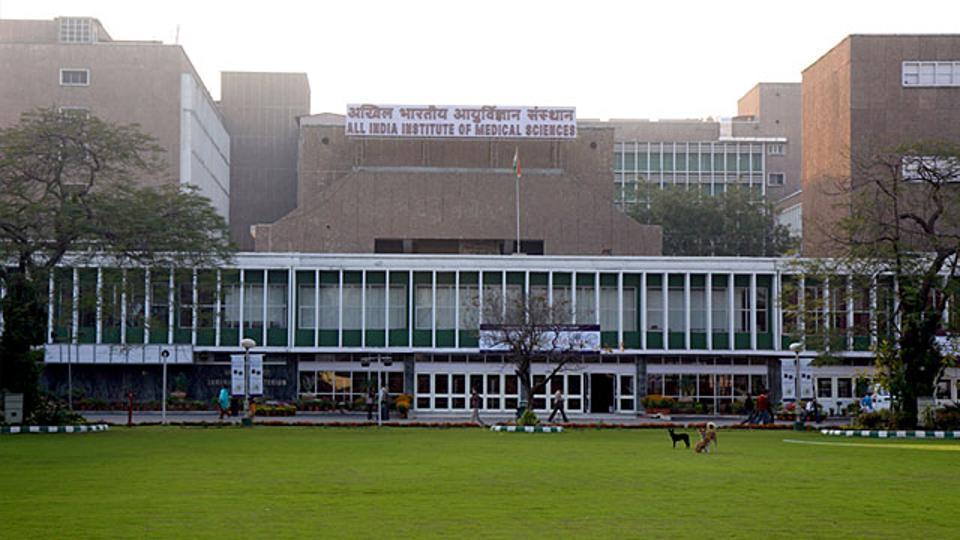
All India Institute of Medical Science (AIIMS) has announced the result of AIIMS MBBS 2018 entrance exam on the official website, aiimsexams.org along with the merit list.
The counselling process for AIMS MBBS 2018 is scheduled to be held start in the month of July. Eligible candidates will be required to apply online to choose the college as per their choices and ranks. Other than the main centre in New Delhi established in 1956, there are six other AIIMS colleges at various cities across India.
Step 2: On the homepage, click on the link ‘Results’ tab
Step 3: On new page click on Academic Courses and click on the Lists of AIIMS MBBS Result 2018
Step 4: The result will be displayed on the screen. Candidates should take its printout for future reference.
AIIMS result 2018 result, Click Here to check complete list
The AIIMS entrance exam is a gateway for admission into MBBS course at AIIMS New Delhi, Patna, Bhopal, Jodhpur, Bhubaneshwar, Rishikesh, Raipur, Guntur (Andhra Pradesh) and Nagpur (Maharashtra).
To participate in counselling process of AIIMS MBBS, unreserved category candidates have to score minimum 50 per cent, OBC (non-creamy layer) have to score at least 45 per cent and those belonging to SC/ST must score at least 40 per cent.






 AISPL will train the students by providing access to the AWS Educate programme and to by assisting in establishing a Cloud Research Lab on Artificial Intelligence (AI) and Machine Learning (ML). The lab will help students in pursing the use researches focused on AI and ML through use of AWS Cloud technology.