



Home Blog Page 752

Introducing new age learning in a small town

It is an undeniable fact that children in big cities and those in small towns deserve the same quality of education. But running a new age private school in a small town in India is equivalent to organizing a professional league football match in an ice skating rink where the players would skid and slide more than run or field a goal. These school leaders have taken the initiative to set up schools in the hinterland with a vision to provide new age education to the children there. But in this process these entities face their own set of challenges which they have to circumvent on their own with little help from the state education department.

Education leaders in the hinterland in the process of introducing new age education is pushed to the wall by local politics and society mores that pressurize the school in favour of ‘doing things the way they have always been done’ and that anything new and modern is suspicious and unsuitable. The illogical demands for more home work, zero perception about concept learning, no tolerance for activities writing them off as waste of time, and falling back on the rote memory system of learning keeps coming back much to the disappointment of the school leaders.

These schools are working in an educational environment where there are not enough qualified teachers to provide a true specialist in every subject. Moreover, the loss of one teacher through relocation or government placement can leave a hole that is extremely hard to fill. It is most common that school leaders employ staff that are not optimum for their jobs but instead represent the best available in the locality at that time. Teacher skilling and up-skilling is an issue due to lack of professional resources and therefore the school has to opt for trainers from the cities.

With power outages and erratic internet connectivity these schools which are trying to provide to their students an environment conducive to digital learning are unable to harness the full potential of their intentions for the children. Salient features which are common to all city schools like a wi-fi campus and digital classrooms become a struggle in the small towns.

Geographic remoteness is difficult to cover with internet, Skype of video conferencing and the schools that have set up operations in the remote areas cannot participate in large established inter-school activities and events. These isolated schools and educators simply do not have the opportunity to develop the professional connections and develop relations with larger school groups where there is an opportunity for peer learning and sharing of ideas.

It is also irrefutable that the government schools or the government sponsored schools have not been able to provide quality education to the children. So the author feels that education provided by these new age schools would really help to mainstream the children of the small towns and that these entities could perform miracles with little governmental support. They have already traversed and reached out to the children in smaller towns with high quality education, crossed the barricades of parental disdain of the modern ways of teaching and learning, a little more ironing out and these institutions would be ready to make a difference to the education environment in their areas.

The author of this piece, Rupamala Singh, had given up a corporate job to establish a secondary school, Hayde Heritage Academy, with her husband, Lt Col Kunwar Ajay Singh, a retired army officer in Kotdwara, a foothill town in Uttarakhand.

Scope of Technical Education on the Increase with more schools included in the School Reform Plan

Keeping an account of the importance of technical and vocational education, the Education Ministry would be granting permission to new schools to include these as part of its School Sector Reform Plan. The Reform Plan aims to provide various skill-based training to students so that they can join the work market after completion of their school education.

Going ahead, Education Department, recently granted permission to 139 schools in 202 constituencies of 74 districts to impart technical and vocational education from Grade IX.

Total of five subjects- Civil engineering, Computer engineering, Electrical engineering, Plant science and Animal science are taught in the domains of Technical and Vocational education.

While students from the general stream study eight subjects with a total of 800 marks, those in the technical stream study various subjects carrying a total of 1,000 marks.

The Ministry of Education had introduced technical and vocational subjects in 99 schools in 71 districts in April 2013. The first batch of students  from these institutes, recently appeared in the Grade XI board examinations.

Navneet Education with its new TVC for ‘Art of being Smart’

To reinforce the attributes of the brand, Navneet Education Ltd has adopted a 360-degree integrated marketing campaign, which includes a new TVC as well as extensive digital activations, targeting the brand’s core target audience.

In today’s digital day and age, students spend a lot of time on social media. It  plays a very important medium used by the youth to communicate. The new campaign taps into this element which has become an integral part of the lives of the young generation.

The campaign shows how students in a college are initially unhappy by the ban imposed on access to social media use in the college. But with smart thinking, and using the Youva range of stationery as a tool, they come up with an idea which allows them to have the same social media experience, even when they are not online. They stay within the boundaries, yet they don’t stop having fun. The entire stationery range of Youva allows them to come out winners. Even the principal (who was the one to impose the ban) acknowledges their smart thinking.

Along with this, Navneet Education Ltd has announced the launch of its new stationery brand for paper and non-paper stationery vertical – Youva- The Art of Being Smart.

Under the paper stationery category, Youva will include long books, note books, drawing books, practical books, casebound books, scrap/project books, craft papers, paper rolls. While the non-paper segment will comprise of pencils, erasers, sharpeners, geometry boxes, rulers, crayons, oil pastels, plastic crayons, synthetic & white glue. Youva branded products under both the categories will be available across India at all leading book and stationery stores.

Results are out, Now the Next step- ‘Education loans’

Now, as the school board exams are out, it is time for the high fliers to plan out for their future. It is time to decide whether the future education should be in arts, science, commerce, engineering or medical within the country or they see better educational opportunities in abroad.

However, the cost of education is increasing every year.  Under such circumstances, studying overseas, be it U.S. or Europe, may be as good as building a castle with ivory.

Under such circumstances, monetary constraint do come in the way in order to pursue your dream career. Therefore, the best option is to avail an education loan from any gazetted lender, which may be a bank or a non-banking finance company (NBFC).

Some of the points to be kept in mind while considering education loan can be as follows:

Tenure of repayment:  It is always advisable for students and parents to select an education loan with longer repayment tenure so that they have to repay smaller EMIs periodically.

Take maximum loan:  As much as 100 percent of the cost of education should be availed which should be inclusive of  tuition expenses, living expenses and overhead expenses such as the cost of traveling, purchasing the laptop, equipment, and books.

Margin money requirements:  Generally any loan requires margin money but some lenders don’t require any margin money, which helps get up to 100 percent of the total cost of education. Lower margin money ensures less financial stress.

Gazetted lenders should be explored: Income tax benefit should be availed while taking education loans. However, this is available only if taken from banks or few private sector lenders.

MOOC Score to Count towards College Degrees

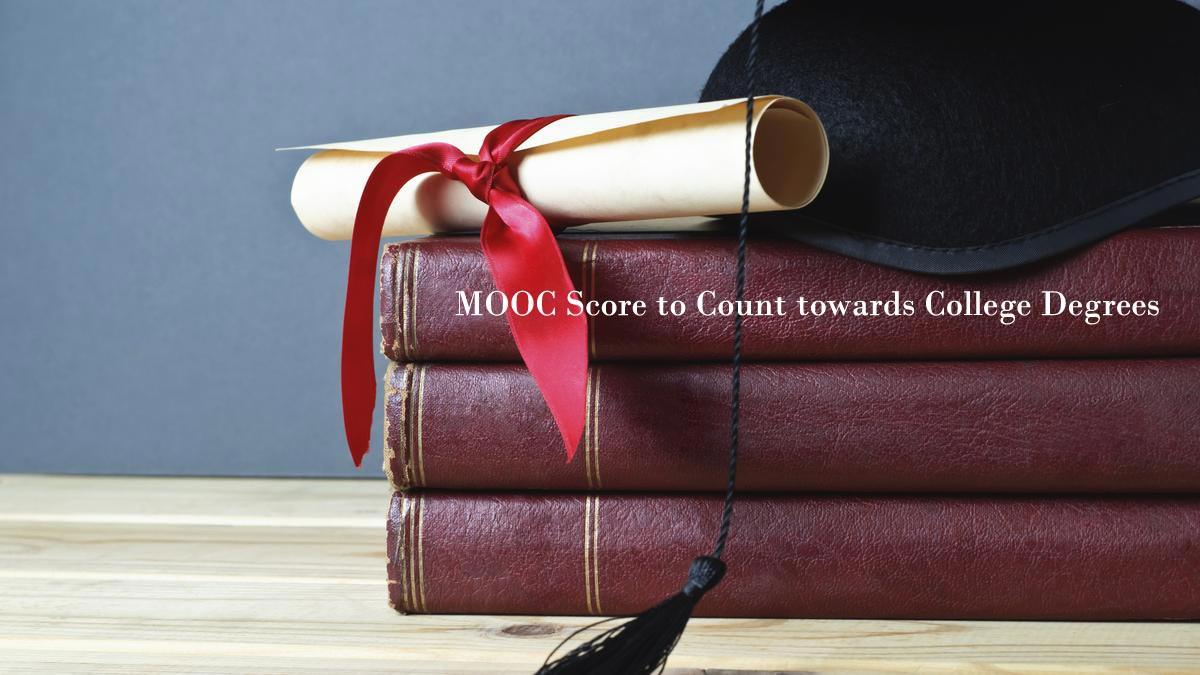
Taking a step more towards the Digital India mission, the BJP Government is all set to  make Massive Open Online Courses (MOOC) count towards the college degree. Till now, the MOOCs had no scores for any degrees.

In a recent development, it was agreed as by the University Grants Commission that the scores achieved in official online courses would be added in the total marks scored in a degree and transfer credits for them.

This move has been done to mainstream online courses and increase their acceptability and credibility in the Indian higher education system.  Moreover, it will also allow students from different institutions to take up courses which may not be available at their institute and get credit marks for them.  However, one condition is that the online courses must be one of the 400 plus courses on offer through the government-backed massive open online course (MOOC) platform SWAYAM .

Online courses are so far only seen as complementary skillsets acquired by an enthusiastic student but they do not in any way reflect in the student’s marksheet or enhance his overall score. UGC will soon notify setting up of a standing committee for SWAYAM courses and a national MOOCs coordinator that will coordinate with all universities and institutions on the MOOCs on offer.

Board for Vedic Education on lines of CBSE being set by Ministry of HRD

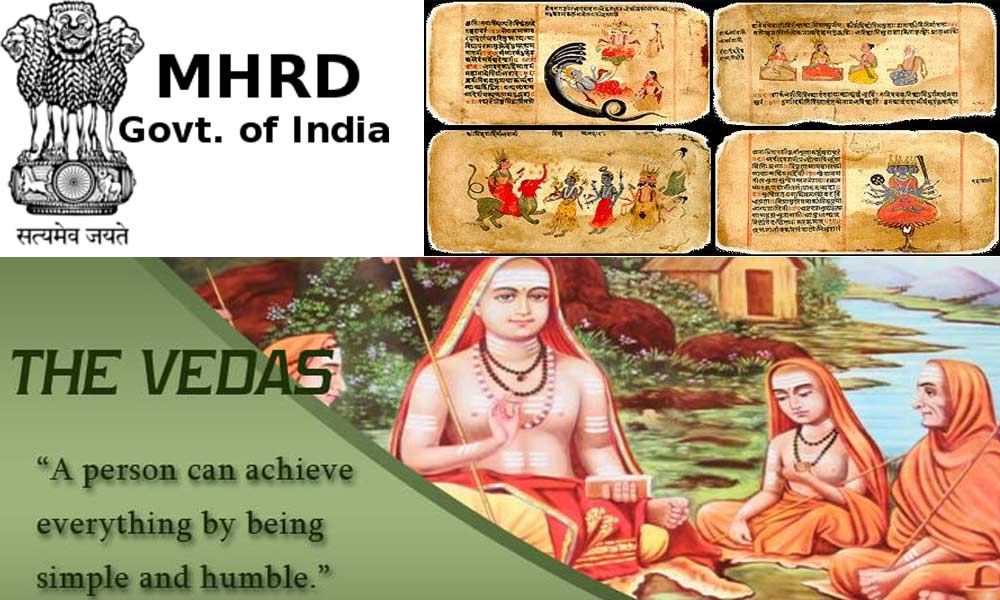
The BJP led, NDA Government would be setting up its own school board for ‘Ved Vidya’. This plan for Vedic education board comes soon after rejecting proposals on similar lines by yoga guru, Baba Ramdev.

Regarding this, the ministry of HRD has plans to establish an examination board under the aegis of Maharshi Sandipani Rashtriya Veda Vidya Pratishthan (MSRVVP) in Ujjain, an autonomous organisation working on encouraging and preserving ‘Ved Vidya’.

A fund of Rs 6 crore has been suggested by a five member Government panel headed by MSRVVP Secretary, Devi Prasad Tripathi. The decision to start a Vedic education board, on the lines of CBSE, is based on the recommendation of Sanskrit experts and representatives of gurukuls and ved pathshalas, under the chairmanship of Swami Govindadeva Giri.

MSRVVP in Ujjain, was set up in 1987 to develop and propagate oral studies of the Vedas. It currently affiliates 450 institutions of traditional learning like pathshalas and guru-shisya parampara yojana across the country. Although this organisation has been conducting Class X and XII examinations, its certificates are not considered equivalent to mainstream levels of education by several institutions. Upgrading MSRVVP to a formal examination body, the government feels, will address the problem of recognising traditional learning.

‘Green Passage’, scheme for Orphans announced in Odisha

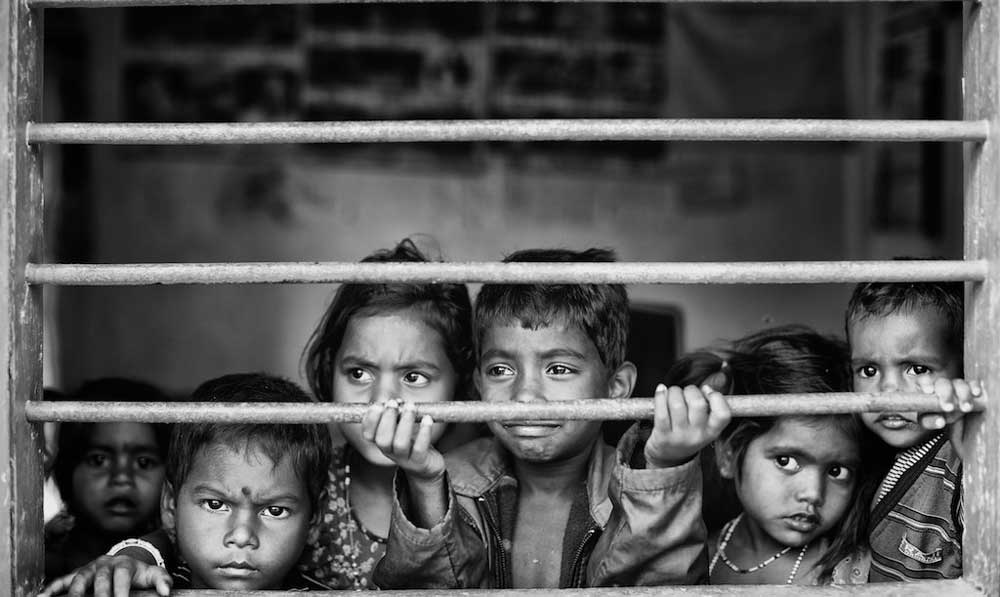
The Government of Odisha has announced a higher education scheme for Orphans by the name of ‘Green Passage’, according to which the Government shall be bearing the expenses of admission, tuition, examination and laboratory  for all orphaned students.

Furthermore, the students from class 12th till post graduate level will also be provided hostel accommodation on a free of cost basis. The government will provide free of cost hostel accommodation to the homeless students, whether they study in private or government colleges and universities.

This social welfare initiative has been taken by the government for ensuring a bright future for the orphans.

Currently, 16,382 students are staying in 272 institutions in the state.

Barco India appoints Rajiv Bhalla as Managing Director

In a recent development, Rajiv Bhalla has been appointed as the Managing Director for Barco India, a global leader in visualization technology.

Rajiv is an industry veteran, armed with a BE(Electronics) degree and MBA, and has more than 22 years of senior leadership experience in technology organizations like Thomson Consumer Electronics, Microsoft, NEC and Intel. He has a deep understanding  of the B2B and B2C aspects of the business.

Rajiv as the new MD, will help formulate and execute business strategy with the goal of tapping into India’s enormous potential and expand Barco’s local business presence. He will also be the legal representative of Barco India, fulfilling all legal, regulatory and statutory obligations ensuring compliance with local legal, safety, environmental regulations as well as company directives and guidelines.

“India is at an exciting inflection point for accelerated growth led by the government’s focus on Smart Cities, Digital India & Make in India. I am excited at the opportunity to leverage Barco’s heritage of technical and operational excellence to accelerate a new era of growth and innovation” Rajiv Bhalla said.

Students to be in constant touch with PM on Mobile app

With a view to strengthen the initiative of ‘Digital India’ , the University Grants Commission (UGC) wants all college and university students to share their views with Narendra Modi, the Prime Minister of India on the Narendra Modi mobile app.
From the beginning, the PM has expressed his desire to make India more digital via use of mobiles, laptops etc. Students, being the foundation for such a change need to start using it to a greater extent.
During the last few years, it is seen that everything is becoming digital, be it lodging complaints in police stations to the government ministers starting a new policy over the social media.

digitalLearning view: Students sharing their views and ideas to improve the education system, directly with the PM is a great initiative by the UGC to make the link between the students and PM simpler and shorter. This would lead to solving the many problems faced by students in the educational institutes.

Sisodia suggests an ‘Out of the box’ idea to utilise vacant buildings and malls for education

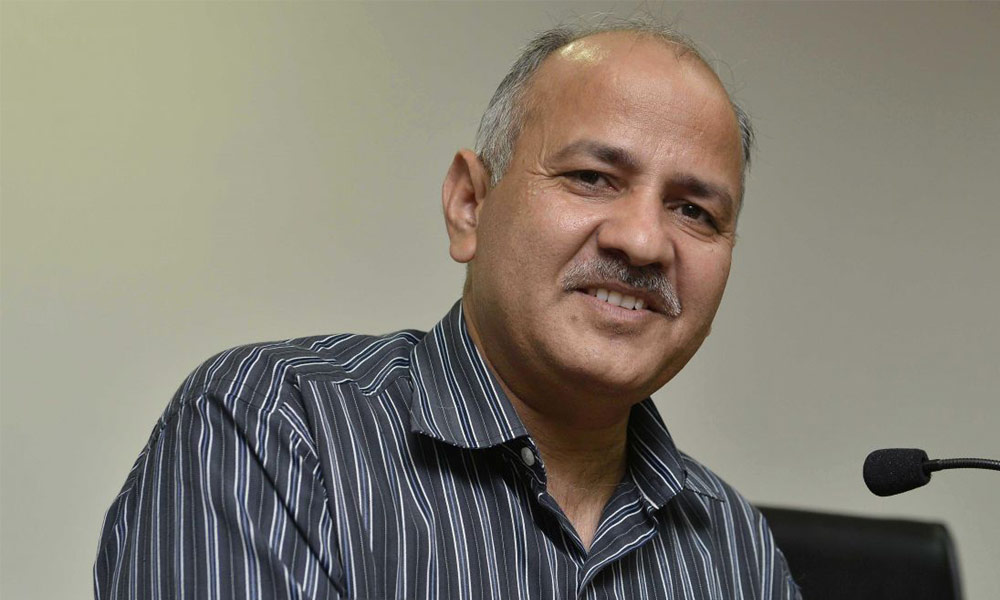
Keeping in mind the need of the hour to expand technical and higher education facilities for catering to the needs of lakhs of students,  the Deputy Chief Minister of Delhi, Manish Sisodia came out with an innovative idea. In order to solve the infrastructure problem, he suggested institutions to start teaching students in schools, malls and rented buildings.

This announcement was made at the inauguration of a techno-business incubation centre at the Indira Gandhi Delhi Technical University for Women.

There are several gaps which needs to be filled in the education sector such as the infrastructure needs to be developed so as to accommodate more than 1.5 lakh students. For this institutions should start teaching students in schools, malls and rented buildings. He also assured that there will not be any procedural and financial hurdles in this regard. An ‘out of the box’ technique is needed to educate students.

The Delhi education minister while giving motivational tips to the students, also mentioned the need to think by at least 25 years ahead of our times due to the fast changing technological space.

LATEST NEWS