
Home Blog Page 1165

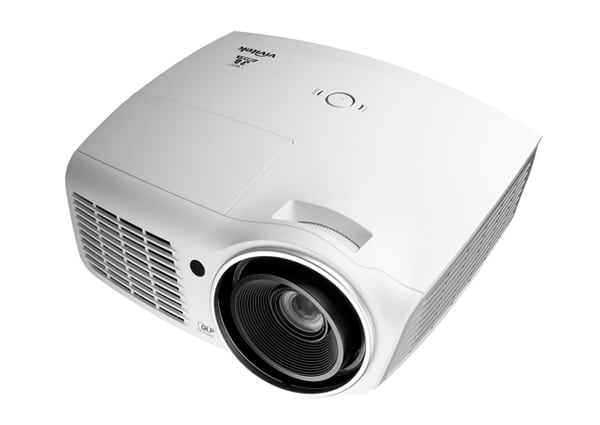
Vivitek Introduces New D860 Projector for Education

Vivitek Corporation, a leading manufacturer of environmentally innovative visual display and presentation products introduces the D860 a powerful yet budget-friendly projector designed for K-12 classrooms and higher education. The D860 high-performance digital projector offers exceptional digital images with full color dissemination having long lamp life that reduces the overall cost of operations. This DLP projector has 2800 ANSI Lumens that provides enough vibrancy, making it great to use for any venues or under any lighting conditions. The projector features native SVGA resolution, multiple connectivity options. The Native SVGA (800 x 600) sharpens the images and offers amazing details for better viewing of the audience. It also features 2500:1 contrast ratio that offers amazing color contrast for a brilliant burst of colors during projections. The D860 VGA/D-sub and Composite ports can also be used to connect to other devices, maximizing its capabilities. Add 3D-ready capabilities, and the D860 is the ideal projector for just about any multimedia/video application. Functionality, performance and value: all found in the Vivitek D860.

“Bright projectors are in high demand for classrooms with a lot of ambient light, and they help to improve learning environments for students. The D860 is not only incredibly bright, it comes prepared with a wide range of features at an affordable price, demonstrating Vivitek’s dedication to providing flexible and robust classroom solutions,” says Hemant Agarwal, Senior Director,  Vivitek

“The projector is equipped with BrilliantColor Technologies by Texas and contains the unmatched 2500:1 contrast ratio for deep blacks and rich, full colors. This results in stunning color reproductions, presenting audiences with crisp and vivid images on every occasion,” he added Additional features, services and solutions of the projector are following:

  • Native SVGA resolution and able to display up to UXGA (1600 x 1200)
  • 2800 lumens of brightness and a 2500:1 contrast
  • 3D-Ready via DLP Link
  • DLP and BrilliantColor technologies from Texas Instruments
  • High-efficiency lamps that last up to 6,000 hours (in standard mode)
  • Connectivity options include: VGA-In, S-Video, Composite, VGA-Out
  • RS-232c for projector control and management

The D860 is available at Vivitek’s authorized dealers and distributors in India. The projector carries two years warranty.

State Teacher Education Plans Should Invest in Human Resource Capacity Academic Structure

Pratham, an NGO has carried out a survey in five States viz Andhra Pradesh, Himachal Pradesh, Assam, Jharkhand and Rajasthan with support from UNICEF and UNESCO. The study has noted that in the last two decades, impressive strides have been made in India in terms of providing school buildings, classrooms, teachers, textbooks and other facilities. These have been matched by very significant improvements in enrollment. The Annual Study Status of Education Report (ASER) study ‘Inside Primary Schools” tracked 30,000 rural children in Std 2 and Std 4 in 900 schools spread over five States of Andhra Pradesh, Assam, Himachal Pradesh, Jharkhand and Rajasthan. The Survey suggested many improvements that are required in education.

• Textbooks need urgent revisions. They need to start from what children can do and be more realistic and developmentally appropriate in what children are expected to learn, with clear learning goals and sequence.

• Systems must be put into place to track attendance, not just enrollment, and ensure regular reporting and monitoring of this attendance.

• Mother tongue instruction and programmes for language transition need to be introduced and expanded.

• Teacher recruitment policies need to assess teachers’ knowledge, but more importantly their ability to explain content to children, make information relevant to their lives and use teaching learning materials and activities other than the textbook.

• State teacher education plans should invest in human resource capacity academic structure, like Block Resource Centres (BRCs) and Cluster Resource Centres structure, like Block Resource Centres (BRCs) and Cluster Resource Centres (CRCs) and District Institutes of Education and Training (DIET) to enable them to help improve teaching and learning quality via in-service training and classroom visits.

• As per the Right of Children to Free and Compulsory Education (RTE) Act, 2009, child-friendly education needs to be defined and measured regularly as apart of the indicators of quality education.

• Libraries with take home books for reading practice at the household level, should be monitored as part of RTE indicators. Family reading programmes could also be part of innovations to help support first generation schools goers.

The Right of Children to Free and Compulsory Education (RTE) Act, 2009 has become operative with effect from 1st April, 2010 and SSA norms have been revised to correspond with the provisions of RTE Act, 2009 in order to ensure quality elementary education to children of age group from 6-14 years throughout the country including these five States.

digitalLEARNING 75 Issue: February 2012


Editorial
Welcoming the digital future

Educating India

NIOS: An Institution with a Difference
Dr S S Jena, Chairman, NIOS

Technology Practices in Schools
The Millennium School

Scottish High International School

Raffles International School

Indu IT School

BGS National Public School

Guru Shree Shantivijai Jain Vidyalaya

St Josephs Boys School

DSK Supinfocom International Campus

Shemrock School

Sri Venkateshwar International School

American School of Bombay

Ramadevi Public School

Kennedy High School

A’s Steward Morris School

Avelon International School

C S International School

Shri L G Haria Multipurpose School

Udgam School

Navrachana Higher Secondary School

River Valley School

APS Academy

Angel Hearts Academy

DLF Public School

Pole Star School

Shree Ghanshyam Academy

Shreevallabh Ashram’s M.C.M. Kothari International Girls’ Residential School

Arwachin International School

Vibes from the Industry Leaders… 

Technology Practices in Higher Education
MIEL Academy

Amrita Vishwa Vidyapeetham

Vizag Institute of Technology

Manipal University

BIIMS & Imperial College

Jaro Institute of Technology, Management & Research

The Birla Institute of Technology & Science (BITS)

C & K Management Ltd

Jamia Millia Islamia

Institute of Management Technology

Jaipuria Institute of Management

Newton’s Institute of Engineering

B S Anangpuria Educational Institutes

Vidya Academy of Science & Technology

Vidya Academy of Science & Technology Thrissur, Kerala

Principal: Dr. S.P. Subramanian
Dr. S.P. Subramanian (ME, Ph.D, FIE, MISTE) Principal, Vidya Academy of Science and Technology, graduated in Mechanical Engineering from Regional Engineering College, Calicut University in the year 1984. He did his masters in Thermal Science from the College of Engineering, Guindy, Anna University, Chennai, and completed Doctoral Degree from the same institute in the field of Energy Technologies. He is a fellow of the Institution of Engineers (India) and is a life member of Indian Society for Technical Education. Dr Subramanian has wide experience in the field of teaching, research and academic administration. He has worked in colleges under Anna University under various categories and is currently working in Vidya Academy as Principal since June 2008.

Digital advancements

Digital teaching tools have the effect of enhancing the scope of learning. These tools enable teachers to move away decisively from the narrow confines of traditional methodologies in teaching and expose their students to a broader system of knowledge. Instead of just lecturing to the students in classrooms, the teachers become facilitators. Through digital tools they can bring knowledge from all parts of the world to their students. Information becomes easily available, and students can access advanced educational resources through a click of the mouse.
Technologies deployed
Currently the institute has deployed DSPACE, MOODLE and NPTEL video tutorial. We are also having Digital Language Lab, and technologies for NMEICT. Some of the new digital teaching tools that the institute plans to deploy in future include Edusat Programs, Smart classrooms, and ERP solutions. Currently we are having one computer for every three students in the institute. Occasionally we use material available on the World Wide Web and the Cloud Space for furthering the goals of education. Lot of excellent material has now become available for free on the web.

Vi sion Statement
At the Vidya Academy we are motivated by the desire of bringing all round progress through quality education.

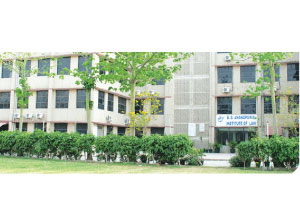
B S Anangpuria Educational Institutes Faridabad, Haryana

Director: Dr. S S Tyagi
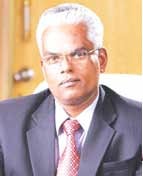
Prior to joining B S Anangpuria Educational Institutes, S S Tyagi was associated with Delhi University and the YMCA Institute of Engineering. He has completed PhD in Electromagnetic Fields from the University of Delhi. A dedicated educator, he has wide experience of teaching in undergraduate and post graduate levels of many different research projects. He has successfully completed the projects awarded by AICTE and guided students in post graduate level. He has a vast experience in handling all kinds of student affairs.
Globally competitive and locally responsive
Today it is difficult for us to imagine education without modern digital teaching tools. Digital technology is now mandatory for our system of education. Our Institute caters to students in the fields of technology, management, education, law and pharmacy. Incorporation of digital tools is a necessity for us as without
such tools we won’t be able to be globally competitive and locally responsive. The main goal of our educational policies is to provide our students with the best possible opportunities for all round development.
Digital tools for education
Currently we make use of innovative Content Management Solution, Online Assessment Solution and College Wise Enterprise Management Solution. The system for Synchronous Learning between Intra campuses and Inter Campuses developed by WheeBOX is a major initiative for our educational ecosystem. As of now we have one computer for every four students in the institution, but the ratio will improve in near future. We have also installed Robust Online Assessment, Feedback Analytics Solutions and On Cloud Content Solutions from WheeBOX. With the help of these solutions our students are able to assess their own cognitive skills from anywhere – from the campus, lab, hostel and even from home. Our teachers use lot of teaching and self-learning material that is available on web. Occasionally we even make use of Wikipedia.

Vision Statement
We are inspired by the idea of providing our students with the kind training that will enable them to become worthy citizens of the world.

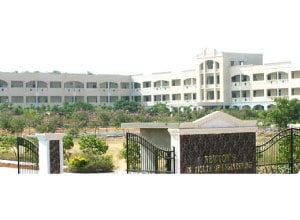
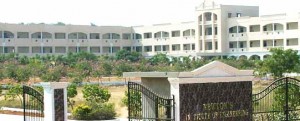
Newton’s Institute of Engineering Guntur, Andhra Pradesh

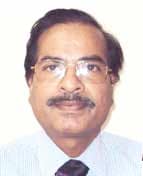
Principal: Dr. M Janardhan Reddy
Dr. M Janardhan Reddy, a professor in Electrical engineering, has over 20 years of experience in education industry. He has been at the institute for the past 8 years. During this period he has brought about several innovations to improve the quality of education. He introduced several teaching tools to enhance the scope of learning methods available to the students. He introduced a wide range of digital content for teaching in the form of videos, e-books, e-journals and e-magazines.
Advantage digital technologies
Multimedia and video content are of great help in letting students accomplish their learning at a much faster pace, as compared to traditional methods of teaching. Hence, digital content
must be encouraged in our schools and colleges. The digital systems that we have in the institute include – NPTEL videos, gate material/videos, placement ready material/ videos, digital library, college email, etc. When these were initially deployed in servers, a lot of system usage and maintenance was required. That is when the management decided to install NComputing solution. With this solution lesser numbers of CPU’s can be used to maintain the lab  infrastructure. Things have become easier for the network administrators.
Saving environment with technology
In fact, our institution has been very conscious about helping to save the environment and contributing towards making the earth a greener place. NComputing solution helps us achieve that objective by reducing electricity consumption to a fraction and bringing down the levels of e-wastage. The institute further plans to deploy research videos, practical workshops, and gaming workshops We have installed the shared computing solution which has improved the ration of computers to students in the institute. We plan to make further investments to ensure that every student has access to his or her own computer system.

Vision Statement
The institute aims to provide our students with cutting edge digital content so that they are able to develop the knowledge for competing in an e-society.

Jaipuria Institute of Management Indore, Madhya Pradesh

Dean: Dr. Prabhat Pankaj
Dr Prabhat Pankaj has over 21 years including four and half years as JRF/SRF of UGC (on qualifying NET). A post graduate in Economics and a Ph.D. in applied Economics, he obtained first position in the University in graduation and a University Gold Medal in post graduation. Apart from writing in newspapers and magazines including The Economic Times, he has published 26 research papers, 4 books, and several conference papers.

Incorporating latest technologies
The 65 years old Jaipuria Institute of Management aims to incorporate the latest tools and technologies for streamlining its dayto- day operations. The group carries the vision for excellence in education, and it has campuses in Lucknow, Noida, Jaipur andabout a year ago a new campus came up in Indore. The Indore campus has been developed with the aim of challenging the myriad stereotypes in education. Innovative ideas have been incorporated. The institute believes that career building can be achieved through a creative process which is geared to provide full expression to the dreams and passion of all stakeholders.

Deployment of digital technologies
The institute has deployed Serosoft’s cutting-edge Institute Management System called Academia ERP for automating and streamlining all the functions at the institute. We are the first institute in South East Asia to conceptualise a contemporary management education system with the inclusion of digital business management practices. The Institute follows a completely paperless system. Session materials get uploaded on the academic ERP, which is based on Serosoft’s Academia. Students have access to a digital library. They can also access various learning tools on the web. In near future, the Institute plans to deploy learning systems that will make use of tablet PCs, podcasts, live video streaming and wikis.

Vision Statement
The purpose of the institute is to prepare a new generation of responsible business and social leaders who can meet the challenges of the 21st century.

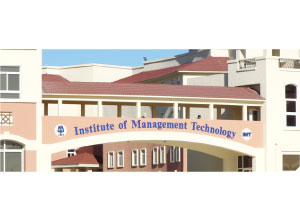
Institute of Management Technology , Ghaziabad, Uttar Pradesh

Chairman: Dr. A.M. Sherry
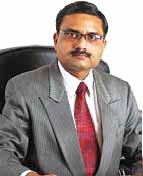
Dr. Arun Mohan Sherry is a Ph.D., M.Sc. (Gold Medallist),and M.Tech. (Computer Science IIT Kharagpur). He has received the Anand Swarup Bhatnagar Gold Medal for securing highest marks in post-graduate examination. In 2011, he received the “Rabindranath Tagore Samman” for his contribution in the field of Technical Education. He has more than 19 years of experience in teaching and research. Presently he serves as the Director of IMT-CDL, Dean (Student Affairs & Corporate Affairs) of IMT Ghaziabad and Chairman (Joint Admission Committee) of Ghaziabad, Nagpur, Hyderabad and Dubai campuses.
Benefits of digital education
Today we have the system of digital libraries, which provide
business leadership and corporate excellence our students with access to books anytime-anywhere. For instance, the Digital Library from Books24x7, an offering from 24×7 Learning, gives a revolutionary approach to problem solving and learning by providing searchable, online access to the full, unabridged contents of thousands of Business, Technical and Finance books. At IMT Ghaziabad we are making use of intranet on advanced fibre optic cables. It gives a wealth of information via connectivity of 100 Mbps to the entire campus including the hostel blocks. Wi-Fi enabled, all areas of the campus enjoy the internet, round the clock. The Computer lab is equipped with state-of-the-art technology and is available to students six days a week. The IMT library has very rich collections of e-books, ejournals, corporate and industry information and country research databases to fulfil the research and teaching related needs of the academic community. Our library boasts of excellent resources, which draw their content from systems like 24x7Learning, CRISIL, World Bank Databases, and much else. Every student in the institute has access to his own computer for learning.

Vision Statement
Our ambition is to make IMT a global integrated business school, which is known for its contribution to management education,

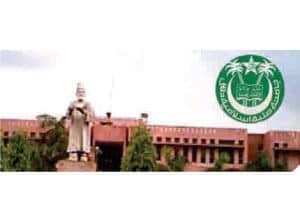
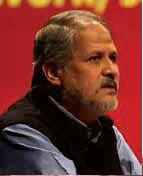
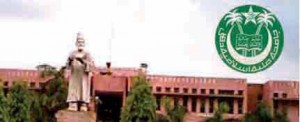
Jamia Millia Islamia, Jamia Nagar, New Delhi

Vice Chancellor: Najeeb Jung
Najeeb Jung joined the Indian Administrative Services (IAS) in 1973 and worked in different capacities in Madhya  Pradesh and with the Government of India at the centre. He subsequently worked with the Asian Development Bank (ADB) and the Oxford Institute for Energy Studies (Oxford University) on energy related issues. He is an expert on governance and energy, having worked with different governments, the public sector and the private sector in these sectors.
The new tools of education
Digital teaching tools have brought a revolution in the way we approach education in the 21st century. The use of digital technologies in teaching and learning has become particu-
larly essential in view of the fact that we are seeing a gradual expansion in the growth of knowledge in all the disciplines of education. At the Jamia Millia Islamia many different digital technologies have already been deployed. We are  sing LCD projectors for teaching in various faculties, departments and centres of the University. In engineering, science and management disciplines, in particular, digital tools have gained an immense amount of popularity. Some faculty members are using e-contents for teaching in their classrooms.
Deployment of digital technologies
The University is planning to set up smart classrooms in all departments of the university. Deployment of learning management system (LMS) is being initiated by the university in order to improve the overall quality of teaching, learning and assessment. We are also using the quality educational material that is also available on the World Wide Web. The ratio of the number of students and the number of computers in the university is 5:1.

Vision Statement
Our aim is to use ICT technologies to bring further improvements in the education that we are offering to our students. We are open to the idea of modern technology transforming the nature of the present universities, making them digital and virtual.

C & K Management Ltd Royapettah, Chennai

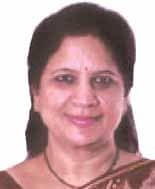
Senior Vice President: M K Geetha
With her expertise in elearning,M K Geetha has  been able to conceptualise, develop and launch myriad market knowledge  portals, which cater to experienced professionals in the finance vertical. A graduate in physics from Madras University, M K Geetha is one of first hundred Indians to acquire the CFA charter. She is also one of the first twenty Indians to get a certificate in Information System Audit from ISACA (USA). She was part of the Price Waterhouse/ICFAI study group for a study on “Disclosures” under the USAID FIRE project. Presently, she is serving as a nominated Member in The Institute of Chartered Financial Analysts of India University, Sikkim.
Stimulating learning
Very often we make the mistake of having a rather narrow view of digital learning. The truth is that digital learning, which is the

Digital Tools already deployed in the institute

a. Learning Management System with unit wise and overall time tracking
b. Online practice tests
c. Online assessment engine with complete tracking of scores and number of attempts d. Mobile alerts about various updates same as e-learning, is not the name of a particular programme or a single technology. It subsumes a range of technologies and products. The most important factor in using digital tools and technologies lies in the methodology. If the methodology is right, the digital tools will serve the purpose of furthering education in the classrooms. Each and every technology has its own issues. For the best learning outcomes, all the technological issues have to be taken into account. Students can access the e-learning courses on the internet from their respective locations. They do not need to come to the institute for the same. In near future, the institute is planning to move to m-learning platform for supplementing online content.

Vision for future
The institute believes in “Transforming Talent to Impact Lives”.

LATEST NEWS