

Home Blog Page 126

We envision quality education with new-age pedagogy: Dr. Neeta Bali, Seth Anandram Jaipuria Group of Schools

neeta bali

Academic rigour is strengthened with a host of 21st-century skills that we develop in children. The thrust is on critical thinking skills rather than rote memorization, shared Dr. Neeta Bali, Director-Schools, Seth Anandram Jaipuria Group of Schools in an exclusive interview with Sheeba Chauhan of Elets News Network. Edited excerpts:

How do you ensure that the Seth Anandram Jaipuria Group of Schools maintains high standards of education across all its branches?

Academic rigour is a complete non-negotiable at Seth Anandram Jaipuria Group of Schools. We adopt the best of new-age pedagogy and infuse it with the power of digital technology to ensure optimal learning experiences and outcomes among students. For instance, our schools adopt practices such as computational thinking to equip children with the know-how to frame problems in a programming language. We encourage the design thinking approach to problem-solving and differentiated learning to personalise education. Project-based learning is actively practiced in the Atal Tinkering Labs. Academic rigour is strengthened with a host of 21st-century skills that we develop in children. The thrust is on critical thinking skills rather than rote memorisation. We guide children toward developing an informed perspective about local, national, and global issues. At the same time, we ensure holistic development by nurturing sporting caliber and artistic creativity. All our schools have radio jockey studios to help students build their communication skills.

The high standard of education is upheld particularly through the regular professional development of teachers through the in-house academy called Saamarthya Teachers Training Academy of Research (STTAR). Frequent sessions for capacity building of staff to keep them updated, integration of the latest technology to enhance teaching-learning, pedagogies that spell modernism, and regular academic audits ensure that standards are maintained. Relentless efforts are made to ensure standardisation to maintain quality across various schools through the corporate office.

What is Saamarthya Teachers Training Academy of Research (STTAR) that your group launched in 2020 to build new-age pedagogical competencies in today’s educators?

STTAR or Saamarthya Teachers Training Academy of Research (STTAR) is a teachers’ training academy with expertise in developing the latest pedagogical competencies in today’s educators. The academy was founded in 2020 when the teaching community was faced with the challenge of delivering online education to students during the prolonged Covid lockdowns.

Since then, the vision and scope of the academy have expanded by leaps and bounds. Today, the academy is transforming the education landscape with proficiency in four verticals: teacher training, curriculum designing, school enrichment programmes, and academic research. I’m pleased to share with you that in May 2023, the academy conducted the STTAR Global School Education Conference which saw enthusiastic participation from global thought leaders, educators, academics, and industry experts. In the past, the academy has imparted ICT training to 10,000 teachers of government schools in Uttar Pradesh. Very recently, STTAR launched a new platform called STTAR E-Learning which offers self-paced learning courses for teachers on some of the very relevant topics in present-day pedagogy.

UGC has approved the hiring of Industry experts as professors for practice. What are your views on industry experts as teachers for schools? Can we see any such practice in schools of India? Will that be of any help?

We welcome the decision by UGC. Hiring industry experts as professors will surely infuse an empirical element in education as these professionals will bring real-world experience with them. This will help to reduce the gap between the erudite world of academia and the action-oriented domain of industry. Students will benefit the most from such practices, particularly in the schools that are beginning to rope in industry experts from various sectors. To give you an example, Seth Anandram Jaipuria School, Ghaziabad, hosted a special session by the world-renowned educationist and computer scientist – Dr. Sugata Mitra, a few months ago. Both teachers and students benefitted a lot. The value added by such initiatives is immense.

The group has many franchisee schools and has also ventured into preschools with the brand ‘Little One’ imparting quality education from KG to PG. What is your plan for expanding in the years to come?

Our focus is particularly on tier 2 and tier 3 cities where we believe, there is immense potential among young learners but not enough avenues to avail quality education. Presently, the group has 16 operational partner schools and 18 signed up and slated to open in the years ahead. By the year 2025, we aim to add 25 more schools to our fast-growing network. Our vision is not just to increase numerically, but to take quality education backed by new-age pedagogy to the heart of India.

The World Education Summit has been igniting transformation in the education industry since its initial edition. What are your thoughts on being a part of the 26th edition of this global platform on 4-5 July in New Delhi?

Having been associated with the event for last many years, my view is that it brings some of the best educators together on the same platform, enabling them to share thoughts, views, and ideas, and brainstorm together. The world of education is very dynamic, what with new advances in technology and pedagogy. Educators need to continually reinvent their methods, styles, and perspectives to keep up to speed with these advances. The World Education Summit is an important forum to initiate meaningful discussions and create a consensus on the way modern education needs to take.

 

AICTE launches ATAL Academy Faculty Development Programme

AICTE launches ATAL Academy Faculty

The All India Council for Technical Education (AICTE) has announced the beginning of the ATAL Academy Faculty Development Programme 2023–24 in a major move to revamp India’s higher education system. The ATAL portal and plan were officially launched by Prof. T.G. Sitharam, Chairman, AICTE who emphasised the need of training faculty members with the skills and knowledge required for Education 4.0. With this programme, educators will be given the tools they need to excel as leaders, researchers, innovators, and teachers in their various disciplines, which is in line with the National Education Policy 2020.

“The ATAL Academy FDPs is a visionary step towards transforming the higher education system in India in alignment with the National Education Policy 2020. The ATAL Academy will empower faculty members to become effective teachers, researchers, innovators, and leaders in their respective fields. The ATAL Academy will also foster a culture of lifelong learning among faculty members and enhance their professional growth”, said Prof. T.G. Sitharam.

“The ATAL Academy is a unique platform that will give faculty members access to high-quality FDPs on various topics relevant for Education 4.0,” stated Dr. Abhay Jere, Vice Chairman of the AICTE. The ATAL Academy will also give faculty members the chance to network with other professionals and experts from many industries and fields. The ATAL Academy will generate a pool of knowledgeable and assured professors who can contribute to the growth of the knowledge society.

Faculty members will have access to excellent Faculty Development Programmes (FDPs) within the ATAL Academy that encompass both technical and non-technical disciplines. Offline FDPs can be offered in a variety of subjects, including engineering, management, computer applications, arts and crafts, life skills development, the Indian Knowledge System, universal human values, and more by institutions that have received approval from the AICTE. These courses will cover subject-matter expertise, industry connections, instructional techniques, research prowess, life skills, civic responsibility, and professional growth.

The Future of Learning: Discover the Game-Changing Interactive Panel by Senses – The Preferred Choice for Indian Educators with 70% Market Dominance

The Future of Learning

Education is constantly evolving, and the integration of technology has become an essential part of modern classrooms. In this era of digital transformation, Senses, an innovative interactive panel brand, has emerged as the frontrunner in revolutionising the way Indian educators teach and students learn. With a 70% market dominance, Senses has made its mark in over 4,000 schools across the country, with an impressive installation of 50,000 screens. Let’s take a look into the game-changing features and customer-centric approach that make Senses the preferred choice for Indian schools and teachers.

Senses owe its remarkable success to its feature-rich software. Designed based on teacher insights, it offers smart and intuitive features tailored to the unique needs of the Indian classroom. With lifetime free software upgrades, Senses continuously enhances its interactivity. With easy access to Wikipedia, Google, and YouTube, Senses facilitates a deeper understanding of the world, while inbuilt tools simplify the study of Math, Geography, and Science.

Durability and longevity are vital considerations in educational technology. Senses excel in this aspect, offering a premium and trusted product that withstands the test of time. With a solid reputation endorsed by teachers from over 4,000 schools, Senses is the go-to brand for reliable and durable interactive panels. Despite its premium pricing, Senses delivers complete value for money, making it a great investment for any institution. Embrace the future of education confidently with Senses’ innovative and long-term solution.

Senses invest significant manpower in training educators on how to harness the full potential of their technology. Through extensive training programs, teachers gain the knowledge and skills to make the most of the new technology in their classrooms. Senses also offer certifications to teachers upon completing the training, recognising their dedication to utilizing technology effectively.

Moreover, Senses sets itself apart with its responsive customer support team. In times of need or technical difficulties, educators can rely on Senses to provide prompt assistance. The brand understands the importance of uninterrupted learning and strives to ensure that any challenges faced by educators are quickly resolved.

The future of learning is being shaped by technology – there’s no avoiding that! Senses is at the forefront of this revolution. With the support of our patrons, schools, and educators, Senses can take education in India to newer unforeseen heights.

Views expressed by Digital Media team of Senses Electronics

Multidisciplinary Approach and Multilingualism: Nurturing Holistic Development in School – Gautam Rajgarhia, Delhi Public School

Gautam Rajgarhia

Initiatives like the National Mission of Mentoring (NMM) undertaken by the National Council for Teacher Education (NCTE) are crucial for the growth and development of our education system, writes Gautam Rajgarhia, Pro Vice Chairman, Delhi Public School, in an exclusive interaction with Srajan Agarwal of Elets News Network (ENN). Edited Excerpts:

How has your journey been from IT engineer to educator? Were any specific sort of challenges you faced in your path to reach such a prestigious position and being from the top management of Delhi Public School?

My journey from an IT engineer to an educator has been a transformative and fulfilling experience. It all began with my passion for technology and the desire to make a positive impact on young minds. While working as an IT engineer, I realised the tremendous potential in education to shape future generations. This realisation motivated me to pursue a career in teaching.

Transitioning from the IT industry to education came with its own set of challenges. Adapting to a different work environment and understanding the nuances of pedagogy required a shift in mindset and skill set. I had to enhance my knowledge in various subjects, understand the psychology of learners, and develop effective teaching strategies. It was a continuous process of learning and growth.

One of the specific challenges I faced was gaining acceptance and credibility as an educator coming from a technical background. However, I leveraged my IT expertise to incorporate innovative teaching methods and integrate technology into the classroom, which helped bridge the gap and earned the respect of my colleagues and students.

Reaching a prestigious position in the top management of Delhi Public School demanded dedication, perseverance, and strong leadership skills. I had to prove my abilities and demonstrate a deep commitment to quality education. Overcoming various challenges, I have worked diligently to contribute to the school’s vision and provide a nurturing environment for students to excel academically and personally.

My journey from an IT engineer to an educator has been a rewarding experience, enabling me to make a difference in the lives of countless students and contribute to the field of education.

As per National Curriculum Framework, all NCERT textbooks will be available digitally available and will get a revision in terms of chapters and context. What is your take on the same?

I believe the decision to make all NCERT textbooks digitally available and revise them in terms of chapters and context, as per the National Curriculum Framework, is a progressive and welcome step in the field of education. Embracing digital resources and corporating relevant updates in textbooks can greatly enhance the learning experience for students and keep pace with the evolving educational landscape.

The availability of NCERT textbooks in digital format brings numerous advantages. It ensures wider accessibility, enabling students from all backgrounds to access quality educational materials. Digital textbooks also offer interactive features, such as multimedia elements, animations, and hyperlinks, which can engage students and make learning more dynamic and engaging. Additionally, digital resources allow for easy updates and revisions, ensuring that students receive the most up-to-date information and knowledge. The revision of chapters and context in NCERT textbooks is crucial in keeping them relevant and aligned with the changing educational needs and societal developments. As our understanding of various subjects evolves and new discoveries are made, it is important to reflect these changes in our curriculum. Revising the content and context of textbooks allows for a more comprehensive and accurate representation of the subject matter, providing students with the most relevant and contemporary knowledge.

Overall, the digitisation and revision of NCERT textbooks align with the goals of creating a modern, inclusive, and dynamic education system. It empowers students with updated information, promotes interactive learning experiences, and ensures equitable access to educational resources.

With the alignment of NEP, how you are implementing a multidisciplinary approach and multilinguistic practice at your school?

At our school, we strongly believe in the power of a multidisciplinary approach and multilingual practice to foster holistic development and inclusivity among our students. To implement this approach, we have taken several key steps. Firstly, we have redesigned our curriculum to incorporate interdisciplinary connections across subjects. We encourage teachers to collaborate and integrate concepts from different disciplines, enabling students to see the interconnectedness of knowledge. For example, when studying a historical event, students explore its scientific, cultural, and linguistic implications, providing them with a comprehensive understanding.

Secondly, we promote multilinguistic practice by offering language courses that go beyond the standard curriculum. In addition to the core languages, we provide elective language options to expose students to diverse linguistic traditions. This not only expands their linguistic skills but also fosters cultural appreciation and empathy.

Furthermore, we organise multicultural events and celebrations where students showcase their linguistic and cultural talents. These events create an environment of inclusivity and respect, allowing students to learn from one another’s diverse backgrounds.

Recently, the National Council for Teacher Education (NCTE) started the National Mission of Mentoring (NMM) in Pilot mode in 30 Central Schools across the nation. What is your thought on such initiatives?

I strongly believe that initiatives like the National Mission of Mentoring (NMM) undertaken by the National Council for Teacher Education (NCTE) are crucial for the growth and development of our education system. The NMM’s pilot mode implementation in 30 Central Schools across the nation is a commendable step towards enhancing the quality of teaching and learning.

Mentoring plays a pivotal role in shaping the future of educators and students alike. It provides guidance, support, and a nurturing environment for both novice and experienced teachers. The NMM’s focus on mentoring will undoubtedly help in improving teaching methodologies, professional development, and overall instructional practices.

By piloting the program in Central Schools, the NCTE ensures that the benefits of mentoring reach a diverse range of educational institutions. These schools serve as models for effective mentoring practices, and their experiences can be replicated and scaled up in other schools across the country.

Overall, the NMM initiative showcases a proactive approach to improving the teaching learning process by recognising the significance of mentorship. It has the potential to uplift the standards of education and empower educators to make a lasting impact on students’ lives. I am optimistic that such initiatives will lead to a positive transformation in the education sector, nurturing a generation of skilled and motivated teachers.

UGC has approved the hiring of industry experts as professors for practice. What are your views on industry experts as teachers for schools? Can we see any such practice in schools of India? Will that be of any help?

The approval by the UGC to hire industry experts as professors for practice is a progressive move that can bring numerous benefits to the education system. While this initiative primarily pertains to higher education institutions, the concept of incorporating industry experts as teachers in schools could also have positive implications.

Bringing industry experts into schools can provide valuable real-world insights and practical knowledge to students. These experts can share their experiences, industry trends, and practical applications of the subjects being taught. This can bridge the gap between theoretical concepts and their practical relevance, enhancing students’ understanding and preparing them for the demands of the professional world.

While the practice of hiring industry experts as teachers is not yet widespread in schools across India, there are a few instances where schools have collaborated with professionals from various fields for guest lectures or workshops. These engagements have proven to be highly beneficial in offering students exposure to different industries and career pathways.

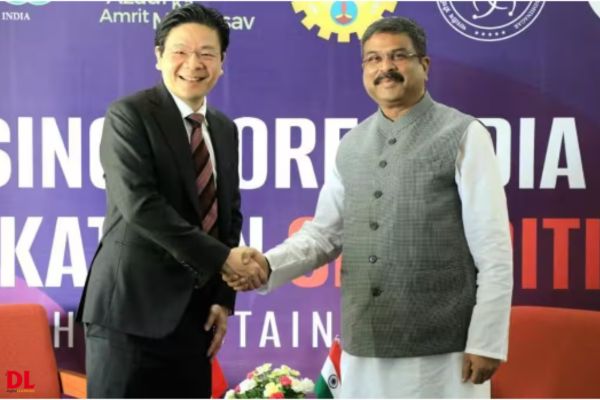
India and Singapore to collaborate and create future-ready workforce says Dharmendra Pradhan

India and Singapore

There is enormous potential for India and Singapore to collaborate and create a workforce that is ready for the future for the entire world stated Union Education Minister Dharmendra Pradhan at the completion of the third iteration of the Singapore-India Hackathon.

According to Dharmendra Pradhan, “Our collaboration in the areas of knowledge, skill, and innovation will not only benefit India but also countries in the global south who are looking to us to lead the way.”

The All India Council for Technical Education (AICTE) and Nanyang Technological University, Singapore, collaborated to organise the closing ceremony.

Dharmendra Pradhan praised Singapore’s skilling concept and asserted that India should learn from it by making sure that everyone has access to training for respectable employment and establishing a confident society.

He said that India needs to work on industry relevant course curriculum and another area of priority for the country on the lines of what Singapore has already attained.

“There is immense scope for India and Singapore to work together to achieve mutual priority, particularly towards preparing a future ready workforce for the entire globe. Skill development and knowledge collaboration are an important element for bilateral strategic partnership,” he said.

According to Singapore’s Deputy Prime Minister and Finance Minister Lawrence Wong, The hackathon event is special and valuable because it “brings out best youths and minds to solve global challenges together.”

The leaders of both nations embrace it, and it was created from Prime Minister Narendra Modi’s vision. For the first time since the (COVID-19) pandemic, I’m thrilled to attend the closing event in Gandhinagar, he remarked.

AI Push Expands the Horizons of Knowledge in Higher Education: Prof. (Dr.) Sibaram Khara, Sharda University

Sibaram Khara

Many universities and educational institutions worldwide have recognised the growing importance of AI and have introduced courses and programs in this field, shared Prof. (Dr.) Sibaram Khara, Vice-Chancellor, Sharda University, Noida, Uttar Pradesh in an exclusive interview with Sheeba Chauhan of Elets News Network. Edited excerpts:

The Sharda Group of Institutions has been a provider of world-class education since 1996. Please let us know, what were some of the major challenges in the path. How is technology helping in mitigating the challenges?

The Sharda Group of Institutions, as a provider of world-class education, has faced several challenges throughout its journey.

  • Limited resources: Educational institutions often face resource limitations, including infrastructure, faculty, and teaching materials. Technology can help overcome these challenges by offering blended classrooms, digital textbooks, LMS, e-content, Video lectures, and digital libraries including journals and textbooks. These digital resources have improved the effectiveness of classroom teaching and have brought quality resources and students closer.
  • Personalised learning: Every student has unique learning needs and abilities, and catering to individual differences can be a challenge in traditional classroom settings. Technology can assist in personalised learning by providing adaptive learning systems, intelligent tutoring systems, and data analytics. These technologies can track student progress, identify areas of improvement, and provide customised learning experiences to meet individual needs.
  • Communication and collaboration: Effective communication and collaboration between students, teachers, and parents are crucial for a well-rounded education. Technology tools such as online mentoring, online grievance handling, real-time availability of data of students in terms of attendance, marks, grades etc, online forums, video conferencing, and collaborative platforms facilitate seamless communication and enhance engagement among stakeholders. This helps in creating a connected and supportive learning environment.
  • Keeping pace with changing trends: The education landscape is constantly evolving, with new teaching methods, research findings, and technological advancements. Keeping up with these changes can be a challenge for educational institutions. However, technology can play a vital role in staying updated by providing access to talks, and sessions by academicians and industry experts from anywhere in the world. Also, the availability of online courses specific to certain topics or areas expands the horizon of information and knowledge. It enables educators to expand their knowledge base and keep abreast of the latest developments in their respective fields.

What is your vision behind the recently launched Skill Development Center in the Internal Quality Assurance Cell (IQAC) department of your university?

Sharda University’s decision to launch a Skill Development Center indicates a commitment to enhancing the skill sets of its students and promoting overall quality in education. The Center emphasises equipping students with relevant industry-specific skills to enhance their employability and career prospects.

The Skill Development Center shall serve as a dedicated space where students can receive specialised training, guidance, and support to develop and enhance their skills. This would include both technical skills relevant to their chosen field of study as well as soft skills such as communication, leadership, teamwork, and problem-solving. The center shall offer high-end and basic-level workshops, training programs, seminars, and other activities aimed at fostering the holistic development of students. We plan to empower our students with enhanced soft skills and enable them to perform better in life through placement or their own entrepreneurship venture.

It may also facilitate a streamlined approach to monitoring and evaluating the effectiveness of these skill development initiatives.

Catering to present AI push in the education ecosystem, do you have any specific courses for undergraduate or postgraduate students?

Many universities and educational institutions worldwide have recognised the growing importance of AI and have introduced courses and programs in this field. Sharda University had developed specific courses and specialisations for undergraduate and postgraduate students to cater to the AI push in the education ecosystem. Specialisation like AI and Machine Learning is offered at B.Tech Programme. Besides this courses like AI, AI in the Business Environment, Computation Agents for AI, etc. are offered in various Programmes.

Do you believe that the recently introduced guidelines by the UGC, allowing completion of degrees or diplomas based on earned credits rather than the duration of the course, are a positive step towards accomplishing more in a shorter timeframe?

The guidelines issued by the UGC in India, allow the completion of degrees or diplomas based on earned credits rather than the duration of the course.

Flexibility and customisation: Allowing completion of degrees or diplomas based on earned credits can provide students with greater flexibility in designing their own academic paths. They can choose courses based on their interests, strengths, and career goals, enabling a more personalized learning experience. Time-saving: If implemented effectively, this approach has the potential to enable students to complete their degrees or diplomas in a shorter timeframe. By earning credits at an accelerated pace, motivated students can graduate earlier and enter the job market sooner.

Focus on competency: This system emphasizes the acquisition of skills and knowledge rather than the rigid adherence to a fixed duration. Students who can demonstrate proficiency in a subject area can progress faster, while those who require more time to grasp concepts can have the flexibility to do so without being constrained by fixed timelines.

Curriculum and Credit Framework: The implementation of credit based degree completion requires robust mechanisms to ensure the maintenance of academic standards and quality. The flexibility in choosing extra courses as credit courses will also enhance the quality of student graduating.

Infrastructure and resources: The successful implementation of credit-based systems requires adequate resources, including faculty, infrastructure, and support services. Institutions need to ensure they have the necessary infrastructure to handle increased course load, provide support to students, and maintain a balanced student-faculty ratio. This initiative will improve the quality of education.

Transition challenges: Shifting from a time-based to a credit based system may require significant adjustments from both students and institutions. There might be challenges related to curriculum restructuring, faculty training, and aligning with the industry’s expectations. A smooth transition would require careful planning and coordination.

The World Education Summit has been igniting transformation in the education industry since its initial edition. What are your thoughts on being a part of the 26th edition of this global platform on 4-5 July in New Delhi?

Participating in the World Education Summit can offer benefits such as networking opportunities, exposure to innovative ideas and practices, insights into emerging trends in education, and the chance to contribute to discussions on shaping the future of education. It allows universities and educational organisations to stay updated with the latest developments in the industry and establish partnerships with stakeholders from around the world.

IIT Delhi campus in Abu Dhabi will unfold a new chapter in internationalisation of India’s education: Dharmendra Pradhan

IIT Delhi campus in Abu Dhabi

The Ministry of Education, the Abu Dhabi Department of Education and Knowledge (ADEK), and the Indian Institute of Technology Delhi (IIT Delhi) have signed a Memorandum of Understanding (MoU) to build IIT Delhi’s first campus in Abu Dhabi.

HE Sheikh Mohamed Bin Zayed Al Nahyan, President of the UAE, and Narendra Modi, Prime Minister of India, were present for the signing. The MoU was signed by Professor Rangan Banerjee, Director of the Indian Institute of Technology Delhi, HE Mubarak Hamad Al Mheiri, ADEK Under Secretary, Shri Sunjay Sudhir, Indian Ambassador to the UAE.

The Memorandum of Understanding (MoU), which complements the ongoing Comprehensive Economic Partnership Agreement (CEPA) between the UAE and India, reflects the shared vision of both countries to prioritise excellence in education, innovation, knowledge sharing, and investments in human capital as the cornerstones of future prosperity and as facilitators of long-term economic growth and sustainable development.

The agreement was signed in the presence of the prime minister of India, Narendra Modi, and according to union minister of education, skill development, and entrepreneurship Dharmendra Pradhan, it opens a new chapter in the internationalisation of Indian higher education. The IIT Delhi campus in the UAE will stand as a symbol of India-UAE friendship and serve as an example of New India’s innovation and skill.

He added that the IIT Delhi campus in Abu Dhabi will establish a revolutionary model for harnessing the power of knowledge for both individual and collective benefit. He continued, “It also opens a new chapter in the internationalisation of Indian education.”

Sara Musallam, Minister of State for Early Education, Chairman of the Federal Agency of Early Education, and Chairman of ADEK, spoke about how the MoU represents a significant step in Abu Dhabi’s commitment to accelerating the creation of a world-class education system that supports the priorities and goals of the country’s development. Our efforts to create a globally competitive education ecosystem have reached a significant turning point with the execution of this MoU. This MoU demonstrates our dedication to provide top-notch educational opportunities, which is consistent with our national goal.

We anticipate that the IIT Delhi – Abu Dhabi partnership will support our transition towards fostering an environment that nurtures innovation and accelerates high-level research, stated HE Sara Musallam.

In collaboration with important players like the Technology Innovation Institute, Hub71, Khalifa University, New York University Abu Dhabi, and the Mohamed bin Zayed University of Artificial Intelligence, IIT Delhi – Abu Dhabi will complement the academic, research, and innovation ecosystem in Abu Dhabi by providing complementary programmes, conducting cutting-edge research, and advancing the regional startup ecosystem.

In addition to operating research centres for computer and data sciences, sustainable energy and climate studies, and a variety of bachelor’s, master’s, and Ph.D. programmes, the IIT Delhi Abu Dhabi campus is anticipated to begin offering academic programmes in 2024. IIT Delhi – Abu Dhabi is expected to offer a diverse range of programs covering Energy and Sustainability, Artificial Intelligence, Computer Science and Engineering, Mathematics and Computing and other disciplines of engineering, sciences, and humanities.

IIT Delhi – Abu Dhabi graduates will join an illustrious alumni network of graduates from 23 campuses across India. With outstanding credentials, IIT Delhi recently ranked among the world’s top 50 institutions for engineering and technology. It also scored a top 30 rank for global employability in the 2022 QS World University Rankings. IIT Delhi has been a frontline contributor to India’s R&D ecosystem in sectors ranging from defense, healthcare, and rural development, to transportation, IT, and software.

Building a better future with nurturing environment at schools: Nisha Bhakar, Chinta Sasidhar Foundation (Nandha Gokulam Life School)

nisha

An educated population understands the importance of interdependence in every aspect of human existence and works towards creating and sustaining that ecosystem. This starts at the early impressionable age and the right nurturing environment at school plays a critical role, shared Nisha Bhakar, CEO – Education, Chinta Sasidhar Foundation ( Nandha Gokulam Life School ), Hyderabad in an exclusive conversation with Sheeba Chauhan of Elets News Network. Edited excerpts:

Can you tell us about the unique educational approach at Nandha Gokulam Life School? How does it differ from traditional educational models?

Nandha Gokulam Life School (NGLS) stands for the desire to create, make a difference, and challenge the traditional ideas of what a school should and shouldn’t be. The school focuses on students engaging with life at large and beyond textbooks. The environment is fearless where dialogue and different ideas are investigated and respected.

The campus has indigenous cow breeds that are adopted and attended by students and teachers during their entire school stay. The student’s day schedule keeps dedicated time when the NGLS community engaging and learns about the local and medicinal plants and agricultural practices.

The staff is trained all through the year to play the role of a coach and mentor to the students and continuous assessments and constructive feedback become part of school’s daily routine. Educators understand the need and importance of differential instructions and alter their pedagogies accordingly.

NGLS stands for its culture of learning and growth mindset and we are dedicated to building a culture of reading and dialogue amongst all members.

What is the vision and mission of the Chinta Sasidhar Foundation, and how does it align with beliefs about education?

An educated population understands the importance of interdependence in every aspect of human existence and works towards creating and sustaining that ecosystem. This starts at the early impressionable age and the right nurturing environment at school plays a critical role.

The vision of Chinta Sasidhar Foundation, CSF is to create a compassionate world in which humans live a happy, contented and free life. They are connected to and coexist with the environment, animals, and people around them, giving and finding the space required to live fully and freely.

What role do you see Nandha Gokulam Life School playing in the broader educational landscape in India as a whole?

There aren’t many business houses in India that have invested in creating an international residential school with a vibrant teaching community and facilities for the lesser privileged students across the country. Chinta Sasidhar Foundation (CSF) has taken up this bold step with the belief that every child deserves the right schooling environment that supports inner transformation and liberates the mind. Our team would work tirelessly to help students and teachers realise their true potential, awaken them to their strengths and their responsibilities as a member of the society and act as an aware inhabitants of the earth.

What are your future plans for the Chinta Sasidhar Foundation and Nandha Gokulam Life School?

Chinta Sasidhar Foundation (CSF) intends to play a critical role in education by setting up meaningful learning ecosystems for all those who are connected with education. NGLS is our 1st international residential school for lesser privileged students followed by a few more schools offering national and international qualifications for students across socio-economic strata of our society. Nurturing a community of teachers and school leaders who are open to dialogue and willing to challenge the existing school system is in the pipeline too.

Can you tell us about any partnerships or collaborations that have been particularly impactful for the Chinta Sasidhar Foundation?

Learning in school happens in different ways and the most important partnership that we are focused on is that between humans, animals, and plants. The day at school is structured in a way where every member of the school interacts with cows, calves, and bulls and also works on organic farms on campus. NGLS is working on collaborating with the best in outbound education providers as well as agencies that would support us in implementing a structured sports curriculum. An empowered teacher is pivotal in making happy and fearless schools and hence a lot of focus will be given in ensuring regular interaction with different trainers. Partners who would engage students in dialogues on our rich Indian cultural heritage and literature are going to be part of NGLS journey too.

The World Education Summit has been igniting transformation in the education industry since its initial edition. What are your thoughts on being a part of the 26th edition of this global platform on 4-5 July in New Delhi?

I congratulate and applaud the team of World Education Summit for actively and consistently striding towards making the right noises and asking the right questions to ensure we create a society that is more responsible, reasonable and fair to themselves and everyone around. It’s exciting and interesting to be part of a forum where one shares and learns from not just the school leaders but higher education leaders and government officials as well.

Thinking Around Technology: Nurturing creativity alongside AI – Amrita Burman, Sunbeam Group of Educational Institutions

amrita

Artificial intelligence (AI) is not a novel concept but has been continuously evolving and gaining prominence in recent times. It has significantly benefited the education industry, shared Amrita Burman, Deputy Director, Sunbeam Group of Educational Institutions in an exclusive conversation with Sheeba Chauhan of Elets News Network. Edited excerpts:

As the Director of the Sunbeam Group of Educational Institutions, could you share with us the philosophy and vision that drives the organization’s approach to education?

Sunbeam has recently celebrated its 50th anniversary and has embarked on its 51st year with a steadfast commitment to its philosophy. Our philosophy has evolved and gained strength over time. We take immense pride in providing affordable and high-quality education to the middle-class segment of society, encompassing both lower and upper middle-class families.

One of our core principles is to ensure quality education for the masses. While it may be easier to deliver exceptional education with a small number of students in each class, we embrace the challenge of providing quality education despite having larger class sizes. We understand the importance of offering education in close proximity to students’ homes, considering the prevalent issue of traffic congestion in cities like Varanasi. By establishing multiple schools throughout the city, we strive to bring quality education to students’ doorsteps. This approach not only saves their commuting time but also grants them the opportunity to pursue various extracurricular activities that might otherwise be difficult to manage.

Holistic education is another vital aspect of our vision, aligning with the principles outlined in the National Education Policy (NEP). We have been practicing holistic education long before it gained widespread recognition. Our aim is to foster the overall development of each child, ensuring a harmonious balance between academic and co-curricular pursuits. We strive to transform our students into lifelong learners, equipping them with essential skills rather than just imparting information.

Furthermore, being situated in Varanasi, a city with rich cultural heritage and recognised as the cultural capital of the country, holds significant importance for us. We believe in honoring ancient traditions while embracing a modern perspective. Our educational approach blends the wisdom of the past with a contemporary outlook, ensuring that our practices remain relevant and adaptable to changing times.

It’s worth noting that Sunbeam offers education from playgroup to post-graduation. In addition to schools, we also operate higher education institutions, providing various postgraduate courses such as M.A. in different subjects. This comprehensive range of educational offerings, from early childhood to higher education, sets Sunbeam apart and contributes to our achievements as an institution.

Sunbeam Group operates a diverse range of educational institutions. How do you ensure that each institution maintains its unique identity while aligning with the broader goals and values of the group?

Sunbeam’s philosophy is spread beyond Varanasi, as we have established schools in tier two and tier three towns across the country. Our focus is particularly on Eastern Uttar Pradesh, an economically disadvantaged region. Our goal has been to bring quality education to areas that have yet to benefit from its presence. As a result, our student body and parents represent diverse backgrounds and experiences, varying significantly from those in Varanasi and other locations.

The demands of higher education differ from those of school education, and maintaining a minimum standard across our institutions has always been a priority.

AI is a buzz word nowadays. What are your thoughts on AI usage in school education and higher education?

Artificial intelligence (AI) is not a novel concept but has been continuously evolving and gaining prominence in recent times. It has significantly benefited the education industry. When seeking information today, AI algorithms offer numerous suggestions and options based on keywords, showcasing the learning and progress of machines. ChatGPT, for instance, has become popular among students who use it to generate essays, poems, and even songs by inputting relevant keywords.

AI is particularly valuable for handling routine tasks, as it frees up time and mental space for higher-order thinking and activities that require human creativity and individual thinking. However, complete dependence on machines or AI without nurturing creativity or independent thinking in children can be worrisome. Recognising the importance of technology, I believe that instead of ignoring or avoiding it, we must embrace AI and engage in meaningful conversations with children about its impact and responsible usage.

In my school, I have started incorporating AI into assessments by providing a paragraph generated by ChatGPT and challenging students to improve upon it, add different perspectives, and think critically. It is crucial to encourage children to think around technology rather than restraining their creative potential by preventing them from using AI. As teachers, it is essential to develop a good understanding of technology and know how to effectively incorporate it into our teaching methodologies to benefit our students.

The World Education Summit has been igniting transformation in the education industry since its initial edition. What are your thoughts on being a part of the 26th edition of this global platform on 4-5 July in New Delhi?

It is indeed an honor to be speaking at the World Education Summit, and I appreciate the theme chosen for the event: “Navigating Education in a Globalized World.” The theme resonates well, particularly with the current focus on education in the country, following the implementation of the National Education Policy (NEP) and the release of two National Curriculum Frameworks (NCFs). Education has become a prominent buzzword, and the government’s call for recommendations from stakeholders demonstrates their intent to bring about meaningful change and ensure access to quality education for every child.

The word “navigating” holds significance, especially for those of us in the private education sector. We have a responsibility to steer education forward and make it beneficial, rather than solely relying on government policies. While we must comply with government rules and regulations, it is within our hands to shape education.

Additionally, the theme’s focus on a globalized world is crucial. In today’s interconnected world, every action and decision we make can have global repercussions, and vice versa. We aim to cultivate a global mindset among our students, encouraging them to think beyond boundaries and embrace a broader perspective. Furthermore, the NEP emphasizes the importance of reconnecting with our roots and local context. Preserving our local culture, traditions, language, and cuisine is vital in showcasing our diverse identity as a nation.

I am excited to be part of a summit that encompasses a wide range of topics and discussions. I look forward to listening, learning, sharing insights, and making a positive impact.

Artificial Intelligence (AI) and its Relevance in Today’s Education: Vivek Bhandari, Scholarly

Vivek Bhandari

Recently, ChatGPT, an AI-powered tool, took the world by storm when it cleared the United States Medical Licensing Exam (USMLE), Wharton School of Business’ MBA exam, The University of Minnesota’s law exam, Google interview questions and many more with great accuracy. Such incidents have sparked concerns among educators and school authorities due to the potential ethical concerns AI tools raise. These concerns include the risk of cheating and the possibility of students being incentivized to put in ‘zero’ effort.

Eyebrows were raised and lips were curled when Calculators were introduced in schools. Yes, it did alter the traditional way of learning mathematics to an extent. The subsequent foray of computers was a game changer. Although, at first, computers were embraced with a pinch of salt, we gradually adapted and learnt to work in synergy with technology. A similar wave of scepticism took over the world upon the creation of Wikipedia. Teachers feared the death of original research and genuine learning efforts. And here we are, still growing and progressing on the path of innovation with each passing day! However, experts believe AI is here to surpass everything (and everyone) that is even remotely related to technology.

An AI-based writing tool, such as ChatGPT, Bard, Bing Chat, and Jasper.ai to name a few, uses a machine learning technique to generate human-like language. It can converse with people and provide answers to various questions. Some examples of the most common questions asked by users around the world include –

● Write a 500-word essay on <Insert Topic here> from a perspective of a High School student

● Generate compelling Instagram captions for a company dealing in Handmade Products

● Help me find bugs and errors in the following Java Code <paste code below>

● Generate a list of SEO keywords for <insert webpage link> with high search volume

● Provide 10 Multiple-Choice-Questions for 5th Grade Math class test on Multiplication

Benefits of AI in Today’s Education

AI tools offer several benefits for teachers, including:

● Time-saving: AI can automate routine tasks such as grading, lesson planning, tracking student progress and administrative work, freeing up valuable time for teachers to focus on more important activities like providing individualized instruction and support to students and developing engaging lessons.

● Data-driven Insights: AI tools can analyze vast amounts of student data to identify patterns, trends, and areas where students may be struggling. Teachers can provide personalized feedback and recommendations to help students reach their full potential.

● Enhanced Instructional Resources: AI tools can offer teachers a wide range of educational resources, including interactive simulations, virtual reality experiences, and adaptive learning materials, enriching the classroom environment and engaging students in new and exciting ways.

● Accessibility and Inclusion: AI can help teachers differentiate instruction by providing different levels of support to different students especially those with special needs. For example, teachers can employ speech recognition technology to help students with speech impairments, while utilizing text-to-speech tools to support students with visual impairments.

AI tools offer several benefits for students, including:

● Personalized Learning: AI can be used to personalize learning for each student by providing different levels of support and challenges based on their individual needs, abilities, learning styles, and interests. This can help students learn at their own pace in a way that suits them best and reach their full potential.

● Enhanced Engagement: AI-powered educational platforms can infuse learning with entertainment and interactivity using simulations, virtual reality, multimedia and gamification techniques leading to enhanced student engagement and enthusiasm. These elements make learning more engaging, motivating, and enjoyable for students.

● Access to Resources: AI can provide students with access to a wider range of educational resources, such as online tutoring, online libraries, digital textbooks, and interactive learning materials. This enables students to access a wealth of information and learning materials anytime and anywhere, fostering independent and self-directed learning.

● 24/7 Availability: AI-powered platforms can be accessed anytime, anywhere, providing round-the-clock availability for students. This allows them to seek assistance, and clarification, or engage in interactive learning at their convenience.

The use of AI democratizes education by creating a level playing field for students without access to traditional means of education. Nonetheless, students must be made aware of the technology and the power it holds in corrupting their intellectual growth. Instead of hiding it from the learners, it should be made transparent. Only by educating students, we can help them make informed decisions.

Limitations of AI in Today’s Education

● Lack of Creativity: AI’s lack of creativity stems from its inability to generate novel ideas/concepts beyond what it has been trained on. It relies on pattern recognition and repetition rather than true creative thinking.

● Lack of Human Interaction: AI tools can provide personalized learning experiences to students, but they cannot replace human interaction. Students still need human interaction and feedback to develop important social skills.

● Cannot Replace Teachers: AI model has a vast amount of knowledge, but it is still limited in its subject knowledge. It cannot replace the expertise of human teachers/mentors who have years of experience in teaching a subject.

● Dependence on the Internet: AI requires technology to function, which means that students need access to the internet and a PC to use it effectively. This can be a disadvantage for students who do not have access to technology or who are not comfortable using it.

● Tendency to Generate Incorrect Information: Since AI models generate responses based on patterns and examples from its training data, this approach can sometimes result in the generation of plausible-sounding but factually-incorrect information. This limitation can be misleading for students who rely completely on the model’s responses for doing their assignments and research.

Although ChatGPT succeeded in cracking some competitive exams, it was unable to pass the JEE Advanced. This reaffirms the idea that AI-based tools are deficient in logical reasoning, critical thinking, and problem-solving abilities.

In conclusion, like calculators and computers, AI is here to stay; we cannot run away from it, but we need to adapt, learn, and grow with it.

Views expressed by Vivek Bhandari, CEO and Founder, Scholarly

LATEST NEWS