Home Blog Page 183

Burlington English signs MoU with Gurukul The School for school transformation partnership program

Burlington English

Burlington English, a leading global provider of English language learning solutions today signed a Memorandum of Understanding (MoU) for multi-track engagement with Gurukul The School, located in Ghaziabad. The partnership will focus on augmenting the school’s efforts to empower its teachers by further enhancing their communication and English language proficiency skills and curating bespoke learner engagement programmes.

Burlington English offers innovative and unique solutions that use a blended approach to learn English by combining online interactive lessons with in-class tutor-led classes. It works to level up language acquisition by integrating content and technology to improve the way English language is learnt.

Burlington’s content delivery options provide flexibility for both students and teachers and helps to ensure that learning breaks out of the confines of the English language classroom. The Metaverse has become one of the hottest topics in the education technology space, and the centrepiece of Burlington English is its innovative AI-enabled speech-processing and training platform, making it a part of the emerging digital paradigm.

Mr. Ratnesh Jha, Chief Executive Officer, The Burlington Group of Companies, said “In the modern world the necessity to learn English is uncontested. In addition to being the passport for holistic participation in national and international transactions, English is the firmly established lingua franca for commercial, academic, scientific, and social communication around the world. Burlington’s world-class methodologies help to improve the quality of teaching, thereby directly impacting the quality of classroom learning outcomes.” He added, “at Burlington, we are committed to helping our partner institutions with the best-in-class content and technology and ensuring that learners are well set to join the global workforce.”

Mr. Sachin Vats,Founder Director, Gurukul The School said: “What I see common between the vision of Gurukul The School and Burlington English, is the passion, honesty and willingness to deliver the best learning opportunities to our students. I am confident that through this partnership, we should be able to empower our teachers, by not only strengthening their proficiencies but also helping them create a fulfilled version of themselves. Happiness shall flourish in the strive to creating future citizens of the country.” 

Burlington’s range of content delivery options provides flexibility for both students and teachers and helps to ensure that learning breaks out of the confines of the English language classroom. The Metaverse has become one of the hottest topics in the education technology space and the centrepiece of Burlington English is its innovative AI-enabled speech-processing and training platform, making it a frontrunner in the English language learning arena.

Ms Leena Singh, Director – Content Solution, Burlington English, said: “We live in the connected, fast-paced, forever-changing world. Therefore, it is important that the products and programmes are conceptualised and designed in the learning environment where we intend them to make an impact. With learners at the centre and teachers at the heart of everything we do, we are excited to return to school to pilot our flagship Burlington English programmes.”

Some of the esteemed guests who joined the program were Mr. Amit Baveja, Chief Business Officer – India and South EastAsia, Burlington English; Ms. Charu Bose, Vice President, K-12 (Sales), Burlington English; and Ms. Samreen Ghauri, Senior Manager – Strategic Alliances, Burlington English.

Telangana govt signs MoU with King’s College London for Pharma University

King’s College London

The Telangana government has signed a Memorandum of Understanding (MoU) with King’s College London in connection with the proposed Pharma University at Hyderabad Pharma City. The MoU sets out a joint intention between King’s College and the Telangana government to explore the development of higher educational provision within the Pharma City and would involve collaborative research projects, staff and student exchanges, as well as curriculum development and upskilling. The partnership fostered between King’s college and Telangana would help support the vision of Pharma City, of which the creation of a life sciences higher education provision forms a key element – drawing together innovation, research and development and excellence.

At the authorisation ceremony, Rama Rao said, “Spread across 19,000 acres, Hyderabad Pharma City would be the world’s largest pharma cluster and the establishment of a Life Sciences and Pharma University is an integral part of the Pharma City vision. With Telangana’s life sciences ecosystem estimated at $50 billionn, combined with King’s College London’s world leading expertise in research and training, I’m hopeful that this collaboration will deliver mutually beneficial partnerships for both Telangana and the United Kingdom,” professor Shitij Kapur, president and principal of King’s College London said. “This collaboration represents an exciting opportunity to develop higher education provision in Telangana with a focus on areas with current global significance and in which King’s has world leading expertise, including technology and health care,” he added.

‘Samsung Smart School’ established at Jawahar Navodaya Vidyalaya, Varanasi

Samsung Smart School

Samsung, India’s most admired brand, has opened its flagship global citizenship program Samsung Smart School at the Jawahar Navodaya Vidyalaya (JNV) school in Varanasi, providing digital learning opportunities to students and helping improve their learning abilities. Samsung is also training teachers of the school to enhance their interactive teaching methods. The Samsung Smart School program aims to create young leaders of tomorrow by giving less-privileged students in India access to the benefits of digital education and its own transformative innovations under Samsung’s vision of ‘Together for Tomorrow! Enabling People’.

As part of the program, students of JNV Varanasi will experience the latest digital learning infrastructure at the two smart classrooms that Samsung has set up in the school. In the classrooms, an 85-inch Samsung Flip interactive digital board replaces the traditional blackboard, making it a more exciting and fun learning environment for students. Students can use the second Samsung Flip (55-inch) to participate in lectures, quizzes, classwork and project work and the 40 Samsung Galaxy Tabs in each classroom for self-study. In addition, the classrooms also have a printer, a server PC, a tablet charging station, and power backup.

Samsung Smart School Varanasi 1“We are delighted to see the efforts put in by Samsung to enable digital education for students in remote areas of Varanasi. Samsung Smart School and the strong teacher training component of this program are already helping us improve learning processes for students and will go a long way in bridging the digital divide,” said Mr. PK Singh, Principal, Jawahar Navodaya Vidyalaya, Varanasi.

“Our global citizenship initiative Samsung Smart School is closely tied with India’s development agenda and we are implementing it in close partnership with the government to ensure less-privileged students across the country get access to the benefits of digital education. Samsung Smart School at JNV Varanasi will provide digital learning opportunities to students and enhance the ability of teachers to use digital infrastructure to teach. Samsung Smart School program strengthens our commitment to our vision of #PoweringDigitalIndia,” said Mr. Partha Ghosh, Vice President, Corporate Citizenship, Samsung India.

The Samsung Smart School program is being piloted at 10 JNV schools in its first year. Apart from JNV Varanasi, Samsung Smart School have been set up in JNV schools in Gwalior, Raipur, Udaipur, Kangra, Sambhalpur, Faridabad, Dehradun, Patna and Dhanbad. Many of these schools are located in remote rural districts around these cities. The pilot will cover over 5,000 students, of which 40% are girls, and around 260 teachers will receive training. Of these, around 500 students are at JNV Varanasi.


400 laid off by education firm Vedantu amid startup slump

Vedantu

Internet mentoring organization Vedantu has laid off in excess of 400 representatives or around 7% of its labour force as Indian new businesses, across areas, are under a slump. CEO Vamsi Krishna in an email that was additionally posted on the organization site, said, “Out of 5,900 Vedas, 424 of our kindred colleagues, for example around 7% of our organization, will leave behind us. This has been a very troublesome call to make. It is one of my hardest choices.”

“The Battle in Europe, looming downturn fears, and Fed rate revenue climbs have prompted inflationary tensions with huge amendment in stocks around the world and in India too. Considering this climate, capital will be scant for impending quarters. With COVID tailwinds subsiding, schools and disconnected models opening up, the hyper development of 9X, Vedantu experienced during the most recent 2 years will likewise get directed,” he added.

Supported by Tiger Global, Vedantu was last esteemed at $1 billion. The lay-offs come in the midst of a recession in India’s new businesses, which raised a record $35 billion in new assets in 2021. It presently faces a unique climate, as corporate administration concerns pose a potential threat for financial backers provoking another vulnerability in worldwide business sectors.

Unacademy to offer offline classes at its learning centres

unacademy

Edtech platform Unacademy will soon be venturing into the offline learning space by setting up learning centres for physical classes pan India. The learning centres will provide coaching for National Eligibility Entrance Test Undergraduate (NEET-UG), Indian Institute of Technology Joint Entrance Exam (IIT JEE) and foundation (Class IX-XII) course categories. The first learning centre will be operational in Kota sometime next month. After the launch of the first offline learning touchpoint, other similar centres will be operational in Jaipur, Bengaluru, Chandigarh, Ahmedabad, Patna, Pune and Delhi.

The new venture entails to bring top educators, pedagogy and study material curated by India’s best educators, in-person mentorship and doubt solving, regular parent-educator sessions and a flagship offline learning experience with high-tech infrastructure to enrolled learners. Along with offline classes, the learners will get access to on-ground counsellors, a state-of-the-art library and brand merchandise at the centre. Besides, Unacademy has decided to conduct a national scholarship-admission test for batch enrolments owing to a high demand for offline classes from learners. High ranking learners will be eligible for scholarships for the offline courses. Around 15,000 learners across all the learning centres will be enrolled on the first offline batch.

Gaurav Munjal, co-founder and CEO, Unacademy Group, said, “Our experiential touchpoints have seen tremendous response from learners, many of whom have also expressed the need for in-person learning from the best educators. With Unacademy Centres we will bring the best of Unacademy — India’s top Educators, best-in-class technology and product, and state-of-the-art infrastructure for our Learners.”

Experience Personalised Learning with SpeEdLabs Online Learning Platform

vivek

How did you come up with the idea for SpeEdLabs?

With rote learning being dominant, there was no sufficient practice for students in the topics they were lagging in. Due to lack of identification of a student’s strengths and weakness, there were multiple gaps in the practice process. And hence, the idea of SpeEdLabs was born – to have a personalised solution for every student, whether bright or average-scoring students. No tutor was giving students everyday feedback on their practices or assessments. We wanted to bridge these gaps and the idea of SpeEdLabs was incepted.

Lectures, self-study/ practice and assessments done in the right proportion is the key.

How do you plan to expand in Tier 2 and Tier 3 cities as many students are coming from these locations?

We are already spread across 300 cities in the country and we are partnering with coaching centres who believe in us. Also, we are looking at establishing alliances with schools.

· Launching hindi curriculum on the app for 9 states- Rajasthan, Madhya Pradesh, Himachal Pradesh, Haryana, Uttarakhand, Bihar, UP, Jharkhand, Chhattisgarh. In these states, almost 85% students opt for Hindi-medium learning in state board schools.

· Increasing product basket graduation and post-grad levels. We are expanding this to non-science streams like law, commerce and liberal arts to cover a wide number of students and help deliver our products to help a wide reach of students.

What is the function of the teacher in practise learning?

Teachers have the most critical function. With SpeEdLabs, teachers are enabled to Teach, Connect and Engage better with students through the analytics and detailed statistics the platform provides on the gaps and weaknesses in concepts of each student. Through customised worksheets and tests, students can streamline practice for students and help them turn their weaknesses into strengths.

Do you believe that such a practice platform has the potential to threaten traditional coaching institutions?

We don’t threaten anyone in the ecosystem. We are here to ENABLE and EMPOWER.

Unlike the conventional setup where teachers’ grading, analysing students’ performance and other administrative tasks of recording attendance take a bulk of their effort and time away, SpeEdLabs provides a platform that brings the focus back on pure teaching, and are time consuming. SpeEdLabs app is a platform that merges effectiveness of traditional teacher-classroom learning methods with the efficiency of a Fully stacked AI-enabled practice platform.

Built by teachers who understand the nuances and what it takes to boost performance, the app can be used and the learning suites can be customised by schools, coaching academies, tuition centres and individual tutors. By helping to deliver lectures via LIVE optionality to enable practice and finally testing, the app helps navigate the entire learning journey of any student. It is designed for teachers to manage multiple batches seamlessly, create tests for students at the click of a button and focus on refining and personalising their own teaching styles.

How can SpeEdLabs help tutors and teachers adjust to new technology?

There are core concept notes for every chapter or areas of inquiry, based on which there are practice papers and tests created by the platform. The app assesses and records objective and subjective assignments and automatically generates reports on a student’s strong and weaker points that they need to focus on to upgrade their learning. Such insights and aid on the administrative side such as attendance, total exams and much more helps teachers as well as academy heads to plan how to modify their teaching styles as per students’ requirements.

Further, the platform also effectively takes care of Enterprise Resource Planning (ERP) of the educational institutes with AI-enabled functions working on accounting, resource management and organisation of several other touchpoints. The coaching or educational institutes’ teaching strategies and unique lecture style remain the core and the main driver of students’ success whilst SpeEdLabs focus on providing the technology & analytical ecosystem which helps ensure progress tracking of each student in the academy.

Do you believe practice platforms have helped your students gain better knowledge of subjects? How has this been achieved?

Yes. The practice platform has tremendously helped students improve their study stem.

Students have significantly improved their understanding of a subject in depth as a result of the practise platform. Providing a platform for children that refines their abilities is the cornerstone of our approach. Having tutors available 24 hours a day is also an advantage; unlike in an offline setting, they have a wealth of innovative resources and are available to answer questions at any time. Continuous testing and analysis of each topic aids students in gaining a deeper understanding of the concepts. Self-assessments on a regular basis enable students to undertake self-analysis, which provides insight into their own comprehension and can aid in the discovery of knowledge gaps. Students are encouraged to evaluate their own learning and knowledge levels, as well as their own competences and performance, in order to develop into self-regulated learners as a result of this method of learning. Due to the world’s ever-changing dynamics, such self-assessment skills would be incredibly beneficial, particularly in their professional lives.

Vivek Varshney, Founder, SpeEdLabs

STEMROBO establishes innovation laboratories in over 1800 schools pan India

STEMROBO

Educational technology company STEMROBO founded in 2015 by Anurag Gupta and Rajeev Tiwari, aims to promote and instil coding in both urban and rural areas of the country and has established innovation laboratories in over 1800 schools across India. Also, they have established over ten robotics laboratories in India and work with over ten lakh kids and teachers to foster and promote innovation and creativity in students from kindergarten to grade twelve.

The founders added that the goal is to embed curiosity, creativity, and imagination in young brains, as well as inculcate creative skill sets including design mindset, computational thinking, adaptive learning, and physical computing. In a recent endeavour to bring coding and artificial intelligence to the country’s grassroots level, the corporation is providing coding training to over 6,000 girl students at Jawahar Navodaya Vidyalaya in the country’s rural areas, reported

As per the founders of this programme, they are working on real-world issue statements, assisting them in becoming problem solvers by learning Artificial Intelligence ideas through Python. The initiative’s goal is to transform youngsters from passive consumers of technology to active creators. Women are set to become key players in the coding business, as coding is already being taught in schools across the country.

GNIOT hosts tablet distribution ceremony in Uttar Pradesh today

GNIOT

Greater Noida Institute of Technology (GNIOT) is hosting a tablet distribution ceremony for final year engineering students today, under the Uttar Pradesh Free Tablet Yojana, an effort of the state government under the Digishakti Yojana. Hon’ Shri Kapil Dev Agrawal Ji, Minister of State of the Ministry of Vocational Education and Skill Development of Uttar Pradesh is the Guest of Honour for the event.

The tablet distribution ceremony is an initiative by the Government to encourage the growth of technology among the future generation of the country and help them become more confident and aware of ongoing digital innovations in the world.

CPGET becomes flexible: brings in major changes

CPGET

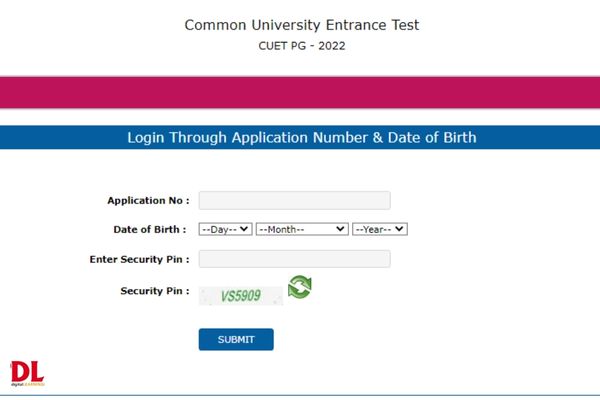
The Council of Higher Education (TSCHE) has arranged a meeting with the Vice Chancellors (VCs) of various universities across the state of Telangana to undertake several key decisions. It was announced on this occasion that several changes are being made in the Common PG Entrance Test system to be conducted this year (2022). PG Admissions in Arts and Political Science courses are offered to students of any degree. As usual, this year too, the Common PG Entrance Test (TS CPGET 2022) will beCPGET becomes flexible: brings in major changes handed over to Osmania University (OU). The Telangana Common PG Entrance Test notification will be released later this month. The Board of Higher Education has decided to cancel the colleges and courses which have registered zero admissions for this (2022-23) academic year. VCs are advised that if there are less than 15 students enrolled in one course, they should be given the opportunity to transfer to other courses or do so at a distance.

IIT Guwahati launches school of Health Sciences and Technology

IIT-Guwahati gate

The Indian Institute of Technology (IIT) Guwahati plans to offer courses in health science soon, under its newly launched the ‘Jyoti and Bhupat Mehta School of Health Sciences and Technology.’  This is being set-up under a partnership between the IIT and the Mehta Family Foundation (MFF), Houston, Texas, USA. The medical school will foster cutting-edge research and innovation, establish new standards of pedagogy and hands-on training methods in the areas related to the health sciences, create a niche of startups and MSMEs who will provide evidence-based affordable healthcare technologies and promote state-of-art biomedical and public health education, claims the IIT.

Speaking about the event, Prof. Ajay Kumar Sood, Principal Scientific Adviser, Government of India, said “At this juncture, I can clearly foresee that the School of Health Sciences and Technology would host a number of modern academic curricula, centers of excellence, incubators, and research laboratories for the advancements in multi-disciplinary research and education, which is presently needed in the country.” In the meantime, the Jyoti and Bhupat Mehta School of Health Sciences and Technology has launched a new Master’s and PhD programmes in Health Sciences and Technology from this academic year. The first batch of 20 M.Tech students in the stream of Biomedical Science and Engineering will be admitted to IIT Guwahati through GATE 2022.

Stressing on the initiatives to be taken up by the New Centre, Prof. T. G. Sitharam, Director, IIT Guwahati, said that as part of the initiative, the joint team will inculcate cutting-edge education and research in the areas related to therapeutics, diagnostics, prosthesis, implantation, bioinformatics, molecular biology, regenerative medicine, stem cells, public health, and health data analytics, among many others.

LATEST NEWS