


Home Blog Page 198

Telecom Sector Skill Council joins hands with Delhi Skill University To Drive Employability

Telecom Sector Skill Council

New Delhi: 

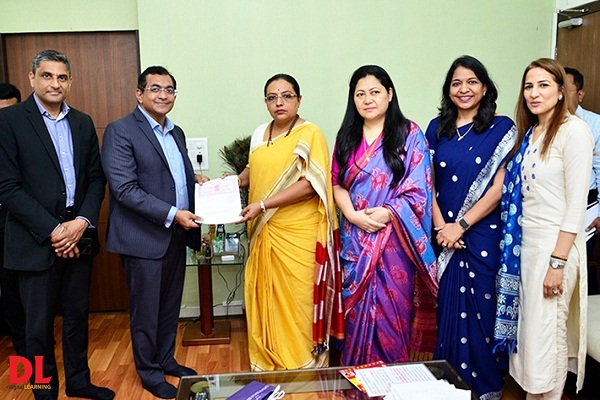
The Telecom Sector Skill Council (TSSC) has partnered with the New Delhi based skill varsity, Delhi Skill and Entrepreneurship University (DSEU), to collaborate to mutually leverage capabilities around skilling and placement.

The MoU, which has been signed for a period of three years, is primarily focused upon working together for the delivery of futuristic courses to the students of DSEU and other aspirants of Delhi and NCR region. This includes co-certification of DSEU with TSSC for various programmes offered under the ‘Centre of Excellence’ initiative. The courses under the program are proposed to be launched for the academic year 2022-23.

TSSC will support DSEU to create and develop the Centre of Excellence (CoE), which will be jointly operated as the “Telecom Centre of Excellence” at DSEU. TSSC has already established CoEs across India and plans to expand its ‘network of excellence’ along with DSEU’s association. The MoU also outlines the joint commitment towards development of new programs for skill training.

IIT Madras introduced an international interdisciplinary master’s programme in nine areas

IIT Madras

IIT Madras has introduced a master’s programme in nine areas. It is an international interdisciplinary programme that also includes next-generation technologies such as quantum science.

The applications for the programme have started and the last date to apply is March 31, 2022. The students willing to apply can visit the official website. It is a two-year programme and scholarships will be provided for international students with good results.

The degree is available in nine areas- energy systems, robotics, quantum science and technology, computational engineering, advanced materials and nanotechnology, data science, cyber-physical systems, complex systems and dynamics, and biomedical engineering.

The Director of IIT Madras, V Kamakoti, said: “These niche programmes are aimed at internationalisation of the IIT Madras campus, introducing students to a diversity of thoughts and cultures, which will serve them well when they compete in a global marketplace.”

Commenting on the curriculum for the interdisciplinary program the Dean (Academic Courses) of IIT Madras, Prathap Haridosssaid said, “Faculty have carefully selected courses that will take a competent undergraduate student from almost any field of engineering and make the student a strong candidate in an interdisciplinary area.”

Khattar announces skill development as a compulsory subject in schools

Manohar Lal Khattar

Bhiwani, Haryana 

Giving a boost to skill based education, the Chief Minister of Haryana Manohar Lal Khattar made an announcement that skill development will be made a compulsory subject in schools from classes 9 to 12. The subject will teach the youth to be self-reliant in all aspects.

Khattar was addressing an event at the Haryana School Education Board campus in Bhiwani. He emphasized that the government of Haryana has been making efforts to provide quality and employable educational facilities to the students of the state.

Khattar said in today’s era, skill universities are the need of the hour and the state government has set up Haryana’s first such university in Palwal. He added that the National Education Policy (NEP) 2020 was going to bring revolutionary changes.

Further in an official statement the CM said “In this policy, along with education and employment, the main goal is to make the students cultured and self-reliant, so that they make significant contributions in making India a global leader again. Along with technical education, emphasis was being laid on artificial intelligence to make education industry-oriented.”

He added, “The subject of skill development will be implemented compulsorily from classes 9 to 12 so that the youth of the state are self-reliant in all aspects.”

Later, Khattar inaugurated astronomy labs at Government Model Sanskriti Senior Secondary School and the Government Girls Senior Secondary School in Bhiwani. Addressing the students, he said, “Generally, children studying in government schools are confined to the general curriculum. With the setting up of these labs, children belonging to the poorest of the poor families will be able to learn about the mysteries of the universe.”

“Edtech solutions support career route for students”

Kanhaiya Kumar

Kanhaiya Kumar is the founder and CEO of School Canvas. He spoke to Digital Learning Magazine.

Q – Tell us about your brand, like its inception, founders and more.

A – School Canvas (previously known as Parentsalarm.com) is one of the leading ed-tech firms in the country. We are recognized as a leading ERP provider in the ed-tech space. Headquartered in Chennai, we have been in the market for over a decade and have grown exponentially ever since. We are a multipurpose platform that provides a user-friendly, innovative and transparent school management system and mobile application that bridges the gap between the school management and the parents in real time.

Kanhaiya Kumar, the founder, conceptualized the idea of the company. When he noticed a gap in technology in the educational sector, he wanted to bridge this gap and revolutionize the way schools communicate with parents and different stakeholders of the schools. This is when they started offering the initial few services.

Q – Edtech has emerged strongly in the pandemic. Going forward, what according to you is the future of EdTech.

A – During the pandemic, the education sector in India has been the most disrupted and shut schools all across the world for almost 3 years. As a result, education has changed dramatically, with the distinctive rise of e-learning, whereby teaching is undertaken remotely and on digital platforms.As all educational institutions, large and small, embrace a hybrid approach to learning, the edtech industry is continuously expanding.

When it comes to technology, the education sector has always been laid back to adapt to it but the pandemic has forced schools, institutions to shift online and use language apps, virtual tutoring, video conferencing tools, ERP solutions, online learning software etc. Hence, I can say that the future of learning is edtech because there is evidence that learning online can be more effective in many ways with the right access to technology. On an average students retain 25-60% more material when learning online compared to only 8-10% in a classroom. This is mostly due to the students being able to learn faster online; e-learning requires 40-60% less time to learn than in a traditional classroom setting because students can learn in their own space, going back and re-reading, skipping, or accelerating through concepts as they choose.

Q – It is said that online mediums have the power to meet policy parameters of NEP – Access, Equity, Quality, Affordability and Accountability. Your views.

A – National Education Policy was a much needed step awaited by the country. As the world is changing, there is a need for change in the education sector as well. For education institutions, technology serves as a bridge to the NEP goals.

EdTech solutions make tracking the proper career route for students, as well as their growth and bridging skills gaps, much easier. These tools assist students in choosing the proper combination of studies and developing the necessary abilities to succeed in their jobs.

Q – What is the biggest strength of the EdTech industry in making a paradigm shift in the education ecosystem ?

A – AI is the biggest strength of the EdTech industry in making a paradigm shift in the education ecosystem. The goal of integrating AI in EdTech is to put students’ experiences front and center. Teach students how to enjoy themselves while studying.

Artificial intelligence‘s greatest gift in personalization. This is something that the EdTech industry is taking use of as well. We are also providing personalization in our solutions to the schools. As every school has their own criteria to manage things, our team modified the services according to the requirement which has been possible through the AI.

SPJIMR batch mates support Alumni for the Universal Business School Convocation

spjimr

Mumbai’s Universal Business School held its offline convocation for two batches simultaneously for over 400 students of 2020 and 2021 on Saturday 19th February at the campus. More than 200 students physically attended the convocation ceremony. The event was graced by Chief Guest Mr. Bharath Uppiliappan, CEO, Dr. Lal Pathlabs Ltd. and Guest of Honour, Mr. Krishnan Govindhan, Business Head at L&T Financial Services and Former CEO of Hi-Care India.

The function was also attended by 10 SPJIMR classmates of Mr. Tarun Anand, Chairman and Founder, Universal Business School and Prof. Sriram Ramshankar, COO, Universal Business School, from the graduating batch of 1996. Ms. Sandhya Malik, Vice President, Business Transformation at HDFC Bank, Ms. Lakshmi Iyer, Head – Mergers & Acquisitions at Sterlite Technologies Ltd., Ms. Jyothi Iyengar, Vice President & Finance Coach at MFA and Former Asst. Director, Industry Engagements, SPJIMR, Mr. Deepak Alva, General Manager – Planning, Forecasting and Credit Control at Meril Life-sciences Ltd, Mr. Mangesh Pathak, Chief Strategy Officer at Prime Focus Technologies, Mr. Niraj Somaiya, CEO at Rosy Blue Securities, Singapore and Mr. Kingshuk Ganguly, Chief Executive Officer, Lightbulb Moments Consulting and Former Director – HR at CRISIL Ltd were some of the guests.

The event saw the grandiose of colour, graduating hat throwing and felicitation ceremony. There were dance performances, a rock band and rock show followed by celebrations run and dance party. All students and guests attending tested negative for COVID-19 and this ensured a safe environment for all.

Online classes in Delhi schools to be discontinued from April 1

schools

New Delhi

Delhi schools will no longer have online classes. In a decision announced by the Delhi Disaster Management Authority (DDMA), it was stated that online classes will be discontinued in Delhi Schools from April 1, 2022. The schools will be conducting classes in physical mode only for all the students.

Since November 2021, children in Delhi schools have been subjected to an online-offline changeover. On December 28, 2021, the Delhi government made an announcement for the closure of all schools, colleges, and educational institutions. Earlier the Delhi government closed schools in November due to the high rise and risk involved in pollution levels.

DDMA opted to remove some of the COVID-19 norms that had been placed in the national capital previously in a Covid review meeting held on January 27, 2022. However, no new decision was made on the reopening of city schools.

Delhi Schools reopened for senior classes after more than a month on February 8, but the continuation of the ‘hybrid mode’ means no bus services and mid-day meals.

Admissions for 2022-23 session start in Sage University

sage

Sage University, which has made its mark in the field of research, has become a priority for international students in Central India today. Admission has started in the university for the session 2022-23.

For almost two decades, Sage University located in Bhopal and Indore has made its place among the top universities of the country on many parameters. With industry ready courses,Research based teaching-learning methodology, academics as per international standard, teaching-training of students as per industry demand, the university today is an institution of excellence among academicians, students and parents.

Students from all over the country and abroad are pursuing higher education in Sage University. In this session also many international students have registered for admission in the university.

Many students are making their career in startup and business. For practical, industry ready learning and exposure to the students, Sage University has tied up with several national and international level educational and training institutes. The university has tied up with world-renowned business school Harvard Business Online, which can be availed by university students, alumni and faculty members. The advanced digital learning and teaching system of the university has been certified by the world renowned rating agency QS IGUAGE. SAGE University has been honored by the country’s prestigious organization ASSOCHAM for its excellent work in the field of academic excellence and research.

Apart from management, admission has also started in the post graduate programs of Master in Computer Applications and Law. Chancellor of Sage University Sanjeev Agarwal, said that Sage Group is determined to fulfill the responsibility of a new direction and better education system in the education sector in the whole of Central India through the curriculum inspired by the new education policy. Students willing to take admission in the university can get more information by visiting the websites of Sage University Indore and Bhopal sageuniversity.edu.in, sageuniversity.in.

Round 2 of the AYUSH NEET UG Counselling 2021 applications kick start

neet ayush 2021

New Delhi

The registration process for 2nd round of admissions of AYUSH NEET UG Counselling 2021 has been started by the AYUSH Admissions Central Counselling Committee (AACCC). Candidates willing to apply can visit the official website.

The process will close on March 2, 2022. As per the schedule, by tomorrow the candidate can proceed with the choice filling and locking their choices. This is a very important step in the process as it will help students have institutions of their choice.

The steps to apply for the process:

  • Visit the official website and portal of AYUSH NEET- aaccc.gov.in
  • There is an Online Registration option available on the homepage
  • Need to enter the login information, such as roll no. etc.
  • Begin by filling out the registration form and submitting any relevant papers.
  • Pay any applicable fees and then click the submit button.
  • You can print the confirmation page or registration form after submitting it.

The results for the AYUSH NEET UG counselling 2021 will be released on March 5, 2022. A provisional result will also be released and it will give the candidates better clarity of the final outcome.

AKTU application process restarts for UG, PG odd semester exams

Abdul Kalam Technical University

Lucknow, Uttar Pradesh

The Dr APJ Abdul Kalam Technical University (AKTU), Lucknow application process has been reopened for odd semester undergraduate (UG), postgraduate (PG) exams, and 2022. Although the application window has been reopened, students will have to submit it for a late fee of Rs 5,000.

AKTU application forms can be filled in via the official portal erp.aktu.ac.in, using their user id and password. The updated exam schedule would be released subsequently. Earlier, the university had announced the schedule for the odd semester exam for regular and carry-over exams for first, third semester, and lateral entry candidates from March 21 to April 4.

“Odd semester exams will be conducted for the first semester (all streams) and the third semester for BTech and BPharm students from March 21 to April 4,” the AKTU said in a official notification.

Engineering education needs nothing less than a transformation

chandan

As a civilization, ancient India boasted of world class universities attracting students and faculty globally. Cut to 2022, we know the state of higher education. Megatrends like Electric vehicles are expanding their footprint and there is a huge demand for technologies like Data Science, but there aren’t enough engineers with these skills. As per Industry sources, 12000 engineers for EV would be needed against a supply of 500. My focus here would be on a few high-level suggestions to mitigate these challenges, specifically on engineering education.

We need to look at this from two levels, one at a policy level and other at the Institute level.

Firstly, this is one area which needs immediate increase in government investment. The US govt sponsors in excess of Rs. 4000 crores for research at MIT. In comparison, the total govt. spending on all IITs put together is approx. Rs. 4500 crores annually. The annual budget of just the top 3 universities under MoE China is equal to the total budget spent by MoE India on primary, secondary and tertiary education. Now look at the problem from a local lens. While spending on IITs looks small compared to MIT, within IIT, NIT and IIMs less than 5% of students go, but more than 50% of govt funding goes to these institutes. So, we can well imagine the plight of the second rung institutes. It’s not surprising that after paying all the salaries, there’s hardly any money left for innovation in education.

Without increasing investment to say 6% of GDP as per Kothari Commission, none of the reforms can be meaningfully implemented. But doing that alone won’t help. We will need accountability on how and where that money is spent.

Secondly, take inspiration from successful agencies like ISRO. Finance ministry allocating a sum in every budget towards Education, is not the best way to execute. Replace the Ministry of Education with an autonomous agency directly under PMO, which is led by a panel of distinguished and empowered academicians and experts from different fields. One of the key functions of this agency would be to liaison with each ministry and understand what the top problem is. Between all relevant ministries and NITI Aayog, let’s identify ten big bets for the country for the next five years. It should also take the funding from these ministries to solve these problems as both problems and funding coming from the same source brings more accountability.

Thirdly, the NEP 2020 talks of creating MERUs (Multidisciplinary Education and Research University). Instead of creating new universities, leverage the older IITs. IITs should gradually move away from UG education. The JEE advanced acts as a perfect sieve to pull the best talent from the country, train them with best facilities available so that these students either move abroad or do an MBA to join an MNC. The hard question here is how many of these ‘brightest of the bright’ minds are contributing towards building a self-reliant India and why we don’t have local companies of the likes of an Apple, Google or a TESLA coming out of these campuses. Start by converting the 7 older IITs and 8 large NITs into 15 large research-based universities with huge defense/ industry and academic collaboration. These MERUs should be clusters of Research and Innovation along with multi-disciplinary colleges including medical, social science, law, finance and management, apart from engineering. Expand these centers, each with 10000 PhD students working on ‘grand challenge’ problems.

The focus here should be on developing implementable technologies on the 10 big bets for the country. These are the clusters where deep tech innovation would be incubated to create future large product corporations providing job opportunities to thousands in the core engineering domain which is increasingly becoming a challenge. Unicorns like platform aggregators are great, but it may be difficult to accelerate the GDP growth only through these models and provide employment to millions of youths.

Fourthly, the responsibility of quality undergraduate engineering education should lie with rest of the IITs, NITs and a layer of good institutes below that. Huge reforms are needed in this segment. The problem of un-employability has been discussed at length, but a knee jerk approach won’t help. Many institutes have retrofitted isolated courses on AI and Data science without much thought on what and how the subject needs to be taught. Currently all industries are focused on IITs and NITs for talent. Why? Because these institutes have the highest bar for entry and hence it provides a good filter to industry to pick the cream. Expand the list of IITs and NITs to 200 (we can call all of them by one name), with each having an average intake of 3000 UG students so that India gets a pool of at least 6 lac good quality engineers, instead of 12 lac mediocre unemployable engineers. These institutes should focus on not only delivering an Industry relevant curriculum, but also solving local problems. Superficial ‘mixing’ of different disciplines wouldn’t create an inter-disciplinary knowledge system. Research based learning should be integral in these institutes, but that research should focus on solving local community problems. When local problems get translated as projects, Multi-disciplinary approach automatically sets in and a substantial part of learning happens out-of-class. Project based learning where we put the problem first, needs to be a mandate. Investment and support to private institutes is essential. When it took sixty years for IITs to transform from a world class teaching institute to a great research institute and now into strong entrepreneur centers, we cannot expect the Tier 2 institutes to accomplish the same result in 6-7 years without financial support.

The other aspect is to enrich the curriculum using computer aided technologies. Learning is enhanced when students use tools to visualize and experiment. Today there are ample technology options for institutes to adopt such tools in curriculum, but sadly there is an inertia to shift from instructional classroom based approach to experiential methodologies.

Fifthly, the aspect of teacher motivation and training in Engineering education has long been ignored. We realise that curriculum has to be interdisciplinary, but not many colleges have faculty to drive such interdisciplinary projects. For a teacher, guiding a student ‘how to think critically and learn’, especially in a world where there’s so much content, is more important today than ‘teaching’ in a classroom. In that way, the teaching role itself is transforming into a mentorship role. Unless we redefine the role of our educators from being ‘teachers passing information’ to guides who nurture the innate curiosity of students so that they ask the right questions, we cannot expect a long-term change. The question of single-minded glorification by institute leaders of heavy pay-scale jobs in campus interviews needs a serious thought. Our campuses need to have an ecosystem where teaching becomes a joyful experience, and that can happen through a combination of training, role definition, remuneration and recognition. A Dept of Education in every university is an increasingly critical need.

Sixth aspect is the industry collaboration. Unfortunately, we have spoken for fifty years on this subject, but this is still transactional and not at the level of collaboration with a sizable trust deficit between the two.

It’s high time, law makes it a mandate for industry to allocate a part of the profit they make in India for funding research in India. Government alone cannot and should not be funding research and education, private sector investment is needed, particularly for funding academic research and also to support the cause of translating that research into wealth. Alongside ‘Make in India’, we would need IPs and patents which belong to India, along with a robust support system which supports the movement of these patents into beta and then into commercial products. For India to be ‘self-reliant’ this is absolutely essential. Without private sector support, that wouldn’t happen. A part of profit needs to mandatorily be ploughed back to develop the education eco-system. It’s a simple equation, if an industry needs talent to grow, they need to be a party in investment needed for developing that talent. They cannot just stand by the side of the road and cry that engineering colleges are not producing good talent for industry. To drive home this point, the Oxfam Inequality report states that just 1 % of tax on the wealth of 98 richest Indian billionaires can fund the total annual expenditure of school education and literacy under MOE.

There’s a lot that needs to happen in this space urgently and for that we need a blend of political will and clarity of vision. I am optimistic that the coming five years would see transformational changes in engineering education so that, in the words of Vivekananda, we truly start walking down the road of making education life-building, man-making and character building.

LATEST NEWS