Home Blog Page 519

CBSE Board Exam 2020: Class 12th date sheet released, check details here

CBSE Board Exam 2020

The Central Board of Secondary Education (CBSE) has finally released the class 12th date sheet for the CBSE Board Exam 2020. Students can download the date sheet in the official website of CBSE (cbse.nic.in).

As per the dates sheet, exams will commence from February 14, 2020 and will be over on March 30, 2020. Along with this, CBSE has also released the Class 10th date sheet.

CBSE Board Exam 2020: Class 12th stream wise date sheet

Science

February 27, 2020: English Elective – N, English Elective – C and English Core

March 2, 2020: Physics, Applied Physics

March 7, 2020: Chemistry

March 14, 2020: Biology

March 17, 2020: Mathematics, Applied Mathematics

Commerce

February 27, 2020: English Elective – N, English Elective – C and English Core

March 5, 2020: Accountancy

March 13, 2020: Economics

March 17, 2020: Mathematics, Applied Mathematics

March 21, 2020: Computer science, Information Technology

March 24, 2020: Business Studies, Business Administration

Arts

February 22, 2020: Psychology

February 27, 2020: English Elective – N, English Elective – C and English Core

March 3, 2020: History

March 6, 2020: Political Science

March 23, 2020: Geography

March 30, 2020: Sociology

CBSE Class 12 date sheet: Steps to check

Step 1: Visit the official website of cbse i.e. cbse.nic.in

Step 2: Click on the link which says class 12 board exam date sheet’

Step 3: Click on the link

Step 4: A new page will appear with a pdf file

Step 5: Open the pdf and download it for future reference

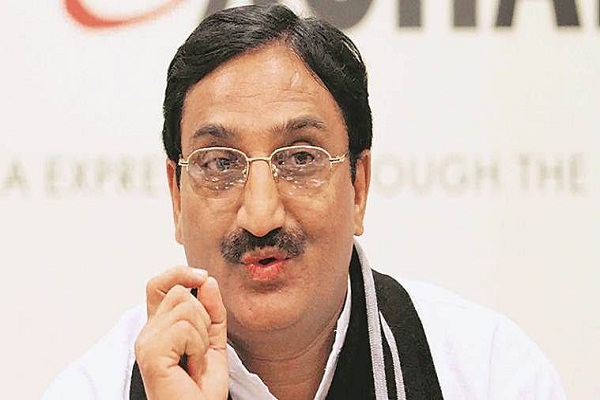
Earlier this year, Union Human Resource Development Minister Ramesh Pokhriyal Nishank said that CBSE has introduced changes in the examination pattern for class 10 and 12 from 2019-20 session to discourage rote learning and to develop critical thinking and reasoning abilities of students.

Amidst exam boycott, JNU to conduct exams via whatsapp & email

JNU University

After the students in JNU boycotted the semester-end exams, the Jawaharlal Nehru University (JNU) administration has initiated to conduct exams through Whatsapp and email. The JNU Teachers’ Association (JNUTA) and JNU Students’ Union (JNUSU) have called the move “absurd” and “ludicrous.

As per a letter sent by Aswini K Mohapatra, Dean, School of International Studies (SIS) to the Centre chairpersons on Monday, she stated that the step has been taken “in view of the extraordinary situation” on the JNU campus.

This unique method was decided in the meeting held between held between the Vice-Chancellor, the Deans of Schools, the Chairpersons of Special Centres and other officials.

There are several speculations as to how the JNU exams will take place on Whatsapp. In regards to that, a letter written by Dean Mohapatra stated that the course teachers for MPhil and MA programme would send the question papers to the students registered for the courses.

Also read: JNU begins academic session 2019-2020

Also, as per the requirement of the centre, the exam schedule may be created by the centre chairpersons.

Students would have to submit their answer scripts to their respective course teachers for evaluation within December 21.

Students can submit the answer scripts via email or can submit images of handwritten answer scripts or submit them personally to their evaluators.

If students fail to submit their answer sheets by December 21, an additional day may be given to them.

When asked about the issue of transparency and no cheating, Mohapatra said there was “no other way” to hold the JNU exams given the circumstances.

JNU students have boycotted their exam as part of their protest against the massive fee hike announced on November 12 which affects around 40% of JNU students along with a new dress code and hostel curfew timings.

CBSE Board Exam 2020 for classes Class 10, 12 to begin on February 15

CBSE Board Exam 2020

The Central Board of Secondary Education (CBSE) will conduct the class 10, 12 board exams from February 15, 2020 and get over by March 30, as per the date sheet released. . The practical exams would be held from January 1, 2020 to February 7, 2020.

This year, CBSE has smashed its own record by releasing the date sheet much earlier than the previous years. This is done for allowing students the sufficient time for preparation. Last year, the date sheet was released on December 24.

Sanyam Bhardwaj, Controller of Examinations, in a notice released said that the students will get sufficient time between examination of main subjects and the distribution of students is in such away that large number of candidates do not reach any examination centre on any particular date.

This is the second consecutive year, wherein the CBSE board exams would start in February instead of March. Last year, the exams were held in March-April.

Every year, the Central Board of Secondary Education (CBSE) conducts class 10, 12 board exams for more than 30 lakh students, in both class 10 and class 12 level. CBSE class 10 exam is known as All India Secondary School Exam (AISSE) and the class 12 exam is known as All India Senior School Certificate Exam (AISSCE).

3rd Annual Higher & Technical Education and HR Conclave commenced in Rajasthan, deliberated on Innovation, Employability & Entrepreneurship

DL Magazine launch

At present, employability of youth is a major challenge in India. But as said, every challenge can be seen as an opportunity too and this will help the country to grow into an innovative and entrepreneurial hub of the world. 

Home to the highest number of higher and technical education institutes in the country, the state of Rajasthan is leaving no stone unturned to bring a paradigm shift in the education scenario in the state. 

In this scenario, with an endeavour to explore the various facets of the higher and technical education in the state of Rajasthan, the Department of Higher & Technical Education, in association with Elets Technomedia, organised the 3rd Annual Higher & Technical Education and HR Conclave in Rajasthan, which was inaugurated in the presence of Shri Ashok Gehlot, Hon’ble Chief Minister of Rajasthan; Shri Bhanwar Singh Bhati, Hon’ble Higher Education Minister, Government of Rajasthan; Dr Subhash Garg, Hon’ble Technical & Sanskrit Education Minister, Government of Rajasthan; Smt Shuchi Sharma, Secretary, Higher & Technical Education, Government of Rajasthan; Shri Pradeep Kumar Borad, Commissioner, College Education, Rajasthan; Prof (Dr) Anil Sahasrabudhe, Chairman, AICTE, Government of India and many other government dignitaries. 

The Summit’ witnessed the participation from various parts of Rajasthan & India, showcasing innovation of students, creating an opportunity for students for Education, Employment Promotion of Entrepreneurial Skills. A National-level Hackathon was organised where students from across the globe participated. Students of Rajasthan were encouraged to participate in maximum numbers. More than 5 thousand students will participate in Hackathon

It was a 2 day-long event where government bodies, Chancellors and VC of top national and international universities, HR Professionals of MNCs came together to evaluate and discuss the scope of employment and entrepreneurship in India. 

The conclave saw the congregation of top decision-makers from Government, Academia and Corporate. A Souvenir was also released which featured Rajasthan’s Higher and Technical Education innovations and initiatives. This souvenir also featured views and ideas of top notch educationists across the globe.

Over 100 HR Managers from several MNCs participated on the second day of the conclave, shedding light on the changing needs of the global education and placement system.

There were discussions and deliberations on topics like: Significance of Industry for Innovations and Employability; World Class Institutions Transforming Rajasthan as the Hub of Higher & Technical Education; Innovations in Higher & Technical Education: Role of Universities & Colleges; Higher & Technical Education: Collaborations for Building a Knowledge Ecosystem among others. 

On the second day of the conclave, the panel discussions were around topics like : Nailing the Employee Experience; Bridging the Skill Gap in an Organisational Structure; A Paradigm Shift in the Enrollment Trends;  Role of HR in Innovation and Employment; Major Concerns in the Placement Landscape etc.

The conclave also witnessed the felicitation of the winners of National Hackathon by esteemed government dignitaries of the state of Rajasthan. 

PSTET admit card 2018 released today; exam on Dec 22

PSTET Admit Card

The admit card for the Punjab State Teachers Eligibility Test (PSTET) 2018 has been released on the official website of Punjab School Education Board (PSEB) today.

The PSTET 2018 is to be held on December 22, 2019. Candidates who have already applied for the exam can go to the official website of PSTET https://pstet.net to download their admit card.

Candidates can follow the steps below to download their admit card:

Step-1: Visit the official website of PSTET

Step-2: Click on “PSTET admit card 2018” tab

Step-3: On the new page, login with a unique registration number and password

Step-5: A downloadable admit card will be displayed on the screen

PSTET 2018 qualified candidates would be eligible to work as teachers for classes I to VIII.

PSTET 2018 online application process was started on November 3 and the last date to submit the online application was December 3, 2019.

CBSE recruitment for 2019 to end today: 357 vacancies on offer

CBSE

Today is the last day to apply for a total of 357 vacancies in the Central Board of Secondary Education (CBSE). The online recruitment is being done by CBSE for Group A, B and C posts for a salary of up-to Rs 45,700, along with other perks.

In Group-A, 14 posts of Assistant Secretary, 14 posts of Analyst (IT) and 7 posts of Assistant Secretary (IT) are on offer. In Group-B, 8 posts of Junior Hindi Translator are vacant for occupation. In Group-C, 2024 posts of Junior Assistant, 60 posts of Senior Assistant, 25 posts of Stenographer, 19 posts of Junior Accountant, and 6 posts of Accountant are being offered.

Interested candidates can apply for the above-mentioned posts on CBSE’s official website https://cbse.nic.in, after checking their eligibility.

Here are some steps that can be followed for the application process:

Step 1: Visit the official website of CBSE

Step-2: On the home page, click on the ‘Recruitment’ tab

Step-3: Click on ‘Apply online’ and read the instructions

Step-4: Click on ‘Start’ to fill up the application form

Step-5: Upload the required scanned documents

Step-6: Make the online payment and click on ‘Submit’

The application fee for unreserved/OBC/EWS candidates is Rs 1500 (for Group-A posts) and Rs 800 (for Group B and C posts). There is no application fee for candidates belonging to SC/ ST/ PwBD/ Women/ Ex-Servicemen/ Regular CBSE Employee(s) categories.

The online payment can be made by Debit/Credit cards, internet banking, cash cards, mobile wallets and Immediate Payment Service (IMPS).

The candidates will be selected based on the marks scored by them in a computer-based test (CBT), and on the final skill test/ interview.

Application procedure for NEET 2020: Registration ends on Dec 31

NEET

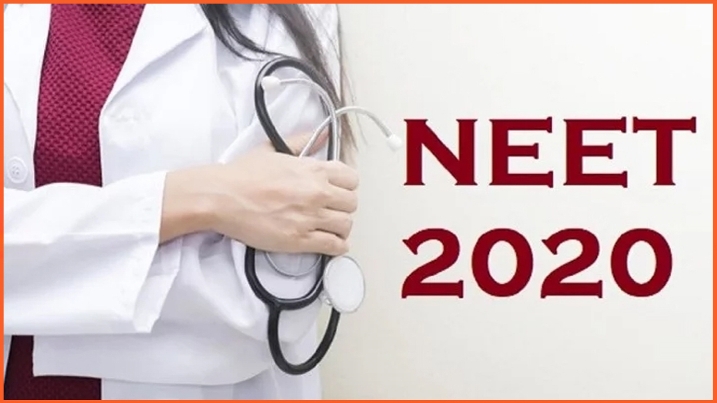
Only 14 days left for the National Eligibility cum Entrance Test (NEET) 2020 registration process to be closed down. Candidates who wish to appear for the examination can visit the official website of NTA NEET https://ntaneet.nic.in to register before December 31, 2019.

The admit card for the examination would be available on March 27, 2020, as per the official schedule. The exam is scheduled to be held on May 3, 2020.

Here are the steps to be followed by those who wish to apply:

Step 1: Go to the official website of NTA NEET https://ntaneet.nic.in

Step 2: Click on the NEET 2020 application form and register using a unique e-mail ID and mobile number

Step 3: Fill the application form and make a note of the automatically generated application number.

Step 4: Upload the required scanned documents (passport size photo, postcard size photo, class X passing certificate, candidate’s signature and left-hand thumb impression)

Step 5: Make the payment using Debit/Credit card/Net banking/UPI and secure the proof of payment.

The NEET 2020 exam will be conducted from 2 pm to 5 pm and the result will be out on June 4, 2020. The exam will carry 180 questions for 720 marks, with each question carrying four marks. For additional information, the interested candidates can visit the official website of NTA NEET.

Creating Schools That Motivate, Engage And Empower 21st Century Learners

Dr Karthik Narayanan

Lit Skills Learning has recently launched its flagship “Project English” and is also partnering with Govt of Telangana, Board of Higher & Intermediate Education for implementing its Teacher Training Programs and Student Enrichment Programs. The key is to deliver world class training programs with effective methodologies says Dr Karthik Narayanan, CEO & Founder, Lit Skills Learning, in conversation with Elets News Network (ENN).

As you strongly believe that English is the gateway to global opportunities, how was your journey in the industry so far? What is the vision of LIT Skills Learning?

During my decade long journey in this industry, I have had some path breaking learnings from the tremendous experiences that I have had, as an educator. I am thoroughly passionate about creating schools that motivate, engage and empower 21st Century Learners for their future. After many successful years of working with leading schools, I wanted to give more back to the society. So I designed a global enterprise to work with schools andschool leaders around the world using 21st Century Leadership behavior, systems thinking, drivers of change, future trends and sustainability tools to create and implement innovative strategic plans to take schools successfully into the future.I founded Lit Skills with a single thought in mind, to provide a greater platform and a simpler approach and methodology to a child in a classroom, which aims to develop the overall english language skills and bridge the gap in learning. We are in pursuit of making products that are accessible and affordable to all.

The vision of our organisation is to ensure that every child in India, especially from the rural sectors, is able to read, write and speak excellent English. We have recently launched our flagship “Project English”, an initiative to bring state of the art learning to the Tier 3 & Tier 4 sectors of India, at the 15th World Education Summit 2019, Mumbai – India.

In what ways are you enhancing the skills of a student? How are you bringing skill training and education together to create employable graduates of tomorrow?

“India Passes out 8 crore Graduates in a year and only 7% are fit to be hired.94% of Engineering Graduates are not fit to be hired as they lack the core Skills.”This is the biggest burning problem in India today and if the nation needs to be built and advanced in the education sector, especially where technology plays a key role, then the right resources need to be given to teachers and a systematic ‘out of the box’ methodology has to be implemented for students. By introducing our program, we are trying to deliver the best student experience and assuring the teachers have all the necessary resources for effective teaching outcomes.

Lit Skills Elite Student Enrichment Programs include:

  • Blended Learning
  • Online Resources
  • Assessments & Quiz
  • Activities & Interactive Entertainment – Video Based using Projector and Speakers
  • Project Based Learning for Science
  • Personalised Mentoring and Coaching for every child who is lacking the necessary skills in English Language and much more by imparting the LSRW Skills in the Classroom.

We believe that teachers know their students best. We also believe that when given the right resources to inform and deliver effective differentiated instruction, every student benefit. With an extensive collection of incredibly powerful and flexible curriculum resources, our products fill the gaps identified in various learning environments. Without limiting their creativity, innovation, or individuality, we help teachers to provide the impactful instruction their students need to thrive

Our Signature Products/ Solutions for teachers include:

  • In house training Programs
  • Digital Training Programs
  • Workshops and
  • Online Video Courses (New) – Developed by Dr. Karthik Narayanan on Effective Leadership Skills for the 21st Century Schools/Teachers and Students.

Online video courses is a new initiative which is been developed by me with my tenure of 10+ and having understood the needs and wants in the classroom from a grass-root level of understanding. The courses are custom made which will suit any teacher working in schools. There are Live Webinars and recorded webinars included in the program.

What are the challenges that Lit Skills faces when it comes to meeting students’ expectations?

Challenges are everywhere – Life is full of them. When it comes to educating a child, there are many involved. Every child is special and has their way of learning. The key is to identify and grasp the child’s attention in the first ten minutes of the class. Most importantly, it’s the love and affection that the child receives from the teacher which will have a lasting impression and it all starts from right there in the classroom.

Entertainment has dominated most aspects of life. In what ways are you combining education and entertainment? Are there any chances of overlapping?

Dr Karthik Narayanan

Edu-Tainment (Education through Entertainment) is in the new, when it comes to learning. When education and entertainment intersect, we can enjoy the best of both worlds: rich delights and profound learning.For creative classrooms, a bevy of strategically selected edutainment modules, can offer crucial reinforcement for learning without the burdensome drudgery and drills of conventional classactivities. When we can findwaysforstudentstodeveloplearningcompetenciesthroughplayandgames, there’s a better chance they’ll be independently motivated to keep learning that skill long after class is over.Lit Skills combines education with entertainment in a measured ratio that keeps the focus primarily on learning the various modules. The child is incentivised moderately, for every effort of successful completion of a module, to keep one appropriately activated for a balanced learning experience. This educational strategy can be too good to improve their intellectual stimulations with gamification aimed at boosting their thinking capability, problem solving and competitive mind set.

Mr Thangaraj Pandian, Chief Advisor & Mentor – Lit Skills Learning, believes that great journeys begin with great people. Always a very transparent and straightforward advisor, his approach is cheerfully lively and lifts up the spirit of the organisation.

What are the innovative strategic plans to take schools successfully into the future?

As an Educator, I am primarily focused on Teacher Training Programs and different methodologies to implement the above ideologies. We have collaborated with ELT – UK for better and effective teacher training programs that can be implemented for rural Indian English medium schools which can bring the best of the teacher and be a lifelong learner.It is always the Human Interference which plays a key role when it comes to learning, in spite of Artificial Intelligence (AI) and Augmented Reality (AR) taking over classrooms today.

Engineering Projects (India) Limited (A Govt. of India Enterprise)

Engineering Projects (India) Limited

Engineering Projects (India) Limited (EPI), a Central PSU, under the administrative control of the Ministry of Heavy Industries & Public Enterprises, Govt. of India is a cohesive body of professionals, having vast experience of undertaking multidisciplinary projects & infrastructure development projects on turnkey basis i.e. from concept to commissioning in India & overseas. EPI was incorporated in the year 1970 for execution of high technology projects in the sectors like industrial, process plants, material handling and electrical projects etc. EPI is a ‘Mini Ratna’ company and possess following certifications:

• ISO 9001:2015

• ISO 14001:2015

• OHSAS 18001:2007

• ISO 27001:2013.

Today, it is ranked as the frontrunner Prime Contracting and Project Management Consultancy Company and has extended its mark of excellence not only in India, but in the overseas market as well. EPI has secured and executed many multidisciplinary projects in India & abroad. EPI’s country wide operations are taken care of by its Corporate Office at New Delhi and its five regional offices (RO) at New Delhi, Chennai, Mumbai, Kolkata & Guwahati. Each of these offices functions as a separate profit center, with ample decentralization of executive and decision-making powers at the RO level itself. The following are the objectives of EPI:

• Focus and Maintain business in its most profitable segments while expanding into new business segments.

• Attract and retain the best people and known as the place where the Bestengineers choose to be.

• Deliver exceptional client service with an unrelenting focus on value creation.

• Pursue operational excellence with a strong focus on quality and margins.

• To continuously upgrade and adopt all technological advancements to meet the growing needs of customers.

• To enhance competitive spirit of the organization through principles of continuous learning and empower to perform.

• To stride on the path of growth by adding every possible value to our service in pursuit of long term relations with all our clients.

EPI has a fairly diverse portfolio of services in a wide range of section, but major portion of profit comes from civil construction projects. With constant thrust on growth, EPI continues to explore diversified frontiers. It is also expanding its overseas footprints. The acquisition of infrastructure projects in Oman, Myanmar and Sri Lanka validates EPI’s focus on exploring new geographical and technological frontiers even further.

PRODUCTS/SERVICES

As a prime Consultancy & Contracting Company, EPI has proven its expertise and experience in virtually every sector. The range of services provided includes:

• Perimeter Security Solutions

• Feasibility Studies

• Detailed Project Reports

• Supply of Plant & Equipment

• Quality Assurance

• Civil & Structural Works

• Erection, Trial Run and Commissioning

• Training of Supervisors & Operators

• Operation & Maintenance

• Overall Project Management

In light of the changing market place, EPI is exploring possibilities to enter into tie ups in project execution with renowned experienced associates. Presently, EPI is making efforts to diversify in following areas as well:

• Urban Transportation (MRTS).

• City Surveillance Projects.

• Mining.

• Oil & Petrochemicals Projects.

• Railways.

• Ports/ inland waterways.

• Roads/highways

• Green building

• Prefabrication/precast technology

MARKETING STRATEGY

Keeping in view the various Government of India initiatives/ policies such as Ease of doing business, relaxation in FDI norms, Make in India etc., EPI has entered/is entering into MOUs with various suitable entities for securing works in infrastructure development sector. To secure business, EPIL constantly scans the opportunities across various geographies such as Maldives, Malaysia, Qatar, Bangladesh, Kuwait, Nepal, KSA and African Countries as part of its international expansion.

PROCESS QUALITY CHECKS

EPI is proud to be one of the first few companies to have been awarded integrated certification for Quality Management and the Environment Management System ISO 9001:2015, ISO 14001:2015 for all its areas of operation, OHSAS 18001:2007 for Corporate Office and ISO 27001:2013.


Rajasthan moving in the direction of upgrading the curriculum in technical education

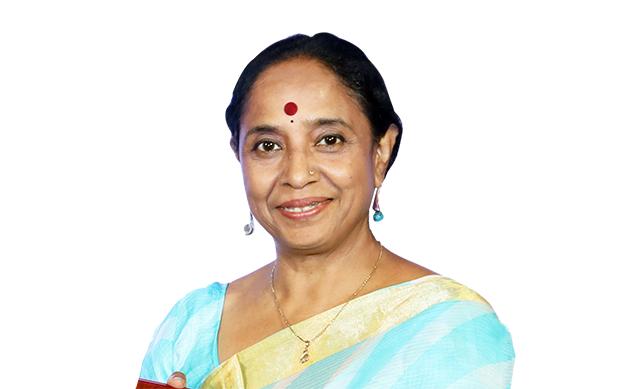
Shuchi Sharma

To achieve the goal of revamping the curriculum, we are urging all the colleges and universities to come up with a new and modern curriculum in their institutions, thus making the classes more interesting for the students to attend, says Shuchi Sharma, Secretary of Higher & Technical Education Department, Government of Rajasthan, in conversation with Kartik Sharma & Prathana Dutta of Elets News Network (ENN).

You have recently taken the position of Secretary, Higher Education and Technical Department, in the State of Rajasthan. How do you see this responsibility and are you looking forward to it?

It’s a great responsibility that I have been entrusted with and I feel though a lot has been done to give a good education system to the society still there is the scope of improvement. In fact, something needs to be done in a direction that emphasizes the evolution of the student as a good human being. Therefore, I believe somewhere a dent is needed in the fundamentals of the present education system to achieve this goal.

At the 15th World Education Summit Mumbai, you spoke on the concept of ‘Joy of Giving’. Could you share your insight on this concept and what is the need of such a concept in the Higher Education sector today?

Knowledge shared is knowledge gained. ‘Joy of Giving’ is the concept that is tied up to the innate nature, compassion and interdependence in human beings. It is a paradox that the more we acquire, the happier we become. In reality, acquiring more and more leads to discontentment and what we give to others is what makes us feel content. If we inculcate ‘Joy of Giving’ as an essential part of the school curriculum, we can teach the child to apply it in day-to-day activities, thereby crystallising the curriculum. A child who is a ‘giver’ is more beneficial to the society than an ‘acquirer’.

What is your vision in developing the higher education ecosystem in the state of Rajasthan?

Besides infrastructure, we need to focus on the syllabus and keep it from getting redundant. Irrelevant topics which are still taught in classes need to be removed. In case of a redundant syllabus, not only are teachers disinterested in teaching, even the students don’t turn up in lectures due to boredom. We need to move in the direction of upgrading the curriculum. To achieve this goal, we are urging all the colleges and universities to come up with a new and modern curriculum in their institutions, thus making the classes more interesting for the students to attend.

What measures are taken to enhance the quality and upgrading the curriculum of Technical Education in the state?

TEQIP (The Scheme of MHRD and World Bank) has provided Rs 10 crore to each engineering college of Rajasthan and Rs 20 crore to Rajasthan Technical University, Kota, for enhancement of quality and up gradation of curriculum of technical education.technical education

In last few months, the department has arranged many training seminars, conferences for improvement of pedagogy and various latest equipment’s. About Rs 25 crore will be spent in current financial year on modern labs, computers and research facilities by which more than 10 thousand students of technical institutes will be benefitted with better facilities in education, research and consultancy.

What are the newly introduced schemes for Research and Development of the state in terms of technical education?

Choice Based Credit System (CBCS) and semester system has been introduced in all departments of Rajasthan Technical University, Kota. This has been recognized by National Board of Accreditation, New Delhi.

  • Uploading of university degrees on National Depository platform.
  • Under RUSA Scheme of MHRD there is construction of cafeteria and books in library will be marked with radio frequency identification (RFI)

What initiatives have been undertaken by the department to make education sector vibrant and result-oriented?

With an objective to prepare good academicians, the department has started induction training programme for newly appointed assistant professors. Initiatives like free coaching classes for regular students of the colleges help the department in making education sector vibrant and result-oriented. Subject matter experts in the department are preparing e-content for these classes. The department is also opting for skill education initiatives along with regular studies to make students after their graduation and post- graduation degree.

Please provide a brief description about the administrative initiatives taken for smooth functioning of the department.

The review meetings with the concerned officials of the respective department on regular basis are among the major initiatives that helped in smooth functioning of the department. We have also installed Biometric attendance system for principals and professors. The OIC system installed in various colleges helps in monitoring the progress and problems of the colleges at CCE level.

What message would you like to give to the students?

My message to the students is that life is the most precious gift of God. It should be lived joyfully. For this, every moment should be lived creatively. We should not lose any opportunity to leave something new and go on contributing to building a healthy society.

LATEST NEWS