Home Blog Page 144

Significance of experiential learning, and why does it matter?

Shally Gandhi

Nowadays, new technology is spreading widely across the spectrum by introducing various tools into the traditional academic curriculum, enhancing the educational experience. One of the ongoing additions to the generic form of learning is experiential learning. This form of learning has emerged as a powerful approach to education, bringing the classroom to life and immersing students in meaningful, real-world experiences. “Through various experiences comes greater knowledge”; during a child’s academic years, they have the ability to fail and learn simultaneously. Absorbing knowledge via textbooks and lectures does not serve the purpose of learning today. The path of experiential learning works better in a fast-paced world of advanced technology.

Challenges of inculcating and introducing experiential learning at schools
Although most schools recognize the value of experiential learning as an educational approach that engages students in active, hands-on learning, allowing them to apply theoretical concepts to practical situations, problem-solve, and reflect on their experiences, it is also a challenge to get the upcoming generation to embrace this format. This generation is busy with their gadgets and social media, and the era has changed drastically. In contrast, the previous generation, the millennials, were more attuned to the world of experiential learning. The diversity in resources makes it difficult for schools and parents to inculcate substantial value into a child’s growth.

How to make it inclusive?
To make experiential learning inclusive, schools can use a curriculum that explores the transformative impact of experiential learning on students’ academic and personal growth and delves into how it prepares them for the complexities of the modern world. From scientific experiments and field trips to community service projects and entrepreneurship initiatives, experiential learning at school sparks curiosity, fosters critical thinking, and nurtures a lifelong love for learning. Be it through outdoor adventures, collaborative group projects, or internships, experiential learning empowers students to become active participants in their education, paving the way for a brighter future.

Why does it matter?
Experiential learning matters because of its ability to engage, inspire, and challenge students in meaningful ways, becoming a driving force in shaping the educational landscape and preparing students for success in the 21st century. Through experiential learning, schools are creating dynamic, immersive, and hands-on learning experiences that empower students to explore, experiment, and discover. From science labs and outdoor adventures to entrepreneurship initiatives and community service projects, experiential learning engages students in authentic, real-world experiences that cultivate their knowledge, skills, and character. Education is no longer confined to the walls of a classroom. Today, schools are embracing a powerful approach that brings the curriculum to life through hands-on experiences.

How does it help the children?
Experiential learning can have many benefits for children, including:
1. Active engagement: Children are actively engaged in the learning process, which helps them to better understand and retain information.
2. Improved memory: Experiential learning allows children to make connections between new information and their prior experiences, which can improve their memory.
3. Critical thinking: Children are encouraged to think critically and problem-solve during such activities, which can help them to develop important skills that would benefit them throughout their lives.
4. Confidence building: Experiential learning can help children to build confidence in their abilities, by providing opportunities to try new things and learn from their mistakes.
5. Motivation: Children are often more motivated to learn when they are actively engaged in the learning process, which can lead to a deeper understanding and enjoyment of the subject matter.

Adapting experiential learning for school kids can provide an efficient and effective way to keep up with the fast-paced world. By incorporating hands-on experiences and real-world applications, students can enhance their skills and knowledge to prepare for their future.

Views expressed by Shally Gandhi, Principal, Orchids The International School, Rohtak

PM Modi’s ‘Mann ki Baat’ completes 100 episodes; achieves enormous goals of transforming education

PM Modi’s ‘Mann ki Baat’

According to an official statement, the 100th episode of the monthly radio show “Mann Ki Baat” featuring ideas from Prime Minister Narendra Modi has helped to achieve the enormous goals he has set before the country to improve education.

The 100th episode of Mann ki Baat aired on Sunday, and at this point, the program’s influence on the Indian educational system is highlighted by glimpses of the many initiatives of the Ministry of Education (MoE), the Government of India, and its several autonomous institutions.

The Ministry of Education launched a number of initiatives, including Kala Utsav to find young artists, Ek Bharat Shreshtha Bharat programmes, the National Yoga Olympiad, Pariksha pe Charcha, NIPUN Bharat for early literacy and numeracy, the National Digital Library for Schools, NDEAR for digital education, Manodarpan and Sahyog, PM e-Vidya, SWAYAMPRABHA channels, and many more. Many of the concepts that the Prime Minister raised with academics and professors at the National Council of Educational Research and Training (NCERT) also inspired them. To give them a tangible form, different initiatives were necessary.

In the previous episodes of June and July 2020, he had already talked about being Vocal for Local and discovering ways to be engaged at home during the national lockdown through traditional games.

“National Education Policy 2020 too emphasised joyful learning. These were taken very seriously by the Ministry of Education and within two years, through toy-based pedagogy the message to promote Indian toys has reached every household,”, according to an official statement.

The National Curriculum Framework for Foundational stage and the Draft National Curriculum Framework for School Education, the learning-teaching materials for Foundational stage, the Handbook of Toy-based Pedagogy for all stages and subjects of school education, the organisation of international webinars, national and regional seminars and webinars, toy hackathons, national toy fairs for school education, and including a separate section on the National Curriculum Framework for School Education are all examples of things that are being done. As a result of his vision for incorporating traditional Indian games and toys into the classroom for school activities the idea has penetrated into the system.

The nationwide Yoga Olympiad was proposed by the Ministry of Education for schools in all age groups, and the NCERT has been running this three-day nationwide event since 2016. Hundreds of kids compete at the national level beginning with competitions at the school, district, and state levels while they are between the ages of 10 and 18 (Class VI-XII).

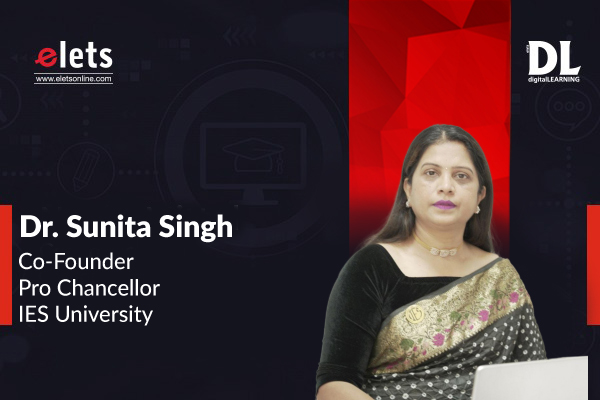
Education is acquiring a whole new dimension: Dr. Sunita Singh, IES University, Bhopal

sunita

AI is gaining popularity for solving modern education challenges such as bridging the gap between students and teachers, continual assessment in a manner allowing remote learning, and developing quality data and information solutions for the modern education process, shared Dr. Sunita Singh, Co-Founder, Pro Chancellor, IES University, Bhopal and IHEC Member, AIIMS Bhopal in an exclusive conversation with Sheeba Chauhan of Elets News Network. Edited excerpts:

University Grants Commission (UGC) revealed a draft regulation on the ‘Setting up and Operation of Campuses of Foreign Higher Educational Institutions (FHEIs) in India’. How do you see this move and what can be the plausible opportunities and challenges that can come along with it?

The setting up of Foreign Higher Education Institutions in India will create a healthy competition among Institutes. The percentage of students going for Higher education abroad is negligible compared to the entire student population in India so the students opting to study here will surely benefit. Our Higher education System is governed by statutory councils like AICTE, NCTE, MCI etc., the Foreign HEIs should also be governed by them. The policy for teachers qualifications, student intake, Student Faculty Ratio (SFR) for Indian HEIs and Foreign HEIs must be same and all rules should be applicable to the foreign HEIs too.

Presently, most of our Institutions are Not-for-profit Institutions run by societies and trusts; they are not funded by the Government. Given that, Government must allow only those foreign HEIs which are also run by charitable societies / trusts to be set up in our country. It is recommended that Foreign HEIs allowed to open their Campus in India on a trial basis, should be from among the top 50 Global / QS rankings. Also, There is Fee Regulation on Indian HEIs as per balance sheet and State Government policy on expenditure. The foreign HEIs coming to India must come under the same fixation rule.

Apart from the basic courses in engineering and medical, what courses does the university offers? Tell us about your future plan to launch Fashion Design & Technology courses.

IES University, Bhopal is a multi-disciplinary University running courses in Engineering and Medicine along with other Departments like Paramedical sciences, Department Of Pharmacy, Department of Education, Department of Journalism and Mass Communication, Department of Hotel Management, Department of Library Sciences, Department of Agriculture, Department of Nursing, Department of Ayurveda (BAMS), Department of Law, and many more. University is also running several Skill Development courses inline with the demands of the industry and will also launch Design and Fashion Technology course to enhance the scope of students with creative flair. Recently, when I was Governor’s Nominee on the Expert Scrutiny Committee for conferment of Honorary Degree at the 22nd Annual Convocation of VTU, Belagavi, Karnataka; it inspired me to also plan such honour for eminent deserving citizens contributing to society.

As IES tie-ups with leading organizations such as Microsoft, IBM India, NASSCOM, CII, NITTR, etc for career opportunities and growth of the university. To what extent, industry-academia collaborations can help students to grow and excel?

IES University is having excellent Training placement records since the past two decades. Definitely industry-academia collaborations give students additional opportunity to participate in internship, visit, training as well as placement. IES is also focusing on research and has MOUs with top ranking Universities and Institutes like NITTTR Chennai; Chennai, Shoolini University, Solan; Chitkara University, Chandigarh; Ganpat University, Mehsana Gujrat; Central University, Chandigarh. IES is also working for International Collaborations and has signed MOU with City University of Seattle and we are working for associations with Universities in Japan, Uganda and France.

World Education Summit 2023 in Dubai aims to unlock fresh strategies and foster new approaches to building a future-ready education ecosystem. How do you think such conferences help to uplift education standards at a global level?

The policymakers were concentrating so heavily on graduation rates, and attainment levels so far, and ignoring danger signs that the amount that students learn in college may have been declining over the past few decades especially in terms of hands-on skills and needs of the industry as well as society. However, with the implementation of the NEP 2020, it will change. Such world education summits will prove most useful in fostering a fresh, updated approach to building student’s skills. Of course, this summit will unlock new strategies to build an effective education ecosystem and take the higher education to a new level.

The advent of technologies like AI, ML, and Automation is transforming the education ecosystem globally. How is technology intervention in education helping your institution?

Education is acquiring a whole new dimension thanks to technology. At IES we are using AR / VR to facilitate learning; our faculties use Virtual labs and simulation technology for training of students in various courses; students are taking training in AI & ML for preparation of professional careers and they receive additional credits for same. AI is gaining popularity for solving modern education challenges such as bridging the gap between students and teachers, continual assessment which allows remote learning, and developing quality data and information solutions for the modern education process.


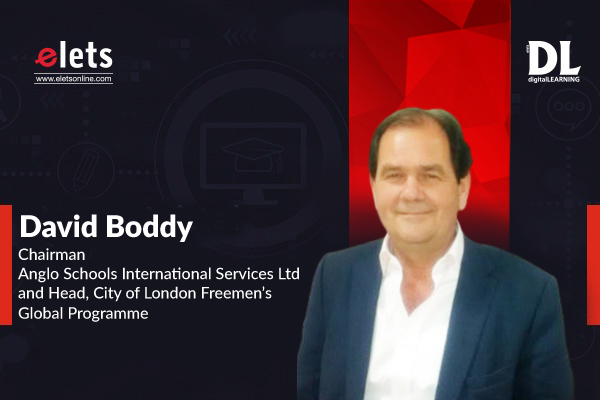
Making global learning happen with technology: David Boddy, Anglo Schools International Services Ltd

david

Every child out of school, or not in touch with regular school-based education, is a serious waste of human potential. A fresh global initiative, perhaps led by the United Nations, needs to address this issue. The number of girls out of education is a serious issue for the development of global society as a whole shared, David Boddy, Chairman, Anglo Schools International Services Ltd and Head, City of London Freemen’s Global Programme in an exclusive conversation with Sheeba Chauhan of Elets News Network. Edited excerpts:

How do you see global collaboration in education? Do you think it can help the foundational stages?

We are witnessing more regional collaborations happening, especially since the pandemic which stimulated the value of online learning across the world. However, there are only a handful of global collaborations, and they are mainly directed towards the secondary or high school levels. City of London Freemen’s, a top 5 UK boarding and day school, has been leading the innovation with the development of a ‘global classroom’, teaching advanced levels and providing enrichment programmes to students in partner schools in the Far East and Europe. Managing time zones is a major blocker. But the technology is available to make it happen. Freemen’s is using the state-of-theart digital immersive learning platform, originally developed by X20 Media for Harvard University. Bringing teachers and teams along with a global perspective is a harder job, and until that happens, technology will continue to outpace human software which is the essential ingredient to make global learning happen across age groups.

Some two-thirds of the world’s school-aged children do not have an internet connection in their homes. Do you think the digital divide can be a major drawback to the digitisation of education?

Fortunately, the technology is moving so fast that I predict within five years the problem could be solved, financial support permitting. ASIS Education (www.asiseducation.co.uk), a division of Anglo Schools which works to bring education to remote areas, is in discussion with Elon Musk’s ‘Starlink’ company about providing cost-effective satellite dishes, which in turn can provide internet services via a string of low-orbiting satellites. It will not be the digital divide which will impede progress. It will be a shortage of competent teachers to work in the digital space. This is one reason why I have been proposing that ‘Learning to Teach in the Digital Space’ should become a key part of modern teacher training, at all levels.

244 million children and young people are out of school globally, of which 118.5 million are girls. Apart from several other concerns, this is the major concern seen in school-age students. Your comments please.

Every child out of school, or not in touch with regular school based education, is a serious waste of human potential. A fresh global initiative, perhaps led by the United Nations, needs to address this issue. The number of girls out of education is a serious issue for the development of global society as a whole. There is so much evidence, not least of all in Afghanistan for example, which shows that the whole of society is made poorer when girls and women are not provided with formal education, comparable to that given to boys. So for the economic and social health of a nation, girls must be given the chance to learn in school. If the UN and others can tackle this problem with new vigour, so many other issues will be solved too, not least of all in public health and the elimination of poverty.

According to UNICEF, over 600 million children and adolescents worldwide are unable to attain minimum proficiency levels in reading and mathematics. What do you consider to be the main issues in developing foundational skills in literacy and numeracy.

My response to this maybe surprising. The family unit across so many societies, especially in the West, is breaking down. That, combined with the fact that teaching is no longer regarded as a ‘vocation’, which in turn creates shortages of great educators; these are two critical factors in our young people growing up without the necessary reading and numeracy skills. Every child needs access to parental figures and teachers – and when anyone of these is absent, the child inevitably suffers. Basic literacy and numeracy are learned on the laps of mothers and fathers, and in the early years of education, in a loving, caring and intelligent educational setting. Although I have spent most of my educational experience in the secondary sector, I still firmly hold the view that the most important time for education is between the ages of 0-5. If a warm-hearted environment can be created at home and at school – even if it is conducted under a tree – then the basics of literacy, numeracy and transmission of good values can take place.

My critics will shout: ‘What about the need for more resources?’ Of course, they are necessary. But the root cause of this problem is more subtle than that. That is why I have argued for governments to provide more resources to support families and early stage education.

An estimated 93 million children worldwide live with a disability and these children are overlooked while making educational policies. What are the programs you have at your school for these differently-abled children.

As a Headmaster, I spent time with my teachers delivering a single-message, first and foremost: “Every child – every child – every child – has the potential for brilliance”. And then I told them to find that brilliance and work out ways to bring that brilliance to the surface. Now, that’s the same challenge I pose to every teacher I meet. From that approach, for example, we developed a programme whereby our Art & Drama teachers worked in the same class at the same time as our English and Maths teachers, ensuring that the knowledge content was delivered in a way most suitable for the learner. And the results were brilliant. Two of our pupils, for example, who came to us as “rejects” from other schools, finally found their own talents and ended up at Oxbridge. Of course, special programmes are helpful, but the most important thing is how the teacher views the pupil. Change the teacher’s viewpoint, and the child can fulfil their brilliance.

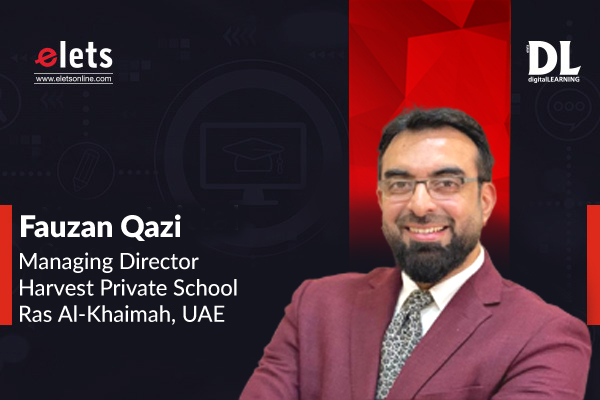
Enlarging the horizons of education on a global level: Fauzan Qazi, Harvest Private School

fauzan

Governments and developed country leaders have an obligation to help poorer nations eliminate the root causes that lead to the crisis in educational levels. More investments and reforms are necessary in this area shared, Fauzan Qazi, Managing Director, Harvest Private School, Ras Al-Khaimah, UAE in an exclusive conversation with Sheeba Chauhan of Elets News Network. Edited excerpts:

In April 2022, enrolment in Dubai’s private schools crossed 300,000, the highest ever in history. Do you think improved enrolment is directly proportional to quality education?

Most definitely that is one aspect, however, the main reason for the improved enrolment is the growing attractiveness of Dubai for expats as a lifestyle, business and investment destination, which has encouraged families from across the world to relocate to the city. Naturally these families enroll their children in schools causing the rise in numbers.

The advent of technologies like AI, ML, and Automation is transforming the education ecosystem globally. How is technology intervention in education helping at your school?

Keeping a step ahead of technology and ensuring it is implemented correctly so as to prove beneficial to the education process is quite a challenge. At Harvest Private School we are moving from a very traditional system with basic technology to the implementation of a comprehensive school operations and integration system, advancements in the internet and networking infrastructure and the introduction of BYOD(Bring your own device) and smart board systems. The school is also working on Virtual Reality and the use of Artificial Intelligence robotics in a few advanced subjects.

According to UNICEF, Over 600 million children and adolescents worldwide are unable to attain minimum proficiency levels in reading and mathematics. What do you consider the issue in developing foundational skills in literacy and numeracy?

The World is facing many issues, one of which is increasing levels of poverty. Many children around the world are taken out of foundational development by their parents who themselves are uneducated or people of determination and depend on their children to contribute to the family income. Hence these children have to drop out of schools to support their families, which is causing a massive inequality in access to education. Governments and community leaders have an obligation to help the poorer nations eliminate these root causes that have led to the global crisis in educational levels. More investments and reforms are necessary in this area if this situation is to be alleviated.

An estimated 93 million children worldwide live with special needs and these children are overlooked while making educational policies. What are the programs, you have at your school for these differently abled children?

We made a deliberate decision and developed a road map to improve this aspect of education at the school. This has included the hiring of staff to oversee the inclusion department. Having an inclusion-focused person enabled our school to complete a comprehensive evaluation and thereby identify students needing attention. We then hired several LSAs and shadow teachers to improve the educational program for students of determination. Now, I am proud to say that we can call ourselves an inclusive school that caters to students with various levels of needs and abilities.

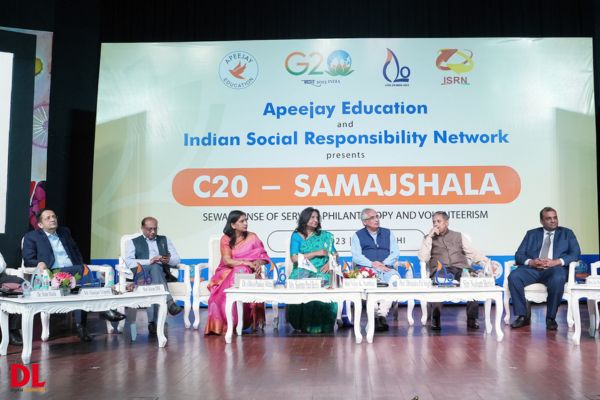
Apeejay Education launches social awareness initiative C-20 Samajshala

C-20 Samajshala

C-20 Samajshala, a massive awareness initiative, was recently launched by Apeejay Education and the Indian Social Responsibility Network (ISRN) under the auspices of the G20, an intergovernmental organisation made up of 19 nations and the European Union that works to address important issues relating to the global economy. The event was held in the Apeejay School auditorium in Panchsheel Park, New Delhi.

The programme, which was attended by a host of dignitaries, was also attended by prominent academics, government officials, members of civil society, teachers, and students. Shri Vijay K. Nambiar, C20 – Sherpa (Principal Co-ordinator), a former ambassador of India and under-secretary general of the United Nations, served as the occasion’s chief guest.

Sushma Paul Berlia, Chairperson of Apeejay Education, Co-Founder and Chancellor of Apeejay Stya University, and Chairperson and President of Apeejay Stya and Svran Group, was honoured on this occasion by Shri Vijay K. Nambiar. The event’s Guest of Honour was Mrs. Berlia. She received recognition for her exceptional work in establishing the crucial synergy between industry and education for the purpose of nation-building. Shri Nishant Berlia, Co-Promoter, Apeejay Stya & Svran Group, also attended the ceremony.

“Right from the beginning it was ingrained within us, in our DNA, that whatever you do, whatever you earn, at least spend some on philanthropy,” Sushma Paul Berlia said in her speech. Our organization’s core value is social responsibility. Mrs. Berlia emphasised the value of charitable giving by stating that “helping someone is something that each and every one of us has the ability and power to do, no matter what our resources.”

She further said, “We have been trying to do sewa through our institutions and organisation as well and be involved even while working. We have framed a curriculum where we talk about yoga, meditation, exposure to comparative philosophy, finding uniqueness in different religions and the similarities and being able to think critically and in that process learn to introspect.”

Also according to Berlia, “My father, Late Dr. Stya Paul, who is the Inspiration behind all Apeejay Education Institutions, always taught us that we are only stewards of the wealth we create and that there is a big difference between the concept of wealth and money.” She outlined the social relevance of wealth creation, pointing out that it benefits not just the individual but also the members of an organisation and society as a whole.

“The sewa bhav must emanate spontaneously from within each individual and be reflected in each’s practical commitment towards fellow citizens,” the chief guest,

Vijay K. Nambiar, said. The tremendous emphasis on community services in all of our areas has always impressed me. He added, “Dr. Stya Paul has to be the epitome of ‘sewa’ if there is such a thing. Additionally, Sushma Paul Berlia has made significant contributions to education.

According to Santosh Gupta, CEO of ISRN and the India Coordinator-C20 Sewa Working Group, “Civil20’s goal is to make it easier for various civil society organisations to express their opinions. These are then turned into policy and presented at a gathering in July 2023 after more deliberation. The G20 will then receive these in September.

One of the G20’s official engagement groups, C20 India 2023, gives Civil Society Organisations (CSO) from all over the world a forum to express the goals of their constituents to the G20’s global leaders.

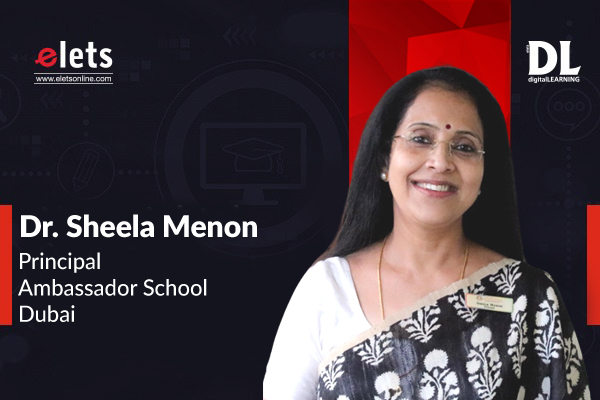
Boosting education ecosystem with rich experience, shared ideas & perspectives: Dr Sheela Menon, Ambassador School

Sheela Menon

The 2020 pandemic just added additional numbers to already increasing school dropouts in many parts of the world. Other than geographic disparities and economic constraints in many countries, there are many more reasons behind this rising concern, especially when we see a growing gender disparity in the number of out-of school children, shared Dr Sheela Menon, Principal, Ambassador School, Dubai in an exclusive conversation with Sheeba Chauhan of Elets News Network. Edited excerpts:

According to UNICEF, Over 600 million children and adolescents worldwide are unable to attain minimum proficiency levels in reading and mathematics. What do you consider the issue in developing foundational skills in literacy and numeracy?

Despite a conscious boost to raise literacy rates in most of the economies worldwide, especially in the MDCs (More Developed Countries) and LDCs (Less Developed Countries) the educators have observed a gap in their learning skills and proficiency levels. Our day-to-day observation as educators raises many a concern and questions behind this gap. Besides poverty which is a major factor, children living in countries facing political disturbances, economic instability, war /conflict zones, and natural calamities often are left with widening lacunae in basic schooling skills. The most likely reasons behind such low proficiency levels are:

Lack of experienced and trained teachers: Though schools are absolutely affirmed in their process of selection only for trained teachers, often are bereft of finding the right talent which thus impacts poor skill development in our early learning group of students. A teacher who has studied the English language would know best how to develop phonemic and phonologic awareness, vocabulary build-up, pronunciation, and grammatical skills, rather than someone who is not from the same subject background. The same is seen with numeracy skills. Teachers need constant self enriching exercises in their subject knowledge and proficiency levels in teaching. CPDs are extremely important tools to help teachers discover newer methods of classroom exchanges and interaction which help in raising skills in students.

Digital preoccupation is a deterrent to developing foundational skills and proficiency levels: Perhaps digitalisation of education has its flip side when we see the decreasing percentage of young readers these days. In the face of the digital preoccupation of our children with video games and other pastimes, reading is found to be a waning passion today.

Lack of infrastructure, inadequate learning material and resources act as a great hindrance in raising the percentage of able learners and in perfecting their skills. Many schools are not equipped with the basic level of infrastructure. In 21st century schools, apart from classroom resources and library, internet connection and digital support to teachers and students are important for a smoother transaction of lessons and faster learning of the many areas of language and numeracy skills.

Foundational skills require clear instructions to students, and it is absolutely essential to understand that proficiency in foundational skills comprising of reading, writing, speaking and listening, helps our learners to get a better grip on numeracy and a host of other skills required in handling various subjects.

Some two-thirds of the world’s school-aged children do not have an internet connection in their homes. Do you think the digital divide can be a major drawback of the digitization of education?

The focus on digitalization of education and its necessity was felt the most during the Covid 19 Pandemic years when the world over, onsite learning at schools came to a halt. Digital technology helped in the continuity of learning at all levels in students of all age groups through virtual classrooms. From completely off-site to hybrid learning and now back to normalcy, academicians and educators evolved in their latest skill, establishing the fact that learning never stops if essential tools are made available. The use of technology and digital skills and applications are here to stay, and perhaps will increase more so in times ahead.

The concerning question today is if lack of technology or absence of digital skills could prove to be detrimental for our students at school levels. It is to be noted that every school today is not blessed with the same levels of infrastructure, now deemed as most important for greater efficacy in the teaching-learning process.

  • Several less developed countries still are not well equipped with high-speed internet connections at home and at schools.
  • Affordability, accessibility and availability of digital technology if found a challenge to school, could mean lesser skill development in the students and a growing disparity between technology-savvy students and those without. This could further limit opportunities for the students in academics and professional life ahead.
  • There could be a growing inequality among economies leading to further socio-political challenges.

Equitable access to learning opportunities and improved skills development in primary education ensures a better future. Do you think catering to primary education mindfully can transform the education ecosystem?

The right to education is a fundamental right provided by most developed countries and growing economies. For many nations, elementary and free education is a mandatory component of social wellbeing of children up to an age of 14 years.

  • Primary education plays a pivotal role for both the individual and society. With an effective and wholesome curriculum, primary education builds a strong foundation which opens many future opportunities for self-growth and sustainability, as well as in poverty eradication and fostering positive social changes.
  • Primary education is the strongest pillar on which a student’s academic career builds up and which in turn helps the student to further his/her dreams in professional career and in life ahead. Foundational skills in literacy and numeracy are the two strongest bases built at this time which then goes on to provide support in all other subjects and areas of interest in students.
  • A school’s primary wing is a world of its own where a child steps in for the first time away from the secured home to know the world outside of his known ecosystem. This is where she/he learns to find the keys to open doors to a future of respectable, independent, self-sustaining and fulfilling life. Primary education is the first point of a journey ahead where necessary skill building shapes up a student’s personality, ethics and values and initiates all the essential requirements in terms of lifelong practices and discipline which further has a deeper role in writing success stories for a student.
  • A nation, a society filled with students armed with the foundational skills instilled in them in their early year’s education is sure to prosper with skilled human resources.
  • Last but not the least, a strong primary education integrating the changing requirements of the current generation given by a school builds up a very holistic education ecosystem which continues to grow richer, and healthier in the following stages as a chain reaction. Students honed with necessary foundational skills from primary years take on the next stage of skills easier and faster, as observed by the teachers in successive phases of school education.

244 million children and youth are out of school globally, of which 118.5 million are girls. Apart from the several other concern, this is the major concern seen in school-going students. Your comments on the same.

The 2020 pandemic just added additional numbers to already increasing school dropouts in many parts of the world. Other than geographic disparities and economic constraints in many countries, there are many more reasons behind this rising concern, especially when we see a growing gender disparity in the number of out-of-school children.

  • School dropouts are very high in conflict-prone regions of the world, as in war-stricken, unstable governments, civil wars or even in nations battling with the economic crisis.
  • Lack of accessibility and affordability in school education is one of the major reasons for many children kept away from schools. Either education is expensive or not available everywhere or for everyone.
  • Students of determination and special needs are not given access to all schools in many parts of the world. Inclusive education is still an unknown territory in many countries leaving behind a growing gap.
  • Gender bias and discrimination have cost the education rights of girls in many societies. Lack of infrastructure, societal expectations, cultural practices and beliefs, have led to fewer girls continuing with their education. Flouting laws on marriage and motherhood have led minors into marriage and early motherhood and thereby ending their need for education.
  • In many developing economies, children are used as workforce despite a law against the exploitation of children and child labour. Government’s inability to stop such practices or the lack of will towards the execution and implementation of the laws have harmed the education rights of our children. Often more than lack of resources, governments have been found to be negligent, lacking in purposeful reforms or shying away from investing in the education sector, thus leading to decreasing numbers of school-going students.

World Education Summit 2023 in Dubai aims to unlock fresh strategies and foster new approaches to build a future-ready education ecosystem. How do you think such conferences help to uplift education standards at a global level?

Meeting people from the same industry but from different places of the world always is a route towards positive changes and growth. Knowing some of the best minds and learning and sharing with each other helps to find solutions to some of the raging concerns which are a global phenomena.

Rich experiences, shared ideas and perspectives help in strategizing better plans to boost the education ecosystem which will eventually lead to collective benefits for the younger generation. Interactions and exchanges open newer avenues for networking for greater and better-shared practices, sharing concerns and finding solutions.

Knowing about the latest global trends in education as in policies, new methodologies of teaching, newer tools and applications, assessment routes and outcomes, latest methods of data interpretation, etc.

Last but not least such summits give us a deeper reflection of our own practices and where we stand, a higher means of self reflection as we compare with global standards.

S Chand to acquire minority stake in Edtech Startup – ixamBee

S Chand and Company Limited

S Chand and Company Limited and its subsidiaries have agreed to acquire a minority investment in AtoZLearn Edutech Private Limited. Other investors in the round include the Mukesh Sharma Family Trust, Inflection Point Ventures (IPV), Firstport Capital, Keiretsu Forum, and Directors of S Chand and Key Managerial Personnel of S Chand.

One of the top providers of educational information, S. Chand and Company serves the entire nation with its offerings. The company operates in three business segments: Early Learning, K–12, and Higher Education, offering content, solutions, and services throughout the whole education lifecycle. The company is well-established in state board-associated schools across India as well as schools affiliated with the CBSE/ICSE and WBSE.

Chandraprakash Joshi, Arunima Sinha, and Sandeep Singh started ixamBee (AToZLearn Edutech Private Limited) in Delhi NCR in December 2016. A superior ‘ixamBee Learning Experience (iLX)’ developed by ixamBee has helped small town students prepare for job-related tests with an emphasis on government positions and speeds up their exam preparation by 50%.

We are thrilled to join ixamBee in its mission to close the employment gap between higher education and employability by preparing students for jobs in both the public and private sectors. The S Chand vision of quality and affordable education opportunities is aligned with the focus on delivering quality and inexpensive education to kids in semi-urban and rural areas so that their aspirations and dreams can become a reality. According to Himanshu Gupta, Managing Director of S Chand Group, “We find many synergies with ixamBee on quality content development, marketing, and addressing the aspirations of the country’s future labour force.

“The majority of our users are from Tier 2 or Tier 3 communities, where there is a lack of access to good education and appropriate counsel. We have more than 12 million students under our reach as we develop a freemium business model. On the ixamBee platform, 1.8 million students have answered 730 million questions. As they bring several synergies for company growth, we are thrilled to have S Chand Group, Mukesh Sharma Family Trust, and IPV as investors in ixamBee. As one of India’s top providers of educational content, the S Chand Group’s participation will multiply ixamBee Learning Experience’s (iLX) reach, and IPV’s network will be useful in collaborating with businesses to place students in the private sector, according to Chandraprakash Joshi, ixamBee CEO.

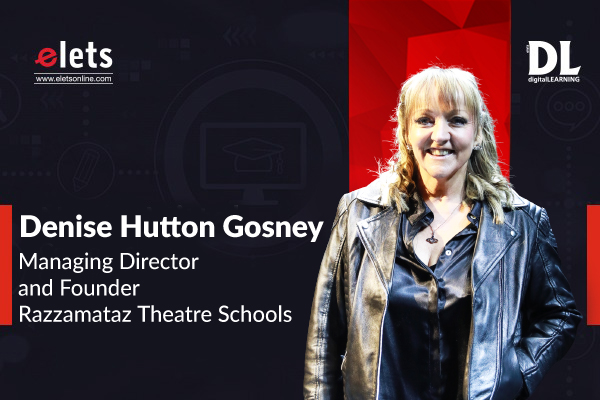
Performing arts is a life tool and stepping stone to a brighter future: Denise Hutton Gosney, Razzamataz Theatre Schools

denise

Having performing arts in schools, taught by specialist teachers, not only ignites creativity but also fosters emotional intelligence, creating well-rounded individuals. Even in the more traditional academic subjects, studies have shown that children who participate in performing arts will have an improved outcome, shared Denise Hutton Gosney, Managing Director and Founder, Razzamataz Theatre Schools in an exclusive conversation with Sheeba Chauhan of Elets News Network (ENN). Edited excerpts:

In a world of theoretical books and monotonous learning, you are bringing fun while learning into the life of students. Let us know in detail about your organisation and various programmes.

Razzamataz Theatre Schools launched in 2000 and currently have 60 schools across the UK, teaching 10,000 children a week. We are a multi-award-winning franchise theatre school, which successfully appeared on BBC’s Dragons’ Den. We offer performing arts education to children and young people from the age of four to eighteen in our main school as well as classes for the pre-school age group and parent and baby classes.

  • Razz Minis (age 4-5) – a fun and informative introduction to the world of performing arts.
  • Razz Juniors (age 6-8) – vibrant and energetic dance, drama and singing classes covering all aspects of the performing arts.
  • Razz Inters (age 9-11) – vibrant and energetic dance, drama and singing classes covering all aspects of the performing arts.
  • Razz Seniors (age 12-18) – high-quality training in dance, drama and singing covering commercial genres and musical theatre.
  • Razz Tots (age 2-3) and Tiny Tots (babies to 23 months) – parent/guardian assisted melody, imagination, and movement class.
  • Razzamataz Project Intense – an exclusive class to support students who wish to take their training to a more advanced level, focusing on the technical skills of dance.
  • Holiday schools – dance, drama, and singing together with learning more about the aspects of theatre including prop making, costume design, choreography, and many more.

Razzamataz was created with a simple dream, to make performing arts available to all young people. How is Razz theatre school bringing performing arts into the life of students? Is there any restriction to the age limit to learn the same?

Our teams of professional performing arts educators will teach the very latest trends in commercial performance and West End and Broadway musical theatre styles. We offer classes in dance, singing, and acting covering a wide range of popular genres including street dance, screen acting, pop singing, and classic musical theatre. Our teams of teachers are highly skilled and experienced, and we offer them regular one-to-one sessions to empower them to lead a class of students that are both experienced and those that are new to performing arts. We give teachers many resources, including the opportunity to complete the Training Academy and earn a Razzamataz teaching diploma. This gives them tools to understand how to bring out the best in every age group and how to deal with challenges such as a lack of confidence, shyness, and other developmental issues. Whether children come to us at the age of two or at the age of twelve, we can bring out their creative side through our fun and dynamic classes.

85 % of a child’s brain develops at an early age in their life. Your institutions have a lot of programmes for early childhood. How are these programmes helping children in excelling from others and how are you making these developments enjoyable while ensuring cognitive development?

Thanks to science, we now know how important these early years are. Through performing arts games and activities, the Razzamataz Early Years classes have been created to aid healthy development for early childhood. The classes have been designed in line with the UK Government’s Early Years Foundation Stage framework, which encourages literacy skills, social skills and problem-solving ability. Offering fun, interactive and imaginative classes to little ones, the content of these sessions helps young children connect, communicate and build community. The programmes have been developed to inspire children to see the world through imagination, senses, play and performing arts. The sessions are themed to provide new experiences and include all the areas that ignite little one’s imagination such as ‘jungle adventures’ ‘under the sea’ and ‘space travel.’ As well as all the benefits to the children, the adults can enjoy special bonding time with their child and meeting other parents and careers living locally over tea and coffee at the end of the class while the children play.

The world is escalating toward a more transformative educational setup. Do you think institutions like yours will escalate performing arts as a mainstream setup in the education segment worldwide?

Razzamataz is passionate about supporting schools worldwide to grow the next generation of confident, adaptable, collaborative and curious leaders. Performing arts is a life tool and stepping stone to a brighter future. Razzamataz helps young people and schools see the value of the Arts sitting next to Science, Technology, Engineering, and Maths. When performing arts is embedded into children’s lives, students can communicate effectively, negotiate, collaborate, become entrepreneurs and leaders. In the UK, we work with many schools offering workshops and classes and the feedback we receive is extremely positive. Having performing arts in schools, taught by specialist teachers, not only ignites creativity, but it also fosters emotional intelligence, creating well-rounded individuals. Even in the more traditional academic subjects, studies have shown that children who participate in performing arts will have an improved outcome. Forward-thinking schools must consider their performing arts programmes to create confident young people with the communication skills needed to succeed in the modern workforce.

World Education Summit 2023 in Dubai aims to unlock fresh strategies and foster new approaches to build a future-ready education ecosystem. How do you think such conferences help to uplift education standards at a global level?

The World Education Summit 2023 in Dubai is giving a platform to arts providers such as Razzamataz who can enhance education standards by showcasing our twenty-plus years of experience working with children and young people. At Razzamataz, we are on a mission to build self-belief in our students, inspiring the next generation through the arts to be better communicators with increased confidence leading to higher academic achievement. The benefits of performing arts are far reaching. Children gain a wealth of attributes by engaging in Razzamataz performing arts lessons. This is anything from increased confidence, collaboration skills, positive effects on a child’s academic learning and increased empathy. We give them a place where they can go to find community, have fun and express themselves in a safe and secure environment. With the Summit highlighting the many benefits, we believe this will change how schools view performing arts. Through performing arts providers such as Razzamataz, we can offer the tools and resources they need to improve education standards wherever they are based globally.

Up to 44% of college students reported having symptoms of depression and anxiety worldwide. Your institution is developing youth confidence and improving health and fitness whilst learning fantastic performing skills. Our readers want to know about your dynamic courses that are mitigating these challenges in the youth.?

Human beings thrive in communities, which is why so many of our students and their families have said they have transformed during their time at Razzamataz, because we are passionate about creating safe and happy spaces for young people to prosper. We work with thousands of young adults, leading to an enormous amount of experience and understanding about their challenges and how Razzamataz sessions improve their physical and mental health. In each Razzamataz school, we encourage Principals to develop special bonds with their students and their families. We encourage regular one to one with teachers and staff to talk about individual students to flag up any worries, we have special ‘Nights In’ to chat to students in an informal way about a variety of topics, we maintain excellent communication with families to keep up to date with new things in students’ lives and we enhance wellbeing through various activities, team building sessions and work on specific ways to build better mental health with specialist coaches. Students really do make lifelong friends with their Razzamataz classmates, which is encouraged through working together and collaborating through putting on shows and performances.

Explore the next in education – An opportunity to elevate the education to global standards

next education

Education needs a new definition, a definition never explored before – it’s time to ‘Explore the Next in Education’. It’s time to circumvent the formidable challenges and reach the zenith in all ways possible to meet the evolving needs of learners in today’s fiercely competitive world.

What is Next in Education? With all the rigorous transformation, it is hard to stick to one. The education ecosystem is large and longing to transform at the fastest speed and the digital wave is making it even faster.

Education beyond classrooms, digital devices, edtechs, rise of subscription-based learning, AI-based learning and more are going to rule the next generation of education. It will be no longer necessary to visit an offline campus to be Data Scientist or to be an Architect, learning will be on the move in the forthcoming times. Recently, a UK graduate wrote an essay using the contentious AI chatbot and surprisingly received passing grades, according to ‘The Independent’. Another graduate from the University of Bristol decided to see if ever-hyped AI tools might be utilised to complete theory assignments and coursework. He used the bot to write a 2,000-word article about social policy. The bot completed an assignment that students were supposed to complete in 12 weeks in 20 minutes. The internet is buzzing with many such stories nowadays. It would not be hyperbolic to say that humans are hijacked by machines and the world will see more of it in the years to come.

Everyone has one’s own opinion on technology implementation. The education fraternity across the globe is continuously aligning itself with the the evolving technologies and believes ‘technology can never replace humans, though humans who don’t know how to use technology will be replaced’. Consider the automatic teller machine as a primary example. Developed in the 1960s and popularised in the 70s and 80s, it was expected that it will likely replace some human tellers, but it’s 2023 and most banks and organisations still have tellers. World is looking at technology as a promise, not as a peril. Alvin Toffler, an American writer once said, “The illiterate of 21st-century won’t be those who cannot read or write but those who cannot learn, unlearn and relearn”. It’s mandatory to match yourself with evolving technology to stay relevant in the 21st century.

It is the century of most novel innovations like Artificial Intelligence, Machine Learning, Big Data, Metaverse, Cloud, Internet of Things, and more. The stage is open now for innovations and that can’t happen in isolation, it’s time to expand our horizon and go global. It’s time for international collaboration for mutual recognition of countries. Most recently, Australian Education Minister Jason Clare signed an MoU with the Education Minister of India on a Mechanism for the Mutual Recognition of Qualifications. Australia will start recognising higher education degrees obtained in India under this mutual framework.

The forthcoming in the education sector are endless as the sector is growing at an unprecedented rate. Global Education and Training Expenditure is set to reportedly reach at least $10T by 2030 as technology drives unprecedented re-skilling and up-skilling in developed economies. The next of education is bigger and brighter.

Exploring the Next in Education: Technology Outlook

Technology has played an increasingly important role in education, from online classes to interactive learning platforms. With the advancement of technology, new opportunities are opening up to revolutionise the way we teach and learn.

Latest Trends

  • Artificial Intelligence (AI): Artificial Intelligence (AI) is one of the most promising technologies in education. AI can help personalise learning by analyzing data on individual student performance, preferences, and learning styles. It can also help teachers and administrators identify patterns and trends in student data that can inform decisions about curriculum and instruction. AI-powered chatbots can also help students with questions and support them in real-time. Additionally, AI can help automate grading and assessment, freeing up teachers to focus on more personalized instruction and feedback.
  • Virtual and Augmented Reality (VR/AR): Virtual and Augmented Reality (VR/AR) is another technology that has the potential to revolutionise education. With VR/ AR, students can experience immersive simulations that help them understand complex concepts and scenarios. For example, medical students can use VR/AR to practice surgeries in a realistic virtual environment, without the risk of harming real patients. Similarly, students studying history can use VR/AR to experience historical events and places, bringing history to life in a way that is not possible with traditional teaching methods.
  • Subscription-Based Learning: Today, we have many platform that works on subscription like Upgrad, Unacademy, Coursera and more. You just have to select the right package & learn. All that is possible because we have technologies that can conduct live study sessions, remote proctoring and more which makes these platforms– a great success!
  • Metaverse: Metaverse has the potential to transform education by providing a more engaging, flexible, and immersive learning environment. One of the main benefits of the metaverse is its ability to provide immersive and interactive learning experiences. Students can explore virtual environments, engage in simulations and experiments, and collaborate with other learners from anywhere in the world.

Moreover, the metaverse offers a level of flexibility and accessibility that traditional education cannot provide. For example, learners can access courses and resources at any time and from any location, making it possible for them to learn at their own pace. Additionally, the metaverse is making education more engaging and enjoyable.

  • Gamification: Gamification involves using game-like elements, such as rewards, badges, and leaderboards, to motivate and engage students in earning. This technology can help students stay engaged and motivated while they learn, making education more fun and exciting.
  • Gamification can also help teachers and administrators track student progress and identify areas where students may be struggling. It is particularly effective for teaching STEM subjects, where concepts can be abstract and difficult to grasp.
  • Learning Management Systems (LMS): Learning Management Systems (LMS) are software applications that help teachers and administrators manage and deliver educational content. LMS can be used to create and deliver online courses, manage student progress and assessment, and track student performance. LMS can also help facilitate communication between teachers, students, and parents, making it easier to provide feedback and support. They can be used to provide access to a range of resources such as videos, online libraries, and interactive learning tools.
  • Blockchain: Blockchain technology has the potential to transform the way we store and verify educational credentials. With blockchain, educational records can be stored in a secure and decentralized system that is accessible to students, employers, and educational institutions. This technology can help students maintain ownership of their credentials, making it easier for them to share their educational achievements with potential employers or educational institutions. It can also help prevent fraud and ensure the integrity of educational credentials.

This is not all! There is a vast scope to leverage tech-drievn innovations in the education sector. From personalised learning to immersive simulations, new-age technologies have the potential to create more engaging and effective learning experiences for students around the world. It will be exciting to see how they will continue to shape the future of education.

International Collaborations: A much needed next in education

Entire world is One – “Vasudhaiva Kutumbakam’- in short one world and one family. International collaborations are not just beneficial for one nation but a lot and the entire poplucae of the countries involved. Recently, The University of Virginia has inaugurated a new partnership with Jindal Global University (JGU) – to provide a significant new platform for student and scholar exchange, joint research on topics of global importance such as democracy and environmental sustainability, and a general expansion of UVA’s engagement in India. Also, Australian PM Anthony Albanese announced that they have finalised Australia-India Education Qualification Recognition Mechanism which means that if you are an Indian student who is studying or have studied in Australia, your hard-earned degree will be recognised when you return home. Or if you are a member of Australia’s very large Indian community — 500,000 and growing — you will feel more confident that your Indian qualification will be recognised in Australia. Now, the time has come when you no longer want to go abroad to study, world will be one and the opportunities will be open for all at their own home spaces.

Earlier, India also announced that we are open for foreign varisties to open campuses in India.

As a result, Australia’s Deakin University will be the first foreign tertiary education institution in the world to establish a campus in India as the Albanese government ramps up prospects in the rapidly developing sector.

Harshita Sharma, Founder & Director, Brainstorm International shared, “Education should be seen in the broader context of community, economy and development with global collaborations. Pedagogic research is an ongoing process to upskill and uplift educators globally to improve teaching learning experiences with collaboration in education. We can keep up with the rapidly evolving ecosystem and focus on keeping education relevant ,responsible and responsive by raising global leaders who thrive on innovation and creativity. With the adaptation and testing of new techniques that can supplement their areas of expertise, global collaboration helps teachers improve their practises and leaders to enhance their professional skills.”

Dr. Ankur Jain, Director, Vanasthali Public School shared, “International student collaboration at an early age helps to promote and revitalise local communities. It is a turning point for the student as it increases interaction between two universities and leads to the improvement in the quality of children.

Children get exposure and opportunities to group problems from multiple perspectives. It also promotes Science and technology development and helps to create global leaders the primary stage of collaboration provides evidence through advocacy and communication on enhancement.”

India – Dubai collaboration: A wave of education partnership

India’s extended neighborhood with the UAE has gained strategic importance due to its geostrategic location, availability of adequate energy resources, home to a significant number of Indians, as well as an important source of remittances to India, and growing prospects for social sectors such as education and health, shared Dr. Vishal Arora, Associate Director, International Admissions, JAIN (Deemed-to-beUniversity).

The UAE’s education market is currently expanding globally, characterised by rising student enrollments, a growing interest in education sector privatisation, and support for government efforts. The global education market size in UAE is estimated to increase by $718 million. The market’s growth momentum will progress at a CAGR of 5.03 per cent. Also, UAE Private K12 Education Market is poised to grow at a CAGR of 5 per cent by 2027.

With the vision to explore future-ready innovations and strengthen collaborative environment, Elets Technomedia is bringing top education leaders and experts from Asia and the Middle East for exchnage of ideas, and best practices at the 25th Elets World Education Summit (WES) on 20-21 March in Dubai.

A lot of our speakers have commented on international collaborations and how WES is helping in doing so. Here is a quick glance:

Nirmal Singh Founder & CEO, Wheebox

“I believe that conferences like such bring together the brightest minds in the field of education to unlock fresh strategies and foster new approaches to building a future-ready education ecosystem. This can lead to the development of policies and initiatives that can benefit students, teachers, and educational institutions globally. Our mission for 2024 is to study the impact of Artificial Intelligence on the Future of Education, Work and Mobility. The summit will give us the opportunity to explore innovative technologies, methodologies, and best practices that can help in transformation.” “I strongly believe that the World Education Summit 2023 can serve as a catalyst for change and inspire stakeholders to work towards creating a better future for education.”

Dr Madhuri Sawant Founder & MD, Barinqaurtz

“I commend the work that the organisers of the World Education Summit 2023 are doing. Conferences such as this facilitate these exchanges of ideas & best practices through both presentations (one-to-many) and networking (one-on-one).”

Today we are at the intersection of multiple global megatrends: ubiquitous connectivity, high-value use cases such as digital payments, remote work/remote education, misinformation, and climate change. The exchange of ideas and best practices, ideally in an in-person setting, helps educators, technologists, businesspeople, and policymakers from around the world drive higher standards in their respective spheres and as a result for the whole world. Globally, there is no uniformity in education systems, every country follows its own style of school education system. Such platforms and conferences could bring uniformity and best practices and ideas which could be adapted globally to standardise school education system.”

Gunjan Pandita Khashu CEO, Accuracy

“Such conferences can help bring together stakeholders from different backgrounds and regions to share knowledge, collaborate on solutions, and promote policies and practices that can improve education outcomes at a global level. Through this event, we look forward to having a unified platform to convey our message to our target audience.”

Harshita Sharma Founder & Director Brainstorm International

“Global summits like the World Education Summit give the experience of a lifetime and bring together innovation, best pedagogies, and new edge technology under one roof for transforming the education eco-system.

It opens doors to the idea of unlearning to re-learn and make a difference in the life of students globally. Decoding International education, connecting with all stakeholders and brainstorming on transforming teaching-learning processes to be well prepared to deal with the challenges of the 21st century to evolve and revamp in perfect tandem with changing times to innovate design thinking solutions. This will definitely bring new innovations and development to the landscape of education in India.”

Dr. Sheela Menon Principal, Ambassador School, Dubai

“Meeting people from the same industry but from different places of the world always is a route towards positive changes and growth. Knowing some of the best minds and learning and sharing from each other helps to find solutions to some of the raging concerns which are global phenomenon.

LATEST NEWS