Home Blog Page 229

43% teachers are unsatisfied with online teaching mode during pandemic: Survey

43% teachers are unsatisfied

According to a survey, around 43 percent of teachers said that they are unsatisfied with online teaching during the pandemic and nine percent were not satisfied at all.

A total of 220 school teachers have participated in the survey. Around 8 teachers were interviewed for an online survey that was published in the Delhi Commission for Protection of Child Rights’ (DCPCR) first journal– Children First: Journal on Children’s Lives.

The major issues that the teachers identified are absenteeism, which was 14 percent among students and children specially abled were not given importance, which was 21 percent. However, attention to children was low, lack of efforts to address emotional issues raised by the students, no assessment and assignment completion by students were given weight age 28 per cent, 19 per cent and 10 per cent.

Also read: NDMC decided to re-Engage nearly 700 contract teachers in its primary schools

In fact, online emotional support and group engagements by counsellors and social workers also helped students to be more expressive and increased engagement.

The teachers are of the opinion that the parents’ involvement is necessary and students also mentioned that school activities, and meeting friends and other merry making is necessary and they are missing it.

Keeping online schedules and fulfilling other responsibilities are quite challenging. Accessibility, affordability, proper curriculum design and other necessities are vital for success online learning.

PM Modi to inaugurate nine Medical Colleges in Uttar Pradesh

PM Modi to inaugurate

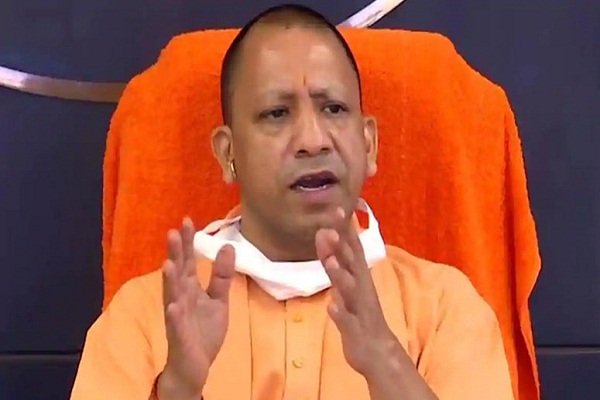
Prime Minister Narendra Modi to inaugurate nine medical colleges in Uttar Pradesh. The nine medical colleges are situated in Siddharthnagar, Etah, Hardoi, Pratapgarh, Fatehpur, Deoria, Ghazipur, Mirzapur and Jaunpur districts.

Eight medical colleges have been sponsored under the Centrally Sponsored Scheme and one has been made functional at Jaunpur by the State Government.

Uttar Pradesh will have 700 MBBS seats in this academic session after the inaugural of the medical colleges. The Chief Minister of Uttar Pradesh Yogi Adityanath said earlier.

Under the centrally sponsored scheme, focus is given to underserved, backward and aspirational districts. The scheme will help to increase the availability of health professionals, evenly distribute medical colleges across geographies, and better utilization of infrastructure of district hospitals.

Currently, 157 medical colleges have been approved in India out of which 63 medical colleges are functional under the scheme, the PMO said.

The return back to school: Learning and growing in the new normal

Mr. Rohan Parikh

As the schools in India are reopening, the children should accept the change and adapt to the new ways of learning, said Mr. Rohan Parikh, Managing Director of The Green Acres Academy – Schools by The Acres Foundation to Elets News Network (ENN).

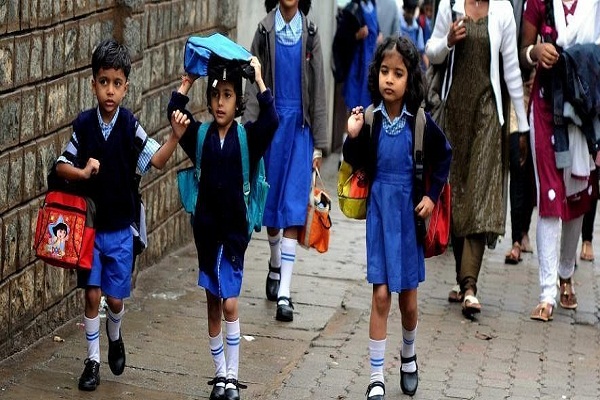
The sight of children in their uniforms, with bags on their shoulders and trooping into the school, has been a rare sight over the last couple of years. While children were forced to stay home in the wake of the COVID-19 pandemic, they gradually accepted a new way of schooling – online learning. However, with the restrictions slowly easing out and things limping back to normal, schools too are looking at reopening their gates and welcoming back their students.

However, there is a larger imperative in question. How do schools make the transition smooth for their students after reopening? Let’s explore how children can feel more at ease and safe upon their return to school.

1. Be open to in-depth conversations

Coming back to school after a long hiatus can prove to be a major change in a child’s life. Many children may have receded into their comfort zones and shells, and may not find it easy to speak to people all over again. At such times, one can take small steps into making students feel comfortable and more aware. Teachers need to motivate students to speak up and share their emotions. Conversing openly encourages students to express themselves better and gives them the reassurance that they’re safe.

2. Organise orientation programs for students

A new beginning calls for newer measures. Orientation programs for kids can be a great way to break the ice and make students feel more at ease while they’re at school. Through this program, students can get to know more about their daily learning schedule once again, meet and greet teachers, explore extracurricular activities, which gives them a better sense of belonging and adventure at school.

3. Set small, achievable goals

Change is a good thing when it’s balanced and calculated. But sudden change can often lead to anxiety. Switching from the world of online learning to a ‘back-to-school’ kind of set-up is not easy for a child. Hence, if students feel nervous about jumping back into school life, teachers can set micro goals and help them by navigating their classroom, reconnecting with old friends, making them more comfortable at their desks, etc.

4. Prioritise mental health for children

Lockdown has made everyone more anxious and stressed – especially children. This sudden shift in lifestyle has given rise to numerous mental health issues in children. At such times, instead of emphasising a child’s learning gaps, teachers need to focus more on a student’s growth over the past two years. With more openness about understanding a student’s mental state, teachers can appreciate their grit and resilience in cruising through this challenging year.

5. Be present for students and participate with them

In the initial days of the school reopening, students might feel that they’ve fallen behind on their curriculum. Spending the whole year in front of the computer can make them feel highly non-competitive. Thus, students need to be kept engaged through various activities and other learning initiatives. An excellent attendance record and active participation can be the key to bridging the prevalent learning gaps and strengthening the bonds.

6. Request for help if the going gets tough

Managing students is not an easy feat; add the pandemic, and it’s a different ball game altogether. Kids are still trying to make headway in a post-pandemic world and are highly dependent on their teachers to guide them. Hence, teachers need to take the reins and help students come to terms with these new changes. However, things can get overwhelming for a teacher as well. At such times, calling for additional help can assist them in becoming better at managing the students during these tough times.

Time can heal anything, so all we have to do is give things some time. Schools need to realise that students seek to experience a sense of normalcy when they return to school. By acknowledging the way they feel and giving them the space to come to terms with their feelings, schools can become an integral part of the students’ emotional journey. So, when students return to school, they’re more accepting of change and adjust to this new way of learning.

Assam schools resume primary classes after nearly 2 years

Assam schools

The primary section from Class 1 onwards have attended classes for the first time in Assam schools. Since the Covid 19 pandemic, the schools were shut down and no classes were conducted.

As per the new Standard Operating Procedures (SOPs), online classes will continue for those who are opting for staying at home.

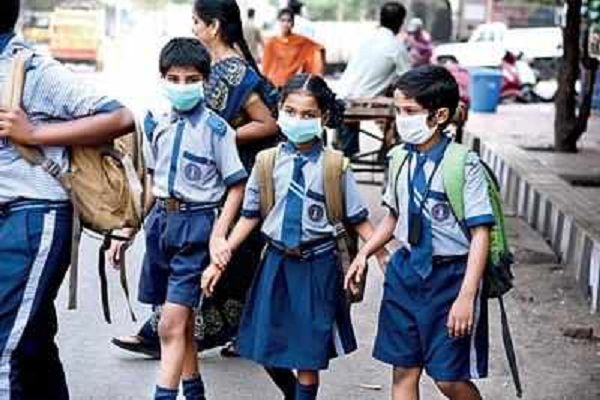
The SOPs also mentioned that the educational premises should be properly sanitized and appropriate protocols should be followed like wearing face masks and maintaining proper social distancing.

Classes for 1-8 will be held on alternate days and from Class 9 onwards, it will be on a daily basis. A total of 30 students are allowed per section in a class, as per the SOPs.

Also read: Assam Schools to reopen for Class 10 from next week

After the deputy commissioner of district has given permission, the decision to reopen schools has been taken in view of the improving Covid situation in the school. If the positivity increase and detection of Covid 19 cases surge then the government will review it and close within seven days.

However, the Covid 19 vaccine is necessary for all teaching and non-teaching staff.

Several Students, Teachers Protest Against National Education Policy and four-year UG programme in Delhi

Protest Against National Education Policy

Several students and teachers protested against the National Education Policy and re-introducing the four year undergraduate programme in Delhi University recently.

The protest was held outside Shastri Bhawan, the office of the Ministry of Education. The protesting organization has submitted a memorandum to the Ministry of Education.

There were representatives from different organisations supporting the protest against NEP.

The organisation includes All India Forum for Right to Education (AIFTRE), All India Revolutionary Students Organisation (AIRSO), AISA, DYFI, SFI and the Youth for Swaraj.

The organisations said that they would intensify the protests if their demands are not fulfilled by the Ministry of Education.

NEET MDS 2022 examination postponed to June 2022

NEET MDS 2022 examination

The National Eligibility cum Entrance Test for MDS (NEET MDS) 2022 examination has been postponed by the National Board of Examinations in Medical Sciences.

The exams are rescheduled for June 4, 2022 and the test has been delayed as the admission process is yet to be completed. However, the exams were scheduled for December 19 this year.

“In view of the admissions for academic session 2021-22 being delayed and yet to be completed, the conduct of NEET-MDS 2022 for admissions to academic session 2022-23 has been deferred, with the concurrence of the Dental Council of India vide its letter No. DE-NEET (MDS) Admission-2021/2672 dated 18.10.2021,” an official statement said.

“The NEET-MDS 2022 has now tentatively been scheduled for 4th June 2022,” it added. Moreover, the NEET MDS counselling 2021 will be completed by November.

Recently, the doctors have moved to the Supreme Court regarding delay in the counselling process. The court has issued a notice following which the counselling schedule was announced.

Admit cards for National Aptitude Test (NAT) 2021 released

NAT 2021 Admit Card Released

Admit cards for the National Aptitude Test (NAT) have been released by the National Testing Agency. Students can visit the official website nat.nta.ac.in to download the admit cards.

The examinations will be held on October 23 and 24. It is an ability profiler exam that guides students to join the right institutions and skills training.

There are four levels in which the exam will be held: Level 1- 13-15 years; level 2- 16-18 years; level 3- 19-21 years; and level 4- 22-25 years. In nine domains the exams will be conducted. These are Critical Reading Ability, Numerical Ability, Abstract Reasoning, Analytical Reasoning, Spatial Eligibility, Finding Irregularities, Data Interpretation, Verbal Ability, Physical and Mechanical Analysis.

Also read: NTA releases JNU Entrance Exam (JNUEE) 2021 Admit Card

“NTA will be sending communication to the candidates on the procedure for taking the online exam, individually, by email at their registered email addresses also. Hence, candidates are advised to keep checking their mailbox regularly so that they do not miss out on the same,” the agency said.

The students will not be sent the admit but they need to download it.

PM Narendra Modi inaugurates and lays the foundation stone of Rajkiya Medical College, Kushinagar

PM Narendra Modi inaugurates

The Prime Minister, Narendra Modi inaugurated and laid the foundation stone of Rajkiya Medical College, Kushinagar.

Addressing the gathering, the Prime Minister said that with the medical college in Kushinagar, local aspirations of becoming a doctor or having quality medical infrastructure will be fulfilled.

He pointed out that under the National Education Policy, the possibility of getting technical education in one’s own language is becoming a reality. This will enable local youth of Kushinagar to realize their dreams.

Rajkiya Medical College in Kushinagar will have 500 beds and admit 100 students in its MBBS course for the academic session 2022-23.

The college will be built at a cost of over Rs 280 crore.

Edtech Byju’s raises Rs 2,200 crore fresh funding from investors

Edtech Byju’s raises Rs 2,200 crore

Edtech company Byju’s has raised Rs 2,200 crore fresh funds recently. The latest funding was done by New-York based Oxshott Capital Partners. According to regulatory filings reported by researcher Tofler, the company has invested Rs 1200 crore as a part of a Series F round at Rs 285,072 per share.

Other investors include Edelweiss who invested Rs 344.9 crore, IIFL invested Rs 110 crore), Verition Multi-Strategy Master Fund invested Rs 147 crore and XN Exponent Holdings invested Rs 150 crore.

As the online learning requirement shooted, Byju’s have secured largest cheques ever from the investors.

Byju’s raised $1.5 billion from UBS Group, Abu Dhabi sovereign fund ADQ, and Blackstone Group in June this year. After two months, the company also raised $1 billion from investors led by Baron Funds, Facebook co-founder Eduardo Saverin’s B Capital Group, and US-based hedge fund XN Exponent Holding at a valuation of around $15 billion.

Byju’s also bought US Kids’ coding platform, Tynker and acquired online examination platform Great Learning, Kids’ digital reading platform, Epic and test preparation provider Aakash Educational Services.

Edtech tools will enhance teaching and learning: Rajeev Krishnan, Vice President – India, Matific

Rajeev Krishnan

Edtech companies need to provide tools that enhance teaching and learning process, said Rajeev Krishnan, Vice President – India, Matific to Elets News Network (ENN). He added that Edtech platforms with its ease of access, quality content and comparatively low-cost investment will motivate people to stick with online platforms.

How do we deal with poor digital infrastructure in online education?

In my option few things have to happen to take care of this : a) Integrated Public-Private Partnership approach where e-learning solutions can be rolled out through the telecom network b) E-Learning Providers should work to provide their content which works both Online & Offline c) Build quality regional content; students not only need to have access to device but also good content in vernacular languages d) Lastly include the parents in this learning process, by capacity building especially for first time learners.

Do you think there is a resistance among educational institutions to change? How do ed-tech firms deal with it?

Most educational institutes are comfortable with a traditional approach and are somewhat resistant to change. We need to keep in mind that change in the education industry does not come easy and it is a very gradual process. It is hence the responsibility of every EdTech firm to demonstrate the real value and benefit of one’s offering – Focusing on the features that aim to enhance teaching and learning, the underlying pedagogy which complements the teaching, ease of use of the program and the safety and security of the technology. Lastly, pricing does play a part, and hence we need to ensure that the products are priced to make it affordable to the parents.

Most importantly, we need to educate various stakeholders by asking the right questions to & providing the right answers. I will share my own company’s example – Matific or Math Labs with experiments, what should a school choose?. It may be fun to play in Math labs; however if the goal is to teach Mathematics, then the simulations are far more efficient than the actual physical objects. If you read books on child development perspective, it has been proven that compared with the physical counterparts, computer representations are more manageable, extensible and free of distracting features.

What are the ways Edtech firms are dealing with multilingual crises?

Our children are more comfortable communicating in their mother tongue, even if they study in English-medium schools. I personally don’t see any challenge here; Companies must tailor their solution and incorporate language nuances for effective delivery and user engagement.

Infact, the National Education Policy (NEP) 2020 document clearly advocates for vernacular instruction during primary years of education. So, any digital resource has to be in vernacular language. Edtech firms are not losing anything because in India we have millions of people who speak vernacular. As a company, we ensure that Matific is localized by language and curriculum alignment in nearly every country where we have users. For example, in India we are aligned to CBSE/ICSE/IB/IGCSE/State Board and translated in Hindi, Tamil, and Marathi, with the option of adding a new language.

How can we highlight the Edtech tools and technologies and make them user-friendly?

India is a huge market for Edtech products and services especially of the high importance that we place on education at every level. There is still a continued uncertainty around the opening of schools and colleges, and so there’s a strong belief that online learning/digital content will become more embedded among consumers.

The new norm is going to be more of blended learning – Edtech platforms with its ease of access, quality content and comparatively low-cost investment will motivate people to stick with online alternatives even after the pandemic has passed. There will also be a lot of emphasis on personalized adaptive learning, supplemental and remedial learning.

One of the demands which I have heard from many Educators was the need for interactive and engaging solutions for teachers in order to enable better learning outcomes in students. This I believe opens a lot of possibilities for Edtech players.

There is a lack of uniform e-learning legislation in India. How can we streamline the process and bring smoothness?

Today in our country, how various stakeholders (Parents, Schools, Teachers, Governments) decide on a particular product or solution is quite Ad Hoc. We need to have quality standards and evaluation framework to decide on various EdTech solutions. Governments in consultation with all stakeholders should roll out a comprehensive policy which lays down the fundamentals of E-Learning, Online classrooms and quality frameworks for EdTech Products.

The notion is that the Internet-based services are free. In such a case, how can we change the mind-set of the educational institutions?

Nothing is ever free on the Internet, somewhere somehow you have to pay for it. The perception is Internet-based services are monetized via advertising and data collection. Hence, they should be provided for free. This mindset can be changed when the perception regarding certain parameters of the paid service are altered – quality and exclusivity, how essential that content is, how readily/non-readily available it is, etc. Moreover, for utilizing good content, you also need proper training, which is not provided as a part of any free content. If a consumer sees merit in all of the above, they would be more than willing to pay for it.

LATEST NEWS