Home Blog Page 27

Smt. Debashree Mukherjee appointed as Secretary of MSDE

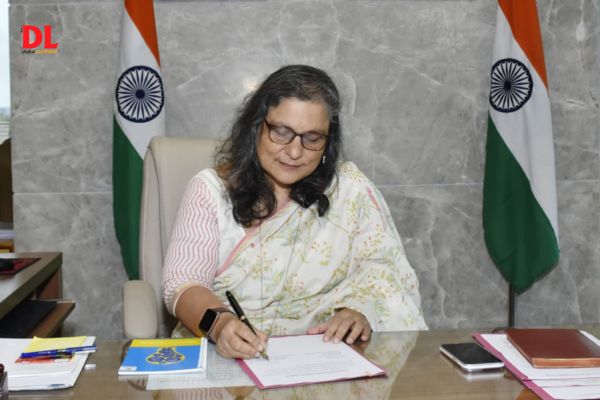
Smt. Debashree Mukherjee

Team Skill India has extended a warm welcome to Smt. Debashree Mukherjee, IAS, who has taken charge as the new Secretary of the Ministry of Skill Development and Entrepreneurship (MSDE), Government of India.

A 1991-batch IAS officer of the AGMUT cadre, Smt. Mukherjee brings with her a wealth of administrative expertise, leadership experience, and policy-making acumen. Over her distinguished career, she has held pivotal roles across governance and institutional development, making her a respected figure in public administration.

Her appointment is expected to give fresh momentum to the Skill India Mission, a flagship initiative aimed at equipping India’s youth with industry-relevant, future-ready skills. With her visionary leadership, MSDE is poised to strengthen the country’s skilling and entrepreneurship ecosystem, fostering innovation, creating opportunities, and accelerating the journey towards Viksit Bharat @2047.

Also Read: MICA Ahmedabad & Digii launch ‘SATHI’

The Skill India fraternity looks forward to her guidance in shaping a more dynamic skilling landscape, one that empowers youth, drives entrepreneurship, and aligns India’s workforce with global standards of excellence.


MICA Ahmedabad & Digii launch ‘SATHI’

MICA

MICA Ahmedabad has partnered with Digii to launch an initiative that celebrates stories of digital change in higher education. The two institutions recently signed a Memorandum of Understanding (MoU) at the MICA campus, formalising their collaboration to design, document, and share impactful narratives of digital transformation across academia.

The collaboration will operate under the project titled ‘SATHI’ (Stories Advancing Technology & Higher-ed Institutions). The initiative is aimed at researching and curating real-life case studies of technology adoption in education, demonstrating how institutions can embrace digital solutions as powerful enablers of growth, innovation, and learning experiences.

Jaya Deshmukh, Director & CEO of MICA, emphasized the importance of this collaboration, saying, “Our partnership with Digii highlights MICA’s commitment to showcasing voices of transformation in education and amplifying the role of technology in shaping the future of learning. This initiative reinforces MICA’s legacy in communication and storytelling.”

The storytelling and creative strategy will be spearheaded by Prof. Ruchi Tewari, Associate Dean, Marketing, Communication and Public Affairs at MICA, along with her team, ensuring a fusion of academic expertise and creative execution.

Also Read: AICTE welcomes Prof. Shyama Rath as new member Secretary

Hemant Sahal, Founder & CEO of Digii, added, “SATHI is built on the belief that stories have the power to connect, inspire trust, and build stronger bridges between technology providers and higher education institutions. Together with MICA, we aim to drive meaningful innovation across the ecosystem.”

This collaboration is expected to create a new benchmark for how storytelling can be leveraged as a powerful medium to inspire digital innovation, foster partnerships, and encourage the widespread adoption of technology in education.

AICTE welcomes Prof. Shyama Rath as new member Secretary

AICTE

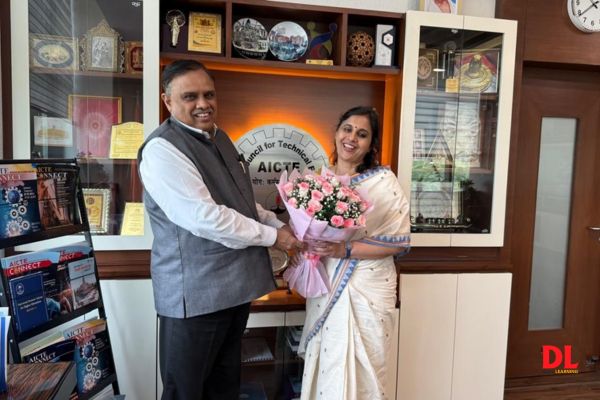
The All India Council for Technical Education (AICTE) welcomes Prof. Shyama Rath, an eminent physicist and academic leader, as its new Member Secretary.

Prof. Shyama Rath, currently a Professor at the Department of Physics & Astrophysics, University of Delhi, has an academic career spanning more than three decades. She earned her M.Sc. in Physics from IIT Kanpur in 1988 and a Ph.D. in Physics from IIT Delhi in 1994, after which she began her career as a Lecturer at Delhi University, where she has been serving as Professor since 2011.

Her research expertise lies in experimental condensed matter physics, with a focus on semiconductors, quantum materials, advanced optical spectroscopy, and accelerator-based material engineering. She has published extensively in reputed journals and guided multiple doctoral scholars, contributing significantly to India’s physics research ecosystem.

Prof. Rath has collaborated with several global institutions, including the University of Electro-Communications (Tokyo), Imperial College London, and the University of Surrey (UK). Reports also highlight her experience as a consultant with the International Atomic Energy Agency (IAEA) and as visiting faculty at Chulalongkorn University, Bangkok, underlining her international exposure.

Also Read: Fibe crosses 500 partnerships, joins hands with JAIN Online

In addition to her research work, she has held several important administrative positions at the University of Delhi. She served as Coordinator of the Internal Quality Assurance Cell (IQAC), playing a key role in NAAC accreditation, and has also worked as Dean of Alumni Affairs. She is widely recognized for promoting women in STEM and encouraging young female students to pursue careers in science and technology.

The AICTE expressed confidence that Prof. Rath’s appointment will further strengthen technical and management education in India, while driving research, innovation, and inclusivity across the higher education ecosystem.

Fibe crosses 500 partnerships, joins hands with JAIN Online

Fibe

Fibe has announced a strategic collaboration with JAIN Online, one of the country’s top UGC-entitled and AICTE-approved universities. With this, JAIN Online becomes Fibe’s 500th education partner, marking a significant milestone in Fibe’s journey as India’s largest fintech-driven education financing provider.

The partnership highlights Fibe’s mission to democratize access to affordable higher education, upskilling, and professional learning. Through its 100% digital loan solutions, transparent processes, and flexible EMI repayment options, Fibe ensures that students and working professionals can pursue industry-relevant programs without financial stress.

So far, Fibe has enabled over 2 lakh individuals to upskill and invest in their education affordably, unlocking career advancement and better livelihood opportunities. By onboarding JAIN Online, Fibe further strengthens its vision of empowering India’s youth and workforce with the right skills to thrive in a rapidly evolving job market.

Akshay Mehrotra, Co-Founder & Group CEO of Fibe, said:
“Access to quality education should never be constrained by financial barriers. Our partnership with JAIN Online bridges the skill financing gap, giving learners the flexibility to upskill or pursue higher degrees that align with their career goals. By offering convenient EMI-based solutions, we’re not just supporting students but also contributing to a future-ready workforce that will fuel India’s economic growth.”

Also Read: IIM Indore partners with Simplilearn

Dr. Chenraj Roychand, Chancellor, JAIN (Deemed-to-be University), added:
“At JAIN Online, our vision is to make education inclusive, impactful, and transformative. By joining hands with Fibe, we are enabling students and professionals to pursue their aspirations without financial worries. With easy financing and EMI support, this partnership will open new opportunities for learners across India, further strengthening our mission of inclusive and accessible education.”


Bridging the Digital Divide: How Pan Afrodigital is Democratizing Education in Africa

Pan Afrodigital

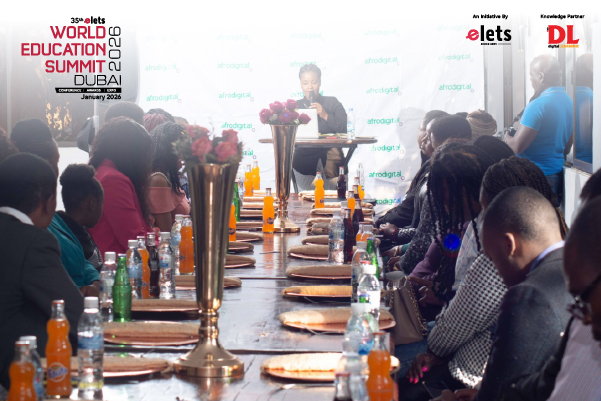
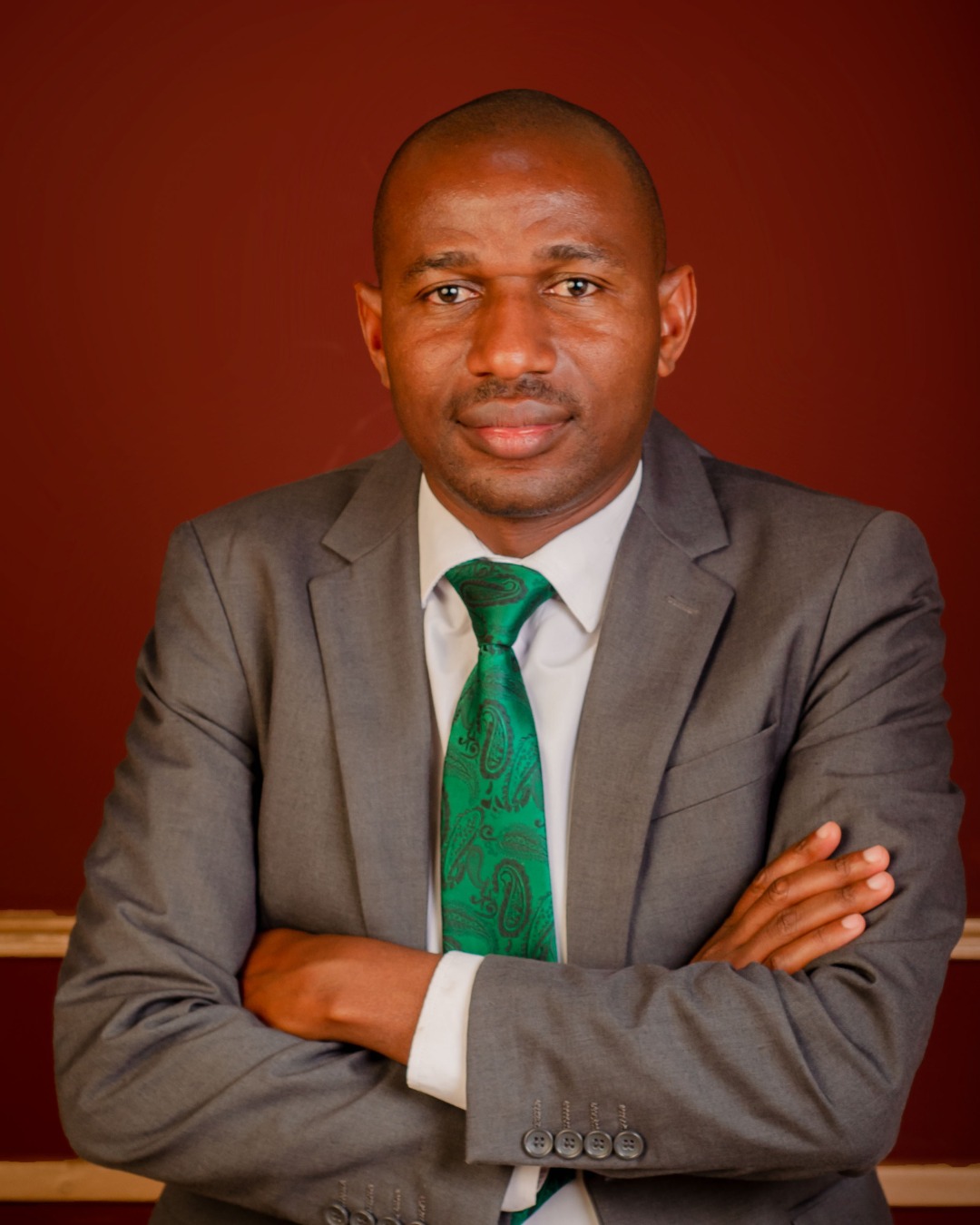
In a world increasingly driven by digital fluency, the gap between traditional academic models and the real-world demands of the workforce is growing wider every day. This is a particularly critical challenge in Africa, where a burgeoning youth population and a vibrant entrepreneurial ecosystem require immediate, accessible, and practical skills to thrive. Pan Afrodigital, a pioneering educational institution, is not just addressing this challenge—it is fundamentally rethinking education by democratising vocational and digital skills training for a new generation of professionals and entrepreneurs.

The journey of Pan Afrodigital began with a critical observation. In 2017, during interactions with over 8,000 individuals through the Google Digital Skills programme, the founder noticed a profound and universal truth: people across all sectors—from corporate executives to high school students—were deeply passionate about the digital future. They recognised its power to transform their lives, careers, and businesses. Yet, a significant barrier remained: the scarcity of accessible learning institutions. Accessibility was limited by financial capacity, geographical distances, and the restrictive academic prerequisites of traditional education.

From this insight, Pan Afrodigital’s core innovation was born: a mission to make education and skills training available to all, regardless of their background or location. The institution’s philosophy is rooted in a model we call “Micro-Certification for Macro-Impact”. This approach, designed to dismantle traditional barriers, focuses on delivering high-impact, short-term courses that are directly aligned with the needs of the modern economy. Pan Afrodigital’s curriculum, which has expanded from digital marketing to include graphic design, occupational health & safety, and most recently, ESG, is a powerful departure from the lengthy, theory-heavy degrees offered by conventional universities.

The design and implementation of this solution were as innovative as the concept itself. The founder, leveraging a background in computer science and five years of experience running a digital agency, chose a lean, bootstrap approach. The institution’s Learning Management System (LMS) was built using readily available tools like the MacBook QuickTime Player, allowing for rapid development and deployment of the first online course in just four months. This lean methodology was not a compromise but a deliberate strategy to remain agile, responsive to student needs, and free from the financial constraints that plague larger, more bureaucratic institutions.

However, a significant challenge emerged early on: the lack of a legal framework for online training institutions in Zimbabwe. The accreditation process with the Zimbabwe Council for Higher Education (ZIMCHE) was a non-starter, requiring a prohibitive USD $27,000 fee and physical infrastructure that contradicted the very essence of a borderless online platform. Rather than surrender to these systemic hurdles, Pan Afrodigital met them with innovation. 3 Inspired by the success of models like Udacity’s Nanodegrees, they introduced the term “Pandegree”—a globally accepted practical qualification designed for the modern professional. To validate this new credential, the institution sought and secured independent accreditation from CPD UK, ensuring that its certificates would be recognised and respected on an international scale. This strategic move not only solved a major regulatory problem but also positioned Pan Afrodigital as a forward-thinking, globally minded institution.

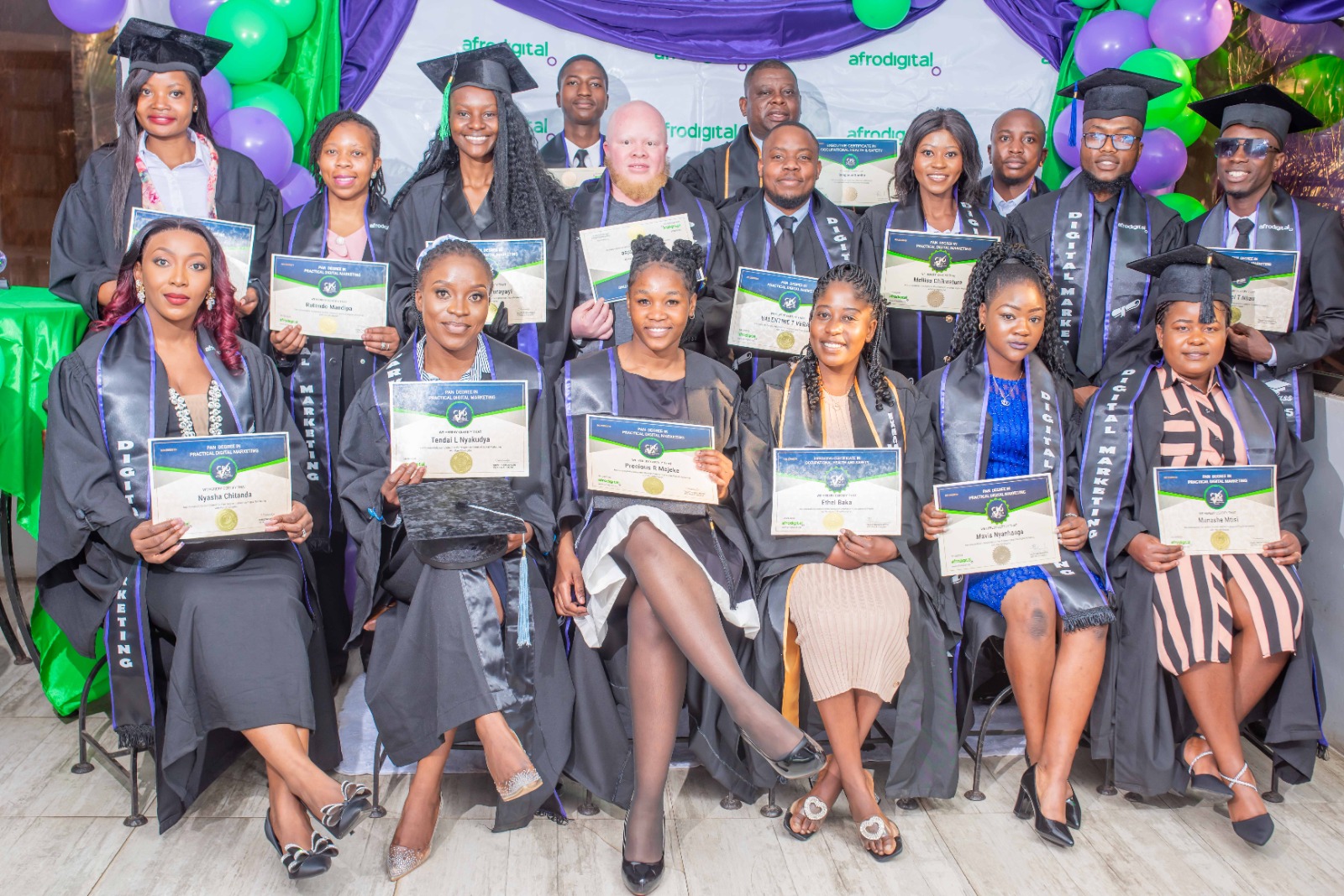
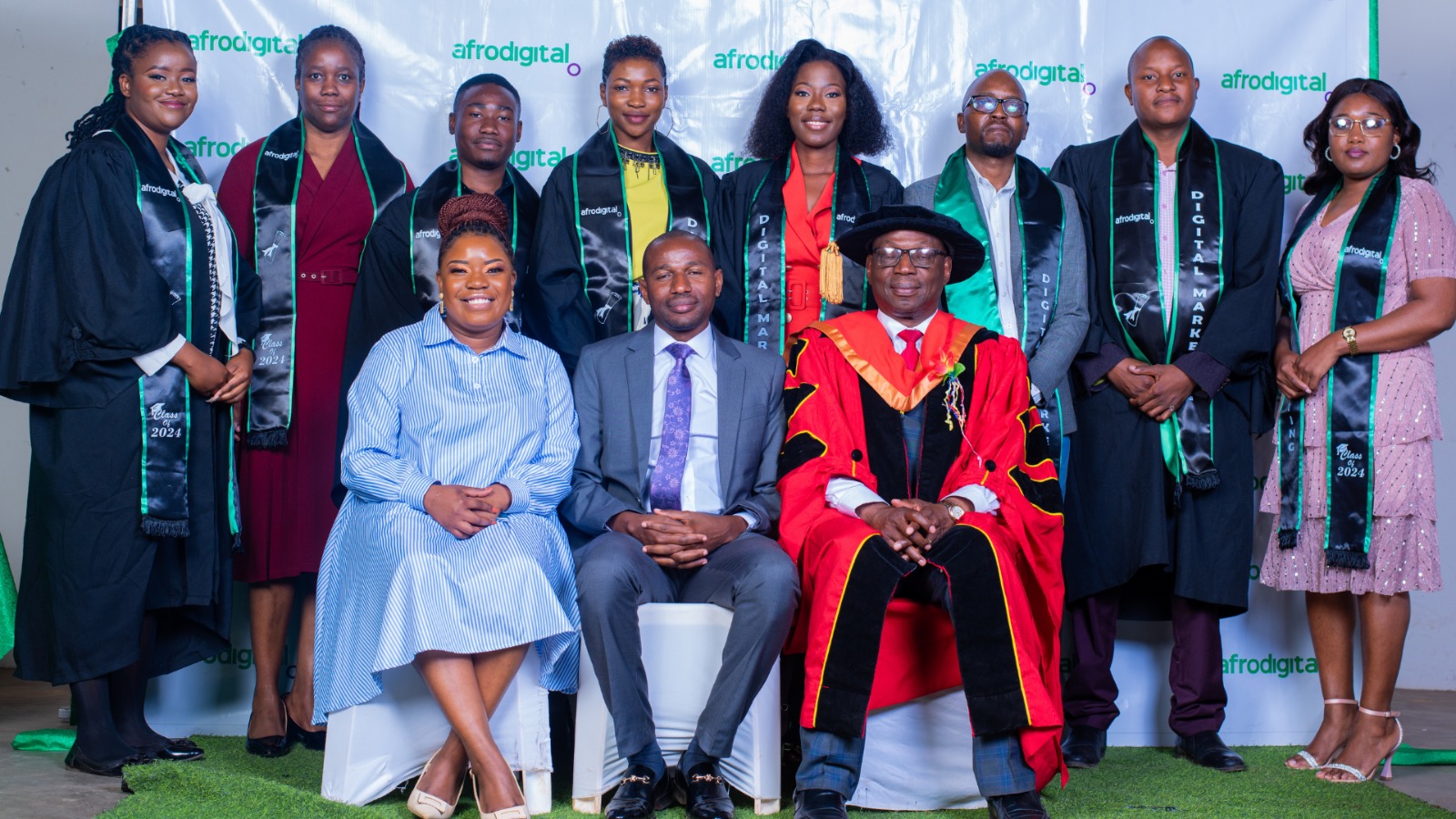
The success of this model is not just a theory; it is powerfully demonstrated through measurable outcomes and real-world impact. Since its inception, Pan Afrodigital has trained over 1,300 individuals, with students hailing from across Africa and beyond. The institution’s reach extends far beyond Zimbabwe’s borders, with students from Zambia, South Africa, and other continents, proving its ability to transcend geographical limitations and provide equitable access to quality education.

More importantly, Pan Afrodigital has transformed lives by creating tangible pathways to employment and entrepreneurship. A striking example is that of three students who, lacking the typical ‘O’ level academic prerequisites, completed the digital marketing course and are now employed as remote workers for a UK-based agency. This is a powerful testament to the institution’s belief that skills, not just qualifications, are the true currency of the digital age.

The focus on practical, project-based learning is a cornerstone of the curriculum. Every student completes a hands-on project that serves as a professional portfolio, ensuring they are job-ready from day one. The results of this approach are clear: a remarkable 15% of Pan Afrodigital’s digital marketing students have launched their own businesses based on the projects they developed in the course. This entrepreneurship rate highlights the programme’s effectiveness in not just imparting skills but inspiring and equipping students to create their own economic opportunities. Student testimonials further reinforce this success, with graduates reporting career advancements and using their certifications to secure visas for work relocation abroad. As one review highlighted, the course’s practical nature and ongoing mentorship are invaluable.

Pan Afrodigital’s work has also been independently validated and celebrated by the media. Publications like The Standard and Techzim have covered the institution’s impact on communities and its role in providing essential skills. The article “Shot in the arm for digital marketing students from underprivileged communities” from The Standard highlights the profound social impact of the institution’s work. Similarly, Techzim’s report, “Afrodigital trains over 1,300 in digital marketing, graphic design skills”, reinforces its status as a key player in Africa’s educational landscape.

Pan Afrodigital’s vision extends beyond mere training. It is a commitment to fostering a new generation of empowered professionals who can contribute meaningfully to the digital economy. The institution’s philosophy aligns with the belief that “good people should flood social media and the internet with healthy and useful content.” By providing accessible, skills-based education, Pan Afrodigital is not just building careers; it is building a more capable, connected, and prosperous future for Africa. It stands as a prime example of how innovation in education can break down old systems and create new opportunities for all.

Views Expressed by: Trust Nhokovedzo, Founder, Pan Afrodigital

IIM Indore partners with Simplilearn

IIM Indore

IIM Indore has announced the launch of its Executive Programme in Business Analytics and AI for Managers in partnership with Simplilearn, a global leader in digital learning. This seven-month programme is designed for mid-to-senior professionals who want to harness data-driven decision-making and lead AI-powered transformations across industries.

The curriculum provides 70+ hours of live interactive training with IIM Indore faculty, hands-on exposure to Python, Power BI, and advanced analytics tools, and a unique campus immersion experience. On successful completion, participants will earn the prestigious IIM Indore Executive Education Alumni status.

Recent research by Salesforce highlights that 60% of large organisations in India already have a defined AI strategy, while another 32% are developing one. With AI adoption accelerating across sectors, there is a growing need for leaders who can integrate machine learning, predictive analytics, and ethical AI into core business functions such as marketing, finance, and supply chain management.

The programme goes beyond technical training to build leadership and project management skills, including stakeholder engagement, agile practices, resource planning, and quality control—empowering professionals to manage AI-led initiatives effectively.

Prof. Himanshu Rai, Director, IIM Indore, said:
“This programme reflects our vision to equip leaders with the ability to navigate the fast-changing business environment. AI is no longer optional—it’s an integral part of decision-making and strategy. Through this initiative, we aim to create leaders who can drive meaningful impact at scale.”

Also Read: OpenAI launches major education initiative in India with 500,000 ChatGPT licenses

Kashyap Dalal, Co-Founder & COO of Simplilearn, added:
“Today’s managers must blend domain expertise with digital agility. This collaboration with IIM Indore ensures that professionals are equipped with the right balance of academic rigor and practical skills. The timing is perfect as industries rapidly embrace AI for forecasting, efficiency, and strategic decision-making.”

Applicants must hold a diploma (10+2+3), undergraduate or postgraduate degree with at least 50% marks, along with a minimum of two years of professional experience. Successful participants maintaining 75% attendance and clearing evaluations will be awarded a Certificate of Completion from IIM Indore.

OpenAI launches major education initiative in India with 500,000 ChatGPT licenses

Open AI

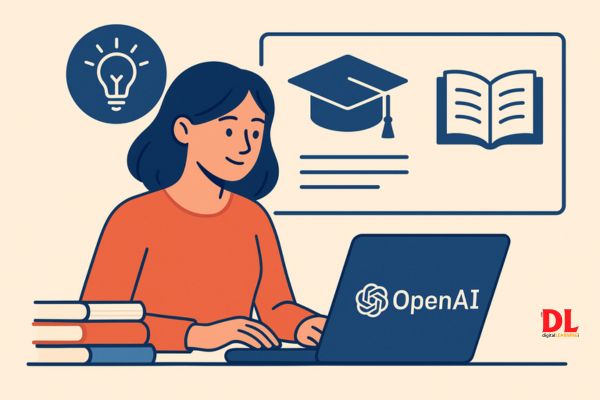
OpenAI has launched a landmark programme to accelerate the adoption of artificial intelligence in India’s education sector. As part of this initiative, the company will distribute 500,000 paid ChatGPT licenses to schools, universities, and technical institutes across the country. The rollout will be accompanied by specialised teacher training modules, ensuring educators can effectively integrate AI tools into lesson planning, assignments, and classroom engagement.

At the launch of the OpenAI Learning Accelerator in New Delhi, Leah Belsky, Vice President of Education at OpenAI, stressed that India is at the heart of the company’s long-term educational vision. She introduced ChatGPT’s new “Study Mode,” a feature designed specifically for the Indian curriculum, covering CBSE boards and competitive exams like IIT-JEE. Unlike simple answer generation, Study Mode aims to enhance active learning and personalised tutoring experiences for students.

A cornerstone of this initiative is OpenAI’s research partnership with IIT Madras, backed by a $500,000 research fund. The collaboration will focus on evaluating how AI-driven tools can improve learning outcomes and foster innovative teaching methodologies informed by cognitive neuroscience.

Over the next six months, OpenAI will work closely with the Ministry of Education, the All India Council for Technical Education (AICTE), and ARISE to distribute licenses and deliver comprehensive teacher training programmes. The goal is to empower educators with AI support, enabling them to devote more time to mentorship, creativity, and human connection in the classroom.

Recognising India’s diverse educational landscape—from top-tier universities to rural schools, OpenAI has appointed Raghav Gupta as Head of Education for India and Asia Pacific. His mandate will focus on scaling AI accessibility for students, teachers, and researchers, while also strengthening government and institutional partnerships.

India’s youth have already shown a remarkable affinity for AI, with more than 50% of ChatGPT’s Indian users under the age of 24. This underscores the platform’s role in shaping future-ready learning environments.

Through this initiative, OpenAI envisions classrooms where AI enhances personalised tutoring, automates routine tasks for educators, and equips institutions for a technology-driven future. The India-first rollout demonstrates the company’s belief that artificial intelligence will be a transformative force in global education, with India positioned as a central hub for innovation and large-scale adoption.

Hyderabad startup Vaave secures ₹6.6 crore funding

Vaave

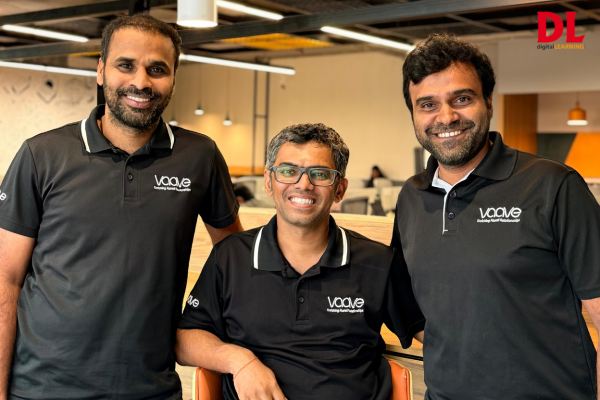
Hyderabad-based alumni networking startup Vaave has raised ₹6.6 crore in its first significant external funding round, marking a major milestone in its growth journey. The investment was led by Aditya Vuchi (VCMint) and Raj Narayanam (RAN Ventures, Founder & Executive Chairman of Zaggle).

Previously operating with bootstrap funds and support from friends and angel investors, Vaave will now leverage this fresh capital to expand into new markets, enhance product innovation, and reinforce its leadership in the alumni engagement ecosystem.

Founded by Paresh Masade, Yasaswy Peesapati, and Jaipal Reddy, Vaave offers subscription-based SaaS solutions for educational institutions and corporates to build and manage vibrant alumni communities.

The platform already works with 1,200+ institutions across 28 countries, including top-tier institutes such as IISc, IITs, IIMs, NITs, and IIITs. It also manages corporate alumni networks for leading companies like Tata Steel, Deloitte, Virtusa, and Bosch.

By offering advanced networking and engagement tools, Vaave competes with international players such as Almabase, Graduway, and Hivebrite, positioning itself as a strong homegrown alternative in the global alumni management space.

Also Read: IIT Council charts roadmap for Atmanirbhar and Viksit Bharat 2047

This funding marks a pivotal step in Vaave’s mission to empower institutions and enterprises with robust alumni ecosystems, driving lifelong engagement and community growth.

IIM Bodh Gaya signs MoU with AMFI

IIM Bodh Gaya

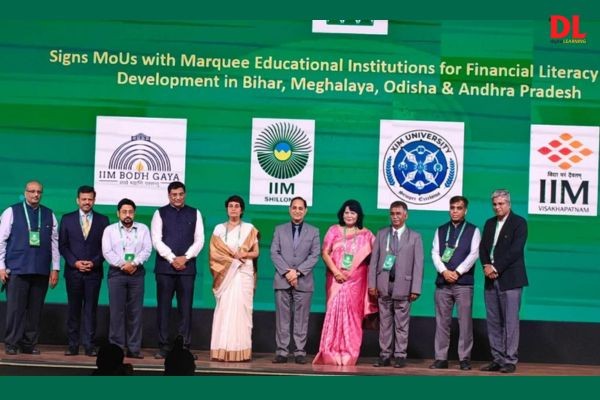
The Indian Institute of Management Bodh Gaya (IIM Bodh Gaya) has entered into a pioneering Memorandum of Understanding (MoU) with the Association of Mutual Funds in India (AMFI), marking a significant step forward in integrating financial education within the academic realm.

This collaboration seeks to bridge the gap between theoretical learning and practical investing. Under the agreement, students at IIM Bodh Gaya will gain access to industry-led programs, hands-on financial literacy workshops, and immersive training modules centered on mutual funds and personal finance, guiding them toward meaningful careers in India’s rapidly expanding financial sector.

Also Read: IIT Council charts roadmap for Atmanirbhar and Viksit Bharat 2047

The MoU was announced during AMFI’s 30th Foundation Day celebrations held on August 22, 2025. It forms part of a broader outreach strategy, with similar partnerships established with institutions such as IIM Shillong, IIM Visakhapatnam, and XIM University Bhubaneswar. These collaborations underscore AMFI’s mission to bolster investor awareness across India’s diverse academic landscape.

From Heritage to Horizon: Redefining Education for a Global Future

Phoebe A. Wasfy

Education stands at a crossroads. On one side is tradition, rooted in discipline, respect for knowledge, and the belief that academic achievement is the key to opportunity. On the other is modernity, with its call for creativity, adaptability, and the ability to thrive in a rapidly changing world. For educators across the globe, the challenge is not to choose between these two but to build a bridge that connects them.

As an Egyptian Canadian educator and principal, I have lived this intersection firsthand. My own journey, from the classrooms of Alexandria, to immigrant life in North America, to leading the first Coptic Egyptian school in Canada, has convinced me that the future of education depends on our ability to balance rigor with innovation, cultural heritage with global outlook, and academic achievement with personal empowerment.

Tradition: Strength and Limitation

In Egyptian culture, education is deeply valued. Parents often carry the conviction that success comes only through medicine, pharmacy, or engineering, the familiar “holy trinity” of professions. These pathways are pursued with intensity, driven by long hours of study, summer tutoring, and a relentless focus on grades.

This emphasis on discipline and perseverance is admirable. It produces resilience, respect for knowledge, and an ethic of hard work. Yet, when pursued in isolation, it risks narrowing possibilities. A student who dreams of becoming an artist, entrepreneur, or researcher may feel silenced by expectations. In communities worldwide, from Cairo to Toronto to Seoul, we see a similar pattern: stability is prized, but passion is too often overlooked.

Modern Demands: Creativity, Adaptability, Leadership

At the same time, the global economy is being reshaped by artificial intelligence, automation, and interconnected challenges such as climate change and inequality. The World Economic Forum consistently highlights skills like critical thinking, collaboration, creativity, and emotional intelligence as essential for the 21st century. These are not skills that can be memorized from a textbook; they must be cultivated through experience, exploration, and reflection.

Here lies the tension. Traditional models of education prepare students for exams. Modern demands require us to prepare them for uncertainty. The bridge between the two is where true educational transformation can occur.

The Whole Child: Beyond Tests and Grades

At PCC, we have sought to embody this bridge by embracing the “whole child” approach. Academic excellence remains a priority, but we view it as one strand of a larger tapestry. Students are encouraged to step outside the comfort zones of their chosen career pathways: to perform in musicals, to compete in sports, to participate in humanitarian trips, to take courses unrelated to their future careers.

The results are remarkable. Students who once doubted their ability discovered confidence on stage. Others returned from trips to Egypt or Bolivia with a global awareness that reshaped their aspirations. Far from harming their academic performance, these experiences enriched it. Graduates have gone on to prestigious medical and engineering programs, but also to law, business, and the arts. Their success lies not in conformity but in the breadth of their formation.

Overcoming Cultural Resistance

Change is rarely easy. Parents initially questioned why musicals or humanitarian trips were necessary. They feared such initiatives would “waste time” or distract from university preparation. Convincing them required patience, dialogue, and results. Over time, they saw that their children were not losing ground academically but gaining immeasurably in confidence, empathy, and leadership.

This tension between tradition and innovation is not unique to Egyptian families in Canada. It plays out in immigrant households in Europe, in competitive education systems in Asia, and in under-resourced schools in Africa. Everywhere, parents want security; everywhere, students crave purpose. Education systems that succeed will be those that respect cultural values while expanding horizons.

Building the Bridge Globally

So how do we, as a global education community, build this bridge? Three shifts are essential:

1. From Memorization to Meaning

Homework and exams should not be abolished, but they must evolve. Tasks should cultivate critical thinking, application, and problem-solving. Students must learn not only to recall knowledge but to use it.

2. From Narrow Pathways to Broad Horizons

Success cannot be defined by a handful of professions. Education systems must celebrate diverse talents, whether in STEM, the arts, social entrepreneurship, or public service. Students should be encouraged to take risks and explore fields outside their comfort zones.

3. From Isolation to Global Citizenship

Humanitarian trips, cross-cultural exchanges, and digital collaboration projects should be integral, not optional. In an interconnected world, the ability to empathize across cultures is as critical as mastering algebra or biology.

A Call to Action

The future will not wait. If we continue to equate education solely with grades and traditional professions, we risk producing graduates well-prepared for yesterday’s world but unprepared for tomorrow’s challenges. As educators, parents, and policymakers, we must expand our vision.

We must empower students to say: “I will be a doctor because I love healing, an engineer because I love building, an artist because I love creating.” Passion and purpose, not pressure and fear, should drive their choices.

Education must light the fire of curiosity, courage, and conviction. It must empower young people not only to succeed but to lead, to be innovators, bridge-builders, and change-makers in a world desperate for conviction and compassion.

Conclusion

As an global educator, I carry the richness of two worlds: the discipline and reverence for learning of my heritage, and the openness and innovation of my adopted home. My life’s work has been to integrate these values and to prepare students not only for careers but for life. But this is not just my story. It is a global imperative. From Cairo to Copenhagen, Toronto to Tokyo, the challenge is the same: to build bridges between tradition and modernity, between knowledge and creativity, between security and vision. Only then will education fulfill its highest purpose: not simply to produce workers, but to empower leaders who can transform societies.

Views expressed by: Phoebe A. Wasfy (BA, BEd, MEd, OCT), Principal of Philopateer Christian College 

LATEST NEWS