
Home Blog Page 906

NIOS to Partner With NSDC for Vocational Training

join hands

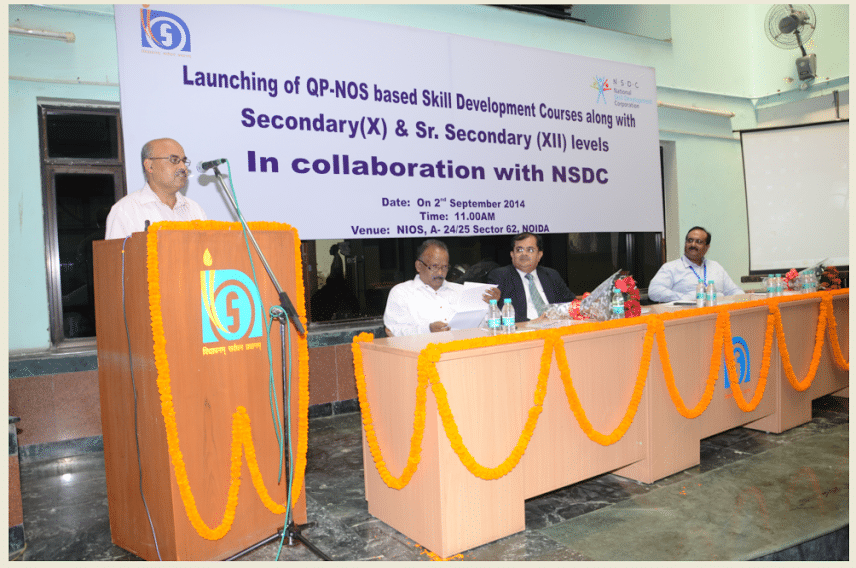
The National Skill Development Corporation (NSDC) and the National Institute of Open Schooling (NIOS) have joined hands to provide vocational training to students of class 10 and class 12. The courses will be based on National Occupational Standards (NOS) set up by the industry through the respective Sector Skill Councils (SSCs).

NIOS students will have the option to select one vocational course as part of their five subjects in class 10 and 12. The marks of this subject will be clubbed with the four other academic subjects to get NIOS certification for class 10 and 12. At present, the programme has been launched as a pilot in few sectors of Delhi an NCR covering 1,00,000 students. The pre-pilot phase was launched today in four sectors – security, retail, telecom and gems and jewellery.

“We are honoured to partner with NSDC for introducing these vocational courses as part of our curriculum. This will enhance the employability of our students and make them job ready,” said Dr Sitanshu S Jena, Chairman of NIOS. Appreciating the partnership, Atul Bhatnagar, Chief Operating Officer, NSDC said, “We are honoured to partner with NIOS in this unprecedented initiative. I encourage students to make the best of this opportunity. The skill certificate will be their partner for life and will give their career a great boost. We are confident of the success of this pre-pilot programme. We will soon look at extending this to other states as well.”

After completion of the course, students will be certified with a degree which will enable them to get employed.


Alma Mater of Legends to Get New Life

Intellectuals who put the country on the path of progress are often remembered. Unfortunately though, we have failed to recognise the institutions that nurtured these legends. In a move directed at correcting this anomaly and for facilitating the right infrastructure and environment to students at such institutes, the Human Resource Development ministry is about to embark on an exercise to draw up a list of schools and colleges whose alumni have won the country international recognition in different spheres.

The exercise, to be carried out in collaboration with the states will honour the alma mater of these historic figures and also help breathe new life into these institutes.

Also on the agenda is a move to pay tribute to national leaders such as S. Radhakrishnan, Raja Ram Mohan Roy, Swami Vivekananda, Zakir Husain, Bal Gangadhar Tilak, Deen Dayal Upadhyay, Madan Mohan Malaviya among others by instituting 50 new centres across universities and institutions of higher education. The University Grants Commission will offer the seed money of Rs. 7.5 lakh to set up these centres which will be named after people who have made stellar contribution towards education, social reform and nation building. Universities and institutions of higher education can apply for the grant and set up these centres.

SC Orders Compensation for Students Denied MBBS Seats

The Supreme Court has ordered the Maharashtra government to pay a compensation of Rs 20 lakh each to the 21 aspirants who were denied MBBS seats. In a sharp reaction to the state government and the malpractices adopted by private colleges, the apex court has held that the state needed to pay the students for having failed to “take necessary action on the students’ complaints”.

In a case in 2012, 21 students were either denied admissions to private medical and dental colleges or were not allowed to shift from dental to medicine despite having the required scores.

The students had earlier approached the Pravesh Niyantran Samiti (PNS), a quasi-judicial body, which conducted an inquiry and found that the colleges had been flouting rules for admissions. PNS asked the state to cancel admissions to 250 seats in 17 colleges, most of which are run by politicians. With the government failing to take action, the students approached the Bombay high court and then the Supreme Court for being denied the rightful admission in 2012.

Though the detailed copy of the order is awaited, it is learnt that the court has also ordered an inquiry against the authorities who facilitated admissions without merit and revised the process to suit their needs.

Prime Focus on Empowering, Educating Women: Modi

At home function in Rashtrapati Bhawan

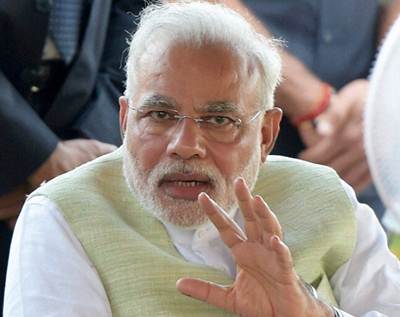
Prime Minister Narendra Modi has stressed on the need to educate and empower women. Addressing students of the Sacred Hearts University in Tokyo on September 2 during his five day visit to Japan, Modi said that he has always given a lot of importance to the education of the girl child.

Speaking about the importance of women education in India, he said, that he has spent Rs 10,892 crore for girl child education. He also mentioned that the Indian constitutional framework incorporates women in the decision-making process and that women constitute 25 per cent of the cabinet including External Affairs minister Sushma Swaraj.

Modi’s comments are being seen as an attempt to resurrect India’s image internationally. India’s reputation has taken quite a beating in the international media in recent years following several cases of crime against women.

Courtesy AISA, DU May See Election Reforms

AISA

In can be a milestone in the Delhi University’s (DU) students’ politics which may result in a change in the DU students’ union elections. The Delhi High Court on November 10 will hear a petition moved by the left-leaning All India Students’ Association (AISA), taking exception to the allotment of ballot numbers in alphabetical order to the candidates for the Delhi University Students’ Union (DUSU) elections.

AISA, which propelled from fringe status to the mainstream in DU in 2013 through its anti-FYUP campaign, is now growing in influence. The student’s body has always been critical of the way DU elections are conducted. AISA is demanding that along with standard manifesto fare, such as hostels and bus passes, there should be reforms in the DU students’ union elections.

“There’ve been unexpected results. We have heard of EVMs not functioning but all such complaints became rumours,” said Sunny Kumar, Delhi state secretary, AISA. “Since there are no polling agents, these aren’t reported and inquiries are pointless. Candidates never know what actually happens in colleges.”

AISA had stated in its petition that the candidates with their names on top of lists had an “unfair advantage” as their position on the electronic voting machines was accordingly determined. Those with their names appearing first in the list on EVMs had a higher chance of winning as many voters, unsure of whom they wish to vote for, press the buttons on the top by default. According to the petitioner, several candidates get their names changed to introduce the alphabet ‘A’ before their original name prior to elections to get advantage of the alphabetical listing.

HRD Minister Clarifies Controversy Over ‘Guru Utsav’

irani

Months after a controversy over a central order on the use of Hindi in social media posts and official communication, the Bharatiya Janata Party (BJP) has found itself in the middle of a fresh controversy over politicisation of education.

The fresh incident relates to a recent central government circular on Teachers’ Day celebrations that saw southern parties, including the ruling party’s own allies, suspecting it as a bid to rename the day to “Guru Utsav”. Moreover, participation was being perceived as being made mandatory for schools.

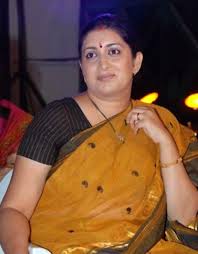
Calling the criticism ‘politically motivated’, HRD minister Smriti Irani clarified that Guru Utsav was the name of an essay competition and claimed that over 1.3 lakh students have already taken part in the contest. She further explained that participation was “voluntary” and that September 5, the birth anniversary of former President Sarvepalli Radhakrishnan, will continue to be celebrated as ‘Teachers’ Day’. “This particular activity is voluntary in nature. If it is being politicised, then I would say it is regrettable,” Irani said.

Calling it a ‘political propaganda’, Congress party spokesman Abhishek Singhvi said: “It has never happened … what sense can a Class 1 student make of the PM’s speech? Can such propaganda be done with state machinery? What is the net result besides propaganda and drama? It is time the government introspected.” The scheduled timing of the PM’s speech —from 3 to 4.45pm — have also been attacked.

The HRD Minister had responded strongly, saying: “If the Prime Minister of a free India does not have the freedom to interact with students, then it is ridiculous.”

Modi will be interacting with around 1,000 selected students at the Manekshaw Auditorium and take questions via video conferencing facility, which will be beamed live to over 18 lakh schools through Doordarshan and education channels.

New Era for Nalanda University

nalanda

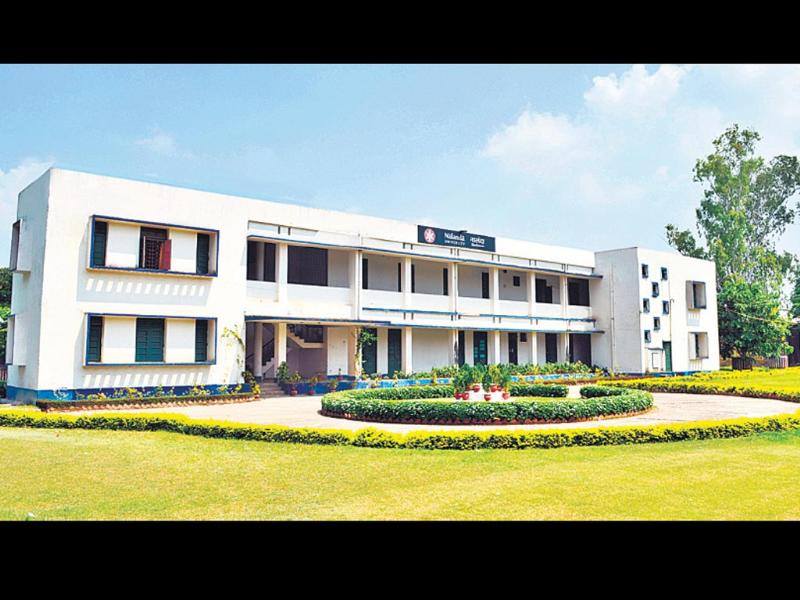
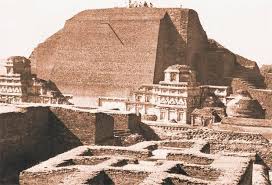
The glory of the Nalanda University (NU) is back after 800 years.  On September 1, 2014, NU began its session with an inaugural class.

The first batch of students has been named ‘Nalanda Pioneers’ by the administration. Out of the seven schools planned, currently NU has started with two schools – School of Ecology and Environment Studies and School of Historical Studies with students and professors hailing from India and foreign nations.

Countries like China, Myanmar, Laos, Australia, Singapore and 10 others have extended financial aid to NU for infrastructure projects. The Japanese government will also help in the construction of Gaya –Rajgir NH-82 in a mark of help to the university.

Tamil Nadu Top Spender in Higher Education

tamil nadu higher edu

Tamil Nadu has topped the list of states in terms of government spending on higher education. The total expenditure on higher education by the state government stands at 1.5 per cent of its gross state domestic product (GSDP), HRD minister Smriti Irani informed the Rajya Sabha in a written reply.

“The Centre expects the same from other states as it provides equal fund as grant under the Rashtriya Ucchatar Shiksha Abhiyan (RUSA) scheme. Every state should spend at least 1.5 per cent of its GSDP for higher education,” said Prof S P Thyagarajan, former VC of Madras University.

“The investment of TN in higher education has been broad-based covering school, vocational, technical, professional and non-professional courses,” said Prof S Vaidhyasubramaniam, Dean, Sastra University.

Seventh Edition of Bangalore India plans ‘Nano for the young’

nano india

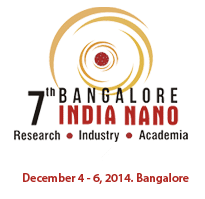
The seventh edition of Bangalore India Nano will witness a special programme “Nano for the Young” where participation of students from various streams like engineering, medical and biotech colleges from the state will be given opportunity to learn about the latest trends in nanotechnology.

It is a two day event which is scheduled on 5th and 6th December. It will feature many relevant sessions which include International conference, product and technology exhibitions, pre conference tutorials, research industry collaboration hub (RICH), keynote talks, Nano for the young programmes among others. The main area of focus of this event are advanced materials, energy, food, healthcare and medicine, nano fabrication and some new areas like oil & gas, devices and sensors, scanning probe microscopy, surface treatments and coatings among others.

The presence of eminent personalities like, chief science officers, fellow, advisors and leaders and directors of institutions will be seen in the event.

A digital cloud of your own

digital

We all have at some point of time carried bundles of certificates and their attested photo-copies to our various visits to government offices. No longer. Under the instructions from Prime Minister Narendra Modi himself, the information and technology department is working on creating a ‘digital cloud’ for every Indian wherein, all the certificates issued by the government — education, residential, medical records, birth certificates etc — are to be stored in individual ‘digital lockers’ and a communication protocol established for government departments to access them without physically having to see the hard copy.

This way, a student applying for a government college after having studied in a government school will have all his details such as birth certificate, identity details and educational certificates, school-leaving details et al, already available with the college authorities.

The idea will be floated on MyGov.in portal where suggestions will be sought for working out a “communication protocol” or what is called an applications programming interface ( API) will be solicited.

The portal has already proved to be a big hit. As of now, more than 2 lakh people have registered on it. Ideas for Digital India have received the maximum number of suggestions, followed by Clean India and job creation on the website

LATEST NEWS