


Home Blog Page 1173

Fostering Creativity

The infrastructure in various universities in India is good, but we need to make it even better

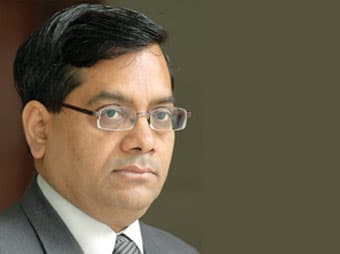
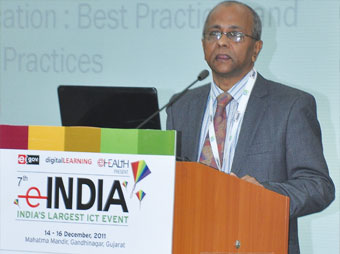
By Prof Paritosh K Banik, Director General, Pandit Deendayal Petroleum University | www.pdpu.ac.in
Pandit Deen Dayal Petroleum University is only four years old, whereas Harvard University is almost 100 years old. The practices that Pandit Deen Dayal Petroleum University has developed in last four years may not be the best, but they are highly workable. Right now the university has four schools. As the focus of the university is on oil and gas sector, two schools have been established – the School of Petroleum Management, and the School of Petroleum Technology.

The School of Petroleum Management offers post graduate diploma. And the School of Petroleum Technology offers BE and M-tech courses. As it is not possible for a university to be focussed solely on petroleum and gas sectors, it was decided that two more schools should be opened to cover other streams in the energy sector. So the third school started by the university is focussed on solar power. This is basically the way in which the university has expanded its scope.

The university started with faculties in three streams – Faculty of MGMT, Faculty of Technology and Faculty of Workers. There are plans to expand the faculty system further. For instance, we have the Faculty of Labour Studies, which is a new concept in India. In this course, students can opt according for educational material that is basically dependent on their own interests and skills. A student may have a combination like economics with environment.

The basic purpose of education is fostering creativity in the students. This is what the university is trying to do through the various streams of education. The infrastructure is already good, but we need to make it even better. If we go to the first 100 education centres in India, we will find that the infrastructure is already quite good. The Pandit Deendayal Petroleum University is planning to have more green areas in the campus. Engineering labs are well equipped. There is also the plan to develop a solar power plant.

Many foreign students flock to the university under the student exchange programme. From the university, the first batch of students has been sent to the university in Houston and Oklahoma. A MoU has been signed with the University of Texas. ONGC keeps coming to our campus on a regular basis. Remote centres are being planned in Gandhinagar and Surat.

All is not well in Education: Prof Sudhir K Jain

Sudhir Jain

There is very little improvement that modern digital tools can bring into the field of education, if our philosophy of education is not right

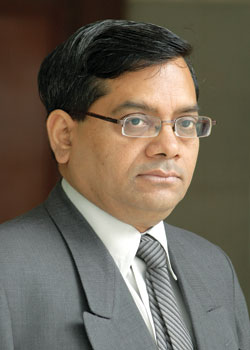
By Prof Sudhir K Jain, Director, IIT Gandhinagar | www.iitgn.ac.in

When I was a child, I went to a school called Dharamvati Veera Nursery School. Later on I joined the Raja Jwala Prasad Intermediate College. It was then a trend in small towns in India to name institutions after some reasonably wealthy philanthropist. Raja Prasad, the founder of the college where I studied, was an engineer from Roorkee. He built huge canals at a time when the British were ruling the country. He received enough money from his British employers to become rich without having to resort to corruption of any kind. There was a time in India when it was possible for an honest person to become wealthy.

The point is that during the 1930s and 1940s people in the country were setting up educational institutes not for making money, but because they felt that this was the right way to deploy their wealth.

End of philanthropy in education

In modern India a different sort of system has developed. The government started by saying that we will take care of everyone, and individuals need not worry about things like education. We created this system of “grants” to expand our college infrastructure. The government makes the investments in educational infrastructure and pays the salaries to the staff, the education system is heavily subsidised. But this has killed philanthropy. The practise of wealthy people contributing towards education has stopped. The money that the wealthy people have come to own, has started to move in a different direction.

Some of the famous universities in the country have been created by the government, but what has happened to these universities. Once they were at the top, but now their reputation has started taking a beating. The government pays the salaries of the professors and the administrators. If the salary is not enough, there are strikes. The focus of our educationists has turned towards making money, often at the cost of the education that they have to offer. The entire university atmosphere has started to deteriorate. Some private universities have come up. But as we do not allow profits to be made in the educational space, entrepreneurs use unethical methods to make money.

Opening ourselves to the world

Is there any top ranking university in the world which does not have an international character? Can we imagine a university in the world that does not welcome international talent? How many universities in India have International talent? But how many universities have the capacity to have an international faculty? In 1949, when Jawahar Lal Nehru decided that Thompson College at Roorkee will become an university, the first VC was Mr. Hart, who came from England. If you read the history of Thompson College, you learn that one of the reasons due to which Mr. Hart accepted the position was because he was assured of a higher salary. The thing is that India in 1940’s was able to have international talent in education because we were paying better salaries than anyone.

For that matter, Indian professors in England and America are making good income. Can we make it possible that more talented people start entering our education system? That is what I call “Next practice.” We need to get out of this mentality of closing the doors. People from around the world should be able to enter our campuses and indulge in exchange of new intellectual ideas. In the system of education you don’t lose ideas by sharing them. In fact, the more you share, the more you gain.

It is time we admitted the problems that we are facing. We must be able to say that “All is not well,” with the system of education that we have in our country.

Creating Innovative Models in Education

While digital learning cannot be a substitute for teachers, it can be used for expanding the reach of education

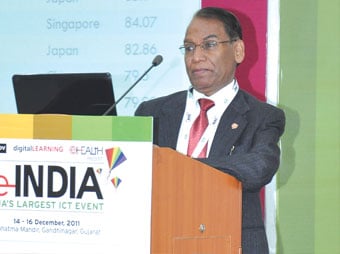
By R P Gupta, Secretary, Primary Education, Government of Gujarat | www.gujarat-education.gov.in

In India there is a large rural population that lacks access to quality education. It is the primary task of responsible government to ensure that all the children in the country have access to minimum levels of education. It is to achieve this very aim that the Parliament has enacted the Right to Education Act. Since the passage of the act, it becomes our statutory responsibility to ensure that every corner of the country is covered by the elementary education system.

Higher education requires lot of investment from the government and from the industry. It also has a commercial aspect. You can’t leave the higher education totally on the government, but that has been the case in India to a large extent. In the private sector, the tendency is that a lot of people who have absolutely no interest in higher education, get into the space, and start institutions that often result in the creation of unemployable graduates. Lot of money gets wasted without any benefit to the student community or to the society.

Education through e-Governance
In Gujarat, the e-Governance format has led to many improvements in education during the last three/four years. All examinations from SSC onwards have been taken online. We also have a system that uses the online medium to provide monthly feedback on students to their parents. In fact, any interested party can access the performance report of the children. They can also get the information on the education institutes available in any particular area. The education portal that the state is developing is geared to create more levels of interactions in the educational space.

The state of Gujarat envisions having all the classrooms in the state incorporated with technological hardware and software, so that the teaching-learning process can be improved. Most of our students in government run schools are from poor backgrounds and at home they might not have access to devices and even Internet. So it will benefit them a lot if they can interact with technology at school level. The e-Governance system in schools envisages, computer education, a centralised educational material disseminated through e-learning, and online transactions between the various stakeholders.

We are not providing computer teachers to the schools. Our strategy is to provide trainers who can coach the teachers who are already employed in the schools.

Reforming the Education Sector

Instead of following the trends developed elsewhere in the world, weneed to start creating educational products that others can use

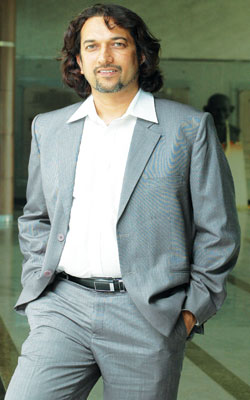
By Dr Akshai Aggarwal, Vice Chancellor, Gujarat Technological University | www.gtu.ac.in

In Gujarat, the Gujarat Technological University (GTU) has a major role to play in the education space. GTU owns 95 percent of the total technology related seats in the state’s education sector. Hence any improvement in the quality of technology education being offered in the state must begin with GTU.

Speaking about the entire country, there is no doubt that in the field of education we have failed to keep up with many other parts of the world. Till 1985 we were nearly at the same level as China, but we were far behind Japan. Now even China has raced ahead. Other Asian countries like Malaysia, Taiwan and South Korea are also ahead of us. If other Asian countries can be home to many top universities, then why cannot we?

It is not as if we are not capable of being at the top of the educational space. There is no dearth of talent in the country. Finances for setting up of educational infrastructure are also not that big a problem. Our students are quite intelligent. They often prove their intelligence when excel in foreign universities, and even in Indian universities.

The quality of our faculty is also quite good. However, it is true that the number of teachers is not enough to take care of the education necessities of all our students. In fact, in many western universities faculty of Indian origin is doing a remarkably good job. Indians are being prized as teachers. Perhaps the problem exists in the Indian educational system as a whole. In our education system, it is not possible for the teachers to carve a niche for themselves and grow on their job.

It is also possible that we have lost our desire to innovate in the educational space. The Indian civilisation is one of the oldest. We have a long tradition of excellence in education. But now we have lost track. After independence we have had the green revolution, the white revolution and many other interesting developments. Unfortunately a similarly beneficent revolution has eluded us in the education space.

This needs to change. We need to focus more on education. We need to bring in innovation and focus on using modern digital tools. It is education that serves as the foundation for every other sector in the country.

Where Are We Going Next?

Things are changing very fast in the educational space; old technologies are
transmogrifying into new ones, which promise better collaboration and connectivity

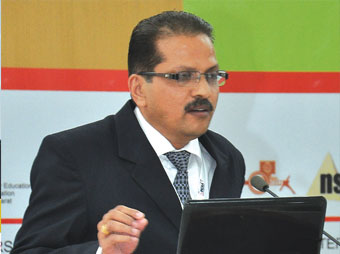
By Dilip Mehta, Principal, Olive Green International School, Ahmedabad |www.ogis.edu.in

These days it has become fashionable for everyone to talk about ICT infrastructure, digital tools, software and things like that. Such systems have already made deep inroads in modern schools. But they might not remain popular in times to come, when we expect many of our teaching tools to shift into the cloud space. Even today institutes are making use of cloud space to enhance the scope of learning.

Movement towards cloud
We can take it for granted that the cloud space is going to become much more important. Today we take copyright issues quite seriously, but in the cloud space copyright might not be applicable. Teachers will be able to access all kinds of teaching material directly from the cloud space and incorporate it into their curriculum. Much of the content in the cloud can be free, but the premium content will carry a price tag.

When the courseware rests in the cloud, then it might become possible for the students to access these on a 24/7 basis. They can even remain in touch with their instructional material while they are at home. However, the success of the cloud based model and other newer systems of education will depend on the kind of technological choices that institutions make. The systems have to be easily usable and they have to be cost effective.

Evolution of technology
At least in urban areas, the schools have reasonable budgets. They can afford to buy good ICT tools. But financial considerations should not be the only factor in deciding the kind of tools that schools should go in for. The first thing is to identify the need that a particular institution has, and then we have to go out and find the technological tool that will help us solve precisely that need. It makes no sense to go in for something that is almost two years ahead of its time. The technology implemented today should fulfil today’s need.

In two or more years our needs could have changed so drastically that we might need a different set of technological tools, which are not even available today, to fulfil those needs. We also can’t afford to ignore the fact that technology is evolving at such a fast pace that in two years of time we might have access to a completely different set of tools. The next generation is already immersed in software and gadgets. They know so much about new technologies that at times their knowledge is better than that of their teachers.

Tech companies that are into providing ICT based tools to schools and colleges have to contribute their mite by conducting workshops where teachers can be trained in the usage of new educational technology.

Technology Challenges and Digital Insights

Teachers feel a greater degree of motivation when they are teaching by the means of digital technologies

By Sreenarayanan P C, Director, Podar International School, Mumbai | www.podar.org

The digital system makes it much easier for students to develop the skills that they need to impart value to society. The students need to develop the original skills to solve all kinds of problems. In USA, lot of research has been done by universities to find out what employers are looking for these days. The main thing that they are looking for is that the future generation should be good communicators. If you have a good idea in your mind, but you are unable to communicate it effectively, then it is of no value.

So the students have to learn to think creatively, they must be able to challenge, debate, discuss, and be in a position to make all the crucial decisions. They should also have good planning and organisational skills, they should be able to teamwork. They have to be good at self management. Of course, they also need to be comfortable with using latest technology. It is our job to provide the technological and the educational materials that impart the student will all the necessary skills.

Equipping the 21st century learner
To equip today’s learner with necessary skills we need to equip our curriculum with 21st century technology. How do you do that? How do you incorporate today’s technology into the curriculum? This is the biggest challenge that we have. At Podar International School, we have managed to address some of these challenges. Few years ago, we replaced our blackboards with overhead projectors. We actually used to write transparencies, which could then be used for teaching in classrooms.

From transparencies we moved to having TV and computers in class. After that we moved on to flat screen computers. Then came the interactive boards. Now we have students using laptops and iPads in schools. I am of the opinion that the iPad can prove to be a very valuable educational tool. But to make transition from the blackboards to the iPad, we need to have teachers who are adequately trained in the ways of using technology.

Of course, the modern digital technology also makes it imperative for schools to make changes in the curriculum. The scope of education becomes much broader. Along with the teachers, the parents too need to be trained so that the child has access to best digital interfaces at school and at home. Digital technologies do result in distinct improvement in the quality of education that is being offered. We actually conducted a short-term experiment with two groups of students. One group was provided iPad, and the other was not. The performance of the students with iPads was much better.

The Classroom of the Future

What kind of classrooms are going to be there in the future? Perhaps the answer to that question can be found in the present trends

By Kartikay Saini, Chairman, Scottish High International School | www.scottishigh.com

There is no dearth of technology in the modern educational space. You look around and you see a vibrant imagery of devices, systems, software and infrastructure. There is so much around us that more often than not it is difficult for us to select the specific technological tools that are best suited to meet our needs. Selecting the right educational technology is an onerous task by itself. You have to do lot of research on not only the tools that are available, but also on the nature of your exact needs.

Facilitators of digital education
The search for new technology has to focus not only on the students, but also on the teachers and the administrators. Training sessions have to be conducted so that there can be a seamless integration of new technology into the classrooms. Most importantly, there has to be a comprehensive change in our viewpoint and our philosophy of education. Teachers have to imbibe the art of becoming the facilitators of digital education.

Until teachers become the facilitators of digital education, all the interactive whiteboards, smart tools, cloud computing and educational software will not be of much use. The best practise in education is one that leads to inquiry based learning, research based learning. As we can see around us, the learner’s profile is changing. Even children of 8 to 9 years have started learning through digital tools. They are quite comfortable with computers, digital boards and software.

In fact, it seems as if teachers and the general classroom environment is way behind students when it comes to understanding technology. It has often been found that children are much closer to technology as compared to teachers. The problem is that teachers are teaching what they had been taught, whereas the students have moved far ahead. A better understanding between teachers and students is required. It is necessary that the teachers should be on the same technological wavelength as their students.

If we, as teachers, want our students to learn from us, we have to be prepared to learn from them. We can learn from our students about the ways by which technology can become the inseparable parts of our lives. Many students spend lot of time these days on the Internet, and on social networking sites. Perhaps teachers can use such sites to disseminate teaching material. There is so much that can be done. The bottom line is that new technology has made it imperative for teachers to make fundamental changes in the way they approach education.

Supporting the Learners

Digital education can be effective only if teachers can ensure that students pay attention to what is being taught

By Vandana Lulla, Director, Podar International School, Mumbai | www.podarinternationalschool.com

It is a fact that by the time they are 21, most students have been exposed to educational content that is more digital and less textual. The digitisation of the educational content has had a seminal impact on the learning preferences of the students. Why do students go to the web? It is difficult for people like us to find an answer to that question. It seems as if the teens are connected to everyone, yet they are isolated. They prefer to send emails to friends rather than talk face to face.

Students versus faculty
Most of present day students are multi-taskers. Recently I was at a digital exhibition where I noticed a youngster, 11th standard student, who was using to the internet to create her own blog. She was editing, taking pictures, creating a movie and at the same time she was chatting. Most teens are like her. They are doing so many things at the same time. They prefer to have the internet on and at the same time read.

The faculty is not prone to multi-tasking. They too are comfortable with modern digital technology, but they prefer to do one thing at a time. We are moving towards digital classroom, where there is striving for honour online. When students are multi-tasking, they often make mistake in their online conduct. Perhaps teachers can control how students behave when they are online. As there is over-abundance of material in the online space, students can develop short attention spans. Teachers can help them in overcoming these issues.

Rise of digital tools
Teachers using the digital medium have more instruction time, as all the notes and other material created during a class lecture can be saved and emailed. We have all kinds of digital tools for providing education. For instance, there is Virtual Lab, through which students can observe chemical reactions. The tool called Cyber Science is now being used by many teachers for bringing about an improvement in the quality of their teaching.

A large number of tools are available online to bring about an improvement in the quality of teaching that happens in our schools. Children use YouTube videos to interact with educational material. At times, they also upload projects that they have created. I believe that students should be encouraged to upload more of their stuff, as this will allow them to become more creative. Their thought process will become more streamlined. Also, there is no dearth of websites that offer free content for teaching.

Education is a Recession free Industry

Our children are highly exposed to modern digital systems; they gain much knowledge from Google search and Facebook interactions

By Manjual Shroff, Founder and Pro Vice Chairperson—DPS, Ahmedabad | www.calorxdps.org

With lot of new ICT technology coming in, education is now a happening industry. Education is being recognised an industry that offers lot of revenue. It is an industry that does not seem to be affected by the recession that affects other sectors. It is not impacted by the phenomenon like the rupee slipping in comparison to the dollar. The education sector can also benefit a lot if FDI is allowed. There is already lot of talk about allowing FDI in education space.

From chalk boards to digital boards
During a recent session at two of our schools, we asked the students if machine would be better at teaching as compared to a real teacher. In a country like USA the answer to such a question would be a resounding “yes.” But this is India, a country where we still believe in the human element. We respect the institution of gurudeva. Hence we had a kind of mixed response from our students.

There were some students who stated that they learn a lot from their teachers, only a few of them seemed to have a preference for digital method of education. After all, our teachers are only too human, quite often we have cases where students have complained to their parents about the corporal punishments that they have suffered in class. When teaching is being imparted through digital interfaces, corporal punishments will naturally get avoided.

In last two years there has been a concerted move towards leaving behind the chalk and talk method of teaching. Everyone has recognised the advantages that can be accrued when you move education into a digital environment.

Benefits of going digital
Think of the entire data management, your student management, your fee management, the process of continuous evaluations, everything gets completely streamlined. The teacher is completely free to devote himself or herself to the exercise of creativity. The maximum standards in education can be achieved through a process of digitisation. The abstract difficult curriculum comes alive and becomes easier for the student to understand when there is multimedia way of teaching.

In USA almost 50 percent of the students do their higher education online. But in India the reach of online education is still quite small. What we are following is a system of blended learning, which incorporates aspects of both – the conventional as well as technological. We need more digitisation in the education space. It is lot easier to teach students when you are using the medium of videos and pictures.

Today students are highly exposed to technology. We like to call today’s students the Facebook generation. Now try to imagine how easy exchange of information between teachers and students can become if teachers started using Facebook.

Miles Ahead

New initiatives in Gujarat can open doors to higher education for  many students

By Sandeep Sharma, Joint CEO, Society for Creation of Opportunity through Proficiency in English Education | www.scopegujarat.org

Gujarat is home to the best higher education institutes in the country, namely the Indian Institute of Management (IIM), Ahmedabad; Nirma Institute of Technology and Dhirubhai Ambani Institute of Information & Communication Technology. There are several outstanding research institutes: Institute for Plasma Research, and Physical Research Laboratory (PRL). Gujarat has recently passed the Private Universities Bill, under which private universities can be formed without passage of legislation in the state assembly.

The Society for Creation of Opportunity through Proficiency in English (SCOPE) has been setup by the Government of Gujarat to build proficiency in English and thereby open new employment opportunities for the youth. The English language programme has been developed on the Common European Framework. Level I to V of the SCOPE’s Programme will map the levels A1 to C1 of the Common European Framework. Out of which levels I, II and III will be available at all centres and levels IV and V will be available to the select centres. Levels IV and V will be launched after six months of the launch of the programme.

Each level covers the following learning areas: listening, reading, speaking and grammar. Within each learning area there are a range of online tools designed to provide students with the pedagogical support needed to effectively and independently work in that learning area.
The assessment partner in this programme is Cambridge ESOL. Each year Cambridge ESOL exams are taken by over 1.75 million people, in 135 countries. They can help you gain entrance to a university or college, improve your job prospects and measure your progress in English. The Cambridge ESOL examinations are recognised by thousands of employers, universities and colleges, professional bodies and ministry and government organisations.

They are linked to the Association of Language Testers in Europe (ALTE) levels; Common European Framework of Reference for Languages and are the only certificated examinations referred to in the framework document as specifically linked to it by a long-term research programme. They can open doors to higher education, improve job prospects and, because the qualifications are so well known globally, increase mobility.

Gujarat Technological University (GTU) has decided to open a club, under the moniker Universal Development of Integrated Skills through Higher Education (Udisha), which aspires to strengthen the bond between industry and colleges. The Udisha clubs will help colleges develop understanding of the real requirements of the industry.

LATEST NEWS