




Home Blog Page 322

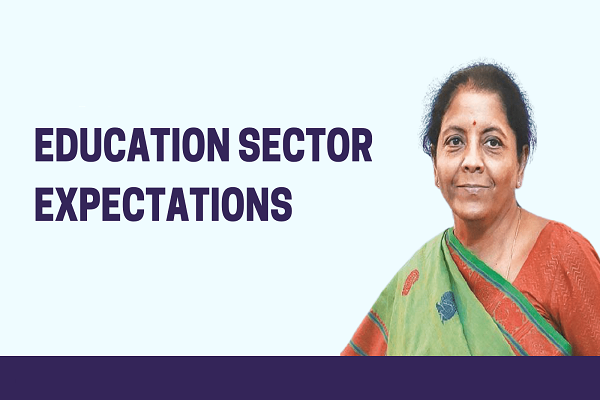
Expectations for education sector from Budget 2021

Expectations for education sector

Union Finance Minister Nirmala Sitharaman will present her third budget to parliament on February 1, with a focus on revitalizing the economy suffering from the effects of the coronavirus pandemic. The pandemic had a profound impact on the education sector, forcing institutions to invest in e-learning methods to stay afloat, as classes remained closed amid restrictions the center announced to contain the virus.

Hundreds of colleges and technical schools have had to close permanently overnight in a difficult work environment and due to lack of funds for permanent access to e-learning solutions. Given the economic stress, the education sector will have high expectations for the next budget.

At a time when investments in digital infrastructure are at an unprecedented pace, the education sector expects the central government to somehow relax the GST of the previous 18%. The move will encourage institutions to access improved e-learning solutions, thereby increasing enrollment rates in e-learning.

India spends only 3.1% of its GDP on education. Last year, the central government increased the allocation of funds for the education sector by 5 percent to 99,311 rupees. Since then, the government has introduced a new educational policy.

Also read: Budget 2020: Govt allocates 99,300 cr for education sector

Here are the quotes from industry leaders before the budget-

Prof (Dr.) Sanjiv Marwah, Director, JK Business School said “We anticipate that Union Budget 2021 will bring in revolutionary changes to the education sector. The New Education Policy (NEP-2020) brought aggressive changes in the Higher Education System of our country – provided flexibility in the learning curve, emphasized on conceptual understanding, and blended learning. Similarly, the upcoming FY budget must promote the perfect amalgamation of digital and traditional education and strive to encourage the adoption of emerging technologies such as Augmented Reality, Virtual Reality, Internet of Things as well as promoting Research & Development. Along with it, another key aspect that we are looking forward to in the Union Budget 2021 is financial support that can be provided to private sector institutions, including low-cost and zero-cost loans, which is done in many countries. We request the Govt. to consider ‘National Education Bank’ as a concept, just like the ‘National Housing Bank,’ such that education loans too can be provided at the lowest possible interest rate.”

Piya Marker, Director – Head of School, The Aditya Birla Integrated School (TABIS) said “As a special educator, I believe that if there is an allocated investment per child having learning disabilities to meet their academic needs, we will be able to help reduce the alarming rate of children facing this challenge. Curriculum design and levels of achievement must be conducive to including those with academic potential despite their learning disabilities. The Government of India on its part can also take steps to encourage students who face such issues by enabling a favourable atmosphere for students, their parents as well as educators. If I were to be given a wish list for the upcoming Union Budget, I would want all teaching and medical courses to have an in-depth learning dedicated to the different types of learning disabilities, their prognosis and modes of treatment and school access. Further, the Government can encourage more schools across the country to include children with learning disabilities, by offering them subsidies in order to ensure that the students are able to graduate from these schools with higher proficiency enabling them to lead a successful life.”

Sumeet Mehta, LEAD School Cofounder & CEO said “The pandemic has severely impacted education in our country with over 200 million children losing out a year full of schooling. This situation is even more dire in smaller towns and cities in India where affordable private schools have struggled to provide requisite online learning since last year owing to lack of technology infrastructure, school fees and teachers who were equipped to teach online. In addition to students and parents, teachers too have been severely impacted as many faced job cuts or mental pressures to train themselves quickly to adopt to online teaching. In view of these disruptions in the learning process, it is important that some corrective methods through fiscal measures be undertaken in the upcoming general budget.”

Gaurav Bhagat, Founder, Gaurav Bhagat Academy said “As one of the most impacted sectors because of the pandemic the education sector is in dire need of support from the Government and the budget will be a great opportunity to set the wheels in motion. The finance ministry along with state governments should look at initiatives that will help students, faculty and also the owners / promoters / management of educational institutions. Education loans are hard to come to come by and also costly. As the sector looks at bouncing back it would help if the Government could cut the interest rates here and also rationalize the process to include quicker online and paperless approval.”

Delhi colleges, schools for Classes 9, 11 to open from Feb 2

Colleges, schools

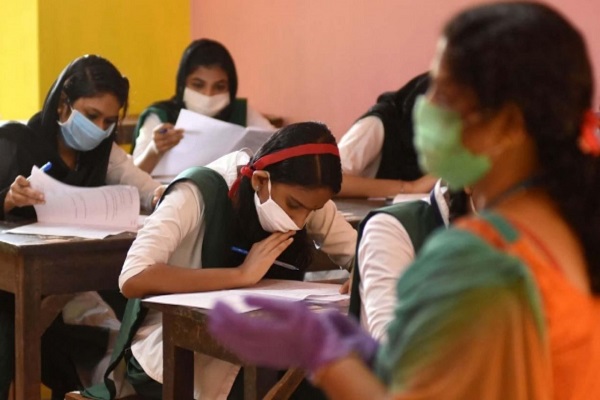
Delhi Deputy Chief Minister Manish Sisodia said that the 9th and 11th grade schools would reopen for internships and projects from February 2. Starting February 2, universities and technical colleges may also be open for hands-on jobs and projects.

Manish Sisodia said at the press conference: “We have received several requests from parents, colleges and universities to reopen schools to complete their practical and project work. The government has decided to reopen 9th and 11th grade schools as of February 5 for practical work and projects, similar to 10th and 12th grade. Any public, sponsored or private school can reopen schools in grades nine through twelve, ”he added.

Also read: Meghalaya to reopen higher educational institutions from Feb 1

The minister also said that 80% of students attend schools for grades 10 and 12. Schools and universities must follow COVID-19 protocols, which are similar to Classes 10 and 12, Sisodia said. The minister also said that students must have parental permission to attend classes. The minister also said that a timetable is being prepared to reopen schools for board and pre-board reviews.

The schools and colleges were closed due to the Coronavirus epidemic since last year mid-March.

CISCE academic session 2021 to begin from March

CISCE academic session 2021

The Council for Indian School Certificate Examinations confirms that the start of the academic session CISCE 2021 will remain unchanged. This was announced by an official CISCE announcement on cisce.org.

According to the official announcement of the CISCE academic meeting, the year 2021 will remain the same as last year. The start of the school year for affiliated schools begins each year from mid-March through the first week of June.

Hill Schools can begin their academic session in February as they do every year. The official announcement that was published included clarifications regarding the CISCE 2021 academic session. The announcement was published on January 28, 2021.

The CISCE Council provided details on the 2021 ICSE and ISC exam schedule. The Council was unable to complete the test at the usual time in February or March. The reason given was the current pandemic situation in the country and the upcoming elections in five states.

Also read: CISCE requests state govts to reopen schools for exam preparations

The dates for the ICSE and ISC 2021 exams will be fixed later and the schedule will be published soon on the official website. According to the council, questions have been asked about the start of the new academic term from the beginning of the tenth grade and the dates of the exams for the twelfth grade have not yet been completed.

Students and teachers are encouraged to review Regulation 2022 and Chapters I, B. of the curriculum. School principals were also asked to follow the rules. You must maintain the academic session of CISCE 2021 to ensure consistency and equivalence between CISCE affiliated schools in India and abroad.

Singapore to launch new programme for polytechnics and ITE graduates

Singapore to launch

A new work-study programme will be launched in March to help young people enter the street vendor market. The Post-Diploma Work-Study (Hawkerpreneurship Certificate), which is part of the Work-Study Skills Future Singapore programme, is the first of its kind.

The programme was announced by the Minister of State for Sustainability and the Environment, Amy Khor, at the second edition of the SG Hawker Seminar.

The 12-month program, which will take place for the first time in March, is open to all graduates of the polytechnics and the Institute of Technical Education. The module, which began its first edition last month, is taught by the Asian Culinary Institute at Nanyang Polytechnic.

Participants receive classroom training for two months, followed by four months of training and six months of mentoring by experienced street vendors.

Also read: MHRD likely to start job-oriented training for graduates

The program can accommodate approximately 50 people over a three-year period, and mentors and interns receive monthly training scholarships of $ 500 and $ 1,000, respectively.

As of January 1 of this year, more than 170 people have completed the HDP training phase and 41 of them are in the final phase of setting up their incubation station.

Due to the encouraging response, the number of training locations under the program will increase from 100 to 300 locations over the next two years.

As a result, the number of hatchery stands under the Hatchery Stand Program (ISP) will increase from 20 to 80 stands in the coming years.

ISP supports budding street vendors by providing prefab stalls and subsidized rentals for 15 months.

Distributors received digitization support in the form of a new module introduced by NEA and SSG entitled Adapt to Change – Digitization for Street Vendors under the HDP.

CBSE all set to digitize records of students of last 45 years

CBSE 2021

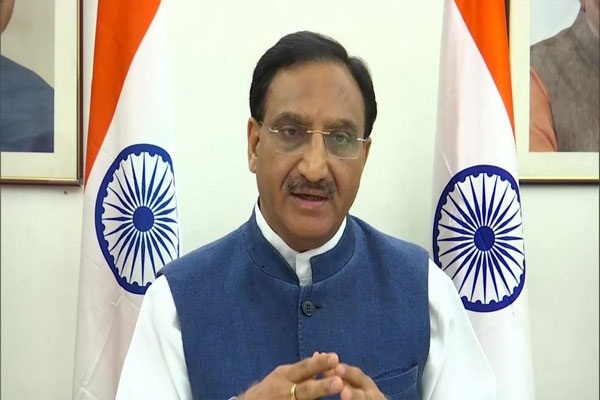
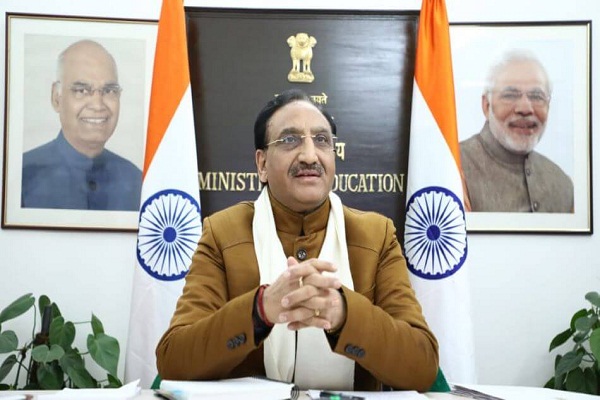
The Central Board for Secondary Education will digitize the records of all CBSE students who have enrolled in the last 45 years. The announcement came during the Union Education Minister Ramesh Pokhriyal’s live interaction with the presidents and secretaries of the CBSE Sahodaya schools.

Speaking with CBSE officials, the Minister explained that by taking this step, board students will be able to access certificates online and help registered citizens after 1975 to easily obtain their CBSE certificates.

The Union Education Minister said on Twitter that the records of all CBSE students who have enrolled in the last 45 years will be digitized so that citizens enrolled after 1975 can easily obtain the certificates. The minister added that CBSE will train 10 lakh of teachers in the coming years to achieve the NEP 2020 targets.

During the live session, the Union Minister of Education also announced that CBSE will publish CBSE 10 and 12 date sheets on February 2, 2021. After the date sheets are released, students taking the exams CBSE 2021 can download CBSE sheets 10 and 12 date sheets from the official website of the council.

Also read: CBSE affiliation system to be restructured

Depending on the dates of the next CBSE 2021 exams, the 10th and 12th grade CBSE exams will start from May 4 to June 10, 2021. However, the CBSE practice exams will start on March 1, 2021 and last until theory exams begin in May 2021. CBSE test results for grades 10 and 12 will be announced by July 15, 2021

The Central Council of Secondary Education will restructure the school affiliation system for schools and completely digitize the process, based on data analysis with minimal human intervention. The new system will come into effect on March 1, 2021, structured according to recommendations and reforms in accordance with national educational policy.

Pokhriyal: NEP will promote arts and culture through education

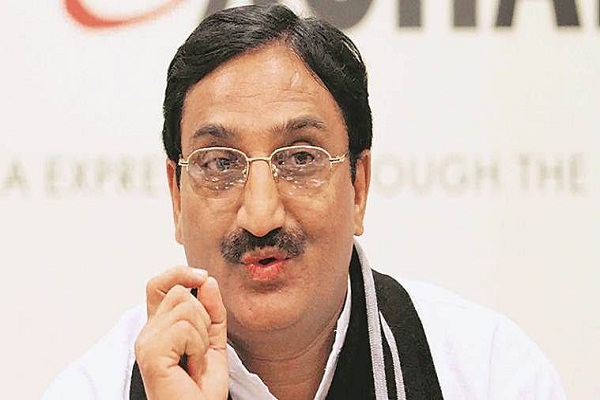
Dr. Ramesh Pokhriyal Nishank

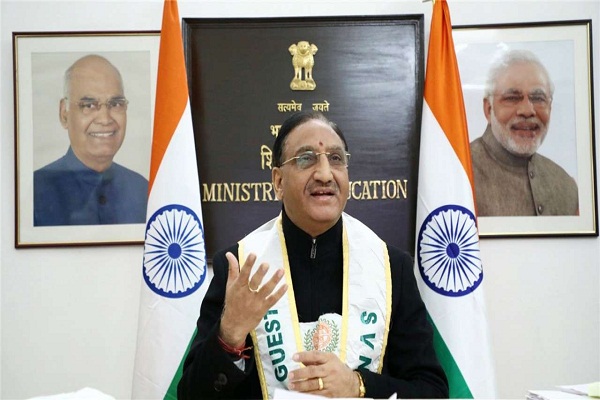
Union Education Minister Ramesh Pokhriyal said that Kala Utsav has achieved Prime Minister Narendra Modi’s vision by giving the right direction and shape to the spirit of “Ek Bharat Shreshtha Bharat”. The minister also took the opportunity to commemorate the launch of the indigenous toys and games segment at Kala Utsav 2020 and highlighted its merit in promoting Vocal for Local.

Speaking on the National Education Policy 2020, Union Minister said the policy emphasises the promotion of arts and culture through education. Kala Utsav 2020 has also incorporated the recommendations of the National Education Policy 2020.

According to a published statement, Kala Utsav 2020 was launched online on January 10, 2021. In total, 35 teams from different states, union territories, as well as Kendriya Vidyalaya Sangathan and Navodaya Vidyalaya Samiti schools participated in Kala Utsav. Almost 287 girls and 289 boys are participating in Kala Utsav 2020, including four participants from Divyang.

Also read: Pokhriyal: CBSE 10, 12 board exams schedule to be released on Feb 2

During the Kala Utsav 2020 farewell session, the union’s education minister also mentioned the national education policy, noting that the new NEP 2020 emphasizes the promotion of arts and culture through education. The union minister also urged educational establishments to promote art and culture through education.

The minister also said that Kala Utsav 2020 also includes the recommendations of the 2020 National Education Policy. Students use their imaginations to enjoy one of the art forms and give their lives to make it come true.

The statement adds that Kala Utsav provides students with an opportunity for artistic process, while opportunities enhance thinking, understanding, problem solving, and cognitive and decisive skills that contribute to the overall development of students.

Meghalaya to reopen higher educational institutions from Feb 1

Meghalaya to reopen

The Meghalaya state government has announced that all higher education institutions in the state will reopen on February 1, 2021. The state Ministry of Education directed universities to adhere to guidelines issued by the state government.

According to the announcement published by the state government, the classes will be held both online and offline in a mixed mode. The class includes classroom transactions, homework, and online interaction in the counseling area. According to media reports, parental consent to attend offline classes is mandatory and attendance must not be enforced and must be entirely dependent on parental consent.

The notice published by the State Department of Education adds that at least three classes will be offline, with two classes per week required at home for homework-related assignments. The notice adds that students and parents can get more updates on the official website of the Meghalaya State Department of Education.

Also read: Meghalaya Board declares MBOSE SSLC result 2020;check details

It should also be noted that, although the decision has been made, higher education authorities will organize face-to-face courses at any time in case COVID-19 cases are reduced. Universities can decide with the health authorities before making a final decision on this issue.

Schools in rural Meghalaya operate in a similar way with parental consent, which is mandatory for schools and universities. Offline participation in courses is also not mandatory for students.

Pokhriyal: CBSE 10, 12 board exams schedule to be released on Feb 2

Pokhriyal CBSE

Union Education Minister Ramesh Pokhriyal announced that on February 2, 2021 the board will publish the CBSE fact sheet for exams 10 and 12 of 2021. Pokhriyal announced this today during an interaction live with the presidents and secretaries of CBSE Sahodaya Schools. The announcement from the Minister of Education is a great relief to all CBSE students who must sit for the upcoming board exams.

According to media reports, with the confirmation of the dates for CBSE 2021 Date Sheets 10 and 12, the board has begun to make all necessary preparations for the release of the technical schedule for the upcoming exams. Like every year, the Central Council for Secondary Education (CBSE) will likely publish the CBSE Council 2021 exam date sheet online on its official website, namely H. Cbse.nic.in. Previously, Pokhiyal also confirmed the start and end dates of the 10th and 12th grade CBSE board exams. According to the announcement, the 10th and 12th CBSE 2021 exams will be held from May 4 to June 10. 2021. In addition, the board of directors announced that practical exams will take place from March 1, 2021.

Also read: CBSE affiliation system to be restructured

Other Important Announcements In addition to confirming the release date of the CBSE Board of Directors’ 2021 exam date sheet, the Union Minister of Education also made several other important announcements. Among them, Pokhriyal announced that CBSE will digitize 45-year-old student records as part of the digitization offensive.

Apart from this, Pokhriyal also said that CBSE teachers are warriors who will help realize the vision documented in national education policy. In his comments, he also praised the CBSE for passing the tests on time, and the teachers reviewed the answer sheets and helped announce the result in a timely manner.

UGC releases draft regulations on academic credit bank

UGC

The University Grants Commission (UGC) has published a draft regulation for the Academic Credit Bank (ABC), an initiative to facilitate student loan transfers that allow them to move between courses and institutions of higher education. Academic credit banking was an important proposal in the National Education Policy (NEP) 2020. The UGC has given until February 5 to send comments.

The draft regulation says that it aims to promote the flexibility of the program framework and interdisciplinary and multidisciplinary academic mobility of students between institutions in the country with an appropriate “referral mechanism”. According to the draft regulation entitled “UGC (Establishment and Operation of the Academic Credit Bank (ABC) in Higher Education), 2021”), students can choose their own learning path to obtain a diploma and many choose Multiple input / output option.

According to the draft regulation, the ABC will be an “online credit database business” for higher education institutions, following the model of the National Academic Deposit. The UGC regulation states: “ABC is a financial grade academic type commercial bank with student account holders to whom ABC is designed to provide a variety of services including credit checking, credit accumulation, transfer or redemption and authentication of diplomas.

Also read: UGC issues guidelines for mentorship of teachers in non-technical stream

“Credit banking aims to empower students by offering” a wide selection of courses for a program of study, program flexibility, and interdisciplinary course options. The goal of the ABC will be to provide students with the opportunity of choosing a pace for their studies, as well as the logistics and costs involved. “This” will allow students to customize their degrees or make specific modifications / specializations instead of following the rigid and regularly prescribed degrees / courses from a single university / autonomous college “, states the UGC project.

Pokhriyal likely to announce changes in school curriculum

pokhriyal

Union Education Minister Ramesh Pokhriyal is expected to make important announcements about the curriculum change as he will interact with the presidents and secretaries of the CBSE Sahodaya schools at 2 pm. Over 1000 people who run CBSE schools are expected to participate in the programme.

Based on these announcements, CBSE will launch orientation programs across its 250 active Sahodaya school complexes across the country to raise awareness of NEP 2020, the council said. The changes are expected to be in line with the 2020 National Education Policy (NEP). Here is an overview of some of the major changes announced by the ministry this year.

With a major change, the ministry agreed to keep the board’s examinations low. “CBSE will introduce an improvement test starting in 2021 and will introduce English and Sanskrit in two stages starting in the 2021-2022 session.

Also read: Pokhriyal: NEP can lift education to new heights

In addition, learning outcomes up to secondary education have been reported and a draft learning outcomes for upper secondary education have been posted for suggestions. In addition, the creation of the National Mission for Basic Literacy and Numbering was approved in principle. A committee has been created to prepare a framework for FL&N, codify learning outcomes, etc. A related update is also expected.

“Changes to be incorporated into the curriculum and school processes from the 2021-2022 academic session will be discussed by the Honorable Shiksha mantri,” the CBSE said in an official statement. “Schools really need to redefine the teaching and learning process and change the educational structure so NEP 2020 can be properly implemented to monitor the transformation process,” he added.

LATEST NEWS