


Home Blog Page 917

Will Stem take Roots and Wings?

stemAs per practice, the first public engagement of the successive Indian Prime Ministers has been with scientists. However, scientific education in India has been short-changed for creating an army of clerks. STEM education is catching up fast globally and India cannot ignore it. Gandharv Walia of Elets News Network reports

  • Indian-born plant scientist Sanjaya Rajaram named winner of USD 250,000 World Food Prize 2014 for contribution in increasing global wheat production by more than 200 million tonnes.
  • Jayant Abhir, a student of class X, won bronze at 11th National Geographic World Championship in Russia.
  • Team Screwdrivers from Mukesh Patel School of Technology Management and Engineering, Narsee Monjee Institute of Management Studies participated in the13th Annual Marine Advanced Technology Education ROV International Competition at Alpena, Michigan USA, June 26 -28, 2014. They are the only team which qualified and participated from India for this international competition.
  • India has become a permanent member of the Washington Accord, enabling global recognition of Indian degrees which will facilitate the mobility of engineers to other signatory countries, including the US, the UK and Australia, for jobs.

These are just some of the many instances that give a peek into India’s huge untapped potential in STEM subjects. For the uninitiated, STEM refers to a curriculum based on educating students in four specific academic disciplines – science, technology, engineering, and mathematics. The acronym STEM is an amalgamation of the above mentioned fields.
In the United States of America, where the acronym was first coined, STEM is used for addressing the education policy and curriculum choices in schools from K-12 through college to improve competitiveness in technological development.

“By 2018, 1 in 20 global jobs will be STEM-related an estimated 2.8 million jobs in total. Over 90 per cent of those opportunities will require secondary degrees, and over two-thirds will require a bachelor’s degree,” said Asheesh Sharma, Executive Academic Head & Vice President (Business Strategy), Resonance Eduventures Private Limited.

Considered vital to workforce development and national security among others, STEM educates students in science, technology, engineering and mathematics in an interdisciplinary and applied approach. It integrates these four fields into a cohesive learning paradigm based on real-world applications.
As inspiring as the idea may sound, the ground reality in India is nothing short of a sad irony. Students in India have been unable to make the most out of STEM education due to an acute lack of vision, initiative and technology. “Our education policy makers should seriously start integrating STEM as part of the curriculum from class VII to IX to make STEM effective,” observes Althaf Basha, Senior Vice President and CMO,GA Software Technologies Private Limited.

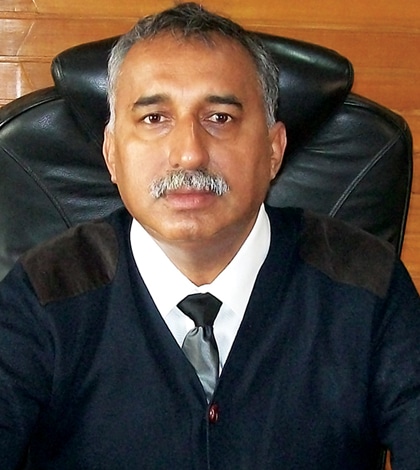
Asheesh Sharma
Asheesh Sharma,
Executive Academic Head & Vice President (Business Strategy), Resonance Eduventures Pvt. Ltd.

A quick look at the education scenario in India can help us make better sense. India has over 1.4 million schools and 35,000 higher education institutions. As per the Population Census of India 2011, the literacy rate of the country stands at 74.04 per cent; while the pupil-teacher ratio in India was last recorded at 35:15 in 2011, according to World Bank findings. Although rating agency CARE Ltd has valued the market size of the Indian education industry at Rs. 3.83 trillion in 2013-14, the call for a holistic approach and making a paradigm shift from creating an army of clerks to creating millions of innovative entrepreneurs is not misplaced.
From a purely economic stand point, students would benefit from better STEM education because the fields are expanding more quickly than any other besides the healthcare industry. “By 2018, 1 in 20 global jobs will be STEM-related an estimated 2.8 million jobs in total. Over 90 per cent of those opportunities will require secondary degrees, and over two-thirds will require a bachelor’s degree,” said Asheesh Sharma, Executive Academic Head & Vice President (Business Strategy), Resonance Eduventures Private Limited.

STEM is not just for scientists anymore. In today’s economy, almost any job with a decent pay requires STEM skills, and many jobs require advanced STEM abilities. Everyone from President Obama to Steve Jobs has weighed in on the topic in recent years – the former to pledge money to new education initiatives, and the latter to praise China for their relative preponderance of engineering talent.
India and China are the biggest knowledge-based workforce nations of the world. India is a leading exporter of IT-skilled workforce, which comprises of mathematicians, engineers and technologists among others. Consider this in the context of the demand for sound professionals globally. STEM education is highly beneficial as it can ensure global employment and these skills are required to be competitive in the global race for energy development, creating and maintaining a healthy economy, and fostering innovation and excellence.

For India, the scenario presents immense opportunity along with some tough challenges. Several private and government initiatives have been undertaken to introduce and establish STEM initiatives in primary, secondary and higher education in India, but they are neither concerted nor consistent. Under the pilot project Obama-Singh 21st Century Knowledge Initiative, the Ohio State University has also been awarded a highly competitive grant from the US India Education Foundation (USIEF) for training STEM faculty in partnership with the Aligarh Muslim University.

Still, in effect, there are no visible concrete measures by the government to impart STEM education collectively in schools and colleges in a proper manner. Add to that the dearth of STEM teachers, ill-equipped schools and the outdated curriculum and we have a worrying scenario. Needless to say, there are numerous changes that need to be brought in. From teachers’ training, curricula to methods of teaching STEM subjects, everything needs to change if we aim to fare well globally. There is a need for several programmes, internships, scholar- ships, and research programmes focused on developing the next generation of STEM professionals.

“STEM is not just for scientists anymore. In today’s economy, almost any job with a decent pay requires STEM skills, and many jobs require advanced STEM abilities”

The STEM edge
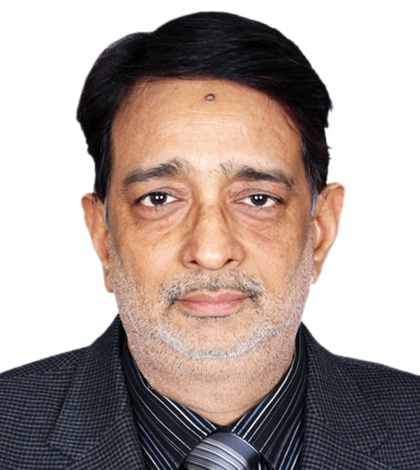
Ashok K Sehgal
Ashok K Sehgal,
CEO, CAT-5 Broadcast

With globalisation, there is a need to develop global citizens. Experts indicate that the best employers, the world over, are looking for the most competent, creative and innovative people, who can think creatively, make judgments, are capable of solving complex and multidisciplinary problems, possess good communication and collaboration skills, and make innovative use of knowledge, information and opportunities. STEM education in schools is being encouraged worldwide to develop these skills among students to prepare next generation scientists, engineers, architects and technology professionals. “STEM education has a big role to play in the growth of our country, both technically and financially. It will empower our students to have a bright future. To obtain this goal, the country’s educational institutions would require selection of suitable curriculum, requisite budget and trained faculty, which at present is a great challenge,” said Ashok K Sehgal, CEO, CAT-5 Broadcast.

In the coming decades, most population forecasts predict that developed countries would be deficit in working population whereas India would have the largest pool of working population. “Technical and research writing conforming to international standards need emphasis in India both at K12 (school) and college level,” said Sarvesh Shrivastava, MD, Encyclopedia Britannica – South Asia. “Investing in STEM education spurs innovation and entrepreneurship, supports employment growth and fuels the country’s economic growth, enabling it to stay competitive in a global environment,” said Ashutosh Chadha, Director, Corporate Affairs Group, Intel South Asia.

“STEM education has a big role to play… To obtain this goal, the country’s educational institutions would require selection of suitable curriculum, requisite budget and trained faculty, which at present is a great challenge” – Ashok K Sehgal, CEO, CAT-5 Broadcast

Technology should not only rightfully enter the classrooms, but should also be integrated in learning, teaching, assessment and evaluation. Logical thinking, simplification of a problem, examining data, problem solving are some of the many skills that STEM education imparts. “It equips children to face the real world challenges. Through the Flow programme, we teach students how to make links across subjects, to think about the same topic through a variety of lenses. It opens up the way to approach a problem,” said Eliza, Co-founder and Managing Director, Flow India.

The twin challenges in imparting STEM education is the dearth of teachers with the requisite skills to effectively teach these subjects using ‘active learning’ methods and the willingness of teachers to take risks in the pursuit of accommodating students and furthering STEM

The Challenges
twin-challengesMore than ever, India needs to move from traditional teaching methods to a robust and application-based curriculum. Infrastructure and shallow reach of technology-enabled education methods are the biggest challenges for imparting STEM education in India. “Ability to make resources available at grassroots level and junking traditional methods of teaching still remain a key area of concern. Initiatives in future should be made to fill the void in basic education in remote communities to reduce the disparities in educational opportunities,” said Kulbhushan Seth, Vice President, Casio India Company Private Limited.

The two big challenges in imparting STEM education is the dearth of teachers with the requisite skills to effectively teach these subjects using ‘active learning’ methods and the willingness of teachers to take risks in the pursuit of accommodating students and furthering STEM. “Some teachers, who are willing to go an extra mile, face difficulty in arranging materials for experiments in the little time that they get free. Another challenge is to schedule these hands-on classes that require longer time slots in the already tight school time table. At a more fundamental level, the awareness about the importance of STEM education has begun only recently. Many school leaders still look at these programmes as good-to-have rather than must have,” said Gagan Goyal, Founder & CEO, ThinkLABS.
Schools even today approach each of the disciplines of STEM individually and there is no effort wherein all the four come together. “Many schools procure resources and start using it, but gradually due to various reasons like teacher churn, lack of time, higher priorities such as exams, the usage dwindles. STEM has to be made a part of the curriculum,” said Beas Dev Ralhan, CEO, Next Education India Private Limited.

Availability of appropriate and optimal resources for STEM education is another big challenge. “The delivery model of STEM education must be critically analysed. Appropriate training and development must be provided to the facilitators of STEM education. More harm than help is being done due to lack of such facilitation skills,” added Rakesh Dandu, Founder & CEO, LFX Technologies Private Limited.
Furthermore, there is a communication gap between teachers and students, which needs to be filled at the earliest. “We need a strong system and even a stronger administration to implement the entire concept from the grassroots level to higher level so that we can see a real change in the society,” said Satyam Malhotra, Founder, TiF-India.

“STEM education is best done with an element of fun and games, it keeps the students interested. Schools also need to do a lot of mentoring with the students and show them the importance of STEM education” – Ankur Rohatgi, Head – Strategy and Alliances, IL&FS Education and Technology Services Limited

Best ways to teach STEM
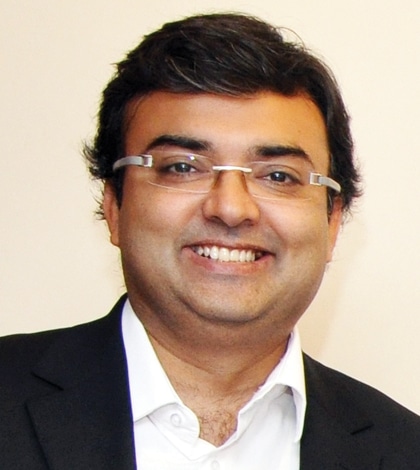
ankur rohatgi
Ankur Rohatgi,
Head – Strategy and Alliances, IL&FS Education and Technology Services Limited

Grounding STEM education in ‘real-life’ practical problems especially related to the workplace can form a strong foundation and is easy to grasp for the students. More and more participation of students in original research projects should be encouraged so that they become aware of its importance and applications. Moreover, institutions must focus on innovative content, accessibility, and delivery platforms to address the needs of today’s students and better understand how pedagogy and technology must interconnect to satisfy the needs of a drator contribution. matic evolution in how learning is happening.
School students also need to explore subject matter content by conducting experiments, drawing flowcharts, constructing models, watching videos and go beyond the knowledge level to higher level of thinking. “STEM education is best done with an element of fun and games, it keeps the students interested. Schools also need to do a lot of mentoring with the students and show them the importance of STEM education,” said Ankur Rohatgi, Head – Strategy and Alliances, IL&FS Education and Technology Services Limited.
Schools also have a responsibility to ensure that principals and teachers act as the drivers for change. “The school should plan the curriculum diligently and focus on making instructions interesting. Parents and local community should be encouraged to get actively involved in supporting the school for their children’s academic success,” said Shreevats Jaipuria, Vice Chairman, Jaipuria Group.

Initiatives by GOVERNMENT 

Innovation in Science Pursuit for Inspired Research (INSPIRE) programme by the Department of Science & Technology for attracting young talent to the excitements of a creative pursuit of science as a career option and building the required critical human resource pool for strengthening and expanding the Science & Technology system and R&D base in the country.
Kishore Vaigyanik Protsahan Yojana (KVPY) is an on going National Programme of Fellowships in Basic Sciences, initiated and funded by the Department of Science and Technology to attract exceptional and highly motivated students for pursuing basic science courses and research career in science.
Homi Bhabha Centre for Science Education has been made the country’s nodal centre for Olympiad programmes in mathematics and sciences. The programmes aim at promoting excellence in science and mathematics among pre-university students.

The Silver Lining

In terms of policy, India’s National Science, Technology, Innovation Policy released in January 2013 aims to position India among top 5 scientific powers in the world by 2020. It also looks to make careers in science, research and innovation attractive, set up world class R&D infrastructure and also raise gross expenditure in R&D to two percent from the present one per cent of the GDP in this decade by encouraging enhanced private sector contribution.
In line with this vision, Intel India has launched the National Science, Technology, Engineering, and Mathematics (STEM) Acceleration Programme to strengthen STEM education in the country recently. The programme will endeavour to focus on initiatives aimed towards promoting creativity, innovation and a do-it-yourself (DIY) attitude amongst students across the country. As a part of this programme, Intel India signed a Memorandum of Understanding (MoU) with The National Council of Science Museums (NCSM) to strengthen the research culture for students across the country and build innovation resources.
Many other companies are also developing content for subjects of science and mathematics for students of various boards in both English and Hindi for classes I-XII. “We primarily focus on rural areas. We are working with various delivery partners for implementation of such content in schools, institutes and coaching centres. In Madhya Pradesh itself, we have over 5,000 academic centres in rural areas where we deliver our content. There is a similar trend in states like UP, Rajasthan, etc,” said Rakesh Dandu, Founder & CEO, LFX Technologies Private Limited.
Similarly, some projects undertaken at Hindustan University have been among the top ten entries in the NASA Tech Briefs-Create the Future Design Contest 2013, where around 1,354 entries came in. These include Solar Powered Road Cleaning Robot for waste disposal (rank 1) developed by Dr D Dinakaran (School of Mechanical Sciences), Tsunami Coastal Communication & Warning System (rank 2) developed by SudalaiMuthu T (School of Computing Sciences), a Night Safety Alert Messaging System for Vehicles through Vehicular AdhocNetworks (rank 6) developed by Thangakumar J (School of Computing Sciences), informs Ashok Verghese, Director, Hindustan University.

In March 2014, LS Creative Learnings Pvt Ltd, a Bangalore-based firm, launched STEM education in collaboration with Dr Tairo Nomura of Saitama University, Tokyo. This pilot project has been initiated by Japan. LSC signed an MoU with the Department of State Educational Research and Training (DSERT) for the project and has already been rolled out in two government schools at Veerabhadranagar and Hosakerehalli in South Bangalore. On completion of the project, DSERT will evaluate students’ performance to recommend its introduction to other government schools. Other schools where the project has been implemented include Bishop Cotton Boys School, St John’s High School, Indus International School and Baldwin School.

Amrita University has also been promoting STEM educa- tion through various initiatives. Amrita Virtual Interactive E-learning World (A-VIEW) is used to train 10,000 engineering teachers at a time (T10KT), using 337 established remote centers across India. A-VIEW was also used by Prof Jhunjhunwala, IIT Madras, for the Quality Enhancement in Engineering Education (QEEE) programme, where IIT teachers conducted courses for six weeks for 100 colleges. The Virtual Labs focus on interdisciplinary research in higher education and has successfully trained over 50,000 students throughout India. Amrita Multi Modal Applications using Computer Human Interaction (AMMACHI) Labs foster technological innovation in vocational training. “Over 3,000 women have been trained by this initiative. The Online Labs (Olabs) are based on the idea that lab experiments can be taught using the internet, more efficiently and less expensively. This helps students in less privileged schools to compete with students in better equipped schools and bridges the digital divide and geographical distances. The project has trained over 30,000 teachers,” said Prof Kamal Bijlani, Director, Amrita E-Learning Research Lab.

It is perhaps an indication of the social recognition that STEM has started to garner popularity. Subjects like game design, robotics, actuarial science, forensic science, bio-medicine, biotechnology, linguistics, etc, which were unheard till a few years back, are some of the most sought after STEM courses now. “Though, mechanical, electrical and chemical engineering courses still hold the top slots, there is a five per cent rise every year in the number of students selecting these unconventional courses,” said Jaideep Gupta, CEO and Founder, Univariety.

There is no doubt that India needs to catch up with the rest of the world in promoting STEM education. With Prime Minister Narendra Modi’s vision and emphasis on developing India as a future leader in science and technology, one can certainly hope for opening up of opportunities – both in terms of employment and investment.

The US Scenario

sanjaya rajaram
Sanjaya Rajaram, recipient of World Food Prize 2014 along with plant geneticist and the “Father of Green Revolution” Dr Norman Borlaug who tirelessly toiled in labs and on land to increase wheat production and alleviate hunger around the world

Though the US has historically been a leader in these fields, fewer students have been seen focusing on these topics re- cently. According to the US Department of Education, only 16 per cent of high school students are interested in a STEM ca- reer and have proven a proficiency in mathematics. Currently, nearly 28 per cent of high school freshmen declare an interest in a STEM-related field, a department website says, but 57 per cent of these students will lose interest by the time they graduate from high school.

In a move to bridge this gap, the Obama administration announced the 2009 ‘Educate to Innovate’ campaign to motivate and inspire students to excel in STEM subjects. The goal is to get American students from the middle of the pack in science and math to the top of the pack in the international arena. This campaign also addresses the inadequate number of teachers skilled to educate in these subjects. Some companies like Lock- heed Martin, Intel, etc have started working to strengthen STEM education for a better future. The US government funnels $4.3 billion every year into STEM education-related initiatives.
A report released by US Immigration and Customs Enforcement (ICE) throws some interesting facts about India that our policy makers need to take into account. As per the report, India has the highest number of STEM students. As many as 78 per cent of the Indian students are enrolled in STEM categories, while the figure for China is 37 per cent. The report futher states that India accounts for the second largest number of international students in the country while China, with 290,133 students is at the top. Over three-fourth of Indian students are enrolled in science, technology, engineering and math (STEM) courses.

Looking Ahead

There is no doubt that India needs to catch up with the rest of the world in promoting STEM education. One only needs to look at the kind of funds that the US government is funnelling into STEM education to understand how significant it is to them. Moreover, the worry that the US may lag behind has valuable lessons for India as well. We might have missed the high growth bus during the 60s and 70s, unlike the Asian tigers. But, we can certainly ill-afford this luxury in current times. India’s newly- elected Prime Minister does not have a magic wand to transform things overnight. But with his vision and emphasis on developing India as a future leader in science and technology, one can certainly hope for opening up of opportunities both in terms of employment and investment.

New Solutions must for upskilling

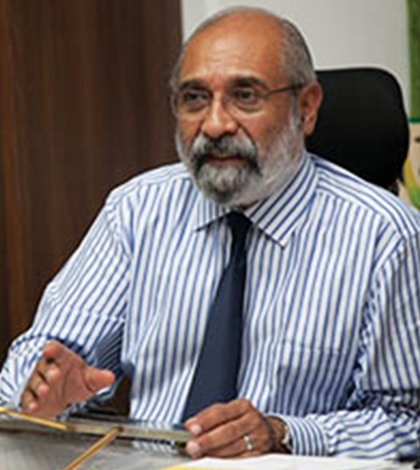
RCM Reddy
RCM Reddy, Chairman, FICCI Skills Development Forum and Managing Director & CEO, IL&FS Education & Skills
RCM Reddy
RCM Reddy,
Chairman,
FICCI Skills Development Forum and Managing Director & CEO, IL&FS Education & Skills

IL&FS Education & Skills is one of the two organisations profiled by the global analyst McKinsey while assessing the success and impact of skill development world-wide. RCM Reddy, Chairman, FICCI Skills Development Forum and Managing Director & CEO, IL&FS Education & Skills spells out how the government and the industry need to collectively address the challenge of skill development in India

As one of the important stakeholders in the skills mission, what are your expectations from the Union Minister for Skill Development, Entrepreneurship and Youth Affairs?

The setting up of a new ministry is a welcome move. India is faced with the target of skilling 500 million by 2022. A dedicated department on skills development was the need of the hour, especially to engage the growing number of young people actively looking for employment opportunities.

Some key areas where the new minis- try must focus to ensure greater impact are :
Streamline the implementation of skills schemes and programmes between 18 ministries to attract more professional agencies and private sector partners to join the skilling mission. One important area will be creating uniform funding across ministries and departments with higher incentives for capex-intensive programmes.
Extend skills development within the scheme framework for the informal sector. The current framework of placement-linked skills programmes does not cater to people interested in self- employment. With less than 93 per cent of economy being non-formal, focus has to be on skills development for livelihood generation.
Fast-track PPP initiatives for setting up of ITIs and Polytechnics that facilitates quality training to create world class public infrastructure for vocational education and training.

IL&FS Skills India started its skill development programme way back in 1997. What were the challenges and how do you see the road ahead ?

There was no proven business model 10 years ago when we began our operations. Hence, we were left with no choice other than learning from international best practices and customising them to local needs. Today, we have mastered the process and re-invented it by engaging industry in delivery and implementation. Ever since we launched our first multi-skill centre at Hi Tech Weaving Park in Palladam near Coimbatore, Tamil Nadu, we have improvised on our training delivery methods and experimented to create a standardised scalable model that draws strength from the integration of technology, innovation, interactivity and industry relevance.

We are focused on bringing the next wave of innovations to cater to the ever- changing needs of industry as well as learners.
We are focused on two key areas : moderating the price point of skill services so that learners-especially from Bottom of Pyramid groups can afford training and improving the quality to make learner experience valuable.

Speaking of innovations in the skills delivery model, we are currently focusing on integrating skills development within mainstream education basis the National Skills Qualification Framework (NSQF). The objective is to reach out to the masses and bring vocational education at par with formal education.

How big is the challenge of skill development for India?

Among several challenges facing the vocational education sector in India, two of them stand in between India’s economic growth and its reaping the benefits of the demographic dividend.
First is inadequate infrastructure: As per Twelfth Plan projections, about 25 million new entrants would join the labour force in the next five years. In India, the per capita availability of institutions imparting formal education is much higher than those imparting vocational education. Poor presence of vocational institutions means the community is less informed about it and hence their poor utilisation. The location of institutions also affects access. Also, poor infrastructure facilities of classrooms, equipment, workshop, and trained teachers etc. within the institution affect the quality of training imparted, affecting learners’ future access to jobs.

The second is inadequate financial support through bank loans and scholarships. Several affirmative schemes of the government have been able to cover the costs of vocational education of people from BPL groups and minority communities. However, a major part of the population are not covered under any scheme and do not have any access to institutional loans either.

Do you see vocational training and skill development getting a boost under the corporate social responsibility as mandated under the new Companies Act?

We are working with some of the top PSUs and private sector companies to implement their CSR vision on skills development. We have already established pan-India operations in a hub and spoke model with our presence in 25 states through a network of 38 multi skills training institutes as hubs called IL&FS Institute of Skills(IIS) and another 250+ single trade skilling centres as spokes known as the IL&FS Skills Schools(ISS). With our outreach in remote, difficult terrains, left-wing extremist affected areas, it has become easier for the PSUs who have their establishments in such locations to partner with us. The Corporates also want to earn goodwill of the local communities and skill development has proved to be a big boon to their operations.

With Prime Minister Narendra Modi’s new thrust on skill development, does IL&FS have new plans for expansion?

There is no proven management tech nique that will deliver a skilled India. It would need new solutions and approaches, and that requires leadership – both at the political level and within the industry. We are happy to see the political will building right from the Prime Minster and are ready to support his mission of attaining shramev jayte or dignity of labour. We have already established 38 institutes and are keen to expand ourselves, especially in the Middle East and African countries, which also face the same demographic challenges as ours.

“We are happy to see the political will building right from the Prime Minster and are ready to support his mission of attaining shramev jayate or dignity of labour”

The IL&FS Skills website mentions that its aim is to train 4 million people by 2022 under the Skills Programmes for INclusive Growth (SPRING). How do you plan to achieve it?

We are one of the only training institutions in the country to offer skills development programmes to the entire learner spectrum. We wanted to create an institution which is able to cater to every individual who wishes to get skilled and does not have any entry barriers. With this objective in mind, we rolled out six different programmes including Skills for Jobs, Skills Upgradation, Skills for Good Governance, Skills at Schools & Colleges, Skills for Trainers and Skills for Entrepreneurship.

We have skilled 14,30,000 people on a pan-India basis. 4,00,000 of these have been skilled through placement linked programmes and are from Bottom of Pyramid groups, and mostly school drop-outs and 8th or 10th pass. Today, 49 per cent of our successful trainees are women, largely from the backward regions of the country.

As chairman of the FICCI Skill Development Forum, how well do you think is the industry geared up for the skill development mission considering that they too will benefit out of it? What are their concerns in this regard?

A few years back, we were discussing the demand – supply gap of trained manpower. Today, with the presence of several private training providers and affirmative government schemes, there has been a considerable deluge in the availability of skilled and certified manpower. However, the industry does not seem to be creating jobs at the same pace to absorb the millions joining the labour market every day. There is also the problem of large scale migration of labour which has its own repercussions of labour up- rising and increasing attrition rates.

Is industry adequately incentivised to boost skill development?

Low incentives have been acting as a dampener to the spirits of big corporate houses which have been investing heavily knowing the risks involved and the slow returns on investment. A favourable investment climate with adequate incentives through lower interest rates for loans and relaxed taxation norms will help the government boost private sector participation in skills development.
The National Skill Development Corporation has been asked to carry out skilling of 150 million Indians by 2022. What should the government and NSDC do to achieve this target?

We need to build a skills development model that is inclusive to achieve a ‘Skills for All’ agenda. The objective would be to address the issues of relevance in skill development in terms of Quantity, Quality, Outreach, Equity and Systemic reforms. There is also an urgent need to mainstream skills formation in the formal education system and, at the same time, adopt innovative approaches for skill creation outside the formal education system.

‘The Pace of skilling mission could change’

Dilip Chenoy
Dilip Chenoy, CEO & MD of National Skill Development Corporation
Dilip Chenoy
Dilip Chenoy,
CEO & MD of National Skill Development
Corporation

The pace of the skill mission could change with the Prime Minister’s call for ‘Skills’, ‘Speed’, ‘Scale’ and ‘Sustainability’, believes Dilip Chenoy, CEO & MD of National Skill Development Corporation. In an interview to KS Narayanan of Elets News Network, Chenoy calls for higher budgetary allocation, incentives to business houses that promote skill training and establishment of more skill training centres

As the CEO & MD of NSDC, do you see a renewed thrust on India’s skill mission with a full-fledged ministry on skill development, entrepreneurship & youth affairs?

If you go back to skill development space prior to 2008-09, there was no co-ordination mechanism between different entities that were engaged in the skill development sector in different ministries and states.
In order to create such an institutional base for skill development in India at the national level, a ‘Coordinated Action on Skill Development’ with three-tier institutional structure consisting of the PM’s National Council on Skill Development (NCSD), the National Skill Development Coordination Board (NSDCB) and the National Skill Development Corporation (NSDC) was created in early 2008. With the creation of National Skill Development Agency (NSDA), the NCSD, the NSDCB and the office of the Adviser to Prime Minister on Skill Development have now been subsumed in NSDA, while PM’s National Council on Skill Development was constituted as Cabinet Committee on Skill Development in 2013.

In this context, the new government wanted to take it a step further. Even if you look at the Cabinet Committee on Skill Development and the National Skill Development Agency, they did not include aspects of the ministry of skill development, entrepreneurship and youth affairs and sports. I think this is a kind of a take on what possibly this government feels how the programme functioned in the past and how they could increase co- ordination and scope of the skill development programme across more ministries than earlier and take it to a scale.

Did you get to meet Skill Development minister Sarabananda Sonowal and discuss the NSDC’s targets and plans?

NSDC target is set by NSDA. NSDC chairman S Ramadorai met him.

With Prime Minister Narendra Modi’s emphasis on skill development, do you expect a substantial hike in budgetary allocation for NSDC?

The government has been talking about it. We will know when the Union Budget is presented. Given the thought process that emerges within the government on the role of NSDC, we need to scale up efforts, set up more sector specific skill council and replicate such efforts. Budgets will be allocated accordingly.

With Prime Minister’s call for a ‘skilled India’, has the challenge for NSDC grown manifold?

The challenge of skilling 500 million by 2022 has not changed. What possibly could have changed is the pace with which we go on year on year. Prime Min- ister Narendra Modi has used four critical words-‘Skills’, ‘Speed’, ‘Scale’ and Sustainability’. His slogan is ‘Shrameva Jayate’ and he talked about the need to empower people across the country. To convert that vision into intent and execution, we need to step up and accelerate action going forward. Again, it all depends on budgetary allocation and what we focus on.

What is the progress on skilling people?

In 2010, NSDC had put together a ten- year plan and how we propose to skill people and reach 150 million. According to plan, we are on target. But the fundamental basis of that plan presumes certain growth rate of the economy, ecosystem and job creation. If those assumptions remain unchanged, then we are confident of reaching the target. The rate of growth of economy has slowed. We have to get back to seven to eight per cent growth rate. Otherwise we cannot expect job creation. Secondly, we had thought of sector skill and certification programmes. If those are not allowed to function or are curtailed, then we have to restructure how we go forward. During the last four years, we have not missed a target.

Why has vocational training and skill development interested only a few Indian companies? Since you interact with many of the Indian firms, what are their concerns?

The size of the challenge needs to be understood. We did close to 8 million people last year. If we have to achieve skilling 500 million people by 2022, the annual target has to go up to at least 60 million people over the next two to three years. We need people to invest in skills. Otherwise, we cannot achieve the target. But the question is whether there is an incentive for people to invest in skill development. Currently, it is only available to those people affiliated to National Council for Vocational Training system. The NSDC has been requesting tax exemptions for those affiliated to sector skill councils. There is a section in the Income Tax law where weightage is given to corporates who set up training institutions under NCVT affiliation and not to those people involved with sector skill councils. The NSDC has made a representation to the government in this regard. Also, we should not regulate the sector heavily. We need to allow the private sector to develop certification and automatically comply with frameworks. There are two kinds of private sector players – those working with grants and sustainable models. NSDC would like to work with players working with sustainable models.

Will the skill development mission get a boost under CSR as mandated under the new company law?

The intention of the CSR was to increase the fund flow to social sector. If the company chooses to come to skills, then there could be fund flow. CSR will be implemented from next year. But many corporate are already involved in skill sector development.

“The challenge of skilling 500 million by 2022 has not changed. What possibly could have changed is the pace with which we go on year on year”

How do you view the role of Industrial Training Institutes in upskilling?

India has 10,000 ITIs in public and private sectors. The total skilling capacity is 8 million. We have to create more training facilities if we have to train 60 million people every year.

How are sector skill councils progressing?

There are 31 sector skill councils out of which two are provisional. On account of General Elections among other things, the real division of work between NSDA and NSDC was not worked out. We are waiting for clarity on that issue. If you look at the 20 high growth sector like Hydrocarbons (Petroleum and Gas), Chemical and Petrochemicals, Manufacturing, Furniture and Furnishing, Education and Management, Sports – there is a need for distinct sector skill councils. We will add five more sector skill councils.

Has the National Skill Certification and Monetary Reward Scheme been able to attract candidates towards vocational education?

Already 1.2 million people have been enrolled in the system when the target was one million. About 8.5 lakh have received training. So far, in terms of training, the system is working well. The Sector Skill Councils have set up standards and since the sector skill councils-approved assessment bodies are doing the assessments, it would be clear whether the trained students are up to the industry’s standards. Once the certification is done on Aadhar or the NPR number is done, the roll out of monetary award is given. So, in terms of creating standards, training and assessment and certifications by sector skills, it is working well. As in any scheme, there are challenges – how to reduce time between training, certification, disbursement of money, scaling and whether the training partners are implementing it in spirit of the scheme

‘The Classroom should not interfere with Learning’

Dr Nripen Kumar Dutta
Dr Nripen Kumar Dutta, Principal, Miles Bronson Residential School, Guwahati
Dr Nripen Kumar Dutta
Dr Nripen Kumar Dutta,
Principal, Miles Bronson Residential School, Guwahati

There is much that a student can learn outside the classroom, says Dr Nripen Kumar Dutta, Principal, Miles Bronson Residential School, Guwahati. In conversation with Elets News Network, he outlines the importance of the boarding staff to be alive to opportunities to inspire a child so as to nurture him as a whole

Could you explain to us who needs a residential school the most?

Students, who come to a residential school are generally from families where both parents are working; or from farflung areas which are away from good centres of learning, or parents who desire an all-round and pastoral care of the child would prefer boarding schools.

What role does psychological counseling play in integrating children with boarding schools?

Behavioural counselling is crucial, especially when it comes to students who lack self-control and self-confidence.

Are learning methods here different from public schools?

We have reduced the lecture method to a minimum and introduced methods which are pupilcentric and make active learning and experiential learning possible. Our innovative teaching methodology includes co-operative learning, collaborative learning, self-driven learningdeveloping qualities intrinsic to motivation and self control.

What are the challenges of administering a boarding school?

The boarding experience for today’s children of a school faces the challenge to provide much more than just a residence for a child. The residential experience should provide a rich environment for learning. It has been said that “the classroom should not interfere with learning”. In other words, there is much that a student can learn outside the classroom. This means that boarding staff need to be alive to the opportunities to inspire and instruct a child using resources, both human and mate- rial, to nurture the child as a whole within the boarding environment.

What are the demands placed by parents on the school?

Parents want their children to achieve academic excellence and high standards of behaviour through an effective system of pastoral care and boarding management.

Is rampant indiscipline, drugs, alcohol, etc in boarding schools a matter of one’s imagination? If not, how does the school address it?

In our school, we have high behavioural expectations from all students through a clearly-defined discipline policy which includes code of conduct, behaviour contracts, anti-bullying, and antivandalism policies.

‘Faculty, infrastructure and facilities occupy prime importance’

Anil Sharma
Anil Sharma, Principal, Birla Vidyamandir, Nainital
Anil Sharma
Anil Sharma,
Principal, Birla Vidyamandir, Nainital

Giving a conducive environment to kids where they can explore themselves despite all odds and be their own listeners turning inwards is the biggest challenge while administering a boarding school, says Anil Sharma, Principal, Birla Vidyamandir, Nainital

Who needs residential schools the most?

With the rise of nuclear families, an ever-increasing ambitious middle class and the rising number of working couples; of course, residential schools have become the need of the hour for a majority of the upwardly mobile middle class.

Is academic excellence a matter of concern to the teachers and management?

Well, academic excellence should not be viewed in isolation. It is actually a manifestation of the level of perfection that you have. Residential schools worth their name always take care of the holistic development. You have a code of conduct, a schedule, disciplinary norms, remedial measures and certain values to condition you. Obviously, in an impressionable age, when you are being conditioned in a time-tested setup with required amount of resilience, your overall performance is bound to have an edge. And as for academics, it is a part of it.

On what parameters does one judge a residential school? Please list them and elaborate for our understanding.

Faculty, infrastructure and facilities available do occupy prime importance. Besides, it is important to take an account of the school alumni. It is their overall success and their contribution to the society that tells a lot of the school they had studied in. Here, I would like to emphasise that ‘success’ as such should not be taken in the narrow sense of materialistic gains alone.

Does the accreditation to the International Education Board ensure higher admission intakes?

It does to a certain extent; yet as an individual, I consider it to be more of a marketing gimmick.

With your years of experience in managing operations in residential schools, what do you think are the advantages and disadvantages for kids being sent to such schools?

Reasons apart, the greatest disadvantage is that for a considerable span of time in the year, the child is deprived of the personal care and possessive concern of parents. Nothing in any residential school can ever be the substitute of mother’s waggle or father’s frown. As for advantages, I think I have already spoken about the holistic development and deliberate conditioning.

Is rampant indiscipline, drugs and alcohol in boarding schools a matter of one’s imagination? If it is real, how does the school address it?

Much of it is a myth. It depends on what kind of residential schools are being talked about. Of late, quite a few ‘over the counter education shops’ have also been claiming to be residential schools. In most of the residential schools, there is zero tolerance for such offences.

What are the challenges of administering a boarding school?

On the basis of my experience, I can say it with conviction that our society being in transition in terms of its values to stick to, its preferences and so on, pressure on students is mounting from all quarters. Giving a conducive environment to kids where despite all these odds they can explore themselves and be their own listeners turning inwards I think is the biggest challenge.

What is the teacher-student ratio in your school? Do you also hunt for global talent?

It is the case with schools that are more of profit centres than educational institutions. In our school, it is 1 teacher over 20 students (to be verified). As I said earlier, things like global hunt and all are more of a marketing gimmick. There is no dearth of talent in our country.

Tie degree to successful internship

Subhasish Biswas
Subhasish Biswas, Head – Business Excellence, Wipro BPO
Subhasish Biswas
Subhasish Biswas,
Head – Business Excellence,
Wipro BPO

In an intercation with Elets News Network, Subhasish Biswas, Head – Business Excellence, Wipro BPO, calls for a composite ranking of students on soft skills, extra-curricular achievements and performance during internships and not merely on theoretical knowledge

As an IT major, how do you view the skill-deficit at entry level?

The current skill deficit at the entry level can be attributed to the way our education system is structured. Firstly, it churns out a large number of aspirational youth adept at theory and rules but lacking business perspective as they have not been exposed to a real-world business environment. Secondly, as students are mostly coached on generic curriculum content, they lack domain knowledge that can be used at the workplace. Finally, and most importantly, they need to enhance their soft skills. In today’s concept-driven world, the ability to communicate effectively and make an impact is of paramount importance.

How should the academia- industry-government synchronise their efforts on skilling India?

The mission to skill India needs all these stakeholders to work in unison and re- model the current approach. The inclusion of ‘internship’ as part of the academic curriculum would play a critical role in this remodeling exercise. For example, the academic content in an engineering degree program should be refined to fit into a three-year time frame. Post this, the student should be expected to intern with an organisation for a period of one year. During this internship, the organisation should evaluate the student’s performance and certify accordingly. Awarding the degree qualification should be subject to successful completion of the internship. This effectively marries theoretical knowledge with practical implementation.

The integration of soft skills development programmes in the mainline course curriculum is another critical aspect of the skilling effort. This involves grooming students in skills like communication, articulation, presentation, and negotiation as well as conflict resolution in order to prepare them for the workplace. Organisations with in- house training programs that focus on talent development can play a pivotal role in extending this into the world of academia, supported by the regulatory framework.
Also, the in-house knowledge and expertise within organisation needs to be leveraged to build accredited courses that can be offered to students by universities. Besides, exposing students to the world of business, this ensures a multiplier effect across the board leading to better skilled graduates in India, which increases our global competency. At Wipro, we incentivise learning and skill training through bonuses as well as ‘Learn & Earn’ options in a variety of paid education programmes affiliated to reputed universities. We also have a Talent Transformation force that focuses on empowering employees with knowledge, skills and opportunities to excel.

How do you think educational institutions and students should be ranked based on their skill rather than on theoretical knowledge?

I believe that ranking students on theoretical knowledge is fine for the most part. However, the composite ranking should take into account factors that influence the individual’s success in the long run. These factors include soft skills, extra-curricular achievements, and especially, performance during internships.

What is the impact of Wipro initiatives?

Since its inception in 1985, the flagship learn-while-you-earn WASE programme has provided selected candidates a high value Masters of Science Degree from the reputed Birla Institute of Technology, Pilani. FinPro, a programme developed for preparing youth for the fast-growing BFSI sector was launched last year by the Business Process Services wing of the company and is provided free of cost to aspirants. Within the organisation, the SEED Program supports higher studies for employees through tie-ups with vari- ous educational institutes enabling em- ployees to secure a qualification of their choice. This programme allows under- graduates hired by the organisation to pursue their graduation while continu- ing their employment.

Emerging Data, Emerging Entrepreneur

Leaders-of-Tomorrow
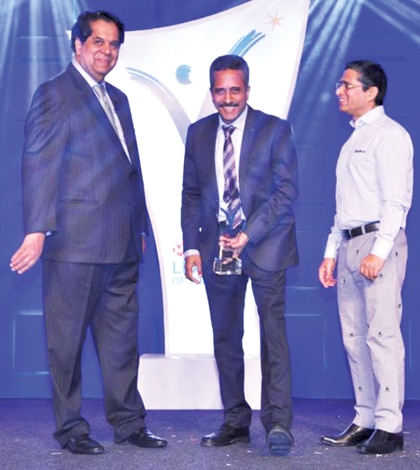
Subramanian receiving the “Leaders of Tomorrow” award from K V Kamath, Non-Executive Chairman, ICICI Bank
Leaders-of-Tomorrow
Subramanian receiving the “Leaders of Tomorrow” award from
K V Kamath, Non-Executive Chairman, ICICI Bank

Recognition for Innovative Ideas – Growth of a first Generation Entrepreneur

It is a proud moment for N. Subramanian and his TEAM TRS Forms & Services Pvt. Ltd. since they have been selected as “The Leaders of Tomorrow” at national level in ITES vertical by the ETNow. TRS has been selected for this award mainly for their innovative products and solutions.

TRS pioneered the concept of using OMR technology for volume data capturing. Till then OMR was synonymous for Objective type of examination and Market survey. OMR was first introduced in application processing. Then it was used in subjective exams as the first sheet of the answer booklet with barcodes acting as the dummy number. Marks tabulation sheets were designed in OMR format for capturing of marks instead of data entry. All these process were introduced by TRS way back in 1995. TRS is proud to say that such systems are being widely used in India even today. With the introduction of such new technology solutions, TRS was recognised as “The OMR People”.

His passion for R&D and Technology based solutions paid dividends. TRS came out with a path breaking solution for dummy numbering process in Indian universities and other educational institutions for their subjective examination. Brand named as FireEye process, this has created a complete change in automation of examination process. FireEye process has revolutionised the post exam process. By introducing this process not only the volume is handled with ease and accurate results are brought out faster. This has helped the student community to a larger extent and brings more credibility to the institution and the examination process as a whole. The FireEye scanner has been designed and developed by TRS and registered for patent. This process had instant recognition from few big universities and professional institutes. TRS now hopes to capture more share of the market in the current year and in two years hopes to capture more than 75 per cent of the market.

Another feather in TRS cap is the introduction of eSekure a software product considered the ultimate security for any document and could eliminate possibilities of fake documents in education, financial transactions, recruitments, registration documents and government certificates. TRS has introduced the security system branded as eSekure. This mark can make even an ordinary white paper a secured document. It is 100 per cent tamper proof. Even mobile applications are available for verification and make it easy to verify on the move. TRS has just introduced this in couple of prestigious institutions as a pilot. TRS aims to make it as a standard mark for document authenticity in India. Since this problem is universal, the same can be implemented globally and eSekure made as a global standard for document security.

TRS is on the forefront of on-line activities as well. TRS has successfully implemented online applications for many education and recruitment bodies. Online examination application has been introduced for universities. TRS has the online examination (eKsamin) software for both schools and college level as well as for bigger examinations. This package has a powerful and comprehensive Question bank software (eQbank) attached. This can help in conducting both objective and subjective examinations. This package is also available separately for schools and colleges to maintain a powerful question bank and be used for their unit or internal tests. The game changer for TRS in future is going to be the on screen marker solution named eMarquer. TRS has indigenously developed the software suitable for the Indian conditions and requirements.

No doubt N Subramanian is a successful entrepreneur and an expert in high volume data processing and data capture services.

‘It is the Product that Brands a School’

Sumer Singh
Sumer Singh, Principal, Daly College Indore
Sumer Singh
Sumer Singh,
Principal, Daly College Indore

Through handling responsibilities at a level available only in boarding schools, children become responsible and self-reliant, believes Sumer Singh, Principal, Daly College Indore. In conversation with Elets News Network, he explains how recognition of a child’s success by peers raises his level in all spheres

Is academic excellence a matter of concern to the teachers and management?

In a boarding school, a student has much more opportunity to discover his or her talents and strengths because of the wider range of sports, cultural, intellectual and adventurous activities available. This, combined with a focus on the individual child and recognition of his success in any field by peers, helps build self-confidence which raises his level in all spheres.

Is boarding school the right place for students whose parents have broken homes or facing separation?

Boarding schools are a miniature reproduction of the Indian multiregional, multisocial and multiethnic society. There is place for all.

How far does psychological counselling play a role in integrating the children with boarding schools?

The family needs to be unanimously supportive of the boarding school for the child to settle. The counselling required by, say a grandmother, is important before the child can settle. Once the child settles, then the majority do not need counselling. However, we all need counselling to a lesser or greater degree.

What are the challenges of administering a boarding school?

It is a full-time job with more challenges and more rewards. A majority of children keep in touch long after they leave school.

What are the demands placed by parents on the school?

Parents, especially mothers, are far more involved in the education of their children. Families come from different cultural backgrounds and have varied aspirations and expectations. These differences need to be rejected without compromising on the essential values and principles the school stands for.

On what parameters does one judge a boarding school?

A boarding school has a real opportunity to inculcate values and responsible citizenship. Therefore good behavior is one parameter. Others are a sense of compassion, camaraderie and a sense of humour. Finally, through a system of sharing with and supporting each other, a boarder is better adjusted to changing fortunes and conditions and his friendship will stand every test including that of time.

Do you hunt for global talent like recruiting teachers from other countries?

Only on a short-term basis. For example, we have a special fund to invite overseas coaches, teachers and poets.

What is the unique selling point that attracts parents to your institution?

Our down to earth students and the varied exposure, including global, that we provide.

Is boarding school meant only for rich and pampered brats? Or do you have any policy to reach out to bright students from poor families?

This is a question that pre-supposes we are an expensive school. We are not. Parents spend at least as much, if not more in a day school.

Is rampant indiscipline, drugs, alcohol, etc. in boarding schools a matter of one’s imagination? If not, how does the school address it?

As I have not witnessed this in the seven schools I have worked in, I would suspect it is the imagination of those who are unfamiliar with or even denied a good education.

Budget version of ‘digi-school’ in offing

Chetan Mahajan
Chetan Mahajan, President, HCL Learning
Chetan Mahajan
Chetan Mahajan, President, HCL Learning

Chetan Mahajan, President, HCL Learning in an interaction with Elets News Network shares how strong content enhances the use of hardware in the classroom for effective learning in smart classrooms

What are the learning solutions that HCL provide to the education sector?

We provide solutions in two categories. Teaching, which is the first category, is sold to schools to be used in the classrooms. These are teaching aids which enable a teacher to impart quality education. This is typically a digitised curriculum. An entire curriculum of a CBSE or an ICSE or a state board would be digitised and made available to the school teacher for their subject and for their grade level. And the teacher is able to use it in the classroom along with a white board. The second product is a self-study version. Here, the students are able to take the content home and install it on their PC or computer and study it.

What is a smart class?

At its core is content. It is a critical piece of a smart class because that’s the true value. We can always have a classroom with a bunch of hardware, with whiteboard, projector, PC, speakers etc but if you don’t have good content then it defeats the purpose. We actually call it a ‘digi-school’. The content involves mapping the entire curriculum that is taught in that particular school. So a teacher can use effective content rather than the traditional model of blackboard or chalk and talk.

Technology movement is fast becoming imperative for schools, has it touched every class and every school in India?

No, absolutely not. If you look at Indian schools, there are three categories.The government schools, which are free, there are relatively low price private schools and there are relatively more expensive public schools. The schools which access this con- tent are largely the more expensive schools and, to some extent, the government schools because the government has been giving contract for these kind of solutions. But the lower end of the private schools is largely untouched due to high cost factor.

Any plans to extend your solutions to these schools?

We are in the process of offering a budget version of our ‘digi-school’ product, which will also enable these schools to get an access to it, because the ironic thing is that these schools are the ones which need such products the most. These are the schools which are not adhering to government pay scale level and they pay the teachers very less salary. So quality of teaching is an issue. The availability of teachers is another factor. So these are the schools which can actually benefit from our product, but unfortunately, they are the ones which can’t afford it.

Will technology substitute teachers in classroom? Not at all. What technology is actually doing is allowing teachers to do lot more than they were able to do earlier. The teacher is indispensible. Schools need to understand the place for technology and should be able to ensure that technology is used as an aid in teaching. But there is no question of any mechanical device substituting a teacher in classroom.

Do you have training programmes for teachers?

HCL is one of the preferred shortlisted vendors of CBSE. We are authorised to do Continuous Comprehensive Evaluation (CCE) training not only in India, but also overseas and we do it on a large scale. Last year, we trained more than 10,000 teachers across India.

What is the reach of HCL learning?

We are present across India. We operate in countries in Africa, Middle East and South Asia. We are holding talks with few entities in Europe and US as well.

Expansion plans for the next three to five years.

We are focussed on the K-12 sector to segments which are under-served till now. With our digi-school model, we are going to engage with the government of various other countries across the world.

Transforming Learning, Transforming Lives

Transforming-Learning

The concept of smart class education has come as a boon for students of the 21st century. In this time and age of smart kids, computers and the Internet, the right use of technology in education is a gift for them. Roselin Kiro of Elets News Network tracks the dynamics of the emerging smart class industry and its growing acceptability in the Indian education system

The days of rote learning and chalk and talk are long gone. One can’t ignore the fact that children today are exposed to gadgets at a very early age and are prone to the latest in technology. Hence, it only makes sense to teach them in the way they want to learn.
Information and Communication Technology (ICT) has transformed the education sector in every sense, with e-learning emerging as the latest buzz. The use of ICT in schools and colleges has not only become vital to learning, it is also crucial in bridging the gap between students and their access to qual- ity education. It is in recognition of this factor that an increasing number of schools and colleges are now incorporating the latest tools in technology to enhance the quality of education being imparted.
The introduction of the concept of smart classes – or digi- tised classrooms – in several schools across India has revolution- ised the teaching and learning process. By adopting interactive and eye-catching modules, smart classrooms today symbolise breaking the tradition of text book teaching and making a shift to a concept that draws students towards better learning.
Smart class has also simplified the teaching process for teachers who can easily explain and demonstrate many abstract concepts making it more comprehensive for students. So, the use of technological tools in education not only has the potential to make learning more rewarding, it can also empower teachers with technology inside the classroom which helps them teach more effectively, thus enriching the quality of education as a whole. “The conventional blackboard has made way for digital equipments, making the learning process interesting and vibrant. This has partly put an end to mugging up of lessons and jotting notes,” observes Manu Nanda, Marketing Director, Wacom India Pvt Ltd. “The new smart class is a blessing for the institutions as it has created a simple yet a distinctive way of teaching,” he adds.

A sunshine sector in India?

Post 2000, a large number of companies established themselves as technology solution providers in the education sector in India. This was the period when new schools, especially International Baccalaureate schools, were being set up in the country. The primary reasons for this growth can be attributed to the spread of the Internet and opening up of the Indian market to foreign players, further propelled by the IT revolution and boom in the Indian economy.

The scheme, Information andCommunication Technology in schools,was launched in 2004 to develop ICTskills and promote an ICT-aided learning process

Stumbling Blocks

  • Misconception that technology is substituting teachers in classroom.
  • Teachers do not use ICT effectively
  • High cost preventing schools to adopt this technology.
  • Poor internet connectivity, poor infrastructure, low literacy rate in India.
  • Lack of research and development in the sector.
  • No parity in prices of e-learning solutions in Indian and global mart.
  • Some technical fault might arise during a class lecture creating disturbance in the classroom.
  • There is a need to develop digital content in regional languages
  • Limited exposure of teachers to technology in rural areas
  • Poor after-sales service by IT companies

 “Schools are realising that digitisation of teaching methods gives an experiential edge to the students,” says Nirav Khambhati, Chief Executive Officer, Tata ClassEdge. The prospects for smart class education seem brighter than ever before. “What the future holds for technology in education is far more than what we can imagine at this point in time,” adds Nirav.
There are several others who also believe that the influx of technology in education is already changing the learning and teaching scenario in India. The acceptance of the system has been remarkable and very encouraging, says Manu Nanda, Managing Director, Wacom India Pvt ltd. “The use of smart classes and modern technology eases the learning process of all students and promotes more participation from both teachers and students alike,” Nanda says explaining the reasons be- hind the success of smart classes.
The smart class concept is gaining popularity majorly in schools fostering individualised and peer learning and schools have started accepting technology intervention as a boon for their students and teachers. As compared to a few years before, one can now see a greater degree of acceptance among schools towards adopting such learning solutions. “The content forms the backbone of the overall solution which enables students to disseminate abstract and abstruse concepts with ease and also compliments teachers in delivering lectures,” says Monica Malhotra Kandhari, Senior Director, MBD Group. “The out- come of smartclass solutions are very positive as the learning experience of the students today has completely changed as compared to last decade,” she adds.

Government spending on ICT increased by 53.2 per cent to Rs 340 crore in the 2013-14 Union budget, expected to grow five times by 2020

The challenges

The concept of smart classes is innovative and encouraging. However, technology in education still has a long way to go in India. Today, a majority of schools implementing smart class solutions are from the private sector, which many in India cannot afford. The cost involved with adopting these technologies is high, which is preventing many schools from adopting these methods. So, with smart education comes the problem of high cost of education.
On the other hand, there are debates on how digital education can act as a major trigger to overcome issues like lack of textbooks and blackboards in rural schools. But this too has its own set of challenges. Unlike urban centres, where education is imparted through smart classes, rural areas lag behind.

Schools need to understand the place for technology and should be able to ensure that technology is used as an aid in teaching. But there is no question of any mechanical device for substituting a teacher in classroom” Chetan Mahajan President, HCL Learning

The government, on its part, has always appeared to have been interested in the use of ICT in education sector in India. It sees ICT as a great driving force in education that can link the gap between urban and rural education sector and help in tackling issues of access and quality. Both the Centre and state governments have taken some initiatives in building technology-enabled schools in villages. However, it is difficult to run such institutes as the format does not find acceptance in the villages. “Most schools have so far adopted smart classroom solutions in 3 to 5 classrooms and we see a huge potential to extend the solution to other classrooms within the existing schools. Plus there is a huge market potential in government schools, government-aided schools etc. that needs to be ad- dressed,” says Monica Malhotra of MBD.
The government, on its part, has always appeared to have been interested in the use of ICT in education sector in India. It sees ICT as a great driving force in education that can link the gap between urban and rural education sector and help in tackling issues of access and quality. Both the Centre and state governments have taken some initiatives in building technol- ogy-enabled schools in villages. However, it is difficult to run such institutes as the format does not find acceptance in the villages. “Most schools have so far adopted smart classroom solutions in 3 to 5 classrooms and we see a huge potential to extend the solution to other classrooms within the existing schools. Plus there is a huge market potential in government schools, government-aided schools etc. that needs to be ad- dressed,” says Monica Malhotra of MBD.

Looking ahead

ICT in education can enable students to be true natives of the global village. There is a need for every school to use the emerging technology of smart class education for the benefit of both teachers and students. The industry of digitised education is gradually budding with many stakeholders venturing into it and increasing their stake in the market. However, more research and development is required in the sector.
The growth of smart classes could be jet speeding in the years to come, if one trusts the optimism of Nanda from Wacom. If technology is changing the way of life and its for good, then why not go for it!

LATEST NEWS