




Home Blog Page 618

Next Education: Improving learning outcome digitally

Next-Education-India-Pvt-Ltd

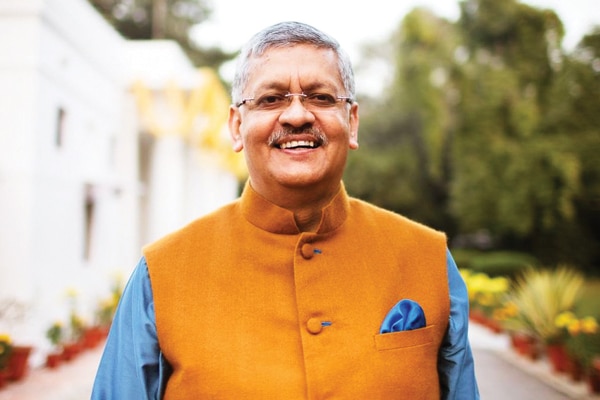
Mr.Beas Dev Ralhan,CEO & Co-founder,Next Education India Pvt. Ltd (1)At Next Education, we believe that scalable, sustainable, personalized quality education for a child is possible only by leveraging technology, says Beas Dev Ralhan, CEO & Co-founder, Next Education India Pvt Ltd, in conversation with Elets News Network (ENN).

What is the role of technology in improving the education scenario in India and removing the structural blocks?

In India, technology has been a late entrant into the education sector as compared to the other sectors such as health and infrastructure. But now that it has finally made inroads into the sector, it has the potential to give the sector a complete overhaul and resolve some of the long-pending roadblocks.

Lack of skilled teachers and quality content and poor ways of tracking learning outcomes are some of the issues plaguing the Indian education system. For instance, teachers are expected to use digital aids in the classroom without even receiving adequate training. Any inadequacies from the teachers’ end are often  criticised without taking into consideration the lack of teacher-training programmes. Devising quality teacher-training programmes is the need of the hour. Teachers, even those who are remotely based, can take up various Massive Open Online Courses (MOOCs) offered by various reputed institutes to upskill themselves and keep themselves abreast of the latest pedagogies. In an effort to train teachers with the best global teaching practices, Next Education, in collaboration with Indian Institute of Technology Bombay (IIT-B) offers a couple of MOOCs.  To address the problem, the government could also mull over setting up of public–private partnerships to design effective teacher-training programmes.

Furthermore, one of the reasons why schools do not thrive even when they receive enough funding to run their academic and administrative wings is the lack of proper academic benchmarks and effective ways to gauge learning outcomes. Adoption of learning management system (LMS) can be a revolutionary step in improving the quality of education in India.  Technology-mediated education can track the learning progress made and suggest corrective measures whenever there are deviations from the well-defined learning paths.

Besides these, accessibility and affordability are other impediments to the delivery of quality education to Indian students. There are remote schools with low resources that fail to deliver quality education to students. With almost 68% of the Indian population residing in rural India, quality education is inaccessible to most Indian students. Adoption of LMSs would largely address the grave situation. Although tech-mediated education seems expensive, it is actually quite affordable in reality. Thanks to the penetration of technology, delivery of quality education has become cheaper than private tuitions. For instance, a private teacher for one subject charges approximately Rs 2,000 to Rs 5, 000 per student for 1 month. LMS with an integrated adaptive learning software would cost around Rs 200–500 for each student per month.  The advent of technology in the education sector has democratised learning, making it available to a larger audience at an affordable cost.

Besides giving students access to quality curriculum designed by experienced subject matter experts, LMS also gives a 360 degree understanding of students’ learning progress. Learning is not confined to the classroom and does not happen in a vacuum – students’ health, family environment, etc. all have bearings on their overall academic performance. A student might have been absent for a couple of days and that could be the reason for his/ her poor performance in a class test. A teacher, dealing with a class strength of 40 students, might fail to take these into consideration, however, LMS wouldn’t.

Next Education is on the verge of launching its LMS, NextLearningPlatform. You could expect it this academic year.

Gamification, the application of game mechanics in a non-game context, has been embraced by various educational institutes. How does it make learning engaging and joyful?

Since time immemorial, teachers have struggled to hold students’ attention for long and engage them effectively in their own learning. Gamification of the learning process is an excellent way to solve those concerns.

When students sign up on online platforms to practise their lessons in a gaming environment, they can challenge others, embrace competition and earn rewards, which is their biggest motivation. Instant feedback and gratification in the form of scores keeps the students hooked. It also helps in developing learner agency. Besides, it helps students take up active role in their education, become more inquisitive, solve problems faster, learn more efficiently, and learn to push themselves harder.

Unfortunately, non-cognitive skills are perceived as less important and, often altogether, dismissed in a traditional classroom. However, patience, discipline and motivation are as important as intelligence to succeed in life. A gaming environment encourages such skills in students.

In fact, the education system, in a way,  has always been gamified. Doing well in exams guarantee good marks, merits, awards, appreciation from teachers, and also the option of moving to the next level/grade. However, dull curriculum, ineffective content delivery and unhealthy competition have killed the joy of learning and made learning a cumbersome process.  A revival of gamification of learning can help bring back the joy. Many of the experiments and activities of Next Education’s NextLab, an experiential learning solution for science, maths, English and robotics, are gamified.

What is the significance of 21st century skills to prepare children for the future?

The world is fast transitioning into a knowledge economy. To be an actively contributing member, each child should be equipped with 21st century skills such as critical-thinking, creative thinking, problem solving and collaboration. Subject matter knowledge alone is not enough to be successful in the 21st century. Take the computer science subject, for instance; we could say that the cutting-edge technologies of today could become either outdated or evolve into unrecognisably advanced forms 15 years from now. Now, we use a word processor to  write and format documents, use a slideshow program to create presentations and use spreadsheets to manage data. However, when new versions of software are developed and applications change, day-to-day activities take a beating. Computer Masti, our computer science curriculum, designed in collaboration with IIT-B, has been designed such that it makes students IT fluent, not just IT literates. In fact, the design of any curriculum should focus on enhancing 21st century skills in students rather than just imparting subject lessons.

What are the solutions provided by Next Education. How do you design the curriculum in line with the latest and best industry practices?

R&D has been at the heart of our venture right from the beginning. Our passionate team of technology enthusiasts and esteemed subject matter experts work relentlessly to design an effective curriculum for students. Unlike many other education solutions providers who come to a standstill after creating a pool of content, we work to increase our range of offerings.

We constantly update our rich repository of audiovisual content, which includes traditional 2D and 3D animations as well as more contemporary ones like claymation and papercraft animation, to provide students with the best learning experience. In fact, we validate the quality of

our courseware through IIT-B’s testing tool called Learning Object Evaluation Instrument (LOBE).

We started off by launching the self-learning solution LearnNext and then moved on to offer the digital classroom solution TeachNext. In the course of a decade, we have increased our offerings to NextERP, NextLab, NextCurriculum and more, and have constantly strived to address the looming gaps in the K-12 sector.  We realised that to truly bring forth great academic results, it is imperative to cater to schools’ administrative needs too, and thus, we have ventured to provide schools with NextERP. We further felt that there was a disruption in between the courseware of a digital classroom and that of books. Moreover, teaching plans, lab plans and other facets of learning in a classroom are also not well-mapped as schools usually take each requisite from different companies. Realising the gap, we have designed an integrated curriculum.

What is your vision and mission?

Our vision is to provide optimal academic and administrative solutions to all K-12 stakeholders.

Our mission is to make quality education accessible to every child. We want to impact the lives of 25–30% of the total school-going-population through our educational products by 2030. And, in the process, we aim to be the no. 1 education solutions provider in India in the next 10 years.

Alumni dedicate their home for AMU Incubation Centre

In a most distinctive way to pay back to Alma Matar, seven siblings and also alumni of Aligarh Muslim University (AMU) have gifted their parental house “Darul Khalil” in Badarbagh area of Aligarh the university.

According to statement by varsity, the gifted property will be used as a dedicated place for the Innovation Council and Incubation Centre as directed by the Vice-Chancellor of AMU.

Through the centre, the university is set to facilitate and creates awareness drive to become a hub of harnessing ideas/ creativity at National level.

Mohd Adil inaugurated the Innovation Council and Incubation Centre. He is one of the sons of Late Kunwar Abdul Khalil khan, a leading Businessman in Retail Sector (Gulf Region), and also Alumnus of AMU and Haward Business School.

Adil said, “All his siblings are well established because of the affordable quality education they received at AMU.”

“When we give back to our alma maters, we get a sense of satisfaction in knowing that we’re furthering the aims of the institution that did so much to educate us and give us a better life,” he added.

Thanking Adil and his family members for their contribution, AMU Vice Chancellor Tariq Mansoor said, “The Innovation Council of the University aims to create an atmosphere where the research and innovation activities could be nurtured and enhanced by tapping and unleashing the hidden innovative potential and skills of our students and teachers in bringing these to higher level.”

Indian Army launches “Kashmir Super 30” for medical aspirants

Indian Army after positive response to its engineering “super 40” scheme from Kashmiri youth has now started the “Kashmir Super 30’ initiative for medical aspirants.

“I believe the children will do well and serve the country. Since a year,our aim has been to engage youth and bring them to mainstream,” said General officer Commanding 15 corps Gen AK Bhatt.

Last year, Indian Army’s initiative – “Kashmir Super 40” helped 28 students from Jammu and Kashmir belonging to economically weaker sections qualify for institutions like IITs and NITs. The students enrolled under the ‘Kashmir Super 40’ initiative are trained under the aegis of the Centre for Social Responsibility and Leadership (CSRL) and Petronet LNG Limited (PLL).

Of the 40 students under the initiative in 2017, 35 boys received coaching in Srinagar while five girls received training in Delhi. Of them, twenty-six boys and two girls qualified the IIT–JEE mains exam while nine made it to the IITs.

At the inaugural ceremony, Lt Gen Bhatt also said, “There’s peace among public due to ceasefire. If in these 30 days there’s no civil casualty it would be good news for us. Pakistan is still trying to infiltrate & our troops are being deployed to retaliate.”

JEE Advanced results: IITs to discuss declining number of qualified candidates

Indian Institutes of Technology (IITs) have called a special meeting today on declining numbers of qualified candidates in the merit list of JEE Advanced and to discuss that the number of qualified candidates is enough to fill 11,279 seats of the institutions.

Since 2013, when IIT-JEE was renamed JEE Advanced, number of candidates who qualified the exam has always been at least twice the number of seats on offer. With 18,138 qualified students this year dropping to a seven-year low, the number is 1.6 times the total seats.

“There is a feeling that we may be on the razor edge. Some institutes have expressed concerns, which is why a meeting of the JAB (Joint Admission Board) has been called tomorrow (Wednesday) morning to discuss this and, if needed, think of a solution. It is in the interest of students that none of seats goes vacant,” said a member of the IIT-JAB on the condition of anonymity.

Despite adding 800 supernumerary seats exclusively for women with the objective to improve gender ratio on campus, the institutes are particularly concerned about the number of female candidates (2,076) on the merit list this year, which is also the lowest in seven years.

“The women, our experience over the last few admission cycles has shown, are usually a little inflexible in filling up choices (of institutes and seats). If cut-offs cannot be lowered, then candidates, especially women, will have to encouraged to fill as many choices as they can to ensure they are accommodated and seats don’t fall vacant,” said another member of IIT-JAB, who did not wish to be identified.

Out of the 18,138 who qualified JEE Advanced, 8,794 are general candidates, 3,140 are from the OBC category, 4,709 are Scheduled Castes (SC) and 1,495 are Scheduled Tribes (ST).

AP Inter Supply results 2018 announced, check details here

Andhra Pradesh (AP) Board intermediate supplementary exams’ results have been released on the official website bieap.gov.in.

The Board of Intermediate Education of Andhra Pradesh (BIEAP) has conducted the supplementary exams in the month of May. The annual exams for the first year began from February 28 and for second year, the exams were started from March 2.

The Intermediate 1st and 2nd year results were released in April. The overall pass percentage for Inter supplementary exams is around 73 per cent (excluding vocational). Among regions, Krishna district is at 84 per cent while Nellore is at 72 per cent and Guntur at 76 per cent.

AP Inter Supply results 2018: How to check

Step 1: Log on to the official website bieap.gov.in

Step 2: Click on the link for results

Step 3: Enter the required details in the provided fields and click on submit

Step 4: Your result will be displayed on the screen

Step 5: Download the result and take its printout for future reference

The board has instructed the students to check the results on the official website and also that the students should take a print out of the scorecard for the future reference.

This year, nearly 5.53 lakh appeared for the first year intermediate exams while in the second year, approximately five lakh students have given the exam in February.

JEE Advanced 2018 Result: Pranav goyal tops the exam

Pranav Goyal from Panchkula has bagged the first position in JEE Advanced 2018 with 337 marks out of 360. He appeared for the exam from Roorkee zone.

Pranav is followed by Sahil Jain from Kota region and Kailash Gupta from Delhi region with second and third ranks, respectively.

Meenal Parakh from Kota is the topper among the female candidates appeared in JEE Advanced this year. Meenal scored 318 out of 360 marks and is placed 6th in Common Rank List.

K V R Hemant Kumar Chodipilli is the topper from IIT-Kharagpur region, reported Times of India. JEE Main topper Suraj Krishna secured 49th position in JEE Advanced results.

In OBC NCL category, Mavuri Siva Krishna Manohar from Vijayawada, Andhra Pradesh topped the exam, while, Aayush Kadam (Kota) and Jatoth Shiva Tarun (Hyderabad) came first in SC and ST categories respectively.

There have been 8,794 general (GE) candidates qualified while there are 3,140 OBC candidates, 4,709 SC candidates and 1,495 ST candidates.

IITs this year has 800 supernumerary seats for female candidates. Out of the total 800 seats, IIT Kharagpur has 113 seats, IIT Dhanbad has 95 seats, IIT Kanpur has 79 seats, IIT BHU has 76 seats, IIT Roorkee has 68 seats and IIT Delhi has 59 seats for female candidates.

The JEE Advanced was conducted for around 1.6 lakh candidates in two papers – paper 1 and paper 2. More than 65,000 selected candidates out of the total 2,31,024 had chosen not to appear for JEE Advanced this year.

JEE Advanced Result announced, counselling to begin from June 15

JEE Advanced Result 2018 has been announced by the Indian Institute of Technology (IIT) Kanpur declared on the website results.jeeadv.ac.in.

 The examination was conducted on May 20 for admission to 11,279 seats of 23 IITs across the country.

Admission to the IITs will be done after counseling by Joint Seat Allocation Authority (JoSAA) scheduled to be conducted from June 15 onwards.

JoSAA conducts counselling for admissions to IITs, NITs, IIITs and GFTIs. All eligible candidates can register and fill their choices of college and courses till June 25, 2018. Seven rounds of JoSAA counselling 2018 will be conducted where the eligible candidates will be allotted seats according to their merit and preferences.

Candidates who have qualified JEE Main will be eligible for admissions to 31 NITs, 23 IIITs and 23 GFTIs whereas JEE Advanced candidates will be able to apply for admissions into all participating institutes including 23 IITs.

JoSAA 2018 Counselling Process

JoSAA 2018 counselling is a step wise process which all candidates will have to follow for admissions. Candidates are advised to check the eligibility criteria before registering for the counselling of JoSAA 2018.

Step 1 – Registration

Step 2 – Filling and Locking of Choices

Step 3 – Seat Allotment and Rank List Announcement

Step 4 – Availability of Allotment Letter and Payment of Seat Acceptance Fee

Step 5 – Reporting at Reporting Centre

Step 6 – Reporting at Allotted Institutes

Uttar Pradesh Crafting Innovation in Education

Uttar Pradesh today ranks among top States of India in terms of number of institutions of preschool, schools, and higher learning. As these institutes lay the foundation of any generation’s development as a literate society, it’s important to evaluate and innovate curriculums and pedagogies on a regular basis.

In this light, our latest issue of digitalLEARNING magazine has focused on current and prospective educational scenario of Uttar Pradesh in a broad way.

Our cover story “Destination Uttar Pradesh – The Next Big Education Hub” talks about the initiatives taken by the Government to make education available to every section of the society and simultaneously ensuring opportunities to learn skills in this tech-driven world. It also highlights improvements made by the State in the education sector in last two decades.

Our Special Story “UP Government Schools: Ray of Hope and Learning for All” talks about how the State Government and its policies are playing a seminal role in transforming and improving the school education sector of Uttar Pradesh.

“Nurturing Tomorrow with Best Higher Education Practices” is another special story which dwells upon the vital role of Higher Education in overall development of a State and how the Government and private players are taking initiatives to understand the current requirements and future prospects.

The edition also features the interview of Ramesh Mishra, Secretary, Higher Education, Government of Uttar Pradesh; Selva Kumari J, District Magistrate, Etawah, Government of Uttar Pradesh; Narendra Shankar Pandey, Special Secretary, Higher Education, Government of Uttar Pradesh and Director, Rashtriya Uchchatar Shiksha Abhiyan, Uttar Pradesh; Dr Vedpati Mishra, Special Secretary, Basic Education Department, Government of Uttar Pradesh, and State Project Director, UP Education for All Project Board and Mahendra Bahadur Singh, District Magistrate, Rampur to offer a glimpse of the future growth of education sector in Uttar Pradesh.

Besides, we are also carrying interviews of government officials, school owners, university vice chancellors, principals of higher education institutes and leaders from edu corporate to showcase the overall education scenario in the State.

We are also carrying conference reports of 7th Higher Education & HR Conclave, Pune and 7th School Leadership Summit, Chandigarh. The summits highlighted and shared finest practices, ideas and latest trends about school and higher education among those who matter for overall growth of the Indian education landscape.

Presenting latest bouquet of articles, special stories and interviews along with industry initiatives, we hope to get an invaluable feedback of our readers.

Indiannica Enriching Learners’ Experience

Indiannica is today a pioneer in creating products that foster exploratory learning, guiding learners to attain the right attitude to seeking knowledge, says Sumit Gupta, Managing Director, Indiannica Learning Pvt Ltd, in an interview with Souvik Goswami of Elets News Network (ENN).

What is mission of Indiannica Learning?

Sumit Gupta, Managing Director, Indiannica Learning Pvt Ltd

Our mission at Indiannica Learning is enriching experience of the learners. Today’s learning is rote- learning developed initially with a focus on not on learning but on getting good marks irrespective of student understanding the concept or not. So, this is what we are working on to develop the solutions that make learning interesting and interactive.

What innovations are you introducing to make the content more enriching for learners?

We are trying to develop the kind of solutions which rather than pushing the students towards learning, fascinates them towards it. As we all know that the best learning is what we gain after experiencing something rather than reading or studying. So, we are developing games, animations, videos and graphics using technologies like Artificial Intelligence, Augmented Reality and Virtual Reality to make the learning more interesting.

Indiannica is working on curriculum and digital interface, what are the focus areas in curriculum as well as in digital interface?

In curriculum space, there are text book publishers which B2B (Business to Business) and most of these publishers are using digital component as a gimmick and others are edtech players which are B2C (Business to Customer). Due to paucity of time, we need learning solutions which comprised text book, digital solutions which may be online or in form of an application. This is exactly what Indiannica Learning is doing. We are serving K-12 segment and developing the digital solutions inclined with the curriculum.

What are your expansion plans in India and globally?

We have very ambitious plans of expansion. Presently, we cover only 45 per cent of the total market and we are planning for gradual increase in the market coverage in the upcoming years.

The second is portfolio increase. We are investing heavily into that for developing physical products i.e. digital and Massive Open Online Courses (MOOCs) along with the curriculum products. This is what we believe will give us the required growth. We are very cautious about price hike and last year there was no increase in our prices. Personally, I would like this company to be three times of its assets in next three to four years.

As per our vision, India and beyond, we want to be the most trusted learning solution company in India and beyond. In early ages, India used to be the knowledge provider to the world and we want to continue that legacy through our various tested products. We have our business in Srilanka and we are planning for expansion in the SAARC countries as well.

We believe “What India thinks today, the world will think tomorrow”. In line with Prime Minister Narendra Modi’s vision of “Make in India”, we partnered with Britannica and named the organisation as Indiannica. Today, the world is looking at us and our Government is also focusing a lot on health and education. We are in the education arena and here we can do a lot to serve our customers.

We are trying to develop the kind of solutions which are rather than pushing the students towards learning is pulling or attracting them towards it. As we all know that the best learning is what we gain after experiencing something rather than reading or studying.

What are your plans for working with the Government?

As a business, we are focusing only on private sector. We have kept our market very limited to ICSE, CBSE and few State board schools. As we see that NCERT is being pushed a lot, though it is not able to supply the books and NCERT books are no match to our books in terms of quality, we are looking for engagement with the Government in textbook side. We are already supplying books to Army schools along with few State board schools.

What challenges are you facing?

In a majority of schools infrastructure is unavailable. It is important to understand that teachers are not burden. The average class size nowadays is of 40 students and if a teacher is teaching three sections of three classes, he/she is dealing with 300 to 400 students. In addition to that they have to prepare tests, check test copies and perform other duties as well. So, reducing the burden on teachers is important which is possible digitally. Providing assessment solutions, test generators will reduce their burden. It will be only possible with technology and good infrastucture.

The second one is the mindset, as whenever we visit a school, they say that we don’t want to expose our children to the Internet. We can restrict a child accessing the Internet at school but at home every child has a laptop, tablet or i-pad etc, which is connected to internet 24×7.

The third challenge is Government initiatives like making use of NCERT books in every school. The parents are getting their children enrolled in the private schools for quality education and, in my view, such initiatives are not good. Another one is the implementation of new tax regime i.e. GST. Though the textbooks are tax-free, unless the supply chain management is made tax free the cost will keep rising and we have to increase our prices and ultimately the customers have to suffer.

Is it needed that company like yours, government officials and the school decision-makers should sit together to overcome these challenges?

Definitely, it is very much needed though it is happening in smaller ways. I am in the publishing committee of the FICCI and most of the private sector publishers in meetings discuss various challenges. FICCI takes those challenges to the government bodies. I think, such meetings should happen more frequently and not only FICCI but other bodies should also come forward. I think, the Government is more open to such things nowadays and it will definitely help if go forward and come together to discuss the challenges. We are part of Navneet group which caters to the Government’s Corporate Social Responsibility activities and related various State board schools.

What is the vision of your organisation for the days ahead?

We want to be the most trusted learning solution brand in India and beyond. At the same time, we just don’t want to focus on selling or becoming the largest, we want to grow the trust for our brand among students, teachers and parents, which will help us to grow three times with a span of three to four years.

LPS: Nurturing Young Minds Holistically

Lucknow Public School (LPS) believes that the purpose of education should be to stimulate and guide the self-development of students and nurture innovation among students, says S P Singh, Former Member of the Legislative Council, Uttar Pradesh and Founder Manager, Lucknow Public Schools and Colleges, in a conversation with Arpit Gupta of Elets News Network (ENN).

What is the vision and mission of LPS?

S P Singh, Former Member of the Legislative Council, Uttar Pradesh and Founder Manager, Lucknow Public Schools and Colleges

Our vision is to empower and make our country prosperous by providing quality education to a large number of students. Our mission is to try to impart the best quality education to students with support from principals and teachers. It is with our combined efforts that we are producing the best results in the country.

What innovations are adopted in your school and what is the role of technology in improving the educational practices?

When we started the school, only blackboard used to be the tool of the teaching. Nowadays, the technology plays a vital role in education as the entire education sector is using digital tools and devices like tablets, i-pads, smart phones etc to get the knowledge. We also encourage our teachers and students to attend conferences and summit to remain updated about the latest and the best practices of the education segment. Technology is supporting the education fraternity well as the whole world is online and anyone can access unlimited knowledge with a click of mouse.

You have opened a new branch of LPS in New Delhi, please elaborate on the infrastructure and other facilities it offers to students.

This is our first branch out of Uttar Pradesh. The Lucknow Public School branch is located at Asthal Mandir Marg, Sangam Vihar, New Delhi. It has been opened with the unique vision of value based quality education. The school with its world class infrastructure, best teaching practices, digital classrooms, vigilance, security and surveillance system will help students to nurture in a friendly yet secure environment. Like New Delhi, my plan is to open schools in other metropolitan cities of India along with in United Arab Emirates (UAE) and Mauritius.

When we started the school, only blackboard used to be the tool of the teaching. Nowadays, the technology plays a vital role in education as the entire education sector is using digital tools and devices like tablets, i-pads, smart phones etc to get the knowledge.

The group is into school education as well as in higher education, how has been the sync between the two fields?

We have a staff of more than 2,000 people and are teaching more than 28,000 students. We focus on commerce and science till secondary level. We have adopted the curriculum designed and developed by National Council of Educational Research and Training (NCERT) at pre-primary, primary, secondary and senior secondary levels.

At higher education level, we follow the norms decided by the University Grants Commission (UGC). The professional courses conducted in our institutions are as per the industry demand. These professional courses make the students job ready. We always try that the students pursuing degree courses in our institution get the campusplacement and do not remain unemployed after completing their degree.

Recently, we conducted a national level job fest in which over 50 multi-national companies participated and over 500 students received job offer letters. It is our efforts to provide quality education and job offers to as much candidates as possible.

Recently, you got two awards in Dubai for the special contribution in education sector. To whom would you like to give credit for this success?

I was given away two awards in Dubai — The World’s Greatest Brands 2017-18 and The World’s Greatest Leaders 2017-18 Asia and GCC. This achievement becomes possible due to the efforts of complete Lucknow Public School family. Every staff in the school contributes the fullest to impart quality education to students. These efforts helped our students to settle not only in India but also abroad. Their achievements are mirroring our efforts which is helping us to establish our name among the best educational institutes not only in the country but also across the globe. The award is the result of our 35 years’ continuous efforts. The passed out students are fulfilling our vision of nation building by working in the government, public and private organisations in India as well as abroad. Whenever achievements are recognised, it motivates us to continue the good work with more enthusiasm.

In the recently announced board results, Lucknow Public School has performed extremelywell which ranked it among the top 10 schools of the country, what is your take on this?

For the first time, in our school’s history, the first and the second toppers of the ISC-2018 exams are from our college. It is a lifetime achievement for us. Some of our schools are affiliated to CISCE, which is spread across the world and scoring the top positions by students of LPS has established our brand’s name globally. I would like to congratulate students, teachers and their parents for achieving this landmark. Both the toppers have been studying in our school since their early childhood which clearly reflects that we help every student in achieving his/her dream.

LATEST NEWS