


Home Blog Page 124

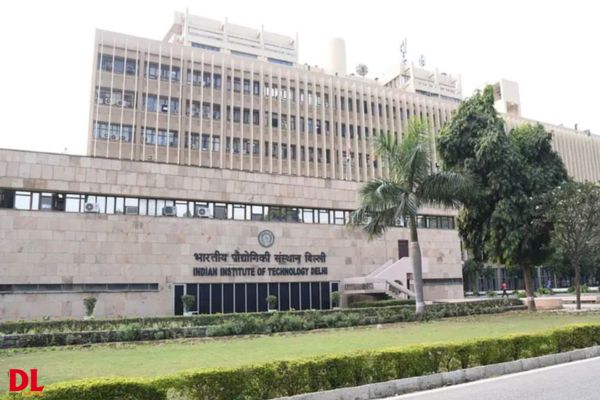
IIT Delhi researchers develop ML-based model for forecasting monsoon rainfall

IIT Delhi researchers

In collaboration with IIT Delhi, MIT in the United States, and JAMSTEC in Japan, researchers at the DST Centre of Excellence in Climate Modelling have created a cutting-edge machine-learning model for forecasting monsoon rainfall. A typical monsoon is defined as having an All India Summer Monsoon Rainfall (AISMR) of roughly 790mm in 2023, according to the model.

According to a statement from the institute, the model has exceeded the country’s present physical models. For the test period between 2002 and 2022, the machine learning model was able to attain a predicted success rate of 61.9%. The model was supplied with AISMR data, Nio3.4 index data, and categorical Indian Ocean Dipole (IOD) data for the years 1901–2001 in order to make predictions.

This model can forecast the monsoon based on the data that is available. Then, it can be modified to reflect evolving situations. Aside from making inputs more flexible, it requires less calculation.

“This study holds immense significance for the entire nation,” said Prof. Saroj K. Mishra, Principal Investigator, DST Centre of Excellence in Climate Modelling and professor at the Centre for Atmospheric Sciences, IIT Delhi. “An accurate monsoon forecast well in advance is pivotal for making crucial decisions in various socioeconomic sectors, including agriculture, energy, water resources, disaster management, and health.”

The prediction and forecasting of the weather is becoming more and more reliant on AI approaches. A predictor discovery algorithm (PDA) was created in April by a group of scientists from Cotton University in Guwahati and the Indian Institute of Tropical Meteorology (IITM), Pune. The system can produce accurate monsoon predictions 18 months in advance of the season, according to the Ministry of Science and Technology.

UNESCO MGIEP and AICTE signs MoU to enhance Digital Pedagogy and Social and Emotional Learning (SEL) in India

UNESCO MGIEP and AICTE

A Memorandum of Understanding (MoU) establishing collaboration in teacher preparation for Social and Emotional Learning (SEL) and Digital Pedagogies has been signed by the UNESCO MGIEP and the All India Council for Technical Education (AICTE). The partnership will put special emphasis on giving students the chance to learn life skills on their own time, developing cooperative academic and research initiatives, and exchanging information and content to foster deeper links between the two sides.

The National Education Policy (NEP) 2020 of India will be implemented with technology’s aid thanks to the agreement between UNESCO MGIEP and AICTE. In order to help teachers strengthen their SEL and digital pedagogy abilities as part of their ongoing professional development, this will entail offering digitally rendered jointly certifiable courses on the Framerspace Digital Platform from the UNESCO MGIEP.

Additionally, the cooperation will concentrate on enhancing students’ knowledge and awareness of issues related to climate change, biodiversity preservation, sustainable development, and social and emotional development. This will be accomplished through conducting collaborative academic research to measure the impact, exchanging ideas and academic papers, and planning shared activities including workshops, seminars, and conferences.

As a result of the relationship, teachers will have greater capacity to integrate SEL and digital pedagogies into their lesson plans, which will improve student learning and engagement. Together, UNESCO MGIEP and AICTE can make sure that Indian students have the skills they need to meet the challenges of the twenty-first century.

In order to find other areas where effective and useful cooperation may be possible within the parameters of the agreement, the MoU also calls for information sharing and dialogue. Any information exchanged between the parties will be governed by their own information disclosure rules and processes.

The collaboration between UNESCO MGIEP and AICTE is anticipated to have a positive effect on Indian education, assisting in preparing students for the challenges of the twenty-first century and fostering a deeper bond between the two institutions.

UP govt inks MoU with Khan Academy to enhance Maths skill of students

UP govt inks MoU with Khan Academy

A Memorandum of Understanding (MoU) between the Uttar Pradesh government and Khan Academy India has been inked in order to improve the maths learning abilities of more than 5 lakh students enrolled in the state’s 48,000 public schools.

According to a government spokesman, this collaboration will enable teachers and students in the basic education department, including Kasturba Gandhi Balika Vidyalaya (KGBV), secondary education department, and schools under the social welfare department to easily access and incorporate high-quality maths learning content in Hindi.

Khan Academy India, a non-profit organisation that was founded in India in 2006 by Khan Academy Inc. and Tata Trusts.

“This collaboration between the Government of Uttar Pradesh and Khan Academy India is a significant step towards ensuring that every student has access to the tools and resources they need to excel in maths and reach their full potential,” said Vijay Kiran Anand, director general, school education, Uttar Pradesh.

“The program’s performance in KGBVs serves as a testament to its ability to improve maths learning outcomes, which has already demonstrated promising results. We are pleased to maintain and grow our close relationship with them, he continued.

The Uttar Pradesh government and Khan Academy have been collaborating closely to enhance maths learning outcomes in state-run schools only serving KGBVs since 2021. The expansion of this relationship is being driven by the good results.

With its seamless integration into the classroom setting, learning maths at Khan Academy has transformed the way that education is delivered, winning praise from both teachers and students.

By the end of the second year, the curriculum had 72,000 participants from 746 KGBVs, and more than 24,000 of them were doing math for 60 minutes each month, resulting in improved learning results.

To ensure that all teachers in the state have access to top-notch content and Hindi-language maths learning resources, the partnership plans to host Khan Academy’s technologically advanced teacher training modules on the DIKSHA portal.

By encouraging a culture of quality and innovation in maths education, the expanded cooperation will further enhance Uttar Pradesh’s educational foundation. pupils will gain from engaging, individualised learning experiences while teachers will be better able to support their students.

Kaspersky, IIT Bombay signs MoU to strengthen cybersecurity education and research

Kaspersky, IIT Bombay

A Memorandum of Understanding (MoU) was signed by cybersecurity firm Kaspersky and the Indian Institute of Technology Bombay (IIT Bombay) to collaboratively promote and nurture the growth of educational and research projects in the field of cybersecurity.

Adrian Hia, Managing Director for Asia Pacific at Kaspersky, and Professor Milind Atrey, Dean R&D of IIT Bombay, signed the Memorandum of Understanding. In accordance with the agreement, the two institutions will collaborate to advance cybersecurity research and education with the aim of creating a stronger cybersecurity workforce in India.

The agreement between the two parties demonstrates their shared dedication to enhancing their working relationship in order to increase the security of the computer environment. Sharing knowledge and skills, producing teaching materials, conducting events to raise awareness of cybersecurity, and giving away awards and book prizes to encourage students to pursue cybersecurity jobs are all part of the project.

“Our partnership with IIT Bombay aims to enhance cybersecurity education and research in India,” Hia stated in a statement. We must collaborate in order to build the knowledge and abilities required for defence against cyberthreats, which are constantly expanding in scope and sophistication. The result of this relationship will be a higher standard of cybersecurity expertise being produced in India and a more secure online environment.

In accordance with the agreement, Kaspersky and IIT Bombay will work together to develop educational resources and programmes on cybersecurity, plan and publicise events to increase awareness of the topic, and sponsor awards and book prizes to inspire students to pursue careers in cybersecurity.

“Giving our young generation the knowledge and abilities required to defend against these risks is incredibly vital,” said Atrey. “Cyber threats are ever-increasing with technological breakthroughs and automation.

“With this partnership with Kaspersky, a reputable and well-known cybersecurity company, IIT Bombay will be able to make a substantial contribution to cybersecurity research and education. We anticipate a productive partnership with Kaspersky,” he continued.

Chegg reduces 4% of employees as AI risks business

Chegg

US-based online learning platform Chegg announced its plans to reduce around 4% of its employees. Just weeks after its CEO acknowledged that OpenAI’s ChatGPT was killing its business as more students were turning to artificial intelligence for homework help.

The company stated that the reduction would affect “about 80 employees” and “better position the company to execute against its AI strategy and to create long-term sustainable value for its students and investors”, according to reports.

The business estimates that these actions will result in “charges of approximately $5 million to $6 million, primarily consisting of cash expenditures for severance payments, employee benefits and related costs,” according to a regulatory filing.

A rising number of detractors have expressed alarm about the popularity of OpenAI’s chatbot and warned that it may encourage students to cheat on assignments, result in significant job losses, disseminate false information online, or even result in the extinction of humanity.

According to the research, ChatGPT offers a serious threat to Chegg’s business model, which is focused on the subscription-based provision of homework assistance, textbook rentals, test preparation, and other educational tools for students.

OpenAI’s chatbot offers free access to a lot of the same knowledge as Chegg with a few keystrokes.

After Chegg acknowledged that its finances had been impacted by the AI chatbot ChatGPT last month, the entire edtech industry descended into chaos.

The stock of language learning platform Duolingo fell by 10%, Pearson’s stock, which is listed in London, fell by nearly 15%, and US-listed education company Udemy fell by more than 5% on Tuesday, according to reports. Chegg’s shares, meanwhile, sank by 50%.

Dan Rosensweig, CEO of Chegg, stated: “We now believe it’s (AI) having an impact on our new customer growth rate.” With the help of OpenAI, the business has introduced its own AI chatbot, called CheggMate, in an effort to keep pupils.

UNIVO Education names Siddharth Banerjee as CEO

Siddharth Banerjee

Siddharth Banerjee has been named the CEO and a board member of the online programme management company UNIVO. Banerjee will be in charge of steering the company at UNIVO to the next phase of growth.

To propel UNIVO’s growth and innovation in the competitive online higher education market, Siddharth Banerjee adds strategic skills from the consumer and technology industries. Banerjee had important leadership positions during the 23+ years of his career, including Unilever, Vodafone, and Facebook (now Meta).

Banerjee held the positions of Managing Director and SVP at Pearson India & Asia before joining UNIVO. He sits on the boards of a few groups for his industry.

UNIVO is at the vanguard of this transition, according to Siddharth Banerjee, who commented on his appointment: “The ecosystem of online learning is continuously evolving via transformation. I’m thrilled to be a part of the team because UNIVO shares my enthusiasm for lifelong learning and advancing education through technology. UNIVO is dedicated to provide an accessible and high-quality learning experience. Making a significant difference for students everywhere while assisting in shaping the future of online learning is something I look forward to.

“Siddharth’s extensive knowledge of building businesses in emerging markets and his track record of enabling digital transformation will undoubtedly propel UNIVO to new levels of success. Under his leadership, we are confident that UNIVO will continue to empower learners through transformed learning experiences & become the most preferred online program management company partner for universities worldwide”, UNIVO said in a statement.

IIT Roorkee roll out new curriculum for undergraduate programmes

IIT Roorkee

The course curriculum for the undergraduate programmes at the Indian Institute of Management (IIT) Roorkee has been updated to meet international standards.

Core course credit requirements have been lowered at IIT Roorkee. Additionally, it has enhanced the inclusion of elective course components in areas including business, community service, humanities and social sciences, and outreach.

The revised curriculum will be introduced starting with the academic session 2023–2024 for all B. Tech, B.Arch, BS–MS, and Integrated M. Tech. programmes, according to the official announcement. The latest adjustments have been made to stay current with technological, entrepreneurial, sustainable, transdisciplinary, and other innovations in both education and industry.

The Indian Knowledge System (IKS), tinkering and mentoring, talent enhancement baskets (TEB), entrepreneurship, environmental science and sustainability (ESSC), community outreach (CORE), soft skills, and other topics are now required courses at IIT Roorkee.

A required course will introduce students to the importance of the conventional Indian knowledge system, according to IIT Roorkee. This updated curriculum will also include a required course on community outreach (CORE), according to the statement.

kamal“IIT Roorkee is very happy to roll out the new UG curriculum that is NEP 2020 compliant. The innovative curriculum promotes multi-disciplinary and project-based learning. On many aspects, for example – introduction of the Talent Enhancement Basket and courses like CORE, this curriculum is unique in India and I am sure, the framework will be able to inspire other institutes as well. The curriculum has created wonderful opportunities for the students to get involved in solving societal problems, thus advocating the philosophy of ‘solving local problems with local talents’. The curriculum is so designed that all students shall learn the basics of AI/ML & data science; also, flexibility has been given to the students to prepare themselves for the global stage while in the institute by crediting selected courses from selected leading universities of the world”, said Professor K. K. Pant, Director, IIT Roorkee talking about programme revision expressed that the UG students will now have better reasons to choose this institute.

Pearson names Vinay Kumar Swamy as Country Head for India

Vinay Kumar Swamy

Vinay Kumar Swamy has been appointed as the new national head for India by the educational corporation Pearson.

Swamy has worked with Pearson for more than seven years, and in his new position, he will guide the company’s transition to being a digital-first online learning, skilling, and assessment business, according to a statement from Pearson. Siddharth Banerjee, who worked for Pearson as the Managing Director and SVP, India and Asia, has succeeded him.

India is a crucial market for us because of the country’s growing English-speaking population and the high level of demand for its students and skilled labour force around the world.

According to Marlene Olsavsky, Senior Vice President of Pearson’s High Education International division, “Swamy’s deep knowledge of the sector and his experience at Pearson will be a strategic lynchpin in our mission to accelerate digital learning and workforce upskilling in the region.”

According to Swamy, the government, businesses, and consumers in India are all adopting a digital-first attitude and desire that is causing paradigm upheavals in the education industry.

upGrad enters Pacific region with its offline medical institute in Vanuatu

Edtech-giant-upGrad pic

The edtech company upGrad has entered the Pacific region by opening the first-ever entirely offline medical institute in the Republic of Vanuatu with a USD 10 million initial investment. Three medical institutions will be built by the corporation in the area.

Vanuatu is in the epicentre of the educational revolution, which also makes it a business-ready geography for us, according to upGrad Co-Founder and Chairperson Ronnie Screwvala.

Vanuatu is a nation in Oceania made up of almost 80 islands in the South Pacific Ocean.

In addition to extending our South Pacific footprints, this move in Vanuatu, which is close to both Australia and New Zealand, will be a crucial component, according to Screwvala.

According to a statement from the company, upGrad’s Institute of Medical Sciences (UIMS), a wholly offline campus in Vanuatu, aspires to draw in and develop global talent with current clinical capabilities and produce the next generation of qualified medical professionals.

The company said UIMS is expected to invite enrolments from the second half of June this year. UIMS will also encourage talent mobility in the region.

According to Gaurav Kumar, Head of Corporate Development and M&A, upGrad, “this initiative is a part of our multi-campus strategy where we aim to set up at least 3 medical schools in the Pacific region along with a few more in select geographies.”

The move is in line with Prime Minister Narendra Modi’s 12-point development programme for the Pacific Island countries, according to a release, and prioritises development in the areas of healthcare, renewable energy, and cyber-security.

IIT alumnus Dr Renu Jain takes charge as Dean of the Institute of Engineering and Technology

JK Lakshmipat University

JK Lakshmipat University announces the appointment of renowned academician Dr. Renu Jain as Dean of the Institute of Engineering and Technology. Dr. Renu Jain’s appointment will usher in a new era of creative learning among the students.

Dr. Renu Jain, an IIT alumnus, has spent the past 31 years working for a variety of reputable institutions, including IIT Delhi, IIT Kanpur, B.I.T.S. Pilani, CSJM University of Kanpur, and NSUT in Delhi. She has effectively performed numerous leadership responsibilities in addition to teaching. At the Institute of Engineering and Technology, Kanpur University, and Krishna Girls Engineering College, Kanpur, she held the roles of Director and Founding Director, respectively. She spent several years performing her duties as the dean at Kanpur University.

It’s a privilege to be a part of this esteemed university, where education and innovation are prioritised in order to educate the next generation for the workforce. I’m looking forward to helping JK Lakshmipat University students develop and give them exposure to relevant industries. According to Dr. Renu Jain, Dean of the Institute of Engineering and Technology at JKLU, “I am optimistic that this association will produce fruitful results and will propel the institution to greater heights because of my experience and comprehensive approach to learning at JKLU.

“We are thrilled to have such a knowledgeable and accomplished academician with a long history in the field of education on board with us. Her experience will undoubtedly result in a thorough approach to learning and a clearer awareness of prospects based on skills. We are confident that Dr. Renu Jain would support our vision to achieve desired goals because JKLU views experiential learning for students as a crucial to helping them stand out in the industry-focused competition, said Prof. Dheeraj Sanghi, Vice Chancellor of JKLU.

LATEST NEWS