Home Blog Page 165

Education System – India’s revolutionary vista

karun

Modern education demands modern methods of teaching and learning. India’s education system is in need of a complete overhaul. The National Education Policy 2020 is the first policy of the 21st century.

The Indian school system is one of the largest providers of education to over 250 million students. Modern education is the contemporary way of educating the students in schools and learning institutions of the 21st century. The new education demands to move away from traditional mainstream subjects such as medical, non-medical, commerce, and humanities, and focus more on life skills, critical and analytical thinking, and logical reasoning. The new-age education system includes using the latest technology like smartphones, mobile applications, audio and video platforms, podcasts, and e-books to educate the learners while engaging and interesting. Now, things work in a fast-paced mode where results are expected within seconds. Therefore, the education systems across the world must evolve according to the evolution in demand of thinkers and creators. The modern education system gives less importance to traditional maths and science subjects instead of fostering life skills amongst students. The main motive is to enhance the analytical competencies, fasten the decision-making and improve the critical thinking aspects of children. The upcoming demand for jobs is a diverse field. Therefore, the learning must focus on developing human skills like compassion and inclusion for all, instead of only promoting the old scoring system in the examination.

The focus of modern education

The main focus for bettering the educational facilities is to make the learning atmosphere more experiential and focus on the real world application of concepts. The responsibility to make education accessible to all nooks and corners of the country, either through physical classes or online classes, lies on all three tiers of the governing bodies. The most suitable way of teaching students of modern times is by initiating a relationship between teachers and students that goes beyond the traditional role of teachers. A healthy relationship with the teacher makes the student comfortable to ask doubts and increases curiosity. The main difference between a traditional and modern approach to education is that traditional education is more teacher-centric, whereas the modern education system is learner-centric. The former is limited to subject learning only, whereas the latter extends beyond the subject to skill development and practical efficiency. In traditional methods, teachers or books were the only methods to impart knowledge. On the other hand, the modern technique of education involves the latest technology and uses non-conventional ways of learning through movies, podcasts, etc..

NEP 2020- A welcome change

The National Education Policy of 2020 is a welcome change as it was the first reform in education in this century. The previous 34-year-old education policy focused on traditional styles of imparting knowledge. NEP 2020 aimed at making learning in schools and colleges more vibrant, inclusive, and practical. The first and the most critical aspect of the policy is to make education universally accessible from pre-primary to class 12. It emphasised the need for quality early educational childhood care in the formative years of three to six. The new education system proposed a 12-year education period and three years in pre-schools and Anganwadi. The new system proposed increased flexibility amongst the choice of subjects available to the students. There would be freedom for the students to choose from a plethora of subjects that interest them. The rigid differences between several streams lie science, arts and commerce are proposed to be blurred.

The main objective is to give equal importance to academics, curricular, co-curricular, and vocational activities. The progressive modern approach focuses on the fact that all students have differing levels of understanding since they come from different financial and social backgrounds. The system currently in place focuses on a formal education that assumed that all the students had a similar level of understanding. Modern education would demand more emphasis on practicals rather than the age-old practice of maintaining notebooks. Teachers would have to adapt to the new changes themselves before implementing them on the students. A modern education system encourages curiosity, questioning, and inventing different solutions to the same problems. This would enhance the child’s capabilities as they get promoted from a junior to the senior level of education. Moreover, a practical way of learning paves the path for inventions and creativity. Since the modern workforce is expected to be creative and think out of the box, it is imperative to teach this ability since a child’s formative years. A New Evaluation Method The new ways of teaching and learning will give way to a new way of evaluation. An advanced marking system would relieve the students of the pressure of scoring high in their examination by any means. Studies have proven that a relaxed mind is more receptive than one under stress. A continual assessment of the skills throughout the year would benefit a child more than just mugging up certain textbook pages. Education refers to the overall development of a human being and is not limited to academics only. Therefore, an inclusive, integrated and developmental model of education is a priority for the child’s holistic development. Several parents shift their children from the government to private schools because the latter provides a better and more opportunistic environment for their children. In olden times, basic infrastructure like a desk and bench, a teacher, and a blackboard were satisfactory for the parents. On the other hand, today, parents demand well-equipped computer labs, maths and science practical labs, a playground, a knowledgeable faculty, and a growth-oriented and encouraging atmosphere.

The modern education system is dynamic and demands teachers to change, learn and grow along with their students daily. Co-curricular activities like theatre, music, dance, and home science, amongst many others, are given equal importance as to core subjects taught in school. Policymakers need to keep in mind the needs of the students for formulating effective policies while working on the quality of education being imparted to the students. Instead of ranking the schools according to the number of toppers it produces, experts should focus on how effective a school is while imparting education, and how happy the students are whilst learning to grow in life.

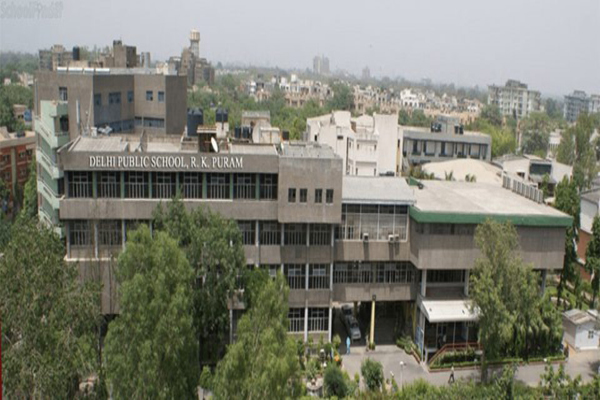
Views Expressed by: Karun Deep, Managing Director, Delhi Public School Rajahmundry, Andhra Pradesh.

Digital disruption escalates access to education

Digital disruption

The world is catching up with the present transforming spectrum with the advent of technology and its possible application in varied sectors. The transformation indeed has thriving outcomes and the development is continuous. The sector that has metamorphosed a lot in terms of applying technology into praxis is education. The emergence of technology suddenly erupted a competitive edge between the traditional institutions and the rising edtech. To move the haystack around this topic and present a clear picture from the industry perspective, Sheeba Chauhan of Elets News Network (ENN) interacted with Dr. Sanjay Chitnis, Dean, School of Computer Science and Engineering, RV University and Puneet Kothapa, President, The Narayana Group. Edited Excerpts:

Traditional institutes catching up with edtech

Somewhat a decade earlier, no one was talking of edtech or for that matter even online teaching but now it is very much an integral part of the educational paradigm. Talking of the same, Dr. Sanjay Chitnis, Dean, School of Computer Science and Engineering, RV University mentioned that these technologies are very important, but that does not mean traditional learning is going to go away. There is a lot of learning that happens outside the classroom in formal lectures and labs. So instead of competing with the Edtech companies, the traditional universities should focus on their core competency.

While Puneet Kothapa , President, The Narayana Group agreed with the statements of Dr Chitnis and said that offline learning remains the most effective way to improve learning outcomes. Humans are social creatures wired to learn using multiple senses in a physical environment. That said, the new advancements in edtech offer tools that can complement offline learning.

puneet“However, we must be judicious in the selection of technologies and measure their effectiveness for learning. We have developed in-house applications for our students that offer some of these tools such as AR and on-demand learning for our students. These technologies complement our classroom teaching and not as a principal mode of teaching”, he further added.

Decatalysing the Edtech boom

The edtech industry is poised to reach $30 billion in the next 10 years, it has placed its paws well, but many rising questions are challenging for educators. Will the technology applications in the education industry will replace the traditional educators or faculty? Though nobody is reaching to a result of this controversial discussion but it is very evident that mere machines cant be the preacher of the entire education ecosystem. Technology is an enabler and it will aid the faculty to teach students and make them industry ready that is very much a fact. However, technology replacing faculty or edtech replacing traditional schools or colleges is not the larger picture of the education sector in the near future.

The Universities are centers of learning not only for the students doing formal programs, but also a hub of knowledge and skills for the whole community that extends outside the campus. While on one side we will continue increasing the proportion of tech-based learning, on the other side we are creating strong competencies in domains that are unique to us and are difficult to replicate said Dr. Sanjay Chitnis.

sanjayPuneet goes elucidative on the topic and said that I would not use the term de catalyst. It is important to innovate and find new tools to improve learning. We have engaged in that innovative process ourselves. Over the next decade, we will narrow down the most effective technologies for learning through a process of trial and error. We will add the ones that work to our toolkit and discard the rest. The technologies that do work will be scaled and made accessible.

E-learning: digital disruption or quality enhancement

Government digital initiatives like SWAYAM (study webs of active learning for young aspiring minds) Diksha, e-pathshala, etc. will accelerate the adoption of e-learning. While there are also talks that it is disrupting the evolving landscape of education.

Talking of the same, Dr. Sanjay Chitnis added these digital initiatives by the government are excellent resources and are definitely taking the quality of education to the next level. However, we still need inspiring faculty who will influence the mindsets and attitudes of students for excellence.

“Digital disruption has the potential to increase access to education. It is not the right medium to improve the quality of education. For that, we need better teacher training programs and encourage more of our graduates to pursue a career as teachers and professors. Digital mediums can only augment classroom teaching, not replace it.” added Puneet.

Edtech or traditional institute- The affordable medium

The pandemic has captured an apparent picture of a few of the issue that was always lingering in the middle but no one was focussing on. When the schools took an online form during covid, many of the students were unable to study due to the lack of amenities. Is India really ready for “Digital India”? Expanding on the same Puneet said that again, the frame is not Edtech vs Traditional education. We do not see this as a competition. It will always be a blend of the two to produce better results. It is about broadening a teacher and student’s toolkit. The most effective and affordable technologies will be integrated into the current educational systems in the future.

While Dr. Chitnis said that in educational institutions, there is the opportunity for students to learn and earn via Teaching assistantships, consulting, etc. For online education, these opportunities are limited.

Bridging the learning gap between graduates and professionals

There has been a huge cry that college graduates are not well equipped to work in the industry. The learning gap is the major existential problem that needs to get resolved. Dr. Chitnis expressed his views and said that the gap exists because academicians have limited exposure to the market and industry. At RV University, we have started a unique program in collaboration with Mu Sigma, where students spend half of their time in the industry learning from industry experts and interning on real-life projects. Such programs will definitely help make the students employable.

Puneet agreed and said, Yes, our graduate curricula are theory-based and far behind the tools and technologies used in Industry. We need to update the curricula to balance theory with application. Well-defined industry internships can also go a long way in bridging the gap. Industry must get involved at an earlier stage of the education process by offering projects and technical internships if we are to improve the quality of the workforce.

JEE-NEET merger, is CUET the way forward?

JEE NEET MERGER222

The University Grants Commission proposed to combine the National Eligibility Entrance Test (NEET) and Joint Engineering Entrance (JEE) into CUET (Combine Undergraduate Entrance Test). According to the UGC chairperson and a few industry stakeholders, conducting a common entrance test will make the process easy both ways for students and the National Testing Agency (NTA) that conducts all these exams. Sheeba Chauhan of Elets News Network (ENN), elucidated the topic and accentuated the possible challenges and opportunities that will come along if the proposal of the JEE-NEET merger is accepted.

The Combine Undergraduate Entrance Test (CUET) has been creating a lot of buzz all around. And an important question doing the rounds is whether it is really going to give a beneficial edge to the students? The decision is not yet final but is already creating a myriad chaos among the NEET and JEE aspirants. NEET and JEE, the main entrances for medical and engineering respectively, are considered the torch-bearers of students’ future endeavours. Though the government is also not in a rush to jump to any conclusion about this historical decision for students, mere talks have been causing wide ranging views to be shared. The Union Minister of Education and UGC chairperson are also in talks to closely monitor the opportunities that came along with the decision. Even the government is also very pertinent about taking advice from industry stakeholders before making it into a rule. They have formed a committee that will examine the current examination process along with the pros & cons of the proposed CUET. NTA and UGC will only finalise the decision after final approval from the designated committee.

Why CUET, now?

On average, 2.5 million students appear in the JEE & NEET every year. The once-in-a-year entrance exam faces a huge footfall of students; as it is the main exam for NEET to take admissions in MBBS, BDS, while JEE aspirants appear in the exam for taking admissions in IITs, NITs, and IITs depending on their performance in the two rounds(mains & advance).

Both NEET & JEE have physics & chemistry in their syllabus, while the main differentiating factor is Mathematics & Biology. Both are considered to be the toughest exam at the undergraduate level and students prepare for years to crack these exams. Bringing such a huge change into these entrance exams will be a historical decision for medical and engineering aspirants.

Though UGC has already introduced CUET for central and state-level universities, the merger of JEE-NEET was a sudden stroke. According to the UGC chairperson, this will reduce a lot of the burden of logistics on the NTA (National Testing Agency) and will bring an easy process of question paper making also. While the intent may be in the right direction, the sudden onset of the decision has not gone down too well across the participating and affected segments.

There is a mixed reaction to the proposal at the moment. Though few industry leaders are very sure that it will decrease the quality of competition proposed by these exams and that the standards will degrade with the merger.

Looking at the brighter side

The change is always taken with a pinch of salt. Though UGC is proposing CUET to unburden the pressure from the shoulders of students to appear in multiple examinations. It will also be aiding support for the test-conducting agency, NTA. Apart from stressing about unburdening the pressure, it will also be taken into consideration to organise this exam twice a year like many other exams conducted by UGC. A huge bunch of students takes a drop year if they lag to crack the exam, a particular year, organising this exam twice will take provide aspirants with more opportunities and will reduce the mental pressure of time crunch.

Industry perspective

As the topic is receiving much attention in the education sector, it is very important to have a look at the opinions & thoughts of the industry on the historical proposal. With regards to the same, Sanjay Padode, Chairman of IFIM Institutions, Founding President Vijay Bhoomi University interacted with Elets technomedia and he said “Admissions have always been faced with the challenge of fair play. To establish equity in the admission process, centralisation of entrance examinations is a convenient route for the establishment. However, equity and fair play is just an illusion. In reality, students who are endowed can buy their way into tuition and coaching classes and attain an unfair advantage over those who are struggling to make ends meet. The centralisation of examinations has fuelled a thriving Rs 25000 crore coaching industry, which is killing the objective of education. Students are ignoring their learnings in school and are focussing only on preparation for entrance examinations. Since entrance examinations test only relevant subjects associated with the degree programs, broad-based education is being compromised and education is now becoming akin to programming human beings. In my view centralising exams is a regressive step in light of the National Education Policy 2020 which advocates multidisciplinary learning, multiple exits, multiple entries, and many more forward-looking concepts. The government must relook at this decision and instead of making one agency as the gatekeeper of education, allow diversity to prevail and permit the higher education establishments to develop their own admission criterion based on one national aptitude test, scores in the Xth and XIIth grade and the overall performance of the student in curricular, co-curricular and extra-curricular activities.”

As the thoughts and vision of an industry person are important, the vision of a person who has followed the same road earlier is as important. In lieu of the same, we interacted with Mandeep Singh Luthra, IIT Kanpur Alumni, Senior Business Consultant, American Express and he said, “College entrances for Engineering and medical aspirants have been evolving for years. Since the golden age of IIT-JEE and PMT, a lot has changed. The earlier times had various exams for different colleges. For example – AIEEE for NITs and AIIMS for selected medical institutions. Then came a big shift and the entire dispersion of Engineering college entrances were merged into JEE Mains & Advance. Similarly, medical colleges saw such a modification in the form of NEET.

But to everyone’s surprise, the announcement was made that there would be a merger of entrances for both engineering and medical. The move brings doubt among IIT alumni like myself and also some repercussions and revolts from students. The fundamental doubt that we all have is how are we going to manage the difference in subjects. As we know Biology and Mathematics are key distinctions between JEE and NEET.

According to some thinkers, they can have a common paper for physics and chemistry, and different sets for mathematics and biology. But this again creates a problem for some, as the level of testing that JEE does in these subjects is very thorough and tough as compared to NEET. Still, there is one fundamental belief that I have in this scenario, no matter what the level of the question paper is, the cut-offs adjust accordingly. This means that tougher questions would drop the mark for medical aspirants. At last, we should all wait to see the final pattern and guidelines, as this is an open ground and the puzzle is being put into its place as we speak.”

Snag in the approach

This year, CUET is being organised for taking admissions in Central, State, and private Universities. The approach evidently was a failure when the exam got cancelled due to technical glitches. The UGC also mentioned that conducting three exams at a time increased the pressure on the NTA in lieu of reducing it. Though the UGC chairperson said they would conduct the next exam with better arrangements at centres to avoid such glitches in the future.

The first edition of CUET glid through the technical glitch and the final decision on UGC’s proposal for the merger of NEET-JEE is still pending. NEET & JEE aspirants are hardly in support of this proposal and some students even took to the roads to protest against it.

In a nutshell

The condemnation faced by this proposal among the NEET and JEE aspirants is massive. While some of the leaders support this approach and said it will be an enlightening approach. Earlier, when PMT was changed to NEET and AIEEE was merged as a single JEE (Mains & advance), the reactions were also negative at that time, but eventually, it only proved supportive for the preparation of aspirants.

As, the final decision is yet to be made, drawing any conclusions is not appropriate. We should all wait for UGC’s final decision on the proposal and hope that students’ perspectives and their career are kept as the base foundation for this historical decision.

Unacademy opens 50 new education channels

Unacademy new

Leading edtech platform Unacademy launched 50 new education channels on Google-owned YouTube. Some of these new channels have existing content categories from Unacademy, along with new areas such as ‘Tick Tock Tax’– to simplify the direct and indirect tax concepts, and Life After IIT — a platform to crack JEE and will also highlight success stories of top Rankers.

Vivek Sinha, Chief Operating Officer, Unacademy, “We are strengthening our commitment towards democratising education and presenting a strong content strategy for learners who are seeking knowledge in unique and exciting ways”.

Unacademy also announced that it is partnering with GATE Academy and all GATE aspirants will have access to the quality content for the category.

The educational channels cover broad categories like NEET-UG and JEE, UPSC, and other post-graduation segments, along with bank, SSC, and defence. Post covid as online education space shrinks, Unacademy has also forayed into opening physical tuition centres across the country.

Physical learning is crucial, but hybrid learning is the way of the future!

Minal

The last two years have been quite challenging for students and parents. It has not been easy for teachers and tutors too! Schools were physically shut down due to the COVID-19 pandemic and students & educators were for the first time introduced largely to online classes. Initially, there were a lot of challenges that students and teachers faced due to a lack of relevant technical skills, access, or understanding of how to use digital tools when engaging in teaching-learning processes. But gradually, online learning became the accepted norm. Despite online classes, students, parents, and teachers preferred traditional physical classes. It’s true! because physical learning allows learners to keep in touch with their tutors or teachers. Also, physical classrooms allow for more collaborative learning that enhances student’s awareness. Students can connect well with their peers, engage in live discussions and hone their critical thinking abilities. Not just that! classroom teaching inculcates skills like conflict resolution, presentation, and other relevant skills. Well, both online classes and physical learning have their own set of pros and cons. When combined together, they can be one of the most effective ways of transforming and reimagining the education system. In that case, hybrid learning emerged as a new possibility.

But, what is hybrid learning?

Hybrid learning is the new educational model that is more learner centric and empowers students to succeed while learning both online and in physical classes. It gives them ample choices and learning opportunities. Considered as the ‘experiential mode of learning’, this model allows students to take charge of their studies and succeed. Not just that, it allows learners to develop practical skills too! Now, with hybrid learning, they can study at their pace from anywhere and at any time they want. So, there is no doubt that a hybrid model of education is amongst the most feasible options available now!.

Why should you consider hybrid learning?

Hybrid learning provides various opportunities and a conducive environment to students. Here are some of the crucial aspects this model:

Experiential Learning: Hybrid learning can help in developing several life skills due to its experiential nature. Students can explore topics in their own time, build confidence, and access help and support from educators and peers. It goes beyond classroom learning and ensures that there is a high level of retention, thereby delivering exceptional RoIl over a traditional learning program.

Many ed-Tech platforms have started providing a blend of both online and physical learning facilities to the students.

Personalised Attention: A study revealed that students who received personalised attention in the form of one-on-one tutoring outperformed 98 per cent of students who depended on traditional form of learning. That’s excellent! But why? Because every learner has a different set of learning aptitudes or styles and not every teaching method may meet their needs. So, it’s better that they learn at their pace and at their convenience. What’s more! Hybrid learning makes it possible. It also makes the process more interactive and interesting! Well, it improves a learner’s attention span and focus. Students are free to clear their doubts without hesitation. This further improves their confidence level.

Flexibility: The key scoring point of hybrid learning is flexibility. Hybrid learning allows students to learn using multiple ways that are engaging. They can study in a way that suits them without choosing between online and in-person learning. Students can learn whenever they want to, at their own pace.

Technological advancements are shaping newer learning experiences; giving multiple choices to students and helping in building new skills. Therefore, it’s essential to leverage on this Ed-Tech momentum and embrace hybrid learning at every level. Technological skills are critical for all learners across all age groups along with other competencies like social and emotional skills. Therefore, hybrid learning is the pathway that will lead to transformational education.

Views expressed by Minal Anand, CEO & Founder, GuruQ


NEET UG 2022 Result: NTA to release the result today

NEET UG 2022 Result

The National Testing Agency (NTA) has announced the result release date for National Eligibility cum Entrance Test (NEET) UG, 2022. According to the NTA schedule, the score cards for NEET UG 2022 will be released on today at the official website — neet.nta.nic.in.

95 per cent of the candidates appeared for the NEET UG,as per the NTA. The NEET UG 2022 exam was held on July 17 and a total of 18.72 lakh candidates registered for the entrance test. The medical entrance examination was held across 3,570 centers in 497 cities in India and 14 cities abroad.

NTA, on August 31, released the NEET official answer key for all codes. Along with the provisional answer key, NTA also released the NEET OMR response sheets of the candidates. Using the NEET answer key and OMR answer sheet, candidates can calculate their approximate scores

From this year, the NTA has removed age as tie-breaking. That means that if a tie occurs between two students, the NTA will resolve it based on marks obtained in biology. If it persists, a student gaining higher marks in chemistry gets preference followed by the candidate with fewer incorrect answers.

Inculcating technical proficiency amongst graduates

kanchi

Currently, there is a discrepancy between what the industry expects and what is available in academics. This issue needs urgent attention. The current educational system in India faces a number of difficulties, including an excessive focus on memory and a lack of attention on innovation. Both academics and industry must work together to close the using technological advancement. To elucidate the topic further, Sheeba Chauhan of Elets News Network (ENN) interacted with Kanchi Khanna, Senior Director, Admissions & Outreach, Plaksha University. Edited excerpts:

There is a huge cry in the industry that fresh graduates don’t have employable skills. What steps education institutions can undertake to bridge the skills gap?

This entire conversation around skill development started a decade ago when corporates realised that candidates fresh out of college lacked the necessary 21st-century skill-sets for the stated job role. While some progress has been made in this regard, a lot more needs to be done to develop communication ability, analytical/critical thinking, and soft skills alongside technical proficiency amongst the graduates. Hence, it’s essential for education institutes to focus on integrated learning from year one, contrary to the earlier concept of ‘T-shaped skills’ where students would be first taught technical core and then inculcate the leadership skills. Additionally, building an entrepreneurial mindset is the need of the hour as it widens the students’ perspective and allows them to think in a 360-degree fashion right from their college days.

As the pandemic accelerated the sudden swirl of technology in the education landscape. What could be some popular technology specializations paving the way ahead?

Popular technology specialisations such as AI/ML/ Robotics are paving the way. Many institutions are contributing to this digital evolution in the education sector. At Plaksha University, we stand at the forefront of providing cutting-edge technology education in the country. The university is committed to making Indian youth capable of imbibing technological progression and adept in new-age skills to solve India’s challenges with advanced curricula. Some of Plaksha University’s cutting-edge interdisciplinary degrees, aligned to the future of work include:

  • B.Tech in Computer Science and Artificial Intelligence
  • B.Tech in Robotics and Cyber-physical Systems
  • B.Tech in Biological Systems Engineering
  • BS in Data Science, Economics and Business

Apart from providing blended learning along with academic excellence, Plaksha University’s razor-sharp focus on research-based pedagogy is transforming Indian talent, further raising their innovation quotient. Additionally, the university has partnered with many industries, other national and international universities, and organizations to delve deeper into research and holistically address the need for experiential technical education in the country.

Intake in Engineering courses is reduced by 25 per cent in the previous years, students are not finding relevant opportunities after graduation. What do you think is the base cause of the lack of good opportunities? Is faculty, curriculum, industries, or the students themselves responsible for it?

There is an urgent need to reimagine technology education across the country, enabling the research and innovation ecosystem. Education institutes must revive their education curriculum that empowers students to address the grand challenges with solutions structured around real-world problems and impact-focused research. These elements form critical pillars of Plaksha University to ensure graduates become future-ready.

For instance, unlike traditional engineering institutes, we have an ingenious admission framework where a student’s 360-degree profile is evaluated. We don’t just test a student’s knowledge in mathematics or physics but also consider their aptitude through innovation challenges.

Traditionally, engineering colleges allocate a particular stream or specialisation based on the score. In contrast to this, at Plaksha University, students are allotted specialization as per their interest after a holistic overview of their academic strength along with extracurricular and co-curricular activities. We understand the diversity of the school education model in India and empower students to take charge of their life’s direction with continued support from our faculty and founders. Overall the admission process is geared towards enrolling students who can thrive in a self-directed learning model.

At Plaksha University, instead of considering seats for every course, we focus on total student intake at the campus to offer a personalized learning environment. For instance, this year, we had 120 enrollments, and next year we aim to have fewer than 150 students enrolled for courses. For the next 2-3 years, we plan to have less than 200 students to deliver on the promise of Individualised learning. Furthermore, we maintain a smaller faculty-student ratio to ensure students have access to faculty members for doubts or other guidance.

We have witnessed that the CEOs of some of the big brands are of Indian origin, be it Google, Microsoft or Twitter. What is the role of the education ecosystem in making India a global powerhouse of talent?

The larger vision of the academia and education industry is to make students excited about solving problems rather than just landing a job. If you look at the current scenario, the best jobs in the industry are offered to graduates who are curious enough to solve societal challenges with technology. The onus to prepare a socially conscious generation that brings high-quality intellect, ideas, dynamism, and passion for innovation lies in India’s entire education ecosystem.

Hence, the entire education ecosystem must collaborate to build a robust ecosystem of innovation and research in India that will entice the youth to study in the country rather than move abroad. Here are some ways:

  • Educational institutes must update the course curriculum, identify emerging specializations, cultivate a culture of accountability, and provide students with diverse learning opportunities.
  • Introduce new models of upskilling through partnerships with corporates and institutes to impart quality technical education.
  • Expand talent sourcing boundaries to rural India, build a productivity-driven technology skill set across the country.

The Info Edge Centre of Entrepreneurship at Plaksha enables students to launch their startups which are internationally recognized. Additionally, Plaksha Entrepreneurs Support Program (PESP), a 3-month in-residence incubation program for Plaksha graduates, Plaksha alumni, and other graduate students, enables students to kick-start their venture. This program is a launchpad for budding entrepreneurs where eminent startup founders and experienced mentors guide students. Every student is mapped to a founding mentor, extending support beyond the compilation of the course. The fact that Plaksha University has been set up by a global community of entrepreneurs, business leaders, and academicians provides a solid vision to nurture the next generation of entrepreneurs.

We aim to foster an entrepreneurship ecosystem through our research-based pedagogy and catalyze over 1000 start-ups over the next decade. I am delighted that so far we have successfully contributed towards fostering an ecosystem of entrepreneurship and innovation of international standards out of India.

Blockchain enhancing data protection in educational institutions

harsh

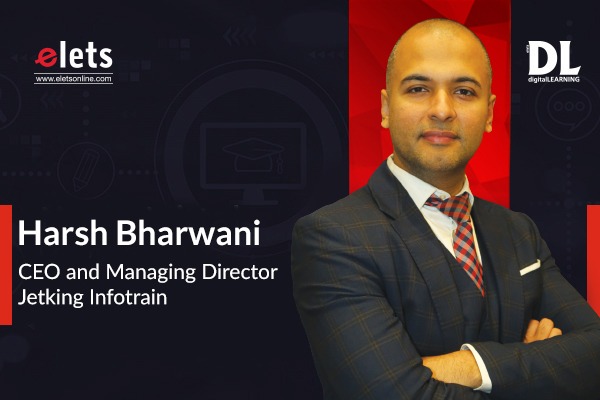
Recent McKinsey research states that there are over 90 use cases for blockchain business applications across industries. Introducing such technology to educational institutions will make the process easy for the administration to keep data safe & secure. Exploring this emerging concept further, Sheeba Chauhan of Elets News Network had an exclusive conversation with Harsh Bharwani, CEO and Managing Director, Jetking Infotrain. Edited excerpts:

How can introduction to blockchain in educational institutes enhance data protection? Will it be able to protect from cyber threats?

One common application of blockchain in education is record keeping. There are essentially infinite student records, and establishing academic qualifications can be time-consuming, requiring extensive paper documentation and case-by-case checking. According to a 2019 study by Credential Engine, there are over 738,000 unique credentials proving to learn, including degrees, certificates, digital badges, and apprenticeships.

When it comes to things like transfers across schools or states, blockchain can eliminate much of the overhead associated with this process and streamline verification procedures, saving educators and administrators time. A college enrolling a transfer student might use blockchain to authenticate their record and the courses they studied with a few simple clicks. The same idea applies to sharing records with an employer.

Why should educational institutions adopt ethical hackers to protect themselves from ransomware??

A digital transcript can be extremely thorough, covering information such as attendance, courses studied, and even the outcomes of specific tests or papers. Those that have access to the student’s transcript, such as other institutions or possible employers, can see how they performed on several examinations. This technology has the potential to be useful not just in higher education, but also in primary and secondary education.

Since the implementation of COVID-19, cybersecurity threats in educational institutions have surged. According to the K-12 Cybersecurity Resource Center, 408 publicly revealed cybersecurity events targeted K-12 schools in 2020 alone, representing an 18 per cent increase over 2019 and the second consecutive annual record. Data breaches accounted for 36 per cent of these occurrences, and while the majority of these affected children, several also compromised teachers’ data.

While the blockchain is erupting as a possible technology to avert cyber threats, Do you think any alternative will induce in the tech industry that can take over blockchain’s prominence in the long run?

Teachers became increasingly susceptible to fraudsters as more online learning platforms were employed during COVID lockdowns. Malware can be found in online textbooks and papers that students and professors download. Others attempt to hack into remote learning sessions in order to disrupt classes and transmit undesirable content.

Before implementing digital tools, school districts should conduct study on them. Third-party software vendor vulnerabilities can jeopardise instructors’ data, therefore schools should ensure that these tools are safe. This involves looking for features such as end-to-end encryption and analysing a company’s history of data breaches.

It is not quite possible to forecast whether cryptocurrencies will grow rapidly in Blockchain 2.0, because corporate leaders and members of the general public may have lingering misgivings that are difficult to overcome. However, we anticipate increased utilisation rates. Furthermore, miners will have more options from which to choose. Although Bitcoin now accounts for roughly 40 to 50 per cent of cryptocurrency market valuation, other cryptocurrencies are gaining popularity. Ethereum, for example, now accounts for over 10 per cent of market capitalisation. Small ICOs (those outside the top 20) now account for roughly 20 per cent of market capitalisation, up from 5 per cent only two years ago.

What are the types of ransomware attacks that majorly happen in educational institutions?

University College London was a well-known victim of the WannaCry ransomware outbreak in 2017, which infected 100,000 systems worldwide in a single weekend, losing access to its shared data repositories and student management system.

Clark County, a 320,000-student school district in Las Vegas, Nevada, became the largest school district to be hit by a ransomware attack since the start of the COVID-19 pandemic on September 28, 2020.

Following a ransomware attack that brought down its websites, email servers, and voicemail systems, Los Angeles Valley College paid over $28,000 to online criminals.

A ransomware attack paralysed the University of Calgary for over a week, and it eventually paid a $20,000 ransom to restore over 100 of its systems.

Do you think technology comes with many drawbacks? What could be possible drawbacks in the use case of blockchain technology in cybersecurity?

Lack of Blockchain Developers: Learning blockchain technology requires the efforts of learning and having knowledge of various programming languages like Python, Java, solidity etc , various development, and other tools. The challenge our country faces currently is the lack of blockchain developers in spite of having numerous uses of blockchain technology.

Scalability: Blockchains are not as scalable as centralised systems. If the Bitcoin network is used, the transactions are processed in accordance with network congestion. This problem is linked to blockchain network scalability concerns. Simply put, the more people or nodes that join the network, the slower it will be!

The data on blockchain is immutable: Multiple systems benefit with the use of blockchain technology like education, financial systems, supply chain etc. Immutability can only be present if the data has been distributed fairly.

And also once the data has been written it cannot be removed. Hence even if a person wants to delete some information online on blockchain, he will not be able to do so.

What sparked the sudden demand for Cybersecurity professionals?

Employers consider cybersecurity management as vital, and they need seasoned individuals who can hit the ground running. Today’s typical cybersecurity job demands a college degree, which creates a significant barrier to entrance because the school system is not producing enough graduates. In many cases, a college degree is unneeded and is not the ideal approach to prepare for a field in which technology is rapidly evolving. To tackle the skills deficit, training providers and workforce development officials must devise plans and techniques.

Hackers aren’t simply after computers, websites, and servers; any technology based on code provides an entry point. More items and systems are at risk than ever before, ranging from airline systems and vehicle alarms to power grids and security systems.


PM Modi announces PM-SHRI scheme on Teachers’ Day

PM-SHRI scheme

Prime Minister Narendra Modi on Monday announced a new scheme — PM-SHRI Yojana — to develop 14,500 schools as model schools that will be equipped with modern infrastructure, which will include labs, smart classrooms, libraries, and sports facilities.

PM Modi announced the scheme on the occasion of Teachers’ Day and said the schools developed under the Pradhan Mantri Schools For Rising India (PM-SHRI) will become model schools, encapsulating the full spirit of the new National Education Policy.

“Today, on Teachers Day, I am glad to announce a new initiative – the development and upgradation of 14,500 schools across India under the (PM-SHRI) Yojana. These will become model schools which will encapsulate the full spirit of NEP,” he said in a series of tweets.

PM Modi said, “The PM-SHRI schools will have a modern, transformational and holistic method of imparting education. Emphasis will be on a discovery-oriented, learning-centric way of teaching.

“I am certain that the PM-SHRI schools will further benefit lakhs of students across India in the spirit of NEP”, PM said and mentioned the National Education Policy has transformed the education sector in recent years.

According to a statement by the Prime Minister’s Office, “PM SHRI Schools will showcase all components of the National Education Policy 2020 and act as exemplar schools and also offer mentorship to other schools in their vicinity. The aim of these schools will not only be qualitative teaching, learning, and cognitive development, but also creating holistic and well-rounded individuals equipped with key 21st-century skills,” It said pedagogy adopted in these schools will be more experiential, holistic, integrated, play/toy-based (particularly, in the foundational years) inquiry-driven, and discovery-oriented.”Assessment at all levels will be based on conceptual understanding and application of knowledge to real-life situations and will be competency-based,” it said.

“These schools will be equipped with modern infrastructure including labs, smart classrooms, libraries, sports equipment, art room etc. which is inclusive and accessible. These schools shall also be developed as green schools with water conservation, waste recycling, energy-efficient infrastructure, and integration of organic lifestyle in curriculum,” the PMO said.

The PMO further added and said “They will provide leadership in their respective regions in providing high-quality education in an equitable, inclusive and joyful school environment that takes care of the diverse background, multilingual needs, and different academic abilities of children and makes them active participants in their own learning process as per the vision of NEP 2020”.

Union Education Minister Dharmendra Pradhan lauded the initiative as a significant step towards implementing the vision of NEP and making India a vibrant knowledge society.

Pradhan said, “A laboratory of NEP 2020, these 14,500 exemplar schools with their unique experiential, holistic, inquiry-driven and learner-centric pedagogy will facilitate the creation of well-rounded individuals with humanistic attitudes who are equipped with skills of the 21st century.PM Shri Schools will also offer leadership to other schools in the region for making the learning environment more joyful as well as improving educational outcomes”.

Impact of introducing problem-based learning at an early age

allan

How can we prepare our children for success in their lives and careers? It has been a debated topic for a very long time. The institutions that provide a platform to students in preparing for the future have transformed, and so have our definitions of what high-quality education means. In most educational institutions, practical knowledge is completely ignored for theory and facts which leads to students forgetting what they studied after passing one exam. The emphasis is on exam performance rather than providing students with problem-based learning skills combined with technology to help them navigate the world of tomorrow. Mental health issues like anxiety among students is a consequence of pressure and stress related to exams. This may manifest as negative thoughts in children and make them feel incapable of having a future if they don’t pass a certain test and further give rise to physiological signs like tense muscles or trembling. The impacts of anxiety might affect a child’s capacity to process and comprehend questions and perform to their highest potential and that is where problem-based learning comes into play.

Problem-based learning (PBL) teaching style substitutes the direct presentation of information for complex real-world problems as a means of encouraging student understanding of ideas and principles. The first step in this process is to find out the real problems and problems that students may face in their future employment and personal lives. Problems are understood through research, experimentation, data collection, and scientific principles. A person with a problem is presented with a solution through ideation and testing of the solution, resulting in a finished product.

In today’s rapidly changing world, not only academic skills such as literature, mathematics, and science, but also a wide range of abilities such as teamwork, critical thinking, communication, perseverance, problem-solving, and creativity are required. Young people learn more easily when they have better control over their emotions. PBL helps students improve their communication, critical thinking, and problem solving skills in addition to their knowledge of course materials. It also provides opportunities for group collaboration, searching and evaluating research material, and lifelong learning.

Problem-based learning can be implemented in almost all schools with the use of the right techniques and a number of tools provided by design thinking. The main components of design thinking are problem identification, creative problem solving, and iterative improvement of those ideas. Students will be better equipped to handle the ever changing difficulties of both school and life thanks to this method of thinking and creating.

It is no longer adequate to teach kids facts mindlessly and have them recite them out of context in order to prepare them for life in the modern world. Students must possess both foundational skills (reading, writing, and math) and contemporary skills in order to solve extremely complicated situations (teamwork, problem-solving, research gathering, time management, information synthesising, and utilising high-tech tools). With this set of abilities, students may take control of and manage their learning process while being directed and supervised by an experienced teacher.

Active learning is now associated with flipped classrooms. The idea of flipping classes gained popularity as technological advancements made it simpler to acquire and produce educational materials. The premise of a flipped classroom is that lectures and one-on-one training are not the most effective uses of class time. Instead, students receive material outside of class, freeing up class time for higher-order thinking exercises.

The fact that the whole school is a classroom with different learning zones for different activities where there are closed classrooms for lectures, learner presentations, and discussions, open zones like the area surrounding the classroom for group work, individual work, spaces for creation, and digital connections to the world outside the school, both domestic and international, aided by accessible technology (personal device) will work together in favor of enhancing educational standards and expanding the system’s reach. It stands to reason that a good school infrastructure shouldn’t be uneasy, alienating, chaotic or monotonous. What the data demonstrates is that many of the characteristics important for ensuring a healthy environment, including aspects like decisions about decor, furniture, and fittings, and about how the rooms are “dressed,” have a substantial impact on learning.

It might be difficult to balance problem-based learning activities with traditional academics and test preparation. Therefore, technology is used to create tailored online learning exercises that can improve the effectiveness of basic academic idea instruction.

PBL adheres to the fundamentals of effective teaching and learning. Numerous learning skills can be acquired along the journey and won’t function until these abilities are mastered; these are learned in context, and through the entire process—from the inception of the group to problem-solving. PBL encourages and demands reflection on the learning process at the end like – how was the process? Will the team be prepared and efficient the next time?

Views expressed by: Allan Kjaer Andersen, Director and Principal, Chaman Bhartiya School

LATEST NEWS