






Home Blog Page 345

UPSC announces NDA I and II Results 2020; check details

UPSCNDA I and II Results 2020

In a major development, Union Public Service Commission has declared the UPSC NDA result 2020 on October 9. The result of NDA 2020 (1 & 2) is available in online mode on the official website- www.upsc.gov.in

This year, NDA exam was delayed due to COVID19 outbreak. UPSC conducted the National Defence Academy and Naval Academy Examination (I) & (II) 2020 on September 6, in online mode. Final NDA merit list 2020 will be uploaded on the upsc.nic.in NDA result 2020 after SSB interviews. Finally selected candidates will get admission to Army, Navy and Air Force Wings of the National Defence Academy for the 145th Course and 107th Indian Naval Academy Course (INAC), 146th Course, and 108th Indian Naval Academy Course (INAC) starting from 2021.

Also read: UPSC NDA II 2020 registration begins today

Candidates should have their admit card or roll number to check the NDA 2020 result. Selected candidates have to appear in SSB interviews.

The schedule of the same will be released soon. Below are the steps to check the NDA exam result 2020 online

Steps to Check Online @upsc.nic.in

  • Viist- official website- upsc.nic.in NDA result 2020
  • Click on the link referring to “Written Result- National Defence Academy and Naval Academy Exam 2020”
  • UPSC NDA 2020 result pdf will appear on the screen.

CBSE and CISCE mull to reduce syllabus for Class 10 and 12 exams

CBSE and CISCE

According to reports, Central Board of Secondary Education (CBSE) and Council for Indian School Certificate Examinations (CISCE) are considering reduction of syllabus of Classes 10 and 12 Board Examinations 2021 further.

As the schools remain closed, the boards are reportedly considering reduction of syllabus to 50 per cent or even consider extending the academic year and delaying Board Exams 2021 by 45 – 60 days.

CBSE, CISCE and other State Boards have already reduced the syllabus by 25 to 30 per cent in July 2020. The schools, however, have remained closed and only online classes have been possible.

Though the permission to reopen schools from October 15 has been granted under Unlock 5.0, the attendance remains dismal.

As for the academic year, the CBSE may consider delaying the Board Examinations 2021 to April so as to make room for some physical classes before the exams. In the meanwhile, CBSE has released Sample Papers for Classes 10 and 12 based on the reduced syllabus.

Also read: CBSE announces Class 12 compartment result 2020

The decision however would be taken only after direction from the centre in regards the academic year. CBSE and CISCE both would take the final call on reduction of syllabus or shifting board examinations after assessing the situation.

The disruption of classes due to pandemic has cast a long shadow on the 2020 academic year. While the schools were able to begin the classes online, there is no actual parity and the loss of physical lectures has been acutely felt.

IISc Bangalore to start advanced course in Computational Data Science

IISc Bangalore

In a major development, the Indian Institute of Science Bangalore is starting a new advanced course in Computational Data Science starting next year. The course duration is 10 months and will be offered in the online mode from January 2021 onwards.

The executive program is for data engineers, data analysts, data architects, and data scientists. Candidates who have completed their undergraduate degree and have work experience of 1 year along with programming knowledge are eligible to apply for the course.

The institute is starting the course for 50 professionals from India, the Middle East, and APAC. Students who are accepted and enrolled in the course will be required to undergo live and interactive online classes and mentor participants to solve data science problems.

Also read: IIT Madras partners Northwestern University for research in data science

The Computational Data Science course also comprises of a case study on the analysis of how the industry today uses computational data science in real-world use cases. The broader curriculum of the course includes the mathematics of data science, neural networks, machine learning, data engineering and business analytics.

Sashikumaar Ganesan, Chair, Department of Computational and Data Sciences (CDS) at IISc and programme said that through the programme the participants will practice on a variety of industry case studies and capstones. He said that this also allows the participants the opportunity to bring their own projects for solving which they will be mentored.

SC refuses to cancel CLAT 2020 exams

SC refuses CLAT 2020 exams

In a major development, the Supreme Court Friday refused to either cancel the Common Law Admission Test (CLAT)-2020 or stay the counselling process and asked five candidates, who were seeking quashing of the exam alleging technical glitches, to give their grievances within two days to the redressal committee.

CLAT is a centralised national level entrance test for admissions to 23 National Law Universities (NLUs) in India and the test was held on September 28.

A bench comprising Justices Ashok Bhushan and M R Shah was informed by senior lawyer P S Narasimha, appearing for consortium of NLUs, that there is a grievance redressal committee headed by a former Chief Justice of India which can consider the issues of the petitioners.

Also read: CLAT 2020 results declared; check details

We are of the view that the petitioners shall submit the grievances within two days from today and the grievance redressal committee will take a decision on the complaints, the bench said in its order.

We cannot stop the counselling, the bench told senior advocate Gopal Sankaranarayanan, appearing for the petitioners.

Sankaranarayanan told the bench that there were technical glitches in the exam which was conducted online and certain questions were not correct.

There is no response from the consortium of NLUs on around 19,000 objections, Sankaranarayanan said, adding that there has been a software defect which led to a situation which has never happened before.

CBSE announces Class 12 compartment result 2020

CBSE-12th-Compartment-Result

Providing relief to students, Central Board of Secondary Education (CBSE) has declared the CBSE Class 12 compartment result 2020. CBSE Class 12 result 2020 compartment is available on the official website, cbse.nic.in and cbseresults.nic.in.

The overall pass percentage is 59.43%. A total of 52211 students passed out of a total of 87849 appeared students.

Students can check the CBSE compartment result 2020 Class 12 by entering their roll number, date of birth, school number and centre number.

Steps to check CBSE Class 12 compartment result 2020:

-Visit the official website: cbseresults.nic.in

-Click on the option of ‘CBSE Compartment 12th Result 2020’

-Enter roll number, school number and centre number

-Now, click on the ‘Submit’ button to get results

-CBSE Compartment Result 2020 Class 12 will appear on the screen.

CBSE Board has released the verification schedule on the official website. It must be noted that only those students will be eligible to apply for the revaluation who have applied for obtaining a copy of the evaluated answer book.

AP CM launches Jaganna Vidya Kanuka scheme

Jagan Mohan Reddy

In a bid to bring back children to school, Andhra Pradesh chief minister Jagan Mohan Reddy launched Jaganna Vidya Kanuka scheme for the students studying in government schools. The new scheme would help in improving government schools’ quality and enrolments.

The AP government said, “CM Jagan Mohan Reddy launched yet another ambitious scheme for students studying in Government schools. Putting an end to the earlier practice of delay and erratic supply of textbooks, school uniforms, and other essentials, this scheme aims to improve government schools’ quality and enrolments.”

The scheme would aid in providing 42,34,222 kits to government school students who are enrolled in class 1 to 10 standards. These kits would be distributed across the state at a cost of Rs 650 crore and consist of three pairs of uniforms, one pair of shoes, two pairs of socks, prescribed textbooks, notebooks, a belt, and a school bag.

Also read: Govt: Over Rs 142 cr spent over environment education scheme

Apart from this, the state government has also started the Nadu-Nedu initiative to provide ten necessary facilities in all the schools before the beginning of the academic year.

The CM said, “This Government aims to protect every child’s education and provide the best education system to all. This scheme is another step towards increasing government schools’ enrollment rate and bringing down the dropout rate.”

Navakoti Ram M.A., Chairman and MD of Upswing aims to empower educators

Navakoti Ram M.A

What are the courses Upswing is providing and how it is unique from others?

Upswing is a team of technocrats and academics with two decades of experience. Beginning from content creation and distribution, automated process platforms and AI-based testing and assessment solutions, we offer digital solutions to help education institutions to automate the process and empower their educators.

Upswing Interactive Learning Platform, an AI-based platform allows teachers to create collaboratively, manage and innovate their teaching whilst to provide them with actionable insights on student’s progress. Upswing Classroom, a virtual classroom environment and Digital Assessment and correction tool have ensured to evaluate and reflect upon the teaching and learning process.

Additionally, for our higher education portfolio, we have -Upswing Pro, an upskilling and employability platform to help campus placement and professional development. Upswing admission allows digitising complete admissions process. Upswing Examiner is our advanced AI proctored examinations platform that helps in conducting online examinations whilst curbing all malpractices.

Also read: Educators: NEP will be a great leveler, implementation will be challenge

Will Ed-tech firms enhance the quality of education in the country? If yes how?

COVID19 has given us a glimpse of the impact of digital education. Quality of Education in a country largely depends on the easy availability of quality content to all learners. EdTech companies have the tools and resources to change the dream into reality. The quality of content is designed by a team of educators and technocrats, making it viable for implementation. Online assessment and analysis of results allow teachers to make the learning process personalised for students. EdTech companies are continually coming up with new ways to address issues such as effectively managing content repositories, simulated learning, personalised learning, efficiently run the digital process and even remote proctoring assessments. India has an abundance of quality teachers; technology will ensure them reach out to more learners.

How NEP 2020 will help in deploying technology in schools and colleges’ and how Ed-tech firms can help in it?

The New Education Policy 2020 is a forward-looking vision for new-age India; an indicator of a more active role technology would play at the core of the new system. To devise school and higher education curriculum, and pedagogy towards a competency-based individualised learning system, EdTech’s delivery models can help identify student skill sets, track their learning curves and support them through their learning trajectories. If implemented at the ground level effectively, the exposure to contemporary issues such as machine learning, artificial intelligence and coding starting from an early age would help reduce the gap between the current state of learning outcomes and knowledge in practice. With greater autonomy to institutions and integration of advance technology, India can truly reach its goal of becoming a global human capital powerhouse.

With a country like India, where digital infrastructure and language is a huge barrier, according to you what steps should be taken to bridge the gap across the country?

COVID19 compelled educational institutes to adopt technology to impart education. However, the lack of digital infrastructure is the most significant contributor to the learning gap across learners. Unavailability of the internet across various parts of India is more of a concern than lack of devices or India being a multilingual country. EdTech teams’ vision should be to provide digital solutions that work in mobile with basic configuration and low bandwidth. Software like text-to-speech conversion, captioning, subtitles, and many more will reduce the language barrier.

According to you what are the main challenges for an Ed-Tech firm in India post COVID-19? What are the future prospects of Upswing Learning?

COVID19 has propelled both adaptation and innovation in the domain of digital learning, particularly in India. Post COVID19 EdTech teams will face the challenge of educating institutions the benefit of technology and empower educators to deliver knowledge as laid out in NEP 2020. Technologies like Augmented Reality, Virtual Reality, Simulations, and Gamification will help institutions give their learners experience and engaging content. Moving ahead, technology will play an active role in innovating new systems to help educators. Seamless collaboration between technology and educators across processes and delivery models will lead to a more robust flip learning and blended learning approach. Upswing will look to be at the forefront of bringing about positive, disruptive changes to the way teaching is delivered through its pedagogy and approach. More importantly, ensuring that technology enables and empowers educators for the new digital India.

Teaching and Learning With ICT Tools: Issues and Challenges :: September 2020

Special Story

Teaching and learning with ICT tools: Issues and challenges

Article

Top School Brands Of India

New age school education for students

New era for pre-schools with national education policy 2020

SSVM Institutions – A 21st century school acclimatizing innovative model of education

Mayo College – Agile and responsive to new circumstances

Seth Anandram Jaipuria School: Upholding academic excellence & tech-immersion

The Geekay World School’s journey towards excellence

CHIREC International School: Connecting beyond screens

The Bangalore School (TBS) – The story unfolds

Kalorex Group: An unwavering focus on students learning needs

Holistic development in education motto for Dr. Chandan Agarwal

Gitanjali Vedika strikes balance between modern education & traditional values

Prometheus School Learning Re imagined!

School Perspective

EIS aims to achieve holistic well being of learners

Assam Valley School aims to create global citizens

Prometheus school aims to create lifelong learners

Navkis education centre focuses on holistic development of students

Navkis college of engineering eyes to create problem solvers

Teaching pedagogy at G.D. Goenka focused on experiential learning

Gitanjali Group aims to innovate in teaching methodology

Corporate Perspective

Navakoti Ram M.A., Chairman and MD of Upswing aims to empower educators


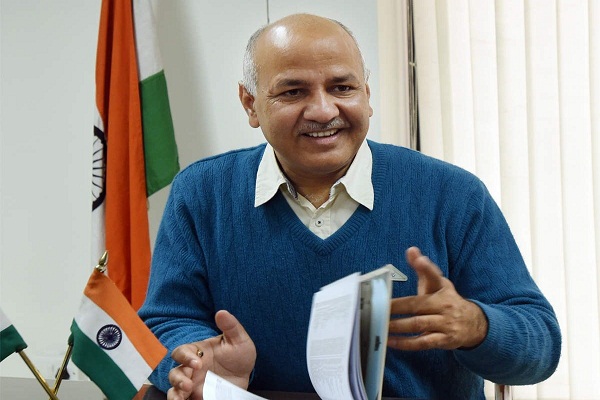
Sisodia launches coding campaign for Delhi schools

Manish Sisodia

To boost coding for school children, Delhi Deputy Chief Minister Manish Sisodia launched a CODE-A-THON campaign. Over 12,000 government school students will take part in the campaign.

“We started coding project in January this year in collaboration with SheCodes foundation where 870 girl students have been given training till now. Due to the outbreak of the COVID-19 pandemic, we decided to make it online. Now, we envision this programme to become even bigger,” Sisodia .

At the launch event, six students presented their animated videos which they made from scratch on their smartphones on various topics such as ‘good touch-bad touch’, ‘saving the environment’, ‘beti padhao, beti bachao’ and public awareness about the coronavirus, among others.

Also read: Manish Sisodia: Wants to run Delhi school autonomously

“Steve Jobs once said coding is the new generations’ liberal art. It is not about programming, designing, or creating some videos, it is about creating art. Coding helps you to think, that is why it is important to learn to code. Today, I could see how it is enabling our school children to start thinking. There was a girl who made a video on early childhood marriage where she mentioned that the girl was helpless,” Sisodia said.

As part of the CODE-A-THON campaign, students will go through self-learning modules on coding and will get an opportunity to practise it.

West Bengal govt brings portal for transfer procedure in schools

West Bengal state government

In a major move, West Bengal state government has launched a portal through which the teacher of the state-run schools and the aided schools will be able to apply for mutual transfers and the applicants will not be required to submit any ‘No Objection Certificate’ (NOC) from the current institute.

At present teachers are required to submit a NOC from the current school in order to apply for a mutual transfer.

State education minister Partha Chatterjee has stated that the new portal will help in simplifying the procedure of mutual transfer as the teachers will not have to approach the school where they are working at present in order to obtain a ‘No Objection Certificate’ while applying for a mutual transfer.

Also read: West Bengal govt requests private schools not hike fees

The applications for the mutual transfer will be processed in a centralized manner which will in turn help the teachers of the primary, secondary and higher secondary schools to join institutions in their home direct or the neighbouring districts.

The West Bengal state government has closed down the schools since March 2020 owing to the COVID-19 pandemic and lockdown which affected the country. Classes are being conducted for the students in the online mode using various options along with broadcasting the classes on TV and Radio for those students who do not have the facilities to attend the online classes.

LATEST NEWS