Home Blog Page 210

Yogi Adityanath to flag off ‘School Chalo Abhiyan’ from Shravasti on April 4

yogi up

Lucknow, Uttar Pradesh

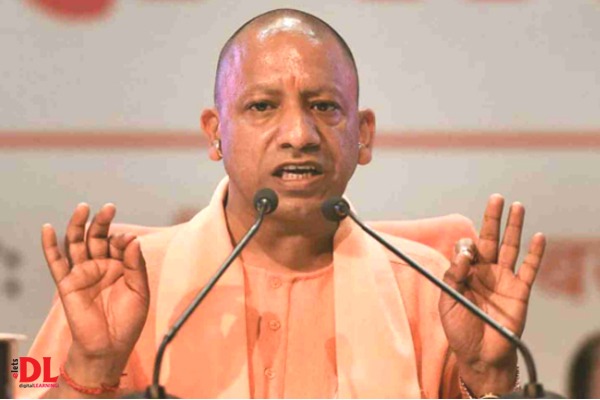
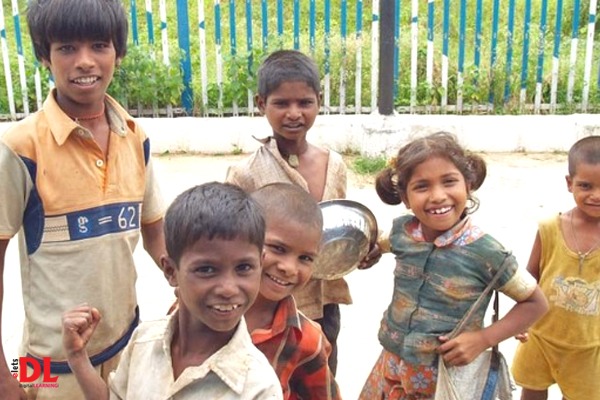
The Uttar Pradesh Chief Minister Yogi Adityanath will launch the ‘School Chalo Abhiyan’ across the state from district Shravasti on April 4. The Chief Minister, in a meeting with the higher officials on Thursday, issued directions that the districts with low literacy rates should get more focus in this round of the campaign.

The primary schools in the state should be equipped with better facilities, he said. “From April 4, the ‘School Chalo Abhiyan’ would begin from Shravasti, the district with the lowest literacy rate. The education department should complete all the preparations in time. All the teachers should go on a door-to-door visit and meet the parents, motivate the children to come to school,” the CM instructed. .

The Chief Minister further instructed the officials that along with all the public representatives that will be associated with the campaign, the members of the legislative assembly (MLAs) must adopt one school each. In addition to this, the officials should also adopt the schools for their holistic development.

The Chief Minister directed the officers to pay special attention to the districts with low literacy rate and run an extensive campaign in their schools. ‘School Chalo Abhiyan’ is being started from Shravasti, where literacy rate is the lowest in the state followed by Bahraich, Balrampur, Badaun and Rampur.

Yogi Aditynath further gave instructions to transform all the schools of the Basic Education Council under Operation Kayakalp. He said that every primary school in the state must be equipped with all basic facilities. For this, private institutions, alumni of the schools should be contacted. CSR (Corporate Social Responsibility) should be also approached for the transformation of schools.


Avoid panicking during exams, PM Modi tells students in Pariksha Pe Charcha

pm india

New Delhi

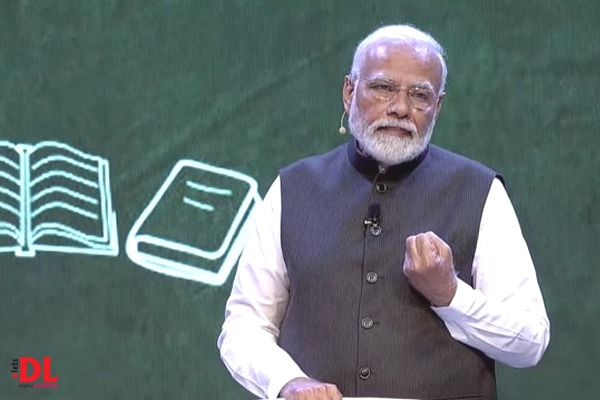
The Prime Minister Narendra Modi on Friday asked students to celebrate exams as festivals and not get stressed. Interacting with students during the fifth edition of Pariksha Pe Charcha, the prime minister said, “You are not giving exams for the first time. In a way, you are exam-proof. Thus, do not be stressed. Remember that you have successfully overcome exams before.”

The PM also urged the parents and teachers to not force their unfulfilled dreams and aspirations upon children. “Students should not feel they are under pressure from teachers and parents to score good marks. Parents should not inject their dreams into their children. They should be allowed to decide their future freely,” he told students present for the event in the Talkatora stadium in New Delhi.

PM Modi answered the queries of the students who participated in the event. When students asked him how they can stay away from distractions when attending online classes, PM Modi laughed and asked whether they are truly studying or watching reels. “Students should introspect themselves while studying online, whether they actually study or spend time watching reels on social media,” he said. He explained that the material being taught in online and offline classes is the same so “the medium is not the problem. Irrespective of the medium, if our mind is delved into the subject, then it won’t make a difference in grasping things”.

A few students also asked him about how to stay away from exam stress, especially at a time when competition is so fierce. “I want students to stay away from a panic environment during exams. No need to copy friends, just keep doing whatever you do with full confidence and I believe all of you will be able to give your exam in a festive mood,” PM said.

He also suggested students to follow an interesting practice this exam season of writing a letter for the exam they will be appearing for next. “Write a letter and address it to the exam. Explain how preparedness and share the hard work that you’ve done. You will be in a more confident state afterwards,” PM Modi said.


“Cloud computing has the power to transform education landscape”

Bhavesh Goswami

Bhavesh Goswami is the CEO & Founder of CloudThat. He spoke to Digital Learning magazine.

Please share about your brand.

I came to India after working for companies like Amazon Web Services (AWS) and Microsoft since 2005 in the US. I came to India in 2012. By then, the concept of the Cloud was still in its infancy stage in India. I had a mission of building an organization to nurture a strong cloud landscape by training individuals and corporates to be cloud ready. Thus, CloudThat was incepted. In this decade’s endeavor, we have helped 400k+ professionals trained on Azure, AWS, and Google cloud platforms. Through this process, we have created strategic partnerships with cloud stalwarts. Today, we are a Microsoft Gold Partner, an AWS Advanced Consulting Partner, AWS Authorized Training Partner, Google Cloud Partner. The new feather in our cap is affixed by recently becoming a VMware Authorized Training Reseller.

How have the various facets of cloud computing transformed the education landscape?

The Education Landscape has transformed rapidly from the traditional brick-mortar stereotypes to a technology-enabled, virtual learning platform-centric system in recent years.

As the entire globe went through the pandemic crisis, a drift towards online schooling and e-learning was witnessed. A plethora of educational applications provided by G-Suite for education from Google, Office 365 Education from Microsoft, Moodle Cloud, Blackboard, Naviance, and many more academic learning management tools aptly help us to understand the power of collaboration and the flexibility the cloud applications have brought into the classrooms.

A wide array of benefits has been witnessed in the educational sphere through cloud adoption; salient ones are:

  • Digital content has helped lower-income students immensely as buying expensive textbooks is no longer needed.
  • Unnecessarily investing in expensive hardware and software is not needed. For instance, WhatsApp being an integral part of every household, WhatsApp-based classrooms have gained popularity across different segments of education.
  • Fool-proof data security of study materials, student data, academic records, administrative documents is ensured.

How can Cloud computing delve deep into the Indian education ecosystem to bring a significant change?

Many educationists in the past and of recent days have one big complaint about the Indian education system, and that is- ‘Our system encourages rote-learning, and a rat-race with no emphasis on fostering problem-solving and analytical abilities in children and youth.’

This is emphasized by a recent Statista report that says 50% of higher educational and professional degrees holders are not employable in India. So, the education system needs restructuring, and technology like Cloud can act as a panacea to get the system overhauled.

Cloud Computing makes education accessible to students from all strata of society. For instance, CloudThat training on niche technologies like Azure, AWS, GCP, VMware clouds, DevOps, AI/ML, Big Data, and IoT are accessible to students from the remotest places of the nation.

Further, enhancing the quality of education is an important change that can be envisioned as what cloud technologies bring into play. For instance, the expertise of a renowned teacher can be shared with a wider pool of learners’ communities by embracing cloud technologies.

Where do you see the future of digital transformations in terms of education, and how can it lead to simpler, efficient solutions?

Digital Transformation has rapidly changed the classrooms of current days. Students today are learning in a collaborative and interactive environment, and teachers are quickly making changes to the delivery methods by incorporating technology tools.

According to me the factors that are driving digital transformation in the educational realm are Student success rate, Student-centric delivery, affordability, campus security, digital integration, and precisely building a strong IT foundation is key for realizing a digitally transformed campus.


Stalin hands over desktop computers to students from Corporation-run Schools

M K Stalin

Chennai, Tamil Nadu

Tamil Nadu Chief Minister M K Stalin on Wednesday handed over 1,370 desktop computers, presented by information technology major Infosys, to students studying in schools run by the Greater Chennai Corporation. Launching this initiative to benefit students in understanding the IT ecosystem and also move towards self learning, Stalin gave away six desktop computers to students at a function held at the Secretariat.

According to an official state government release, the 1,370 desktop computers would benefit 28,000 students studying in schools run by the Greater Chennai Corporation and encourage them towards ‘self-learning’.

“Online education provides a low- cost alternative to traditional education”

Kalpathi S. Suresh

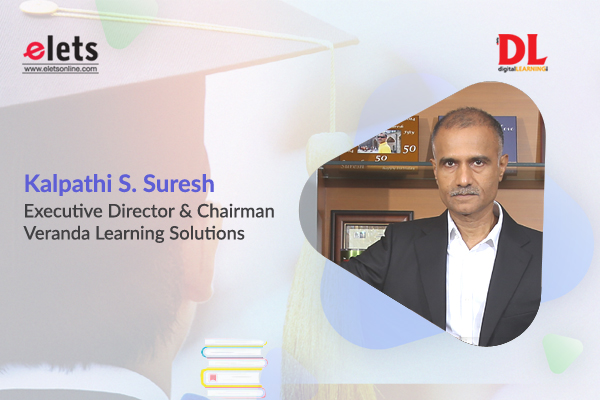
Kalpathi S. Suresh is the Executive Director & Chairman of Veranda Learning Solutions. He spoke to the Digital Learning Magazine about strengths of the Edtech industry.

Give us a brief about your company

Veranda Learning Solutions offers diversified and integrated learning solutions in online, offline hybrid and offline blended formats to students, aspirants, and graduates, professionals and corporate employees through a multitude of career-defining competitive exams, professional courses, exam-oriented courses, short term upskilling and reskilling courses.

We offer our services through our four wholly owned Subsidiaries including Veranda Race, Veranda CA, Veranda IAS and Brain4ce – whose customer-facing brand is named Edureka. State Public Service Commission, Staff Selection Commission, Banking, Insurance and Railways preparatory courses are offered under Veranda Race. Under Veranda CA and Veranda IAS we offer CA preparatory courses and training for the Union Public Service Commission (prelims, main exam and personality tests). With the acquisition of Edureka in September 2021, we have expanded our presence in software education in global markets.

We offer integrated 360 degree training to the Students by providing them with comprehensive courses prepared by our content team. Through our B2B offerings, we also provide customized short- term and long-term skilling courses and other corporate courses for employees.

What is the biggest strength of the EdTech industry in making a paradigm shift in the education ecosystem?

The COVID-19 pandemic and the subsequent lockdown forced all educational institutions — schools, colleges, universities — across the country to shift from offline to online mode. This resulted in a significant increase in the number of students studying online in India since March 2020. Parallelly, there was an increase in demand for EdTech platforms from Tier II, III, semi-urban and rural areas, with requirement for courses in local vernaculars.

I believe that ever-evolving technology is the biggest strength of the edtech industry. The way the industry has begun to incorporate cutting- edge technology to make education available in whatever form the students need is clearly visible. Technology aids in the personalization of learning depending on the requirements of individual students. Edtech applications can help track students’ progress throughout the course and make recommendations and suggestions as needed.

Do online mentorship programs have the potential to provide the best to everyone and hence bridge the socio-economic gap?

Online education provides a low-cost alternative to traditional education due to lower infrastructure costs and a larger student base. Private edtech companies, I’m sure, are also working to close the socio- economic divide in online learning. Our brand’s commitment is to give a high-quality programme at an affordable price that drives outcomes, and we are working hard to fulfil that promise in tier two, three and four towns.

It is said that online mediums have the power to meet policy parameters of NEP – Access, Equity, Quality, Affordability and Accountability. Your views.

The NEP envisions an education system rooted in Indian ethos that contributes directly to transforming India into an equitable and vibrant knowledge society, by providing high-quality education to all, and thereby making India a global knowledge superpower.

The vision of the policy is to instil among the learners a deep- rooted pride in being Indian, not only in thought, but also in spirit, intellect, and deeds, as well as to develop knowledge, skills, values, and dispositions that support responsible commitment to human rights, sustainable development and living, and global well-being, thereby reflecting a truly global citizen. The NEP instills a great deal of optimism in the education sector’s future.

Delhi government’s three departments to work for setting boarding school for Homeless Children

Homeless Children

New Delhi

Three departments of the Delhi government will be working in close coordination to set up a boarding school for homeless children. This is being done after the Deputy Chief Minister Manish Sisodia announced this during his budget speech recently. The Aam Aadmi Party led government has allocated Rs 10 crore for setting up such a school.

According to a senior Delhi government officer, “The modalities of the school will be worked out in close coordination with the Department of Social Welfare, Department of Women and Child Development (WCD) and the Department of Education.”

Government sources say that the state government had earlier initiated a pilot project to give residential school facilities to homeless children. “ We did a pilot project in Malviya Nagar with the Delhi Commission for Protection of Child Rights (DCPCR) and district authorities to see that if they are provided residential facilities how will they be benefitted. We identified the children, and found that we may be able to prevent them from getting into begging by providing them residence,” he said.

Sisodia had proposed Rs 10 crore for setting up the boarding school, while noting that the government has taken several measures to provide basic education to the homeless children, but the measures have only been partially successful.

“It is not possible to get quality education unless basic facilities like food and shelter are in place. The Delhi government has decided to set up a boarding school with modern facilities for these underprivileged homeless children. These schools will try to bring them into the mainstream of society,” he had said.

BSEB Bihar board Class 10 result 2022 to be announced today

BSEB Bihar board Class 10

Patna, Bihar:

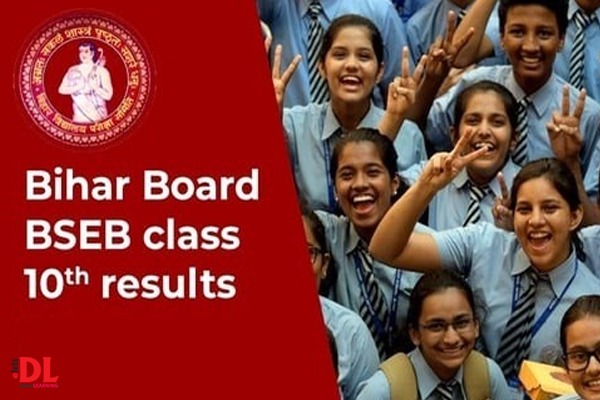
The Bihar School Examination Board (BSEB) will release the matric (class 10) board exam results 2022 today i.e. on March 31 at 3 pm. The result will be announced by the state Education Minister Vijay Kumar Chaudhary. Students can check the result at official website — biharboardonline.bihar.gov.in.

BSEB matric exams were held from February 17 – 24, 2022 and nearly 17 lakh students in the state had registered for the exam. The exams were held in two shifts, the first from 9.30 a.m. to 12.45 p.m. and the second from 1.45 pm to 5 pm.

It may be recalled that the BSEB class 10 exams faced hiccups this year as the mathematics exam had to be cancelled and rescheduled to March 24, between 9:30 and 12:45 pm, after several students and others alleged that the question paper for mathematics was leaked prior to the exam.

“There is a need to update our curriculums & empower educators”

Ashish Jhalani

Ashish Jhalani is the President (International Markets) Square Panda Inc & Managing Director of Square Panda India. He spoke to the Digital Learning Magazine.

Tell us about your brand, like its inception, founders and more.

When Andy Butler, our CEO & Co-Founder, discovered his daughter was dyslexic, he was committed to finding the right learning resources for her. This led to him exploring expert literature on the neurology of reading, early learning, and language skill acquisition. He reached out to Andre Agassi (Chairman of the Board, Square Panda), who piloted early literacy tool in his own schools so that he could see its efficacy first-hand. When he saw just how much faster kids could learn when given access to early reading tools, he knew just how much this can shape an entire generation of learners. We are on a mission to create a more equitable, accessible, and inclusive education ecosystem, helping each stakeholder of the Education System – educators, students, and the Government – reach their learning and developmental goals.

It is said that online mediums have the power to meet policy parameters of NEP – Access, Equity, Quality, Affordability and Accountability. Your views.

The education ecosystem is always evolving, and over time technology has come to be a key pillar of it. The innovative deployment of edtech can be an incredible game changer for India’s education system, helping to not just revolutionise the way we approach foundational literacy and numeracy, but also empowering and informing educators and leaders as they guide students along their learning journeys.

There is a dire need to not just update our curriculum and contextualise it for diverse Indian needs and languages, but also empower educators by equipping them with the key skills or knowledge needed to create systemic impact. As education experts and innovators, we have devised an array of comprehensive products and programs that aim to improve learning outcomes from pre-primary through secondary grades. This includes creating bespoke content services, educational infrastructure, and innovations such as vocational labs, language laboratories, hanging libraries, and much more.

What do you think would be the key factors for the growth of EdTech post pandemic?

In order for India’s education system to realise its full potential, we need to take a ‘whole system’ approach in order to impact each pillar of the ecosystem. We believe that contextual evidence- based interventions centred on curriculum and content, capacity building, technology awareness, creating enabling infrastructure, and personalised assessments are the need of the hour.

Our team of experts have put in years of research in early childhood learning, leveraging technology and data to create replicable and scalable models of intervention that have been deployed across India. We believe that our integrated and comprehensive approach can create a long-term impact across India’s grassroots and narrow long-standing education gaps. This philosophy is embodied by our flagship initiative, ‘Aarambh’, which aims to catalyse the education ecosystem in every state, thereby positively impacting Anganwadi workers, ECCE educators, parents, administrators, and children themselves.

What is the biggest strength of the EdTech industry in making a paradigm shift in the education ecosystem?

The rapid transition towards a more digital world order that we have witnessed over the last 2 years has given us an opportunity to modernise learning for a new world order. It has led to classrooms and learning environments becoming decentralised and democratised, and we’re seeing the benefit of this in adaptive curriculum and learning platforms, personalised learning pathways, real-time assessment, and so much more. Edtech holds the potential to wholly transform the way we approach learning, and we believe the industry will scale greater heights in years to come.

EdTech sector hopeful that budget 2022 will support the sector in a big way

budget 2022

As the union finance minister Nirmala Sitaraman presented the Union Budget on February 1 recently, India’s education sector looked at her with hopeful eyes. The pandemic has strongly affected the education sector and people from the sector are hoping that the budget will give that much needed boost to the industry. Swar Makhija of Elets News Network takes a look at the views of Edtech companies on the budget 2022-23.

The Union Budget was presented by Union Finance Minister Nirmala Sitharaman on February 1, 2022.

The education sector saw more indulgence and push in technology and e-learning. EdTech sector, which has seen tremendous growth during the pandemic, has a very strong opinion on the budget. Swapnil Dharmadhikari, the Director and Founder of Splashgain Technology Solutions Pvt. Ltd. said, “FM Nirmala Sitharaman has mentioned a digital university being developed to provide students with world-class quality education with ISTE Standards.” He further added that this will help students to learn by being in the comfort of their homes, from anywhere. “Expanding the PM eVidya scheme from 12 to 200 channels will bring in a regional inclusion for students across the country, and the move is applaud-worthy.”

Commenting on the budget offerings in the education sector, Managing Director and CEO, Schoolnet India Ltd. RCM Reddy, said, “I welcome the announcements for the education sector. The focus on digital learning, as well as the provision of enhanced learning aids through the PM e-Vidya scheme will give a new impetus to strengthening the school education system.”

Sriram Subramanian, Co-founder and CEO of Clever Harvey felt that the capping of long term capital gain surcharge will surely go a long way. Clever Harvey is an ed-tech platform and they recently raised funds for the expansion of Edtech in India. “ The government’s move to cap the long- term capital gains surcharge at 15%. It will go a long way towards ensuring investor confidence not just in startups but in equity generally.” He was happy with the offerings in the vocational field. He said, “We appreciate the special focus on creative vocational fields like animation, graphics, and game design in this year’s budget.” He further mentioned that one area where the budget fell short of expectations is the ongoing disparity in GST rates applied to physical and digital learning materials.

We asked the CEO and President of Infinity Learn, Ujjwal Singh, on how this budget is better than last year. He said, “The Budget 2022-23 has an inclusive approach. We are pleased that the government has recognized the importance of digital learning provided by the EdTech companies in India. The extension of the PM eVIDYA initiative 12 to 200 TV channels will give the segment the requisite boost.” He added, “Education specifically has taken a new direction that has made technology- based learning, whether online or blended, indispensable for our education systems.”

CEO of Globus Infocom Ltd. Kiran Dham, said, “The government’s budget 2022 announcement included steps to push online education via having digital universities with 200 channels and providing education in multiple regional languages which will facilitate supplementary learning and help the education ecosystem to deliver world-class education to learners.” She added that the expansion of “One Class One TV Channel” will help in tackling the continued learning even in a pandemic. We, being a part of this industry, do look forward to the positive impact this will make.

Jai Decosta, Founder and CEO of K12 Techno Services Pvt. Ltd. said, “ The FM and the Central government have given more emphasis on digital education. The acknowledgment of the loss of formal education of the students especially from the government schools due to the pandemic induced lockdown and infusion of the expertise of foreign universities to strengthen the fintech and mathematics education in the Indian education system is a good proposition.”

He further added, “Aggressive initiatives to promote and collaborate with private players might help the government to reduce further education loss for the students from economically challenged backgrounds.” Decosta feels that the overall budget failed to provide direction to private education players especially in the K12 segment. ”The budget doesn’t offer GST exemption or special provisions for Private schools to borrow funds from banks at concessional rates. Since this was highly required and expected from this budget, therefore it was a bit disappointing to notice the FM did not factor these in her Budget planning.”

Raj Mruthyunjayappa, President- India, Anthology Inc. stated “The Centre’s proposal to set up a Digital University to develop and provide access to digital education tools for the masses is a big win for the sector. The fact that the Digital University will have programmes in different Indian languages is highly encouraging. To be built on a hub and spoke model, by stitching collaborations with some of the best institutions in the country, the University looks designed to meet modern-day requirements.”

LATEST NEWS