



Home Blog Page 251

Universities should become thought leaders to find solutions to global challenges: M. Venkaiah Naidu

M. Venkaiah Naidu

The universities need to become thought leaders in finding solutions to global challenges such as climate change, poverty and pollution, said the Vice President of India, M. Venkaiah Naidu during his address at the ‘World Universities Summit’ organized by O.P. Jindal Global University virtually today.

He also wanted the universities to discuss various socio-economic and political issues facing the world and come up with ideas that can be implemented by the governments as per their needs and suitability.

Referring to the benefits of learning in the mother tongue, the Vice President said it enhances one’s grasping and comprehension levels. “To understand a subject in another language, one has to first learn and master that language, which needs a lot of effort. However, this is not the case while learning in one’s mother tongue,” he added.

Highlighting our country’s rich linguistic and cultural heritage, the Vice President said that India is home to hundreds of languages and thousands of dialects. He said, “Our linguistic diversity is one of the cornerstones of our rich cultural heritage.” Emphasizing on the significance of mother language, Shri Naidu said, “Our mother language or our native language is very special to us, as we share an umbilical cord relationship with it.”

Union Education and Skill Development Minister Shri Dharmendra Pradhan also addressed the summit. Pradhan emphasized on the Government’s commitment to transform India’s education sector bringing it at par with global standards, encouraging research and innovation and on developing well-rounded responsible citizens, who are also global citizens- Vishwa Manav.

The education minister added that the New National Education Policy -2020 has heralded a new imagination for the Indian higher education system. It outlines the vision of the Prime Minister Shri Narendra Modi to make an Aatmanirbhar Bharat. Quality, equity, accessibility and affordability are the four pillars of the new education policy on which a new India will emerge, he added.

He said that the multidisciplinary education and research university (MERU) will open up new opportunities for India’s youth. MERU will promote inter-disciplinary research and make India a global hub of Research and Development.

Pradhan stressed that synergizing education with skill development will open new avenues of socio-economic empowerment. The NEP will facilitate integration of education with skills and enable India to reap the demographic dividend.

The Covid-19 pandemic necessitated the adoption of online learning and use of digital technologies to ensure that learning continues. This mode is going to stay giving way to hybrid methods of learning and knowledge dissemination. Our future planning, therefore, needs to fill a digital divide, the education minister added.

Delhi Skill and Entrepreneurship University focuses on skill development to meet industry requirements

skill development

The Delhi and Skill Entrepreneurship University aims to focus on making students highly skilled and focuses on meeting industry needs.

In an interview with PTI, Neharika Vohra, the Vice Chancellor, The Delhi and Skill Entrepreneurship University, said: “We worked with the industry to first find out what are the job roles for which they don’t find talent. For instance, if a BA or BCom graduate joins a bank, they are sent for training for one-and-a-half years. But we have a course that will help students attain the level of a BA and all the knowledge around the financial industry like insurance.”

The faculty members and experts of the university have focused on designing the curriculum to make it current and up-to-date. The university has made the curriculum in such a way that it is completely industry-ready. The university also imparts lessons that are subject-related.

As we all know, there is a huge requirement of skilled manpower in most of the Indian industries, it is very vital to focus on it. Around 3000 hours have been given in designing a curriculum that can nurture talent for the industry. Not only this, it has virtual labs for students to do their practicals. Students are also taught employability skills like english language, etiquette, critical thinking including others.

The university is expecting the board results announcement soon. After that, the admission process will start and seats will get filled up. “Currently, students are visiting us to learn about the university and some of them are also filling out registration forms. We are seeing 30,000 visitors on our website daily. At least 5,000 registration forms have been filled out while 16,000 students have started the registration process but not completed it,” she added.

“My vision for the university is that this is a place where people will come and they will get deeply skilled in the field they choose. They will do well in that field. They will learn to do well enough to excel in their job or entrepreneurship. The idea is to not only learn a subject but to learn skills as well. Our lessons will be 60 percent practice and 40 percent theory,” she added.

Chhattisgarh’s Schools and Colleges will reopen for Classes 10 and 12 soon

Chhattisgarh’s Schools

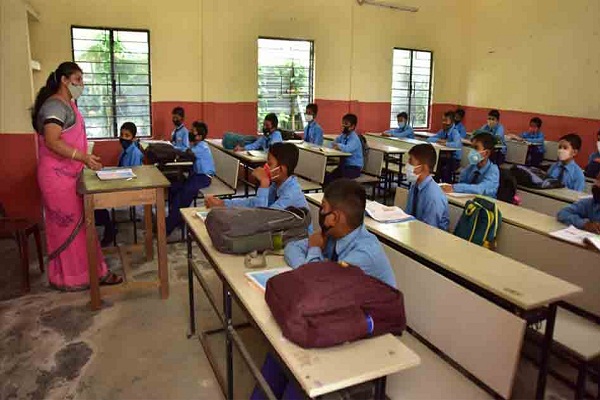
Chhattisgarh schools will reopen for Classes 10 and 12 standards as COVID cases are declining. The schools will reopen with 50 per cent capacity from August 2. The students need to attend classes on alternate days.

The decision was taken by Chief Minister Bhupesh Baghel during a cabinet meeting on Tuesday. The regular schools and colleges are closed down after the Covid 19 pandemic created a catastrophic situation in the country. The online classes will continue in the same way it has been happening for the last one and a half years. Schools in urban areas need to also talk to parents before making any decisions.

“In light of the current Covid-19 situation, physical classes for students of universities and colleges for the academic session 2021-22 will be started from August 2 with 50 per cent daily attendance,” the official statement said.

To reopen schools in remote areas, the village panchayats need to consult the parents. Hostels and residential schools in the tribal-dominated Bastar division will also reopen soon.
Anganwadi centres will also reopen in two shifts from July 26.

According to the latest data available, the state has reported 10,00,169 COVID-19 cases. The number of active cases is 3,469 and a total of 9,83,200 has been recovered.

Haryana Board reduces syllabus for Class 10 and 12

Haryana Board reduces syllabus

Haryana Board has reduced the Class 10 and 12 Syllabus for the academic year 2021-2022, said the Board of School Education Haryana (BSEH). Due to the ongoing pandemic and extended lockdowns in India, the board has decided to reduce the syllabus by 30 per cent for smooth running of learning and teachings.

“Haryana Board of School Education has decided to reduce 30 percent of the syllabus for secondary and senior secondary classes for the academic session 2021-22. The new syllabus is available on the official website of the board,” said a news report.

The new syllabus is available on the official website of the board. The board has taken this decision to avoid a loss of learning due to the disruption of the pandemic.

Similarly, other boards such as the Council for Indian School Certificate Examinations (CISCE) reduced the syllabus for Class 10 and 12 to ease learning.

Latest digital technologies providing a unique opportunities for learning

Prof Christopher

With inclusion of 3D printing and Mixed Reality (Virtual Reality + Augmented Reality) the learning experience can be taken to a completely different level. There is a unique opportunity of learning with the latest digital technologies, said Dr Christopher Abraham, CEO & Head, Dubai Campus, SP Jain School of Global Management to Elets Media Network.

In the past few decades there has been cutting edge research from the annals of neuroscience that prove our awesome human brains change and grow during the learning process. The emerging field of educational neuroscience is attempting to answer fascinating questions like how the brain learns, how it stores the learning and how it retrieves the learning at the opportune moments. Contemporary insights from brain science tell us that every time a human being learns something new, the brain forms new neural connections. The brain is also excited when novelty and variety are introduced in the learning process.

Connecting these insights with the latest digital technologies available with us for education, a very interesting confluence of ideas can be tested to enhance the learning process and better the experience for students. The z generation (those born after 2000) are naturally tech savvy and enjoy using technical gadgets with ease. With this premise, a whole range of approaches can be attempted to engage and enhance the student learning experience. Today, advanced educational technologies are emerging as important instructional methods for student engagement and self-directed learning.

Also read: Artificial Intelligence making learning very simple at Cyboard School

In recent advances, behavioral scientists have explored the learner’s cognitive processes during different stages of learning. This understanding combined with the use of advanced technologies are enhancing the learning experience to the extent that students feel more “connected” as they can explore the concept beyond the rigid walls of their classrooms. Current research proves that when students are using digital resources, building multimedia projects, collaborating, and connecting online, and conducting online research, they are more interested and engaged in their schoolwork today, and they feel more connected to what their future holds tomorrow. Most of today’s students believe that they will be using more technology after high school—in college, in their future occupations, and in their personal lives—to work collaboratively, research, create and solve problems. This revelation gives educators the impetus to explore novel approaches combining traditional human interventions with advanced digital technologies.

Technology tools for enhanced learning

From smartphones to tablets to various collaborative tools, the world of digital learning has undergone dramatic changes. Once condemned and banned the ubiquitous smartphone has become the preferred mode of choice in these uncertain pandemic times. With newer technologies that foster web-based video collaboration and peer to peer collaboration using cloud-based tools such as google drive, dropbox etc. These technologies are even assisting special education students through appropriate apps designed to assist those with learning disabilities. For the teachers, apps such as Socrative, Polleverywhere.com and Remind101,to name just a few, enable them to assess students’ knowledge in an exciting manner and send out relevant and subtle reminders for project and assignment deadlines.

In addition, inclusion of gamification in many learning scenarios also excites the learners with the concept of competition and rewards, which in turn excite the neural areas of the brain. The idea of “play” as a learning tool is gaining increasing significance. With inclusion of 3D printing and Mixed Reality (Virtual Reality + Augmented Reality) the learning experience can be taken to a completely different level. While 3D printing addresses “the maker” and the creative instinct, Mixed Reality can bring to life historical experiences and three-dimensional perspectives of the human anatomy, as successfully used by the Duke Medical School. With Big Data & Data analytics also gaining popularity, personalized learning experiences can be further enhanced through App based interventions that can address every student’s learning experiences. With recent advances in Human/Brain Computer Interface (HCI), the future of learning promises to be even more exciting.

The COVID-19 pandemic has dramatically changed the way we teach and learn. Distance learning using digital technologies has become the new norm. This situation offers a unique opportunity to combine our knowledge of the neuroscience of learning with the latest digital technologies in education to create a revolutionary paradigm shift which can not only enhance the learning experience of current learners but also help in widening the reach of education even to the unreached.

Education institutions should focus to make students employable: SAGE Foundation

Upskilling of graduates

Shahani Academic & Global Empowerment Foundation (SAGE Foundation), a non-profit trust conducted a survey of its students in order to understand the current trends of the job market during the Covid-19 pandemic.

A total of 2,317 underprivileged students had been trained and placed by SAGE Foundation. They have been placed in the BFSI (Banking, Financial Services and Insurance) sector between April to December 2020 via its bootcamp model.

100 percent respondents of the survey said they were able to retain their jobs during the pandemic. Many are still working with the companies they were originally placed with, some got promoted and shifted to other companies. The talents got placed in companies such as Accenture, KPMG, HSBC, HDFC Bank, IIFL, ICICI Bank and SBI Capital Markets, among others

Dr Akhil Shahani, Managing Director, The Shahani Group, said, “In light of the increased demand for job-ready professionals with detailed industry knowledge, it is imperative that institutions alter their approach to make students employable and relevant, especially in view of the current economic scenario.”

“The program focuses on new-age skills in addition to industry knowledge, to develop leaders who possess the ability to think critically as well as grow through continuous learning to help their organisations achieve their long-term business goals,” he added.

SAGE Foundation’s data driven Edtech model helps students to learn English, improve skills that are job-related and get good placements within 35-40 days.

UP Board to declare Class 10 and Class 12 results soon

UP Board Class 10, 12 results

The Uttar Pradesh Madhyamik Shiksha Parishad (UPMSP) is likely to declare the Class 10 and Class 12 results in July. According to the news media reports, the board will declare the Class 10 results this week and the Class 12 results by the end of July.

The candidates can visit the official website of UP board to get the results. The official websites of UP board are upresults.nic.in and upmsp.edu.in. A total of 56,03,813 students had registered for UP board exams. Among these, 29,94,312 students are of Class 10 and 26,09,501 of Class 12.

The UP Board Class 10th and 12th exams were cancelled earlier due to the ongoing pandemic. Now, the board will evaluate the performance of students on their past performances. This time 50 percent weightage will be given to Class 9 and the remaining 50 percent will be given to Class 10 pre-board examination for assessing Class 10 students.

However, Class 12 results will be declared on the basis of internal assessment. The UP board for the first time will declare results without holding an examination.

Moreover, the candidates who are not happy with the examination results can appear in a special exam held by the board after the COVID situation is under control.

UP Board Class 12 Result 2021: How to check

-Visit the official website of UP Board

-Click on UP Board Result 2021 link for Class 10 and 12

-Enter the roll number and other required details

-Press submit and your result will be displayed on the screen

-Check the result and download the page

NTA JEE Main 2021 session 3 examination begins today

JEE Main 2021 session 3

The National Testing Agency (NTA) Joint Entrance Exam (JEE) Main 2021 session 3 is going to begin today. The JEE Main examination will be conducted on July 20, 22, 25 and 27.

The JEE Main 2021 paper 1 examination will be conducted in computer-based mode. The number of candidates registered for Session 3 is 7.09 lacs. Students appearing for the examination can download the hall tickets from the official website jeemain.nta.nic.in and take along with them to the exam centre. The admit card is also available online for you to download.

However, the number of cities also has increased from 232 to 334 along with the number of examination centres in each shift increased from 660 to 828.

Candidates are advised to keep visiting the official websites of NTA (www.nta.ac.in) and (jeemain.nta.nic.in) for the latest updates.

All Covid 19 protocols will be closely monitored and maintained such as facemasks will be provided to all students at the exam centre. All seats and computers will be sanitized. Common places, furniture and fixtures will also be sanitized before and after the JEE Main exams. The examination centre will also have open windows and fans for proper circulation. Proper social distancing norms will be maintained.

Blackstone invests $250 million in edtech startup Simplilearn

Blackstone invests $250 million

The private equity investor Blackstone has agreed to invest $250 million in edtech startup Simplilearn. Amit Dixit, head of Asia for Blackstone Private Equity, said: “This is Blackstone’s first private equity investment in Asia in a consumer technology company. Like many other sectors, technology is disrupting education and education technology has been a high conviction theme for Blackstone in India and globally.”

Simplilearn provides online training on technologies and applications in data science, Artificial Intelligence (AI), cloud computing, machine learning including others.

Pointing out further, Krishna Kumar, founder and chief executive, said, “My team and I have partnered with Blackstone to build the largest digital skilling company in the world. We believe Blackstone can add significant value to our company because of its scale, commitment to building businesses, and global network. This will enable us to develop partnerships with businesses and universities as Simplilearn continues to expand around the world.”

Simplilearn’s major business of 60 percent comes from overseas. The company has already raised $28 million from Kalaari Capital, Helion Venture Partners and Mayfield Fund. The company claims to have 2 million plus learners on its platform and expects to reach 5 million soon.

Tamil Nadu announces Class 12 results today

Tamil Nadu announces Class 12 result

The Directorate of Government Exams (DGE), Tamil Nadu, announced the Class 12 results today. Higher Secondary Examination (HSE) board result 2021 can be checked on the official websites- tnresults.nic.in, dge1.tn.nic.in, dge2.tn.nic.in and dge.tn.gov.in.

The Class 12 results are prepared on the basis of an alternative marking scheme. Assessment is done by giving 50 percent weightage to Class 10 board examination, 20 percent weightage to Class 11 final examination and 30 percent weightage to Class 12 practicals and internal assessment.

Tamil Nadu Chief Minister Edappadi K Palaniswami had earlier announced in the assembly that all students have passed out without any examination this year. Tamil Nadu has also promoted students of Class 9,10 and 11 standards without any exams.

Also read: Tamil Nadu AIADMK appeals to PM Modi to cancel NEET & Entrance exams

According to news report data, a total of 39,679 students scored between 551-600 marks, 1,67,133 scored between 501-550, and 2,22,522 students scored between 451-500 marks. In science stream, 30,600 students scored between 551 and 600 marks. Around 8909 students scored between 551 and 600 marks in the commerce stream and in the arts stream only 35 students scored between 551 and 600 marks.

A total of 8,16,473 students registered for the Class 12 examination, out of which 4,35,973 are girls and 3,80,500 are boys. All students are declared 100 percent pass.

Steps to check Tamil Nadu Class 12 results:

  • Log in to the website
  • Fill in your registration number/roll number
  • Click on the ‘download’ link and your results will appear on the screen.

LATEST NEWS